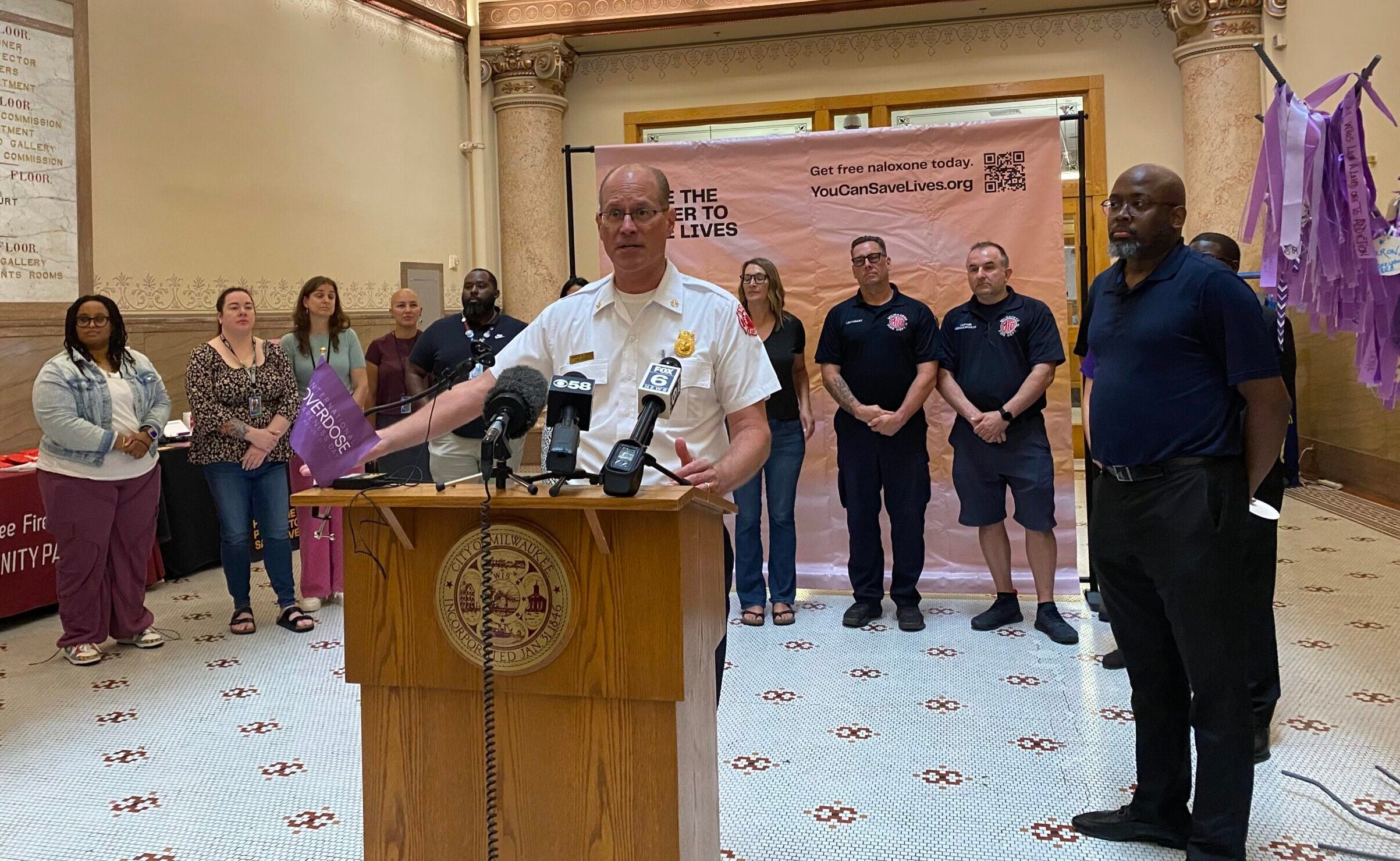
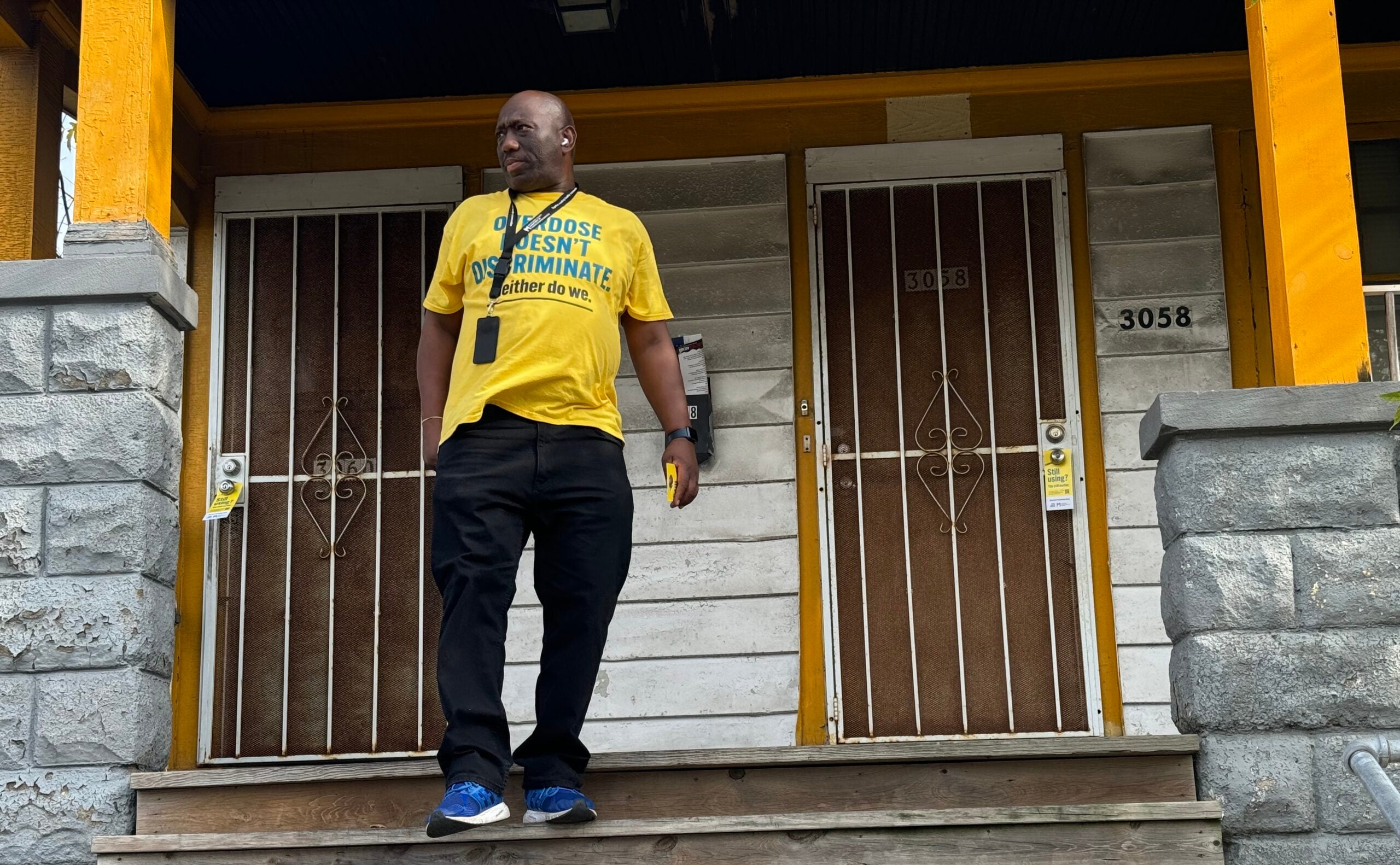
Once a month, more than 40 people from 30 different agencies in Winnebago County cram into a room at the Fox Valley Technical College’s Oshkosh campus.
They range from members of the sheriff’s office to the medical examiner’s office, as well as members of the county public health department. During each meeting, the Winnebago County Overdose Fatality Review Team discusses a recent overdose deaths in the community.
Who died? What led to their death? And how can a similar death be prevented?
News with a little more humanity
WPR’s “Wisconsin Today” newsletter keeps you connected to the state you love without feeling overwhelmed. No paywall. No agenda. No corporate filter.
“It’s become a really important part of overdose prevention work in Winnebago County to be doing these facilitated deep dives,” said Ashlee Rahmlow, the public health supervisor at the Winnebago County Health Department.
The team is funded through a grant the state receives from the U.S. Centers for Disease Control and Prevention. That grant, from the Overdose Data to Action program, helps local communities and states fight the opioid epidemic.
But a recent NPR report found the Trump administration could delay or cut about $140 million in funding for that program.
“I think that any changes or delays in funding for the Overdose Data to Action grant would be devastating to our overdose prevention efforts, and specifically our Overdose Fatality Review team here in Winnebago County,” Rahmlow said.
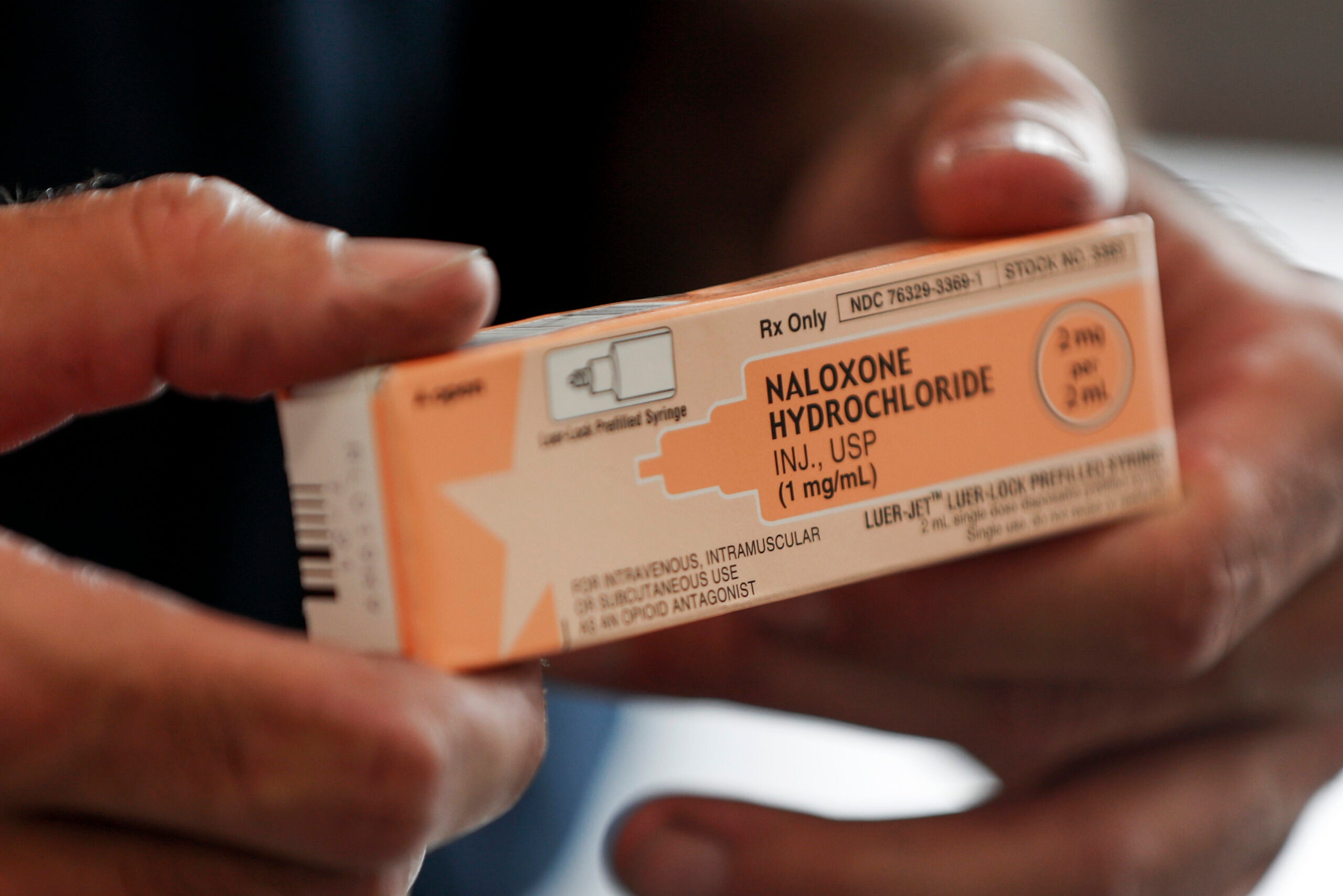
Wisconsin has received more than $8.9 million in federal funds from the grant program in the first two years of a five-year grant period, according to the Wisconsin Department of Health Services, or DHS. That money goes to the state, which then distributes it to local health departments across Wisconsin.
“The goal of this funding is to enhance the ability of state health departments to track and prevent nonfatal and fatal overdoses while also identifying emerging drug threats,” Jennifer Miller, a spokesperson for DHS, wrote in an email.
Miller said the funding cycle ends Sept. 1, and the department planned on getting $4.48 million from the grant for the third year of the work.
“At this time, we have not yet received official word about funding for year three,” Miller wrote in an email to WPR.
The state expected to get $4.48 million this year. Of that, $3.4 million would have gone to “support the work of organizations across the state as well as community outreach and public awareness,” Miller said.
Sara Jesse, the community health manager for the Sauk County Health Department, said the county gets $144,000 a year from the state through the grant program for two projects. One project is for a contract with WisHope, which helps the county with peer recovery coach services. Jesse said members of the team respond to the home of a person who was involved in a nonfatal overdose.
“The teams also provide patients with support to get health insurance, transportation, housing, employment, recovery support meetings, sober social interaction events, emergency food supplies, really anything that they need,” Jesse told WPR.
The grant program also funds the county’s overdose fatality review team, which includes 25 local agencies in Sauk County.
“We’re worried at this point that our funding will at least be delayed and perhaps be reduced or canceled,” Jesse said. “So if we don’t get our notice of award that would start on Sept. 1, that means that people won’t receive the services that we’re so proud of serving our community with.”
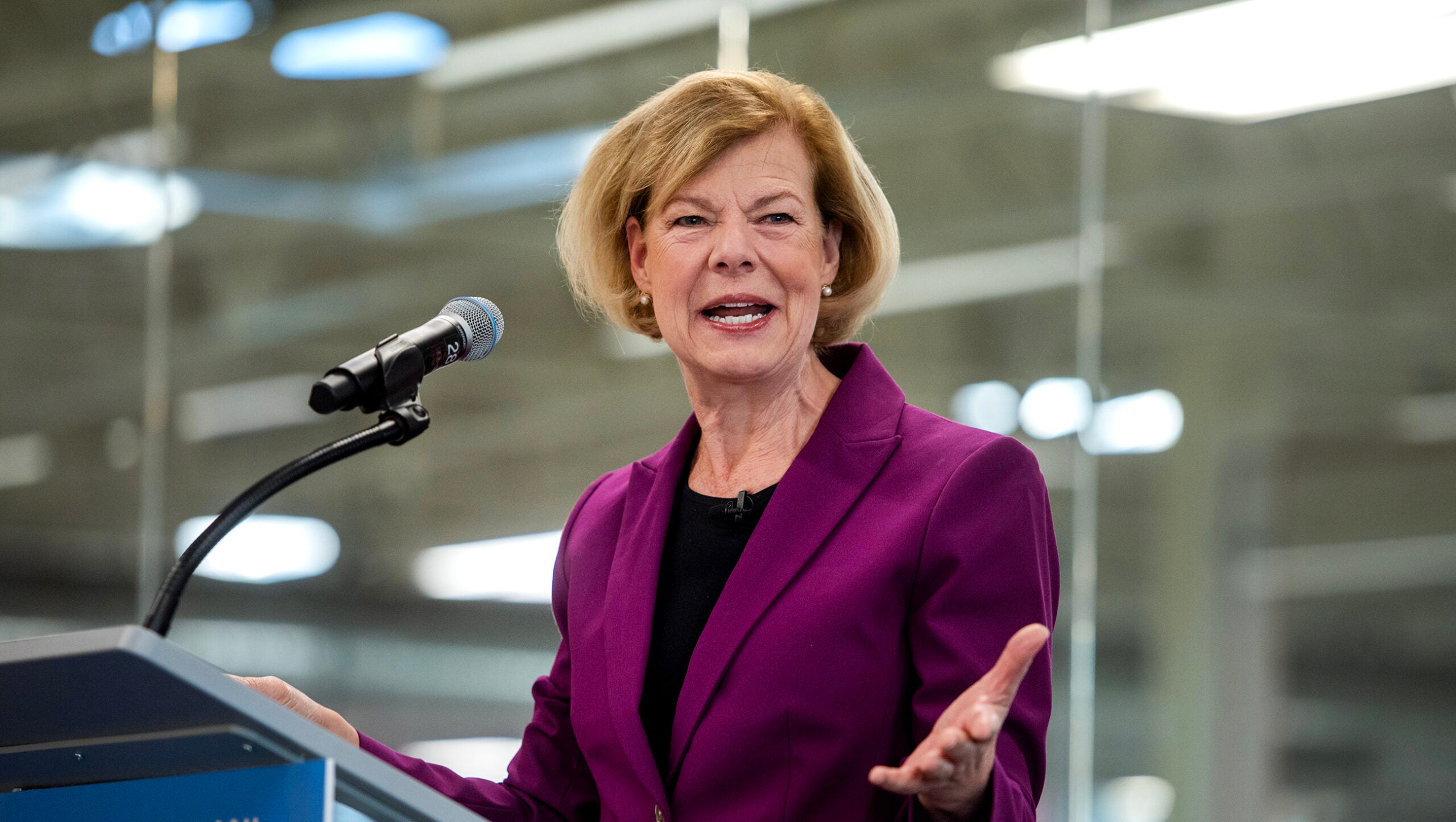
In a statement, Democratic U.S. Sen. Tammy Baldwin said the grant program helps fund “essential tools” in the fight against the opioid epidemic.
“We should be doubling down on prevention and treatment efforts,” Baldwin wrote. “Instead, this administration is turning their backs on the hundreds of thousands of families who have lost a loved one to fentanyl overdose or poisoning.”
Federal funding for overdose prevention could instead be funded incrementally
A spokesperson for the U.S. Department of Health and Human Services said in a statement the CDC is “poised to build on recent progress in reducing overdose deaths and remains committed to supporting the Overdose Data to Action (OD2A) program.”
However, the statement said the grant program will be funded incrementally going forward.
“We are working closely with our funding partners to make within the next month, at a minimum, initial grant awards, which may contain less than the full-year of funding in the first incremental award,” the spokesperson wrote in the statement.
Another report from NPR, which mentions the incremental funding going forward, said staffers within the CDC said there’s still uncertainty about delays or cuts for the funding.
Miller with DHS, said the agency is monitoring all federal grants and funding that have been promised to the state, but because of the uncertainty, “We are unable to issue new contracts for this work to our subgrantees without having the notice of award from our federal funder confirming funding beyond September 1, 2025.”
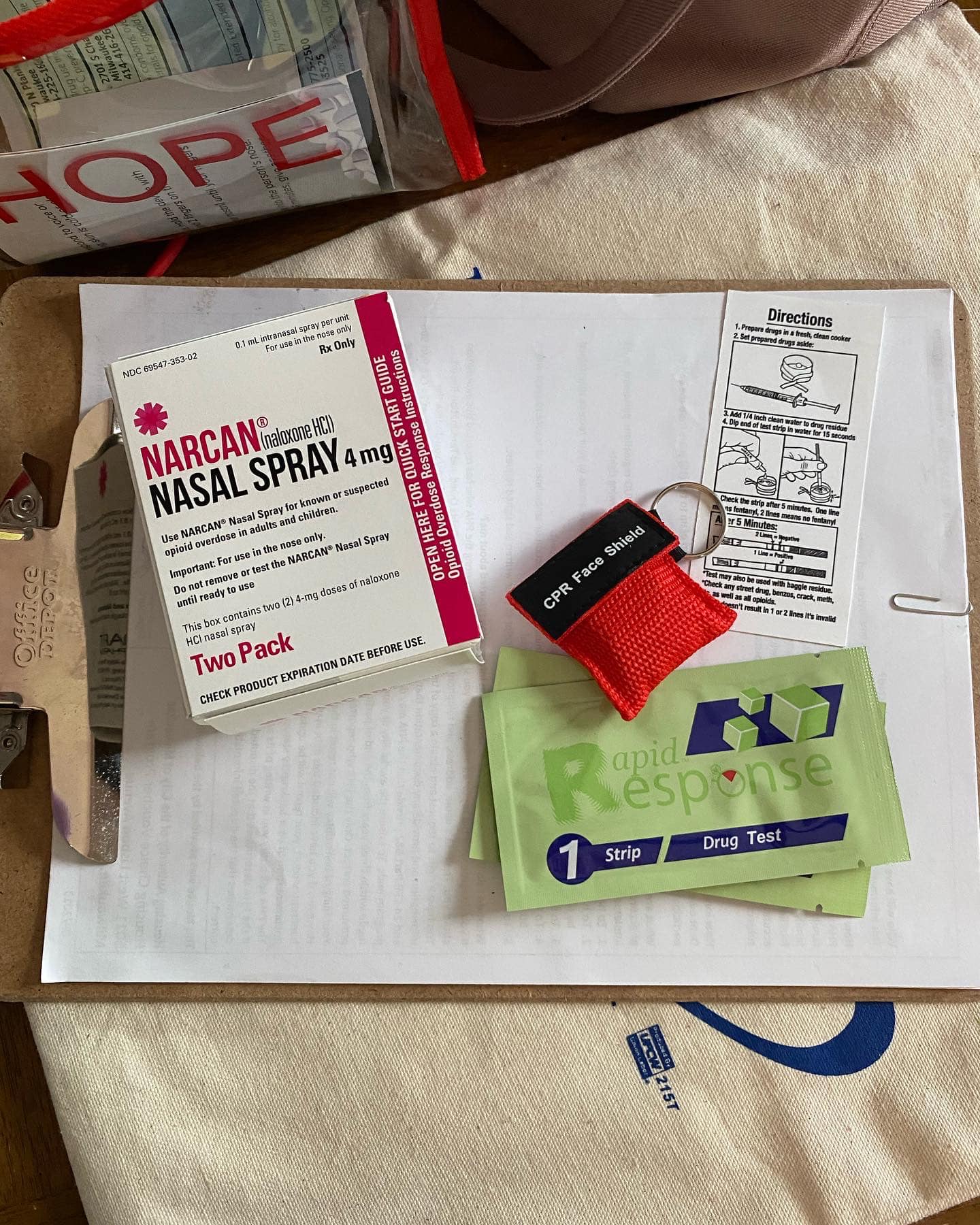
Winnebago County gets between $35,000 to $40,000 each year from the state through the grant program, Rahmlow said. She said they use the money to pay for a facilitator who helps run the overdose fatality review meetings.
Overdose deaths declined 49 percent in Winnebago County in 2024 compared to 2023. Rahmlow said she believes the team’s work is part of the reason for that dip.
A 2024 document said the state funds 21 local overdose fatality review teams through the federal grant program, including the Dane County Overdose Fatality Review team. In an email, Morgan Finke, a spokesperson for Public Health Madison & Dane County, said as of Thursday, they have not received any official notice about changes to funding.
Milwaukee Health Commissioner Mike Totoraitis said the city almost applied for the Overdose Data to Action grant two years ago, but the health department didn’t have the capacity to apply at the time.
“It’s a critical piece in the nation’s fight against the opioid epidemic,” Totoraitis said.
He said the uncertainty around the federal money is concerning for other health departments across the state and nation.
“When these decisions are made at a federal level, they have real world implications at a very local level, very quickly,” Totoraitis said.
Meanwhile, overdose deaths are on the decline across the state and nation. Nationally, overdose deaths were down 26.9 percent in 2024 compared to 2023, according to an estimate from provisional data from the CDC.

Wisconsin Public Radio, © Copyright 2026, Board of Regents of the University of Wisconsin System and Wisconsin Educational Communications Board.