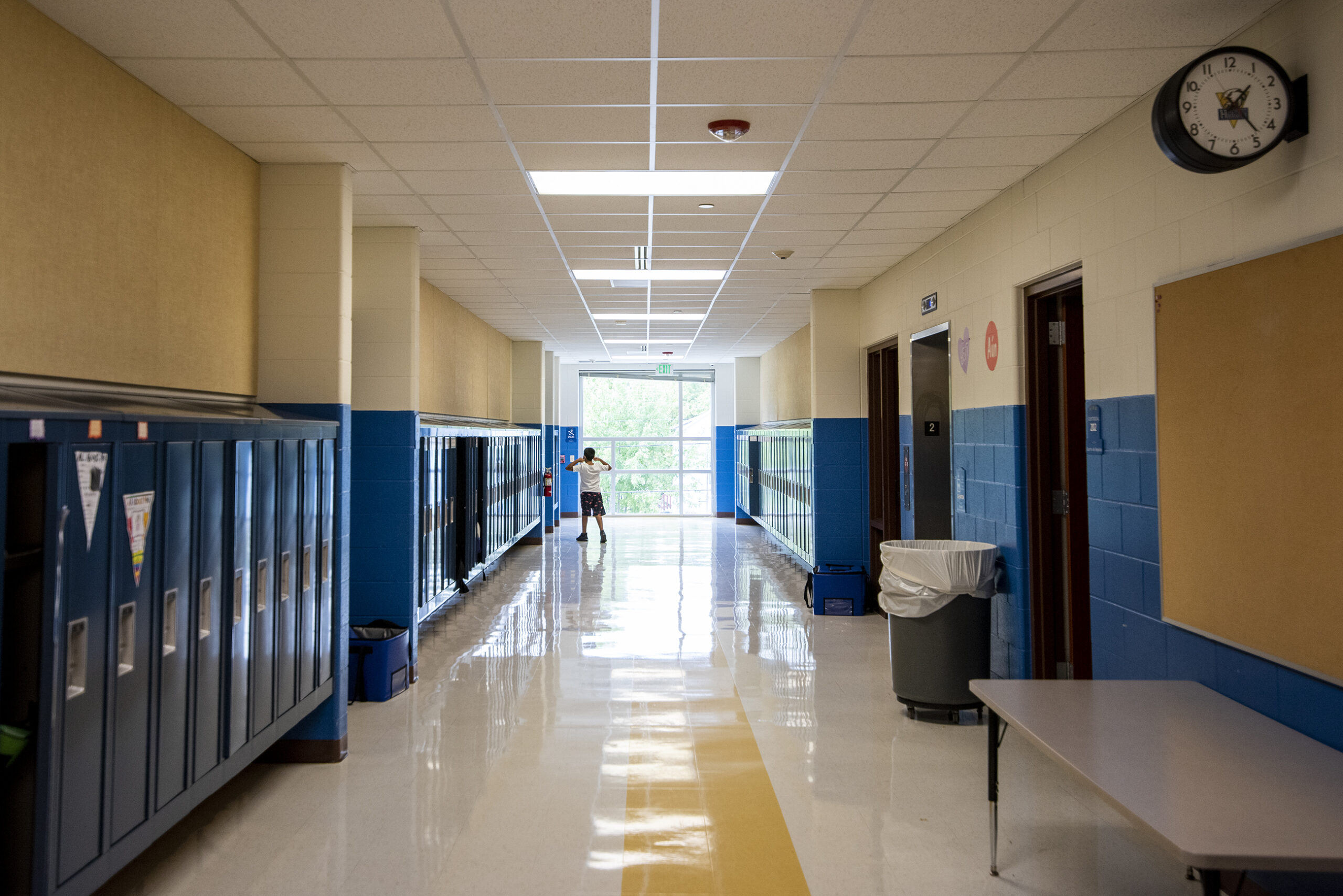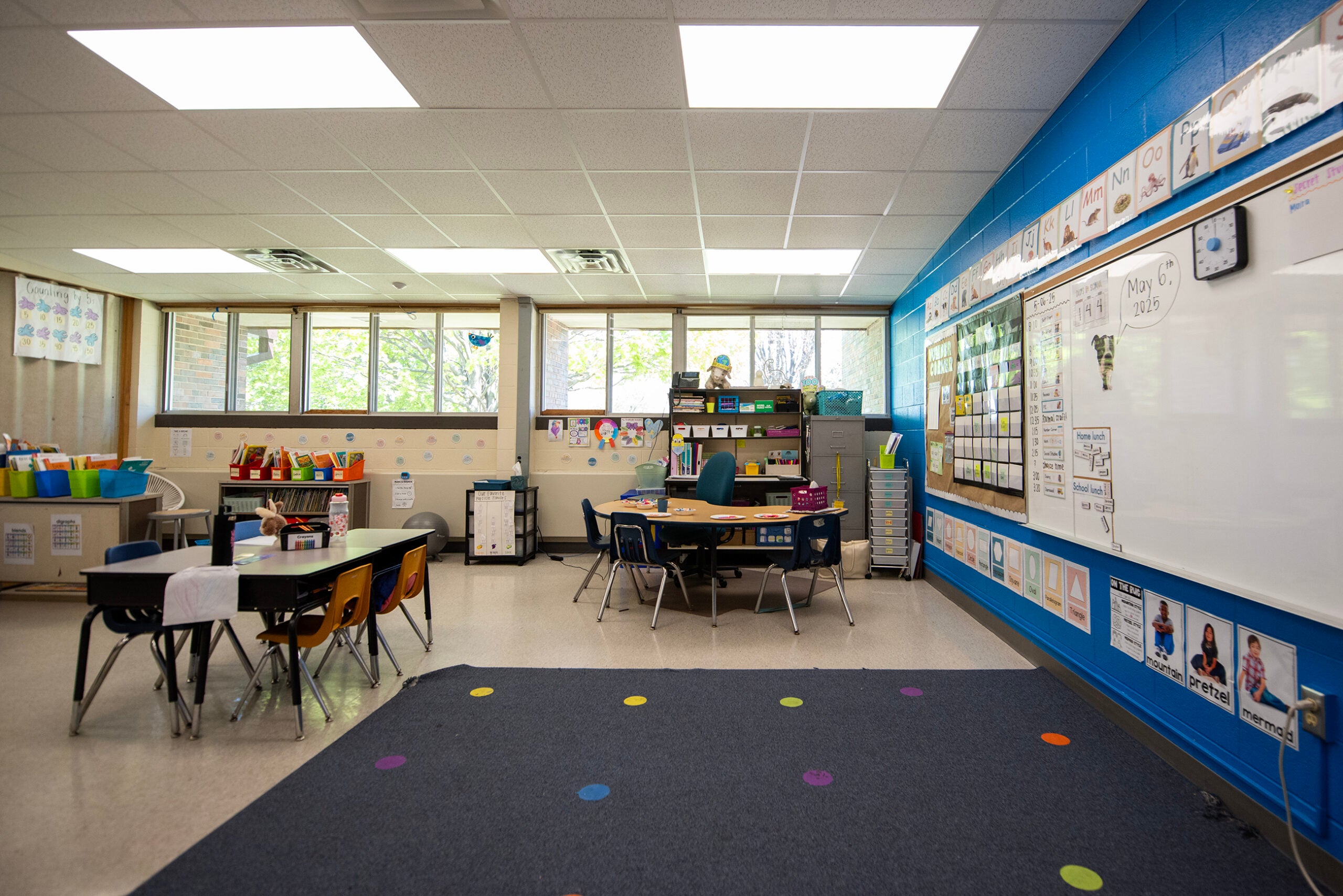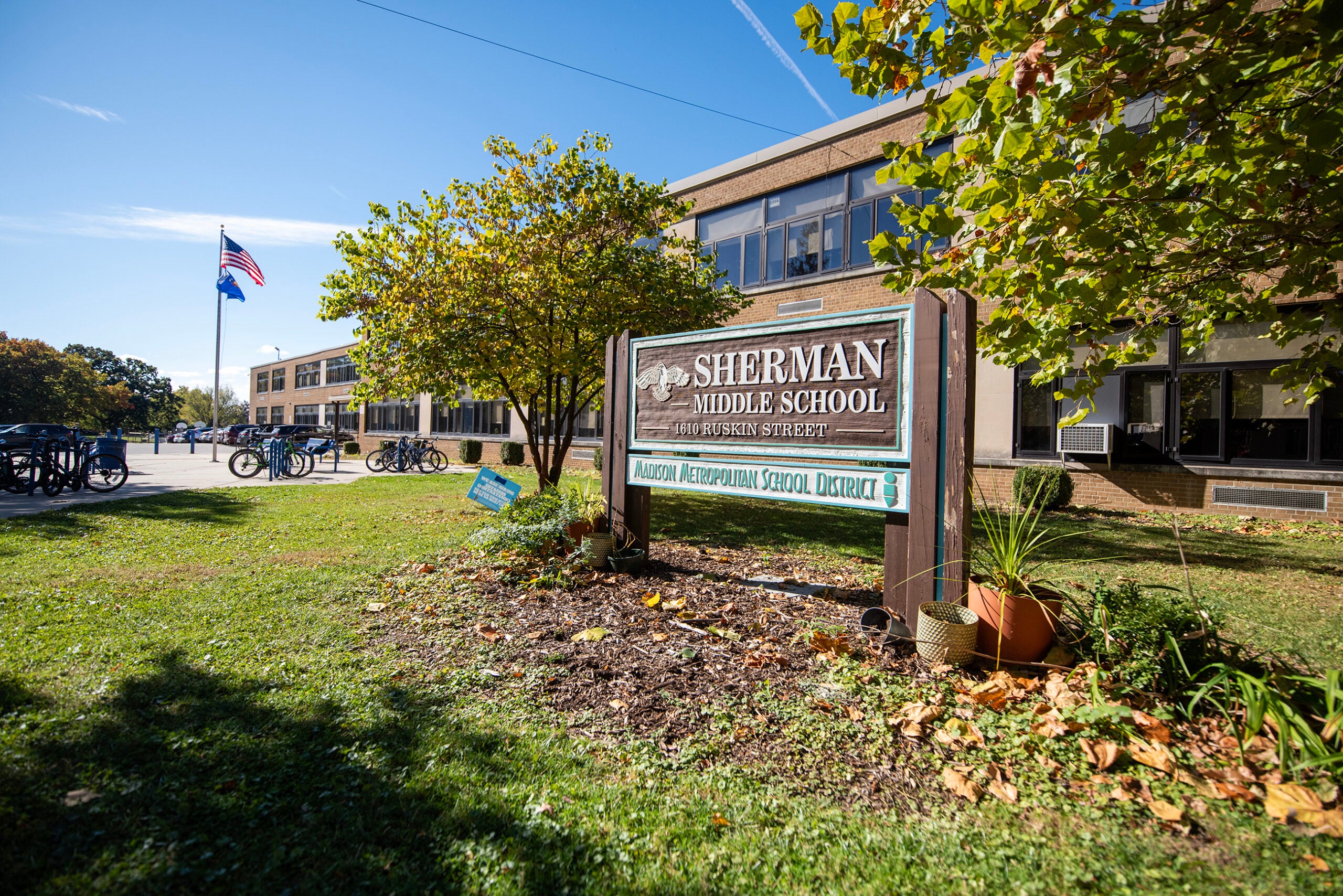
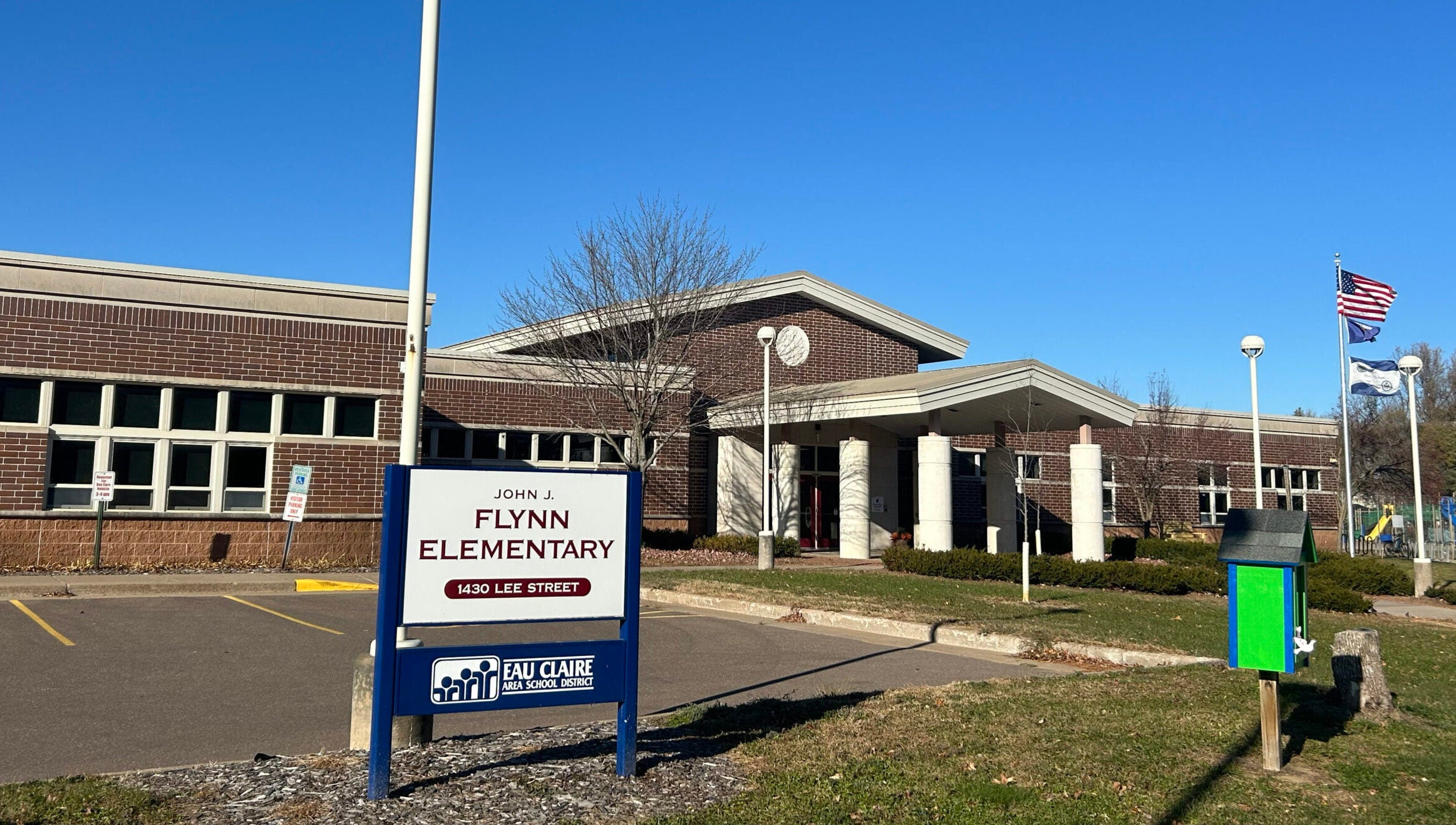
The Eau Claire school district is considering repurposing its early childhood learning center and had previously proposed closing or repurposing some elementary schools because district officials say they’ve got too much space and not enough students.
It’s a familiar problem in the face of declining enrollment that’s already led to elementary school closures around Wisconsin in recent years.
In several meetings this year, concerned parents and community members from Eau Claire pleaded with the Eau Claire Area School District Board of Education to rethink plans to shrink the district’s footprint.
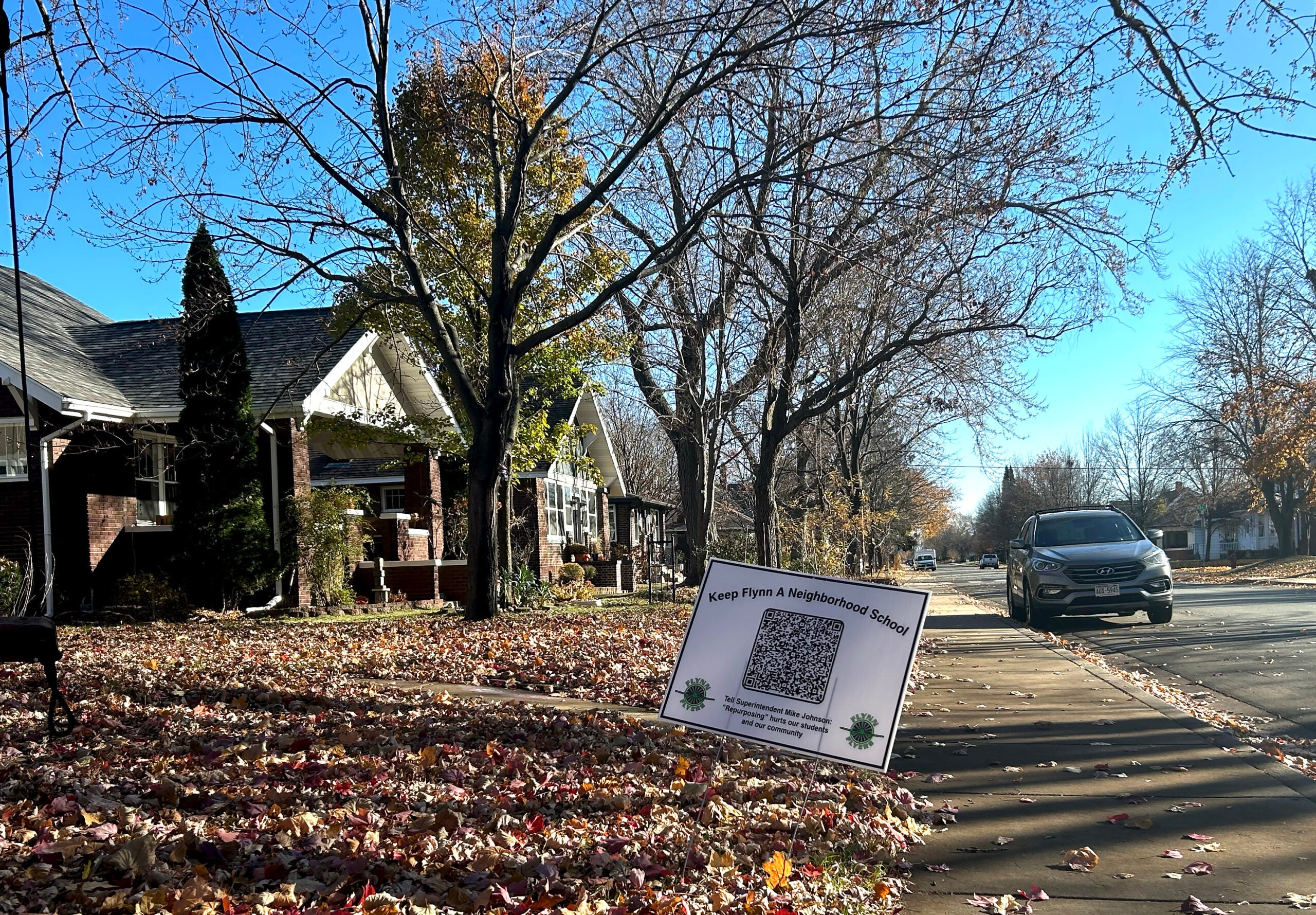
They wore shirts emblazoned with their local school’s sports teams and spoke about how their local elementary schools are the anchor of their neighborhoods. “Save Our Community Schools” yard signs have sprung up on front lawns across the city.
News with a little more humanity
WPR’s “Wisconsin Today” newsletter keeps you connected to the state you love without feeling overwhelmed. No paywall. No agenda. No corporate filter.

Eau Claire Area School District Board of Education President Tim Nordin told WPR the district estimates there are between 400 and 1,600 empty elementary school seats this year. He said while no one wants to see schools close, district officials “have to have that conversation.”
“So, even at the most conservative viewpoint of how we consider our school space, we’re at least one school over what we could be running without crowding students,” Nordin said.
District Superintendent Mike Johnson sent a message to parents and staff Monday, saying options to close or repurpose Roosevelt, Longfellow and Flynn elementary schools are no longer being considered.
Nordin said the proposals aren’t set in stone and there aren’t yet any concrete cost-saving figures, but the district needs to figure out how to “run leaner” when state school funding hasn’t kept pace with inflation.
The district is considering making changes to Prairie Ridge, an early childhood learning center. Focus groups have also met to consider boundary changes for some or all K-5 schools.
“And then, as we have fewer students, we’re not only behind on each individual student, but we’re receiving less funding to educate them,” Nordin said. “So we we have to look for every avenue we can, to tighten our belts.”
The tough conversations being had in Eau Claire are part of a chorus heard from districts around Wisconsin grappling with the same issue. Data from the Wisconsin Department of Public Instruction shows there were around 433,000 elementary school students enrolled in the 2014-15 school year. During the 2024-25 school year, enrollment had fallen to around 376,000, or by around 13 percent.
Wisconsin Association of School Boards Executive Director Dan Rossmiller said since 2020, at least 13 districts from Kenosha to Superior have either already closed elementary schools or are in the process of studying future closures in the face of declining enrollment.
“A lot of them refer to this as right-sizing,” Rossmiller said.
Rossmiller said because Wisconsin’s strict school revenue limits, which date back to the early 1990s, are tied to enrollment, “fewer students means fewer dollars for school budgets.” At the same time, he echoed Nordin’s inflationary concerns and said fixed costs like utilities, staffing and maintenance have increased.
“A lot of districts around the state, particularly those in urban centers that may have some older school buildings, are responding to the situation of declining enrollment, particularly in the early grades because that’s where we’re seeing it show up first, by cutting or closing and consolidating schools,” Rossmiller said.
The enrollment declines have also been felt by smaller, rural school districts, which have fewer ways to respond. One option is to consolidate with neighboring districts.
Republican state lawmakers introduced a package of bills offering financial incentives for districts that agree to merge. Between 2000 and 2022, five Wisconsin districts have consolidated to meet enrollment and budgetary challenges.
Editor’s note: This story has been updated to reflect the Eau Claire school district’s decision Monday to no longer consider closing or consolidating some of its elementary schools.

Wisconsin Public Radio, © Copyright 2026, Board of Regents of the University of Wisconsin System and Wisconsin Educational Communications Board.