More than 805,000 students are currently enrolled across Wisconsin’s 421 public school districts, according to the state Department of Public Instruction.
While statewide data shows that’s 18,000 fewer students than two years ago, that downward trend spans more than a decade.
Now K-12 school districts, like the Manitowoc Public School District, are examining solutions to maintain student enrollment and culture. The eastern Wisconsin district enrolled about 4,300 students this year, which is a few hundred less than the previous year, according to superintendent Lee Thennes.
News with a little more humanity
WPR’s “Wisconsin Today” newsletter keeps you connected to the state you love without feeling overwhelmed. No paywall. No agenda. No corporate filter.
“The last couple years — I’ve been calling the third Friday (of the month) count the dreaded count because of those declining in numbers,” he said on WPR’s “Morning Edition.”
He said the declining birth rate driving declining enrollment is outside the school district’s control. That trend has been happening slowly for 20 years, according to the Wisconsin Department of Health Services.
But, Thennes said the district is moving forward with what it can control.
“We’ve built some great foundational programs in both school to work and early college that we believe can help us pave the way to getting some kids back,” he said.
To keep up with declining numbers, Thennes said the district created two advisory committees in January to review budgets, building footprints, enrollment, revenue limits and state funding. He said nearly 40 community members volunteered to take part.
“People have been very supportive of our school system,” he said. “My goal is to not just … maintain a good relationship but build trust.”
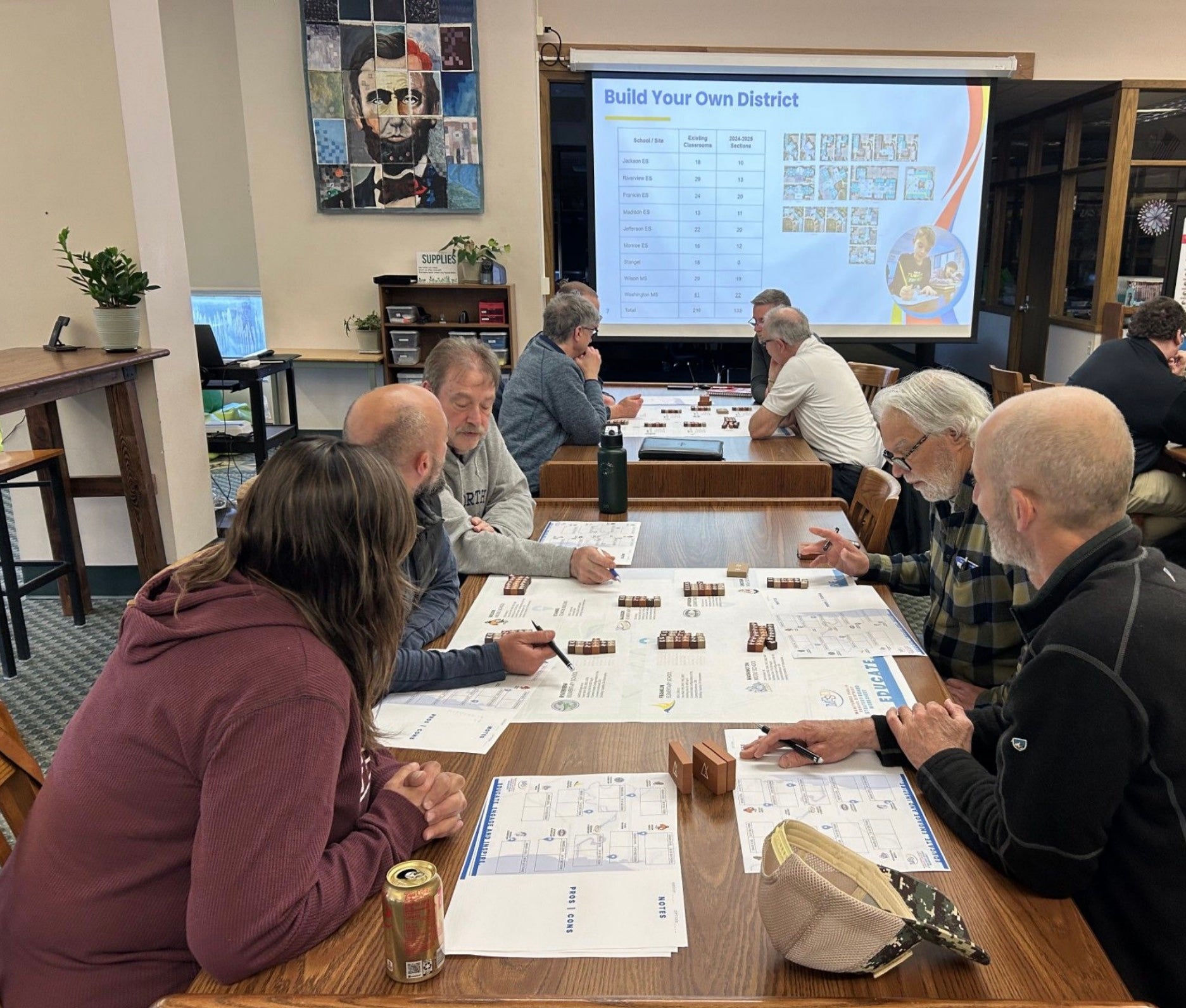
For months, staff and community members participated in a “Build Your Own District” discussion exercise with Cadence Consulting, a Milwaukee-based architectural and planning firm.
The conversations led to nearly 60 recommendations to determine the most efficient way to structure the district.
“They came up with unique options of things we could do for enrollment and the condition of our facilities,” he said.
A key recommendation: consolidation.
Thennes said it’s a direction that would save the district money by operating with fewer buildings. But those buildings need investment.
“Our high school is 102 years old, our two middle schools are 95 years old and 90 years old, respectively,” he said.
Some repairs, like a new roof for the high school, were made possible thanks to community members passing a $25 million referendum last April.
But a recent study showed $60 million would be needed to update the Manitowoc middle schools.
Addressing declining enrollment statewide
Last month, Republican state Rep. Amanda Nedweski discussed a package of bills to help facilitate consolidation for districts grappling with declining enrollment across the state.
At a press conference, she said, “Let’s end the cycle of constant referendums and help districts right-size their footprint to maximize student learning.”
The Pleasant Prairie lawmaker added that because the state has 53,000 fewer students compared to a decade ago, districts are receiving less state funding.
One bill, introduced last month, would change the total amount of revenue a school district may receive from general school aids and property taxes in a school year.
It would prohibit a school board from adopting a resolution to initiate an operating or capital referendum without getting state certification of the necessary financial information.
Consolidating schools and districts is unlikely to put an end to school district referendums. Thennes said he will continue to bridge communication between his district and the community.
“We need the community to know that we need their help and support,” he said. “But we’re also not going to just take more than we need.”