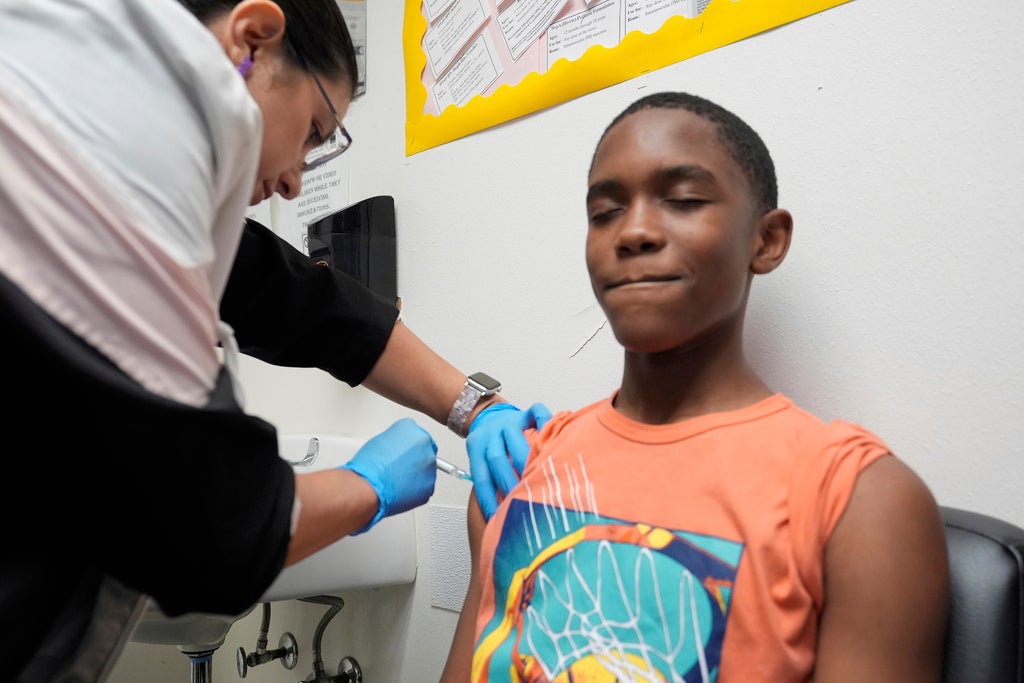
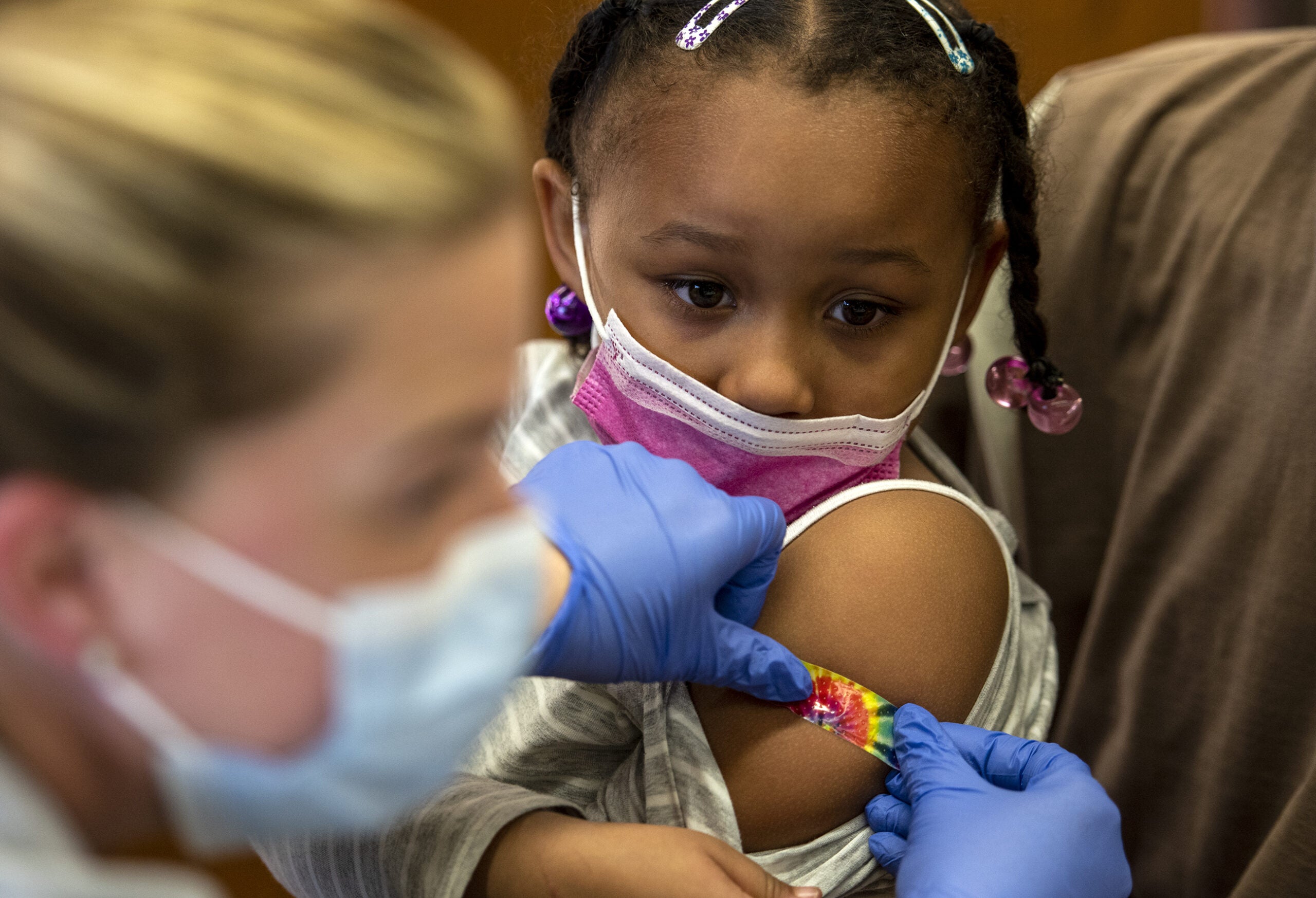
State health officials are directing Wisconsin doctors to continue following the childhood vaccine schedule supported by the medical community, despite recent changes to federal guidelines.
The Wisconsin Department of Health Services on Thursday announced it continues to recommend the “evidence-based childhood vaccine schedule” from the American Academy of Pediatrics.
The guidance to providers rejects a new schedule released Monday by the Centers for Disease Control and Prevention that cuts the number of recommended vaccines for all children from 17 to 11.
News with a little more humanity
WPR’s “Wisconsin Today” newsletter keeps you connected to the state you love without feeling overwhelmed. No paywall. No agenda. No corporate filter.
The CDC’s new guidelines recommend vaccines for rotavirus, hepatitis A, meningitis and seasonal flu be given only to children considered high risk or after consultation with a health care provider.
Health Secretary Robert F. Kennedy Jr. said in a press release the move aligns the U.S. vaccine schedule “with international consensus,” following a directive by President Donald Trump to examine other country’s immunization practices.

But Wisconsin DHS Secretary Kirsten Johnson criticized the change for not being based on U.S. data and said the move “upends our longstanding, evidence-based approach.”
“Copying another country’s schedule without its health and social infrastructure will not produce the same health outcomes,” Johnson said in a press release. “It creates chaos and confusion and risks the health of Wisconsin’s youngest and most vulnerable citizens.”
Dr. Ryan Westergaard, chief medical officer at DHS, said there has not been new scientific evidence that would justify changing the longstanding recommendations.
Speaking to reporters, Westergaard said there has been consensus around the vaccine schedule “for generations.” He worries about the impact of losing a unified voice between the federal government and state health agencies.
“It’s going to result, probably, in more vaccine hesitancy,” Westergaard told reporters. “Because people are going to see that disconnect and say, ‘Well, what’s going on? Has the vaccine, has the science changed? What am I not understanding?’”
Westergaard said health providers already use shared decision-making when talking to their patients about routine vaccinations.
But he said the CDC’s push to reclassify shots from a universal recommendation to “shared clinical decision-making” undermines decades of science showing the benefits of these vaccines outweigh the risks for most patients.
“‘Shared clinical decision-making’ has (previously) been a flag to say, ‘Well, the evidence might not be quite as strong,’” Westergaard told reporters. “But that’s not actually how it’s being used in this setting.”
He said Wisconsin joins other state health agencies who have taken a stand supporting the current vaccine recommendations since the CDC’s announcement Monday.
All recommended vaccines will continue to be covered for children enrolled in Wisconsin Medicaid and those who are eligible for the state’s free Vaccines for Children program.

Wisconsin Public Radio, © Copyright 2026, Board of Regents of the University of Wisconsin System and Wisconsin Educational Communications Board.