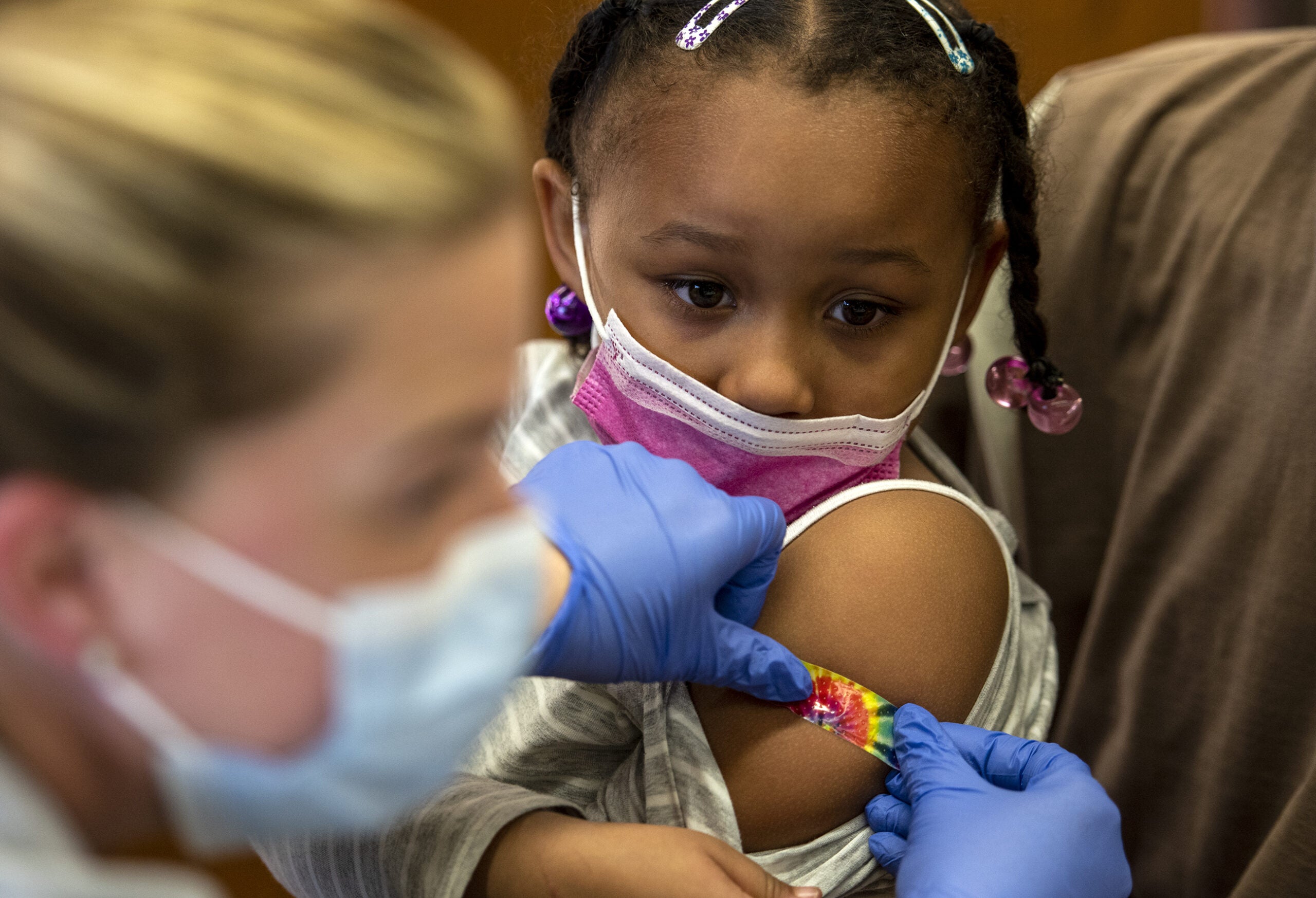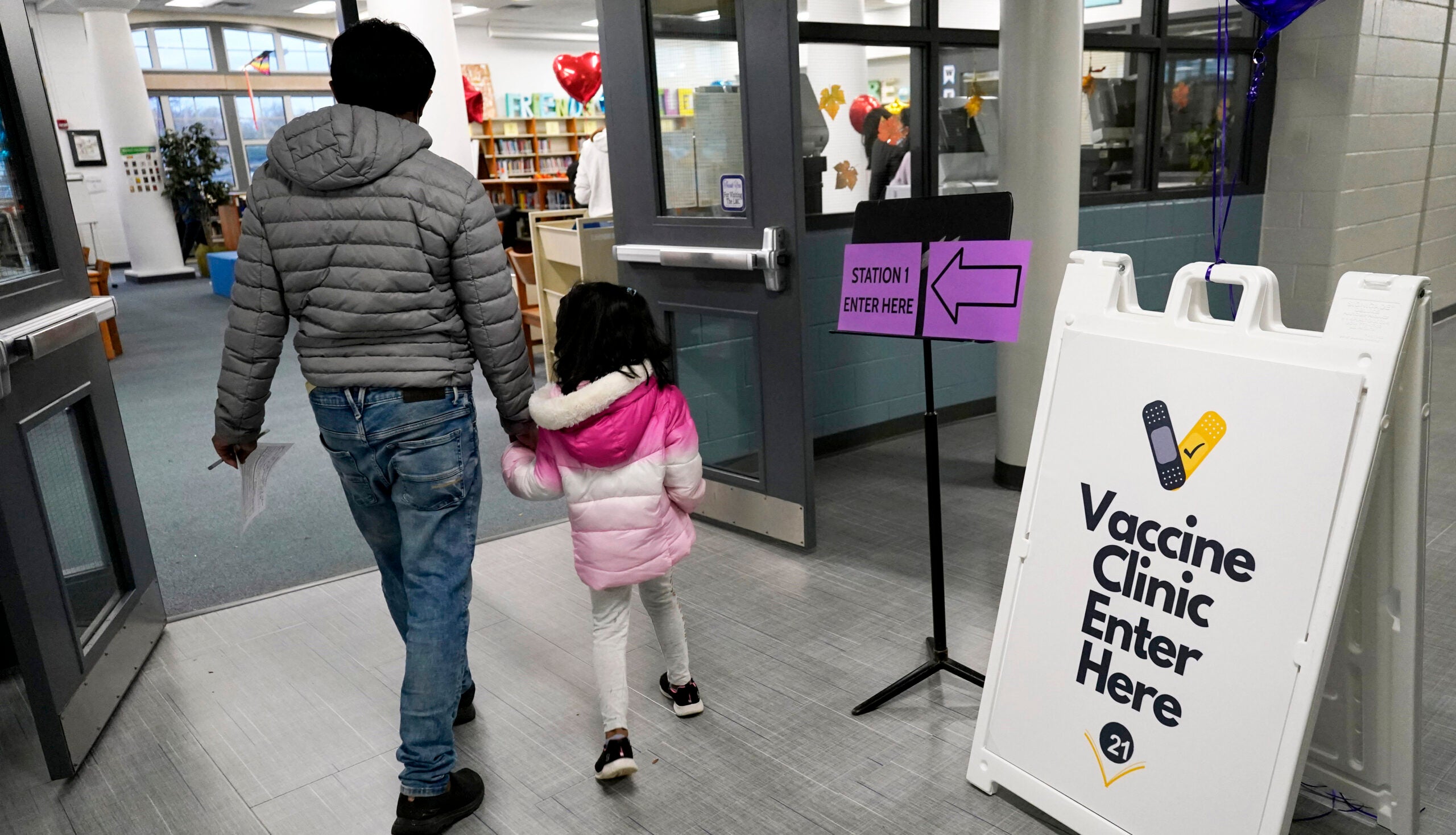
Wisconsin’s Department of Health Services is recommending an annual, updated COVID-19 vaccination for anyone over 6 months old.
But some Wisconsin parents have reported struggling to get that shot for their kids — especially when it comes to young children. That prompted several Wisconsinites to write to WPR’s WHYsconsin, asking how they can get the vaccine.
Among them was Lisa Ho of Madison, who tried multiple avenues to get her 3-year-old son vaccinated against the coronavirus.
News with a little more humanity
WPR’s “Wisconsin Today” newsletter keeps you connected to the state you love without feeling overwhelmed. No paywall. No agenda. No corporate filter.
“I had to call a lot of pharmacies, and a lot of them just didn’t have (the pediatric vaccine) or were unwilling to vaccinate someone my child’s age,” Ho said. “I had to really do a lot of my own legwork.”
Ho was eventually able to get the vaccine for her son in early October through UW Health.
Parents encounter ‘mixed messaging’
But she worries that additional hurdles will lead to lower vaccination rates, especially among children.
“There was a lot of mixed messaging,” Ho said. “This year was such a struggle because there was so much misinformation spreading and also just lack of communication that it can make it very difficult for a parent to have to navigate through all of that sort of information to begin with.”
President Donald Trump’s new Health Secretary Robert F. Kennedy Jr. is a vaccine skeptic who has promoted false information about vaccines.
In August, the federal Food and Drug Administration diverged from its past practice, when it approved the COVID-19 vaccine only for Americans 65 and older or with certain medical conditions.
In early October, the U.S. Centers for Disease Control and Prevention accepted guidance from an advisory panel, recommending that anyone over 65 get the COVID vaccine, while urging younger people to speak with a clinician about the risks and benefits.
Despite those changes at the federal level, multiple state health departments — including Wisconsin’s — are continuing to urge more widespread vaccination against COVID for anyone over 6 months old.
Wisconsin’s health department put out a standing order for the new COVID vaccine on Sept. 16, which was intended to ensure that pharmacies across the state would make the vaccine for anyone above 6 months old without a prescription.
But, even after that order took effect, Ho said several local pharmacies told her she would need a prescription to get her son vaccinated against COVID.
Providers, pharmacies differ on age limits for COVID vaccines
Dr. Jim Conway, the medical director at UW Health’s immunization program, said some pharmacies may be concerned about a state law which generally requires a prescription before a pharmacist administers a vaccine to someone under 6 years old. Even so, Conway said the state directive was intended to clear that up, by specifying that prescriptions aren’t required for the COVID vaccine.
Beginning on Oct. 1, UW Health began offering COVID-19 vaccines to anyone over 6 months old who already scheduled an appointment. And, starting Oct. 6, UW Health patients could start scheduling new COVID-19 vaccines via phone or MyChart.
UW Health is not requiring a prescription for those COVID vaccines. Conway said UW Health began taking steps to roll out its 2025 COVID vaccination program after the CDC’s advisory panel made its recommendation in late September.
“It’s not just flipping a switch,” Conway said. “We had to get vaccine ordered and get it shipped in and then get it distributed to the clinics. So that was happening … and then everything was finally in place and we were ready to go. We’re very excited.”
Representatives of both CVS and Walgreens said they are not requiring a prescription for COVID-19 vaccines in Wisconsin, although those pharmacy chains differ when it comes to the age range they’re serving.
CVS is providing the shot to people ages 5 and up at “select” pharmacies, as well as to anyone over 18 months old at the company’s MinuteClinics, a spokesperson said. Meanwhile, a Walgreens spokesperson said the new COVID shot is available at Wisconsin locations for people over age 3.
“The COVID-19 vaccine is typically available at no cost to patients at Walgreens,” a Walgreens spokesperson wrote in an email. “Most private insurance plans, as well as Medicare and Medicaid, cover the cost of the vaccine.”
Some providers, however, are still waiting for COVID-19 vaccines to arrive.
“Because of ongoing confusion at the federal level, all COVID vaccine is getting shipped to pharmacies and providers later than usual,” Public Health of Madison and Dane County said in a statement on Oct. 7. “This means it may take extra time to get an appointment.”
Once those shipments arrive, however, the local health department said it plans to offer free COVID vaccines to uninsured adults as well as to children who meet certain eligibility requirements.
Why is the COVID vaccine important for kids?
The 2025 COVID vaccine is formulated to protect against newly emerging versions of the virus. That’s why it’s a good to get vaccinated again this year even if you’ve already had a COVID shot in the past, Conway said.
“It’s a very unpredictable virus,” Conway said. “We have more than enough experience over these last five long years of unfortunately seeing both healthy and kids with underlying comorbidities all have really significant and poor outcomes from these diseases.”
Although people over 65 are at highest risk of getting very sick from COVID, the very young are at risk too, with children under 2 facing increased risk of getting severe COVID or being hospitalized, according to the American Academy of Pediatrics.
In addition to protecting individuals, Conway said vaccines are key to limiting the spread of a disease in a community, so that even vulnerable people who can’t get vaccinated are less likely to get sick or die.
Respiratory viruses typically peak starting in the late fall, which is why the American Medical Association recommends that anyone over 6 months old gets their annual flu vaccine ahead of the winter. For the sake of convenience, Wisconsinites can try to get a COVID and a flu shot at the same visit, Conway suggested.
“Do it for yourself,” he said. “Do it for your kids. And do it because it’s a better situation for the school, the community and the family that those kids live within.”