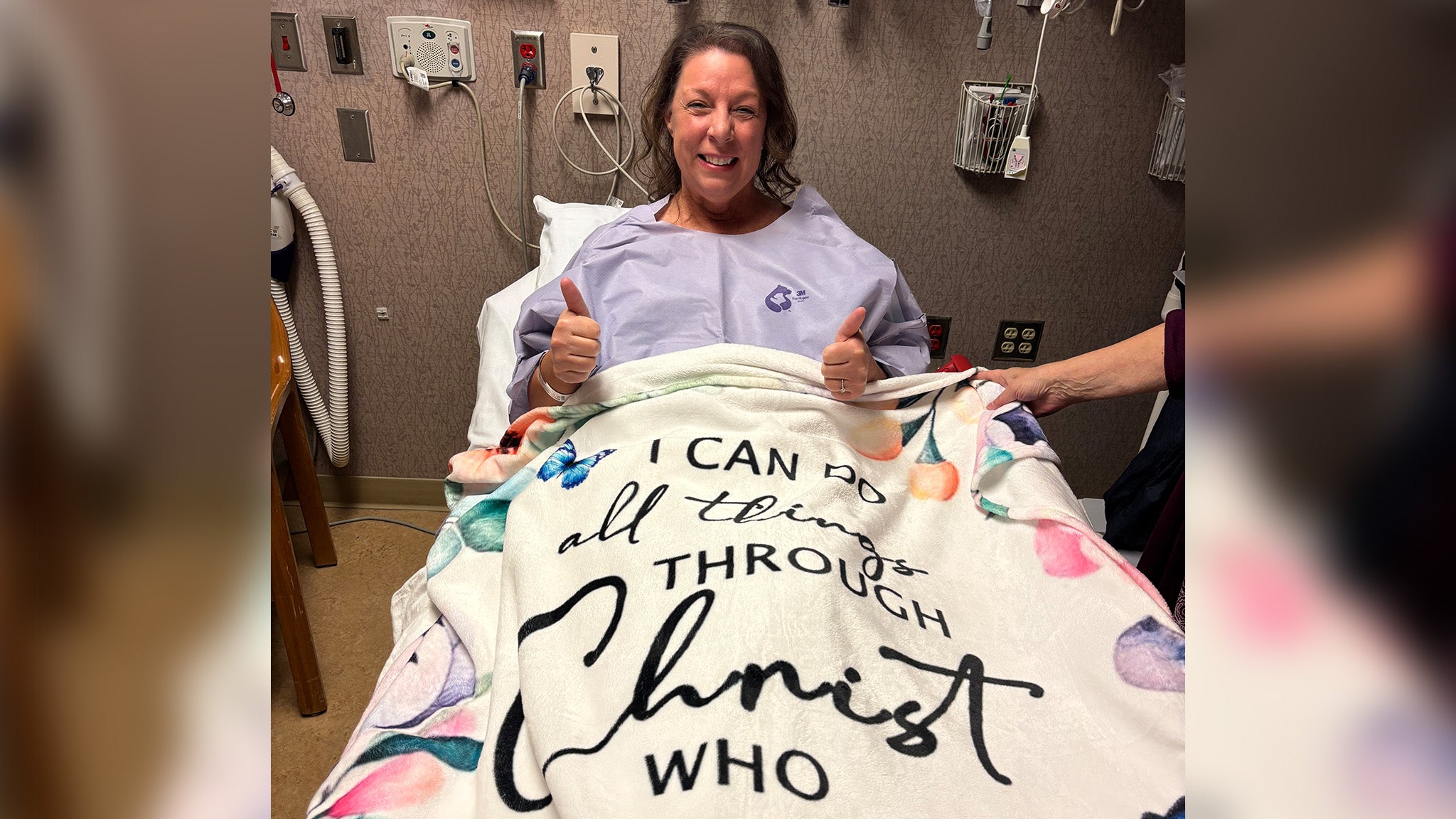
October is Breast Cancer Awareness Month, which is a story that longtime Wisconsin TV news manager Julie Moravchik McAllister has been covering and assigning for years.
A trailblazer in the industry, she’s from the town of Ino and a graduate of the University of Wisconsin-Superior. She created what is now Fox 21 News in the Twin Ports before working in news management in Milwaukee and is now news director of WBAY-TV in Green Bay.
She’s won multiple Emmy awards, but along with that success, she’s faced adversity — none more so than a diagnosis of stage two breast cancer last spring, finding herself experiencing a story she had long been assigning.
News with a little more humanity
WPR’s “Wisconsin Today” newsletter keeps you connected to the state you love without feeling overwhelmed. No paywall. No agenda. No corporate filter.
“Never in a million years could I believe that I would have a mastectomy on Oct. 1, which happened to be my birthday and the first day of Breast Cancer Awareness Month,” she said. “But I’m a believer that everything happens for a reason, and I am very passionate about spreading the word to other women.”
After the surgery, she spoke with WPR’s Robin Washington on “Morning Edition” with an update on her condition and words of advice to all women.
The following interview has been edited for brevity and clarity.
Robin Washington: You had a post on your Facebook page last week saying, “Julie is out of surgery and they were able to remove all the cancer” — with several exclamation marks. “She has six weeks of recovery and infusions every three weeks until April 2026, but no more chemotherapy or radiation. Julie says thank you for all the prayers and that this is truly a miracle from God.” Is there anything to add to that?
Julie Moravchik McAllister: That was the good news, but what I’m learning with a cancer journey is that it’s a long marathon and it can change on a dime.
I’m here at Mayo Clinic again this week. I was very much surprised by some new information from the pathology report, which is that unfortunately I now do have to go through 14 rounds of chemotherapy and radiation. There’s a lymph vascular invasion, which means although the chemotherapy that I already went through did shrink the tumor, it didn’t completely make it disappear and the aggressive tumor was spreading cancer throughout my body.
It’s going to be OK, but now there’s going to be another year of chemotherapy and radiation.
I’m really getting a good awakening of what women go through. I’ve done so many stories, but once you actually walk through it, you learn how hard it is.

One of the most important messages is that support is huge. It can be the smallest thing — like a little message on Facebook or sending a card or bringing a meal over it. It means more to that person than people realize.
RW: How closely do you think women pay attention to self-care and warning signs?
JMM: We’ve done a lot of stories about how men need to get to the doctor more, but what I’m learning after going through this is that women have gotten worse at taking care of ourselves.
We’re so busy juggling with work, kids and activities that we put everyone else first. We’ll cancel our doctor’s appointment or notice something that’s not right but not get to it right away.
Make those appointments, keep those appointments, make it a high priority. And if there’s anything that’s just not right, like when I felt the lump, you must get it checked out.
RW: You had a former colleague at Fox 21 News, Chris Snider, who you were personally involved in getting moved to Mayo when he had cancer. We lost him in 2013. Did that experience inform your own?
JMM: Oh, yes. I loved Chris Snider. He was a wonderful meteorologist and a real joy to work with. And he and everyone that’s ever battled cancer in my life all have been on my mind as I’ve been going through this. The most important thing that Chris inspired in me is just to keep a positive attitude and not think of the worst.
I know that I’m in good hands here at Mayo. One thing that’s really exciting is that they’ve made so many advances just in the last 10 years that they told me 10 years ago, there was no cure for my type of cancer.
I would not have made it.
So I’m so thankful to everyone who has participated in research — the women before me who made it possible for me to live. I have said yes to all the research at ThedaCare in Appleton and at Mayo in Rochester. I will do anything I can do to help the women behind me so that they can live longer in this situation.
If you have an idea about something in northern Wisconsin you think we should talk about on Morning Edition, send it to us at northern@wpr.org.