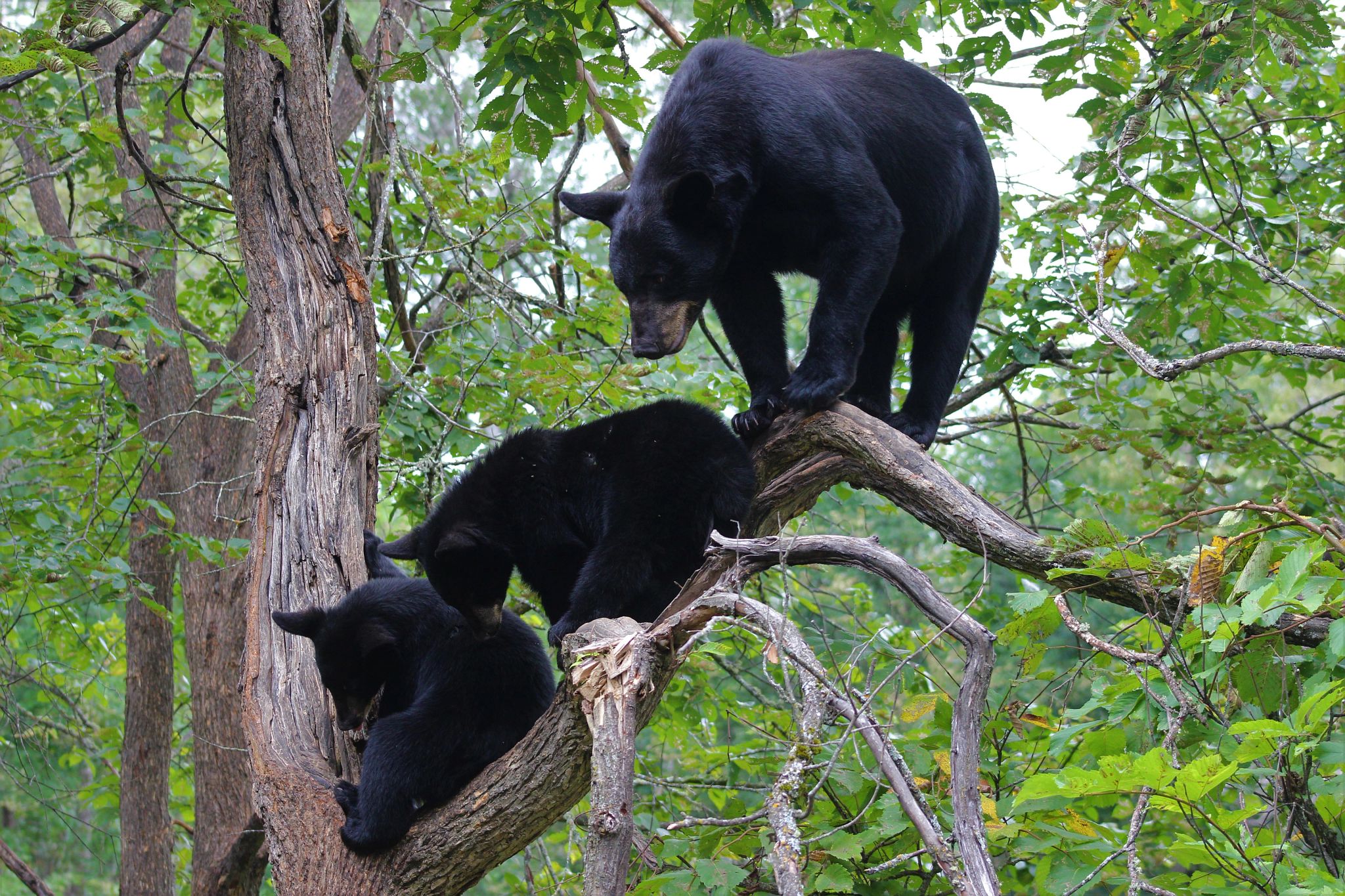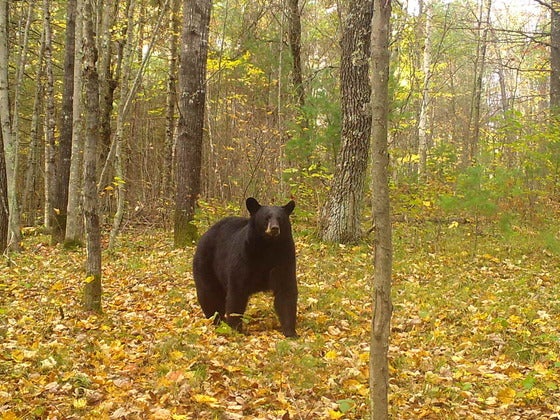
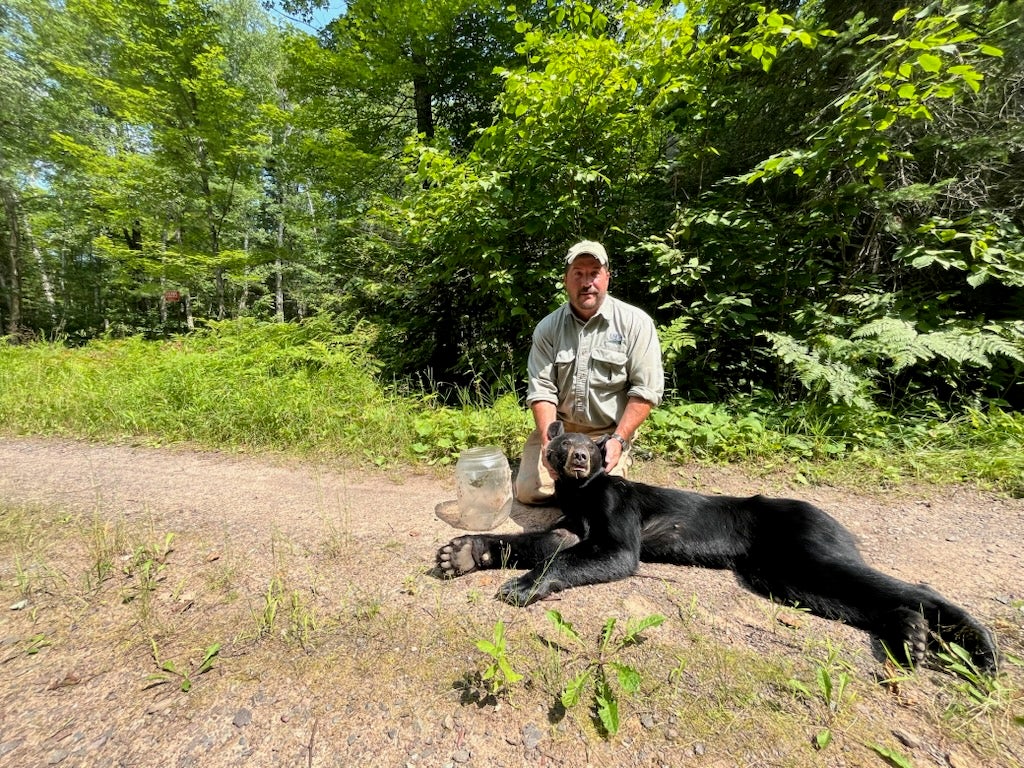
A bear that had been wandering the Northwoods with its head stuck in a plastic jug has been freed.
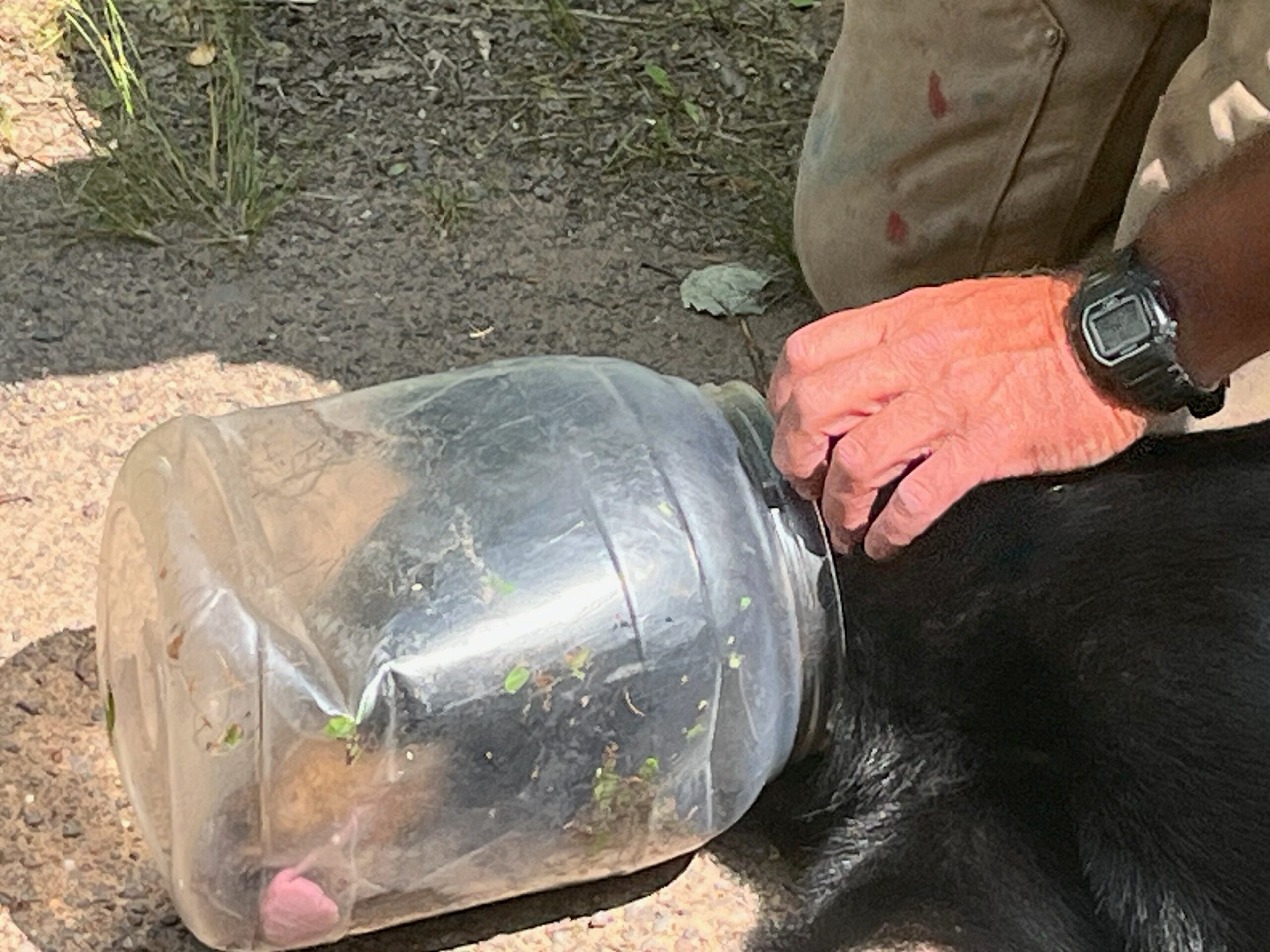
The black bear was first spotted in Bayfield County in late July in what a representative of a local humane association called “a terrible predicament.” Photos posted on social media in a call for help from the community showed the bear with its head stuck deep inside a clear plastic jug, the lip of the jug tight around its neck.
The animal kept wandering as residents of the region reported sightings to the Wisconsin Department of Natural Resources and to the Chequamegon Humane Association in the hope of saving it.
News with a little more humanity
WPR’s “Wisconsin Today” newsletter keeps you connected to the state you love without feeling overwhelmed. No paywall. No agenda. No corporate filter.
Over the course of the search, the bear traveled more than 50 miles and was spotted in three counties, according to the Wisconsin DNR. The agency set up live traps in areas where it was spotted, “but these efforts were ultimately unsuccessful due to the distance the bear was traveling each day,” according to a statement from the DNR.
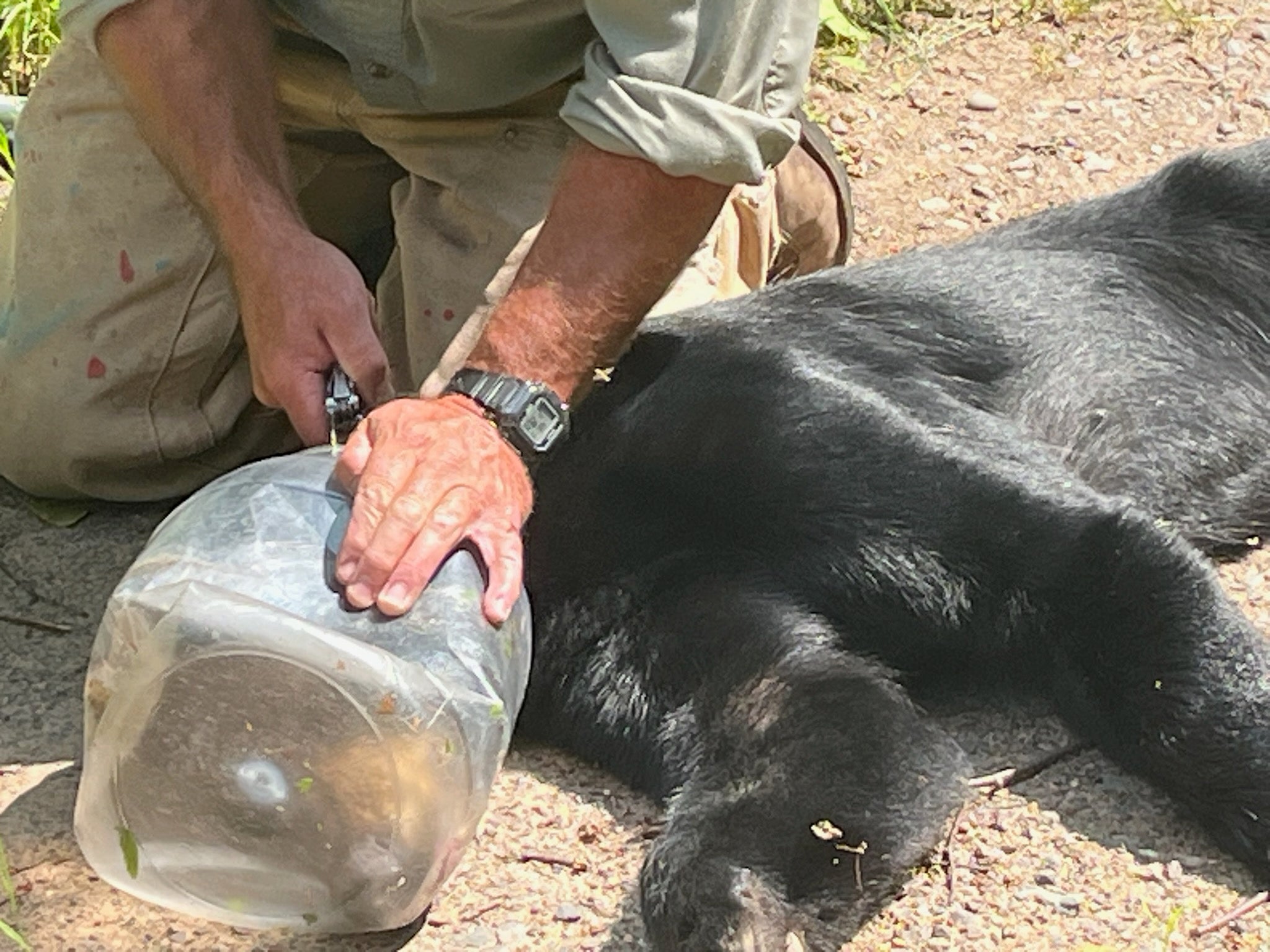
The bear was sighted outside a home near Cable on Sunday. According to the DNR, a “trained wildlife professional” was able to tranquilize the bear using a dart. Staff with the U.S. Department of Agriculture Wildlife Services cut the jug from her head.
The DNR said the 2-year-old female was relocated to a safe wooded area with ample food and water nearby. She weighed 70 pounds when she was rescued, about 30 to 80 pounds below the average weight of bears her age. She had no other injuries.
“We do not know how long the jug was on the bear’s head, but it was a little skinny when captured. There were punctures in the jug – likely from the bear’s claws – and a public observation indicated that it was able to drink by dunking its head in water,” said Randy Johnson, DNR large carnivore specialist, in a statement. “The bear was likely surviving on body fat reserves.”
Those reserves, Johnson noted, “can be significant on bears by midsummer.”
The bear was released with two tags on her ears, which the DNR says is consistent with federal law for wild animals that have been received immobilization drugs.
The DNR statement thanked the public for help in locating the bear, saying “these timely reports” were “critical to the success of this effort.”
As for the bear, the DNR statement said her best chance of survival is in the wild, feeding on naturally occurring food sources, which the agency said are abundant this time of year.
“The bear was alert when released and quickly began feeding on a patch of berries nearby,” the DNR stated.

Wisconsin Public Radio, © Copyright 2026, Board of Regents of the University of Wisconsin System and Wisconsin Educational Communications Board.