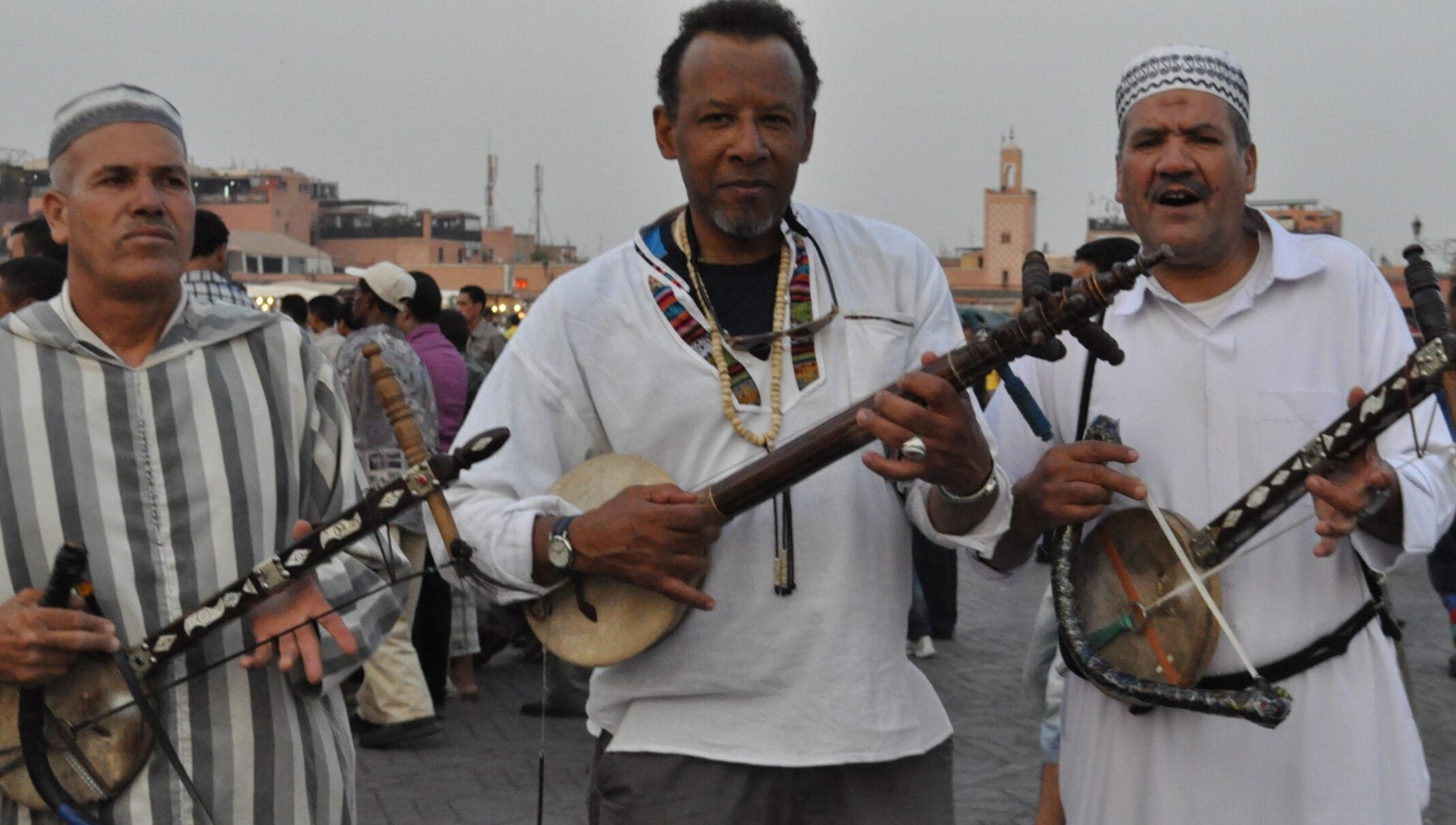
WPR Music asked our hosts what they listen to on their off-time. Dr. Jonathan Øverby, host of world music on “The Road to Higher Ground,” wrote about his experiences listening to and performing “Goin’ Home.”
Written in 1893 during Antonín Dvořák’s stay in the United States, the Largo from his Symphony No. 9 in E Minor, “From the New World,” is among the most deeply soulful movements in all symphonic music. During his tenure as director of New York’s National Conservatory of Music, Dvořák sought to understand what an American sound might be. He found his answer not in the concert halls of the elite, but in the songs of the people — in the spirituals, frontier hymns and folk idioms of a young, diverse nation.
It was Harry T. Burleigh, one of Dvořák’s most gifted students, who sang these spirituals for him — melodies carried from plantation fields to prayer meetings, expressing both the ache of bondage and the hope of deliverance. Burleigh’s voice, steeped in memory and faith, gave Dvořák access to a world of feeling that transcended race and geography. Through those songs, Dvořák discovered a music of both pain and promise — one that he called “the future music of America.”
News with a little more humanity
WPR’s “Wisconsin Today” newsletter keeps you connected to the state you love without feeling overwhelmed. No paywall. No agenda. No corporate filter.
The Largo that emerged from this encounter became a bridge between continents, cultures and hearts. Its main theme, later adapted by William Arms Fisher into the beloved song “Goin’ Home,” speaks of spiritual return — a longing not merely for a physical place, but for peace, belonging and divine embrace.
Later recordings, such as the Czech Philharmonic Orchestra under Václav Neumann, reveal the work’s spiritual depth and timeless humanity.
As a voice student at San Francisco State University, I first encountered Largo and felt something stir deep within me. The music spoke to my own sense of searching — for meaning, for identity, for home. It carried the same blend of melancholy and hope I had heard in the voices of my elders and in the music of the Black church.
Later, as a concert artist, that resonance deepened. I came to hear in Dvořák’s melody not just European longing, but the echo of an American spiritual heart, one that honors both the immigrant and the enslaved, both the exile and the dreamer.
Later in life, I had the good fortune to perform “Goin’ Home” in Spillville, Iowa, a town with a significant Czech community where Dvořák himself once found solace and inspiration. In the audience that day was the composer’s grandson, Antonín Dvořák III — a living bridge to the man whose music continues to unite worlds through compassion and song.
I still resonate with this work because it mirrors my own journey — moving between cultures, seeking harmony between history and hope. The Largo reminds me that home is not only where we come from, but also what we carry within us: the songs, the memories and the courage to keep searching for unity through sound.
I have long valued Harry T. Burleigh’s life and artistry, especially his arrangements of spirituals that gave permanence to melodies once passed from heart to heart, field to field. Were it not for Burleigh’s influence, Dvořák might never have discovered one of America’s earliest and most profound musical languages — a music born of sorrow, shaped by resilience and sung by unknown bards whose faith turned suffering into beauty.
“Goin’ Home” endures because it captures that universal human story — of yearning, transformation and grace — and in it, I hear the sound of every road that leads toward higher ground.