
Psychologist Shilagh Mirgain estimates a majority of her patients feel like they’re not good enough.
That tracks with national and global data, with studies showing 85 percent of people experience low self-esteem, Mirgain said.
But all’s not lost. Because confidence — rather than being something you’re born with — is a skill that can be sharpened.
News with a little more humanity
WPR’s “Wisconsin Today” newsletter keeps you connected to the state you love without feeling overwhelmed. No paywall. No agenda. No corporate filter.
Mirgain, who practices with the University of Wisconsin School of Medicine and Public Health, joined “The Larry Meiller Show” to share tips for overcoming the feelings that cultivate imposter syndrome and low self-esteem.
“Feelings aren’t facts,” she said. “Just because we feel like, ‘Hey, maybe I don’t have what it takes,’ that feeling isn’t … true. And I would say for everyone, we’re much more capable than we even realize.”
The following interview has been edited for clarity and brevity.
Larry Meiller: Let’s talk about some day-to-day strategies you can use to improve your confidence. First, self-talk plays a big role in your confidence.
Shilagh Mirgain: I really want to highlight (that) confidence is a skill we can strengthen. So, one, paying attention to our own inner voice.
I think a lot of us grew up thinking: If I beat myself up, if I criticize myself, I’m going to go farther, further. And we actually find that negative self-talk erodes confidence. It diminishes how we feel about ourselves. So, I think, No. 1 is be kind to yourself.
You can think about somebody you care about who’s struggling, how you might talk to him or her. You can think about somebody who cares about you, what they might say to you. So having some grace for foibles, failures, mistakes — think about (how) there may be something to learn from that of what you do differently or what you need to work on. But focus on being kind and then what is possible.
LM: I was thinking about my golf game. There’s a couple of places on particular golf courses where I’ve done really well. I hit a great shot, and I try to channel that when I’m at other spots where I haven’t had that good of luck.
SM: Larry, you’re using a second technique that’s powerful, which is what I call the “flick back, flick forward.”
We’ve all had that — a time where you did well, or even turned out better than expected. You had something go wrong, but you resolved it. So you can flick back in time, remember it, relive it with some visualization, re-experience it, almost like virtual reality, and then come into the moment. So you flick forward, seeing yourself having a similar, if not better, outcome.
What’s powerful about that is we trust our past experiences more than that negative self-talk in the moment.
So if you find you’re really getting ruminative, you’re beating yourself up, do that: Flick back to a time that went well or turned up better than expected, and then flick forward, seeing yourself having a similar, if not better outcome.
I encourage whenever something does go well, add it to that highlights reel — kind of re-experience it, remember and say, OK, that’s my personal highlights reel I can carry forward.
LM: One of your suggestions is to speak up and use your voice. Talk about that.
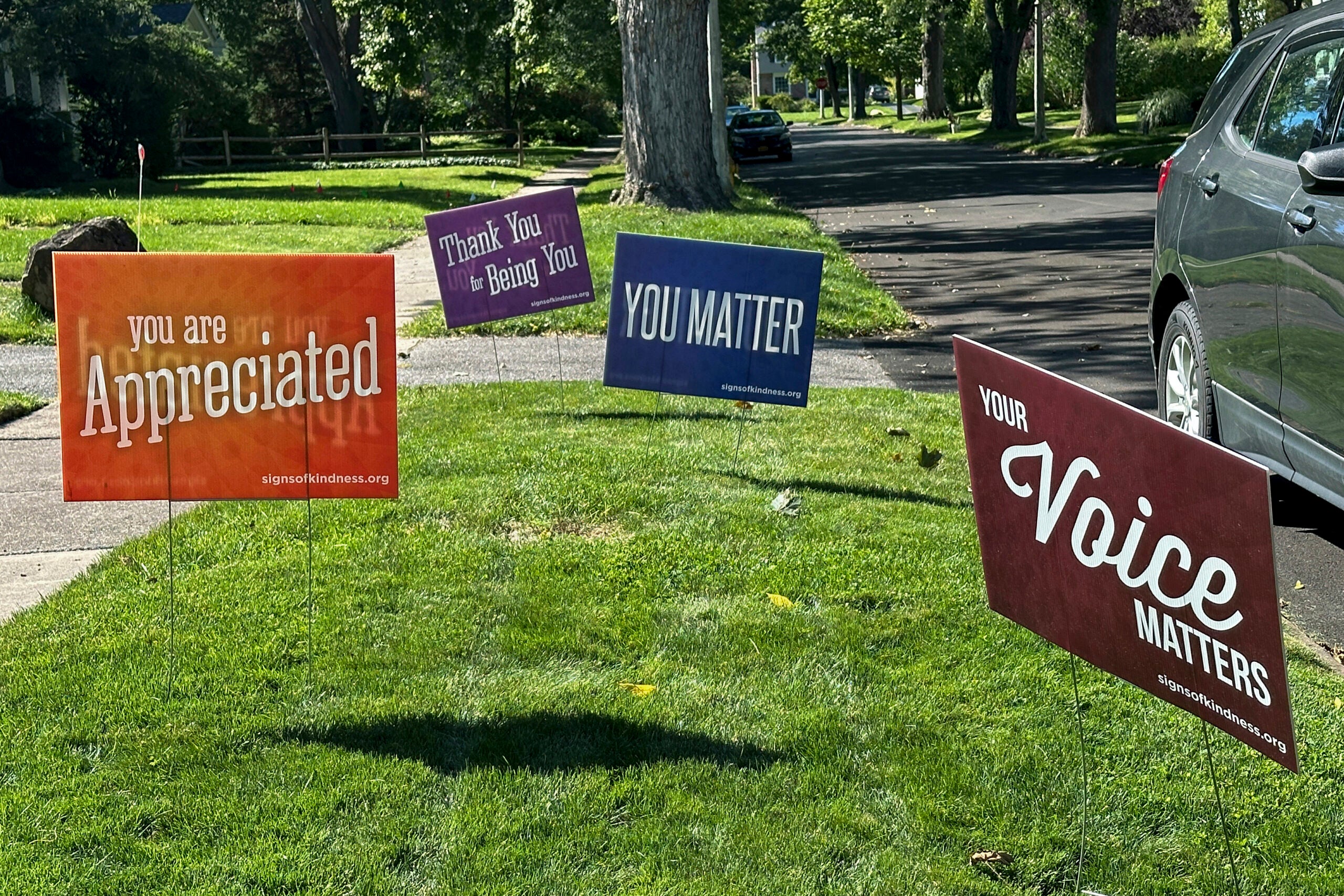
SM: Sometimes we can keep ourselves small by not participating, becoming invisible. By actually using your voice, saying something, participating, speaking up — that is really important.
I think of studies that show in a meeting that has both men and women, women are much like much less likely to say something until one woman participates. When one woman participates, other women will start to participate.
So be that person who participates, finding ways to make your voice heard — even if you’re nervous, even if your voice is quivering. Our voices are a way of expressing ourselves.
Even just trying to say one thing — for example, if you’re in the workplace — goes a long way. Because we find in the workplace, people get promoted, not necessarily because of how well they’re doing, but because they’re advocating for themselves. They’re pitching their ideas, they’re asking for the raise.
We don’t become confident by just sitting on our hands. It’s by using our voice and taking action.
LM: We can’t get away without talking about the power pose. Why is that a good strategy to feel more confident? And what is it?
SM: Amy Cuddy has a great TED talk on this. And in the follow-up research, people haven’t necessarily replicated her findings, but I still like to talk about it. It’s called the Superman or superhero pose.
I actually personally do it before public speaking and have a lot of my athletes do it before a race. It’s simply standing up, having your feet apart and then creating some space.
I usually put my hands on my hips while I’m standing and my feet are hip-distance apart. Even in a meeting when you’re sitting, you can think about maybe putting your arms behind your head. Men tend to do this more than women. Or just creating some space in your body.
Take up physical space. The research with Amy Cuddy said people did that for two minutes, and then when they came in for a mock job interview, they were rated as having more presence. They were more likely to get hired in this mock job interview than people who didn’t do the power pose.

Wisconsin Public Radio, © Copyright 2026, Board of Regents of the University of Wisconsin System and Wisconsin Educational Communications Board.