
Maybe you’ve had this experience: Something small happens … and it triggers a bigger emotional response than you expected. You’re stuck in traffic and get angry, maybe even yell a little.
Afterward, you wonder, “Why was I so upset about that?”
Wisconsin psychologist Ryan Martin has been studying emotions for years. And he says there’s good news: We have more control over our emotions than we might think.
News with a little more humanity
WPR’s “Wisconsin Today” newsletter keeps you connected to the state you love without feeling overwhelmed. No paywall. No agenda. No corporate filter.
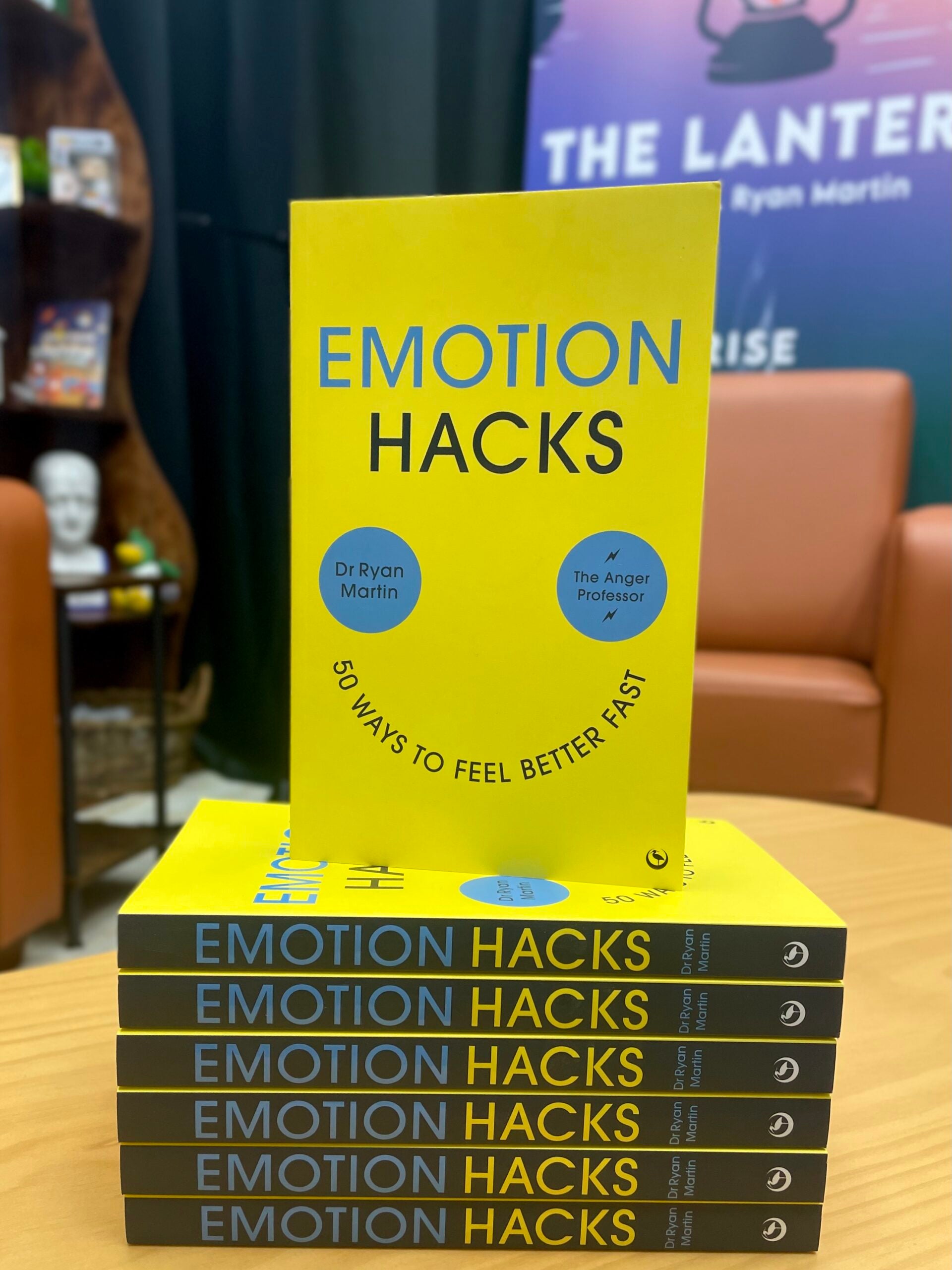
Martin, a psychology professor and dean of the College of Arts, Humanities & Social Sciences at the University of Wisconsin-Green Bay, is known as “The Anger Professor.” In his new book, he offers advice on dealing with a wide range of human emotions. It’s called “Emotion Hacks: 50 Ways to Feel Better Fast.”
He told WPR’s “Wisconsin Today” that he wanted to offer practical techniques to help people deal with emotional situations.
“There’s lots of things we can do,” Martin said, “big things and small things that can have a really profound impact on our emotional life.”
How emotions work
Martin breaks an emotional reaction down into a series of steps. “What I want people to understand,” he said, “is that there are different interventions at each and every one of those points.”
Stimulus: “Maybe you get stuck in traffic or maybe you see a scary movie, or maybe you lose something that you care about.”
Mood: “Are we hungry? Are we tired? Are we stressed?”
Interpretation: “How do we appraise, how do we make sense of it?”
Emotional feeling: “Sadness, anger, fear, guilt, jealousy, happiness, surprise, whatever.”
Expression: “How we express it, what we do with it.”
Drink water
What’s a really simple way to help with our emotions? Stay hydrated and take care of physical well-being.
“There’s plenty of research out there that says even mild dehydration impacts your mood,” Martin said. “Taking good care of yourself by eating well, by prioritizing sleep, exercising, staying hydrated, being careful about what you drink, can really influence your mood in a positive way.”
When small things trigger big emotions
What do we do when we have that big emotional response — we’re running late and stuck in traffic, or we spill water on ourselves?
“First of all,” Martin said, “whenever you experience something, there’s going to be a moment where you’re maybe a little bit irrational and that’s OK.”
But then, we can think it through. “What are the consequences here, in the case of the glass of water? ‘Hey, I got to grab a towel and clean this up,’ right? If I’m stuck in traffic, I can think, ‘OK, how long is this delay actually going to be and what consequence is that going to have on my broader day? And can I solve that problem over time?’”
Martin said we can turn that type of thinking into a habit, “and you’ll cut down that irrationality moment considerably.”
When big things happen
Not all emotions are responses to small things. What can we do when we’re dealing with something bigger — a break-up or losing a job, for example?
Martin says it’s important to acknowledge these understandably more serious emotions.
“Suppression or denying your feelings is also going to be a problem,” Martin said. “Part of managing your emotions is having that realistic understanding of how bad something is.”
A first step Martin outlines in his book is to practice “active acceptance” instead of “passive acceptance.” In the example of job loss, he writes that passive acceptance might sound like, “This is terrible and I’ll probably never find as good a job again.” Active acceptance would acknowledge the negative emotion, but look ahead: “This is terrible, but I’m going to focus on what’s next for me.”
Another strategy involves taking a moment to think of the problem as happening to someone else.
“Imagine how this story might be from another person’s perspective,” he said. “Especially when you’re feeling pretty intensely, trying to distance yourself from the situation can offer you some really important perspective.”