Irish music sessions regularly pop up in pubs and restaurants across Wisconsin. These are generally informal gatherings, where tin whistlers, fiddlers and accordionists play traditional Irish tunes. Writer Nancy Jorgensen of Waukesha tells us more about her growing love of these sessions in this “Wisconsin Life” essay.
==
On a Tuesday evening, I yank open the backdoor to House of Guinness —Waukesha, Wisconsin’s popular Irish pub. I allow my eyes to adjust, and notice the quiet. That won’t last long.
News with a little more humanity
WPR’s “Wisconsin Today” newsletter keeps you connected to the state you love without feeling overwhelmed. No paywall. No agenda. No corporate filter.
The narrow space, with its elongated bar top, reminds me of a New York City pub. A few regulars perch at the rail, facing the bartender who lifts a hand as I walk in. Next to expansive, streetside windows, I choose a chair and unpack my gear: an iPad for reading music, a melodica for playing and money for a stout.
I’ve only participated in this Irish session a few times, so I probably won’t know the songs. My instrument is unconventional. And I don’t usually drink while performing. I wonder how this evening will go.
The medley of musicians changes week to week. Some new faces peer curiously at my instrument: What is that? they say.
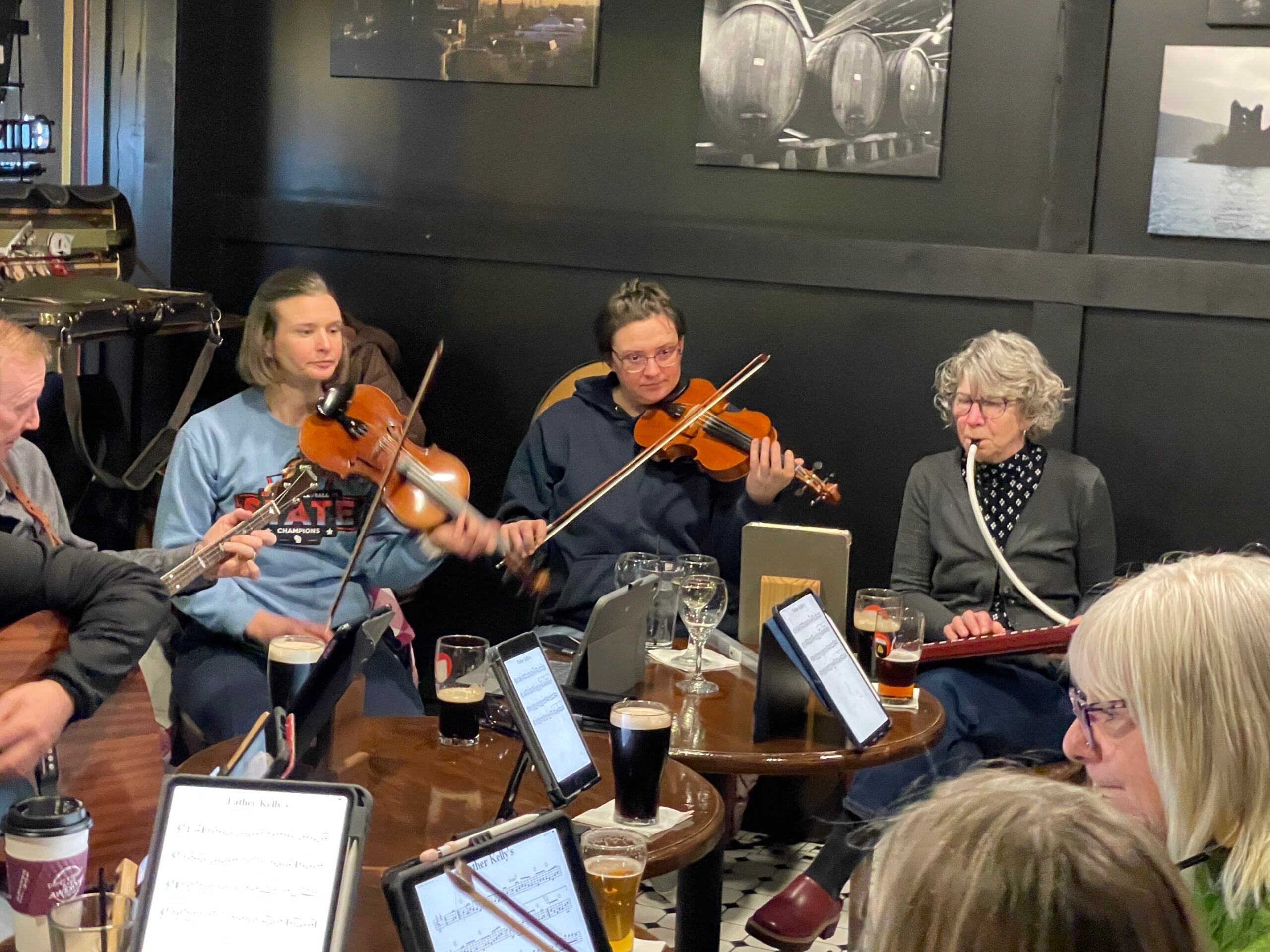
I lift my 1 ½-pound melodica to show 37 black and white keys. I blow through its plastic tube and press one of the keys, allowing my breath to activate a reed. Ta-da! Sound!
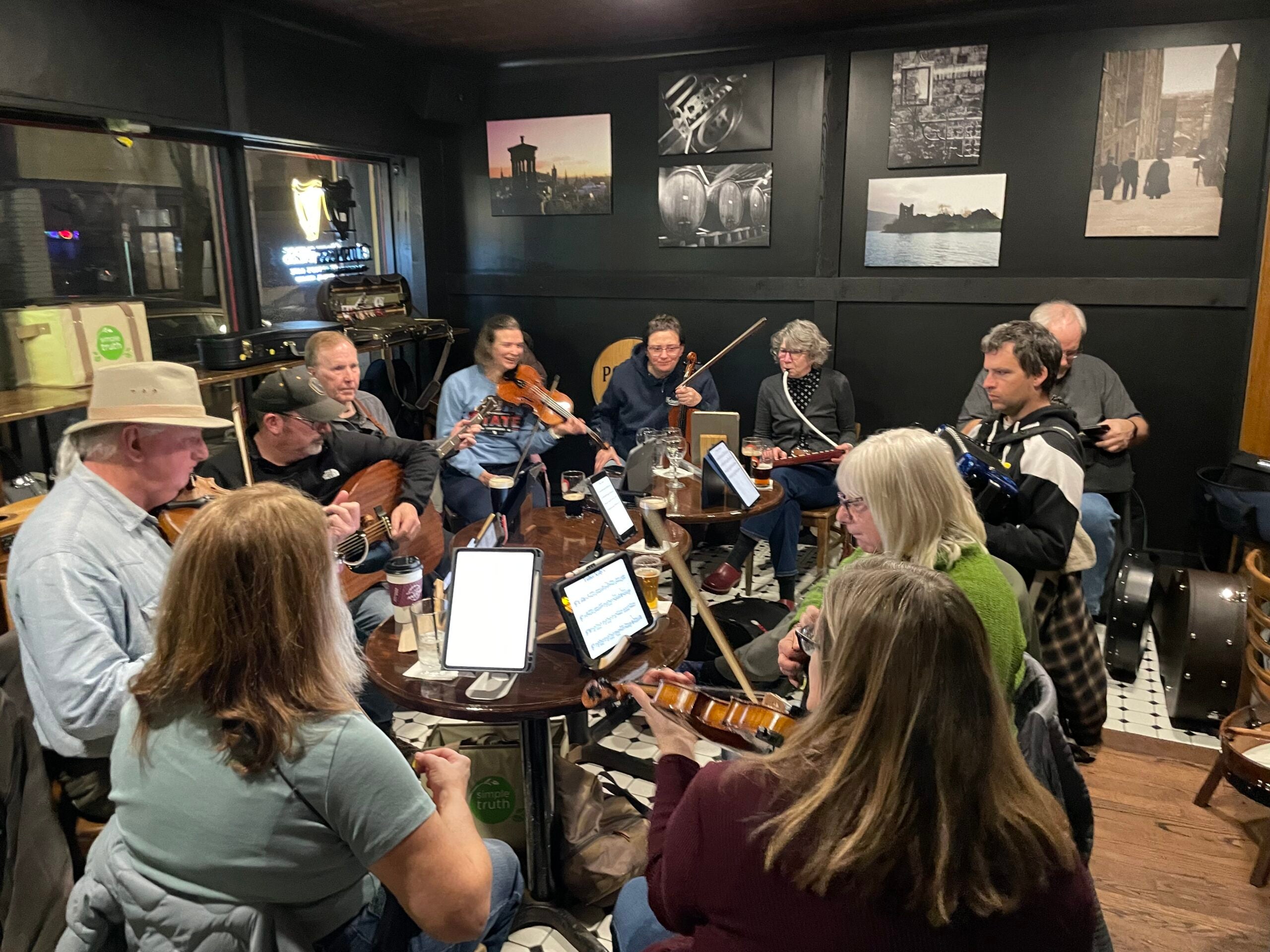
Before I can explain more, Patrick, the leader, launches into a tune and the musicians jump in: violins scratching, mandolins plucking, and a button box squeezing, all on melody. Guitarists play chords and a percussionist beats the bodhrán — an Irish hand drum.
The tempo is quick; my fingers stumble, and I miss some notes. But when my notes are correct, the melodica blends with the strings and sounds similar to the button box. My daughter, Elizabeth, and her friend, both violinists, are also new to this group and miss a few sharps and flats. But they quickly master the key signature as their fingers dance across their strings.
The music score, controlled by Patrick, appears automatically on my iPad. True Irish sessions don’t use printed notes but rely on an aural tradition: players learn by ear and remember the tunes. I’m grateful we use a score because I don’t memorize easily.
Typically, the first run-through of a tune is rocky. But we repeat each song multiple times, and by the third round, our ensemble is clean and confident.
Some of my daughter’s friends sit at the bar, and when we play a jig, they clap and hoot, and soon others do the same. A little girl wanders close to me and dances. A few patrons record iPhone videos. Meanwhile, I lose myself in the music, surfing scales and arpeggios, riding the musical wave as it dips and crests.
For three hours, we play. There are no breaks. Additional players wander in and the circle grows to three-deep.
Throughout the night, I field melodica questions: Do you get winded? It’s more like breathing than blowing, I say. Does it drip? There’s a moisture vent on the side — my leg gets damp. How many octaves can you play? Three.
As the clock nears 9 p.m., Patrick seems to choose familiar songs — the musicians play every note right, guitars lock into a groove, and out of nowhere, the men sing along on select phrases.
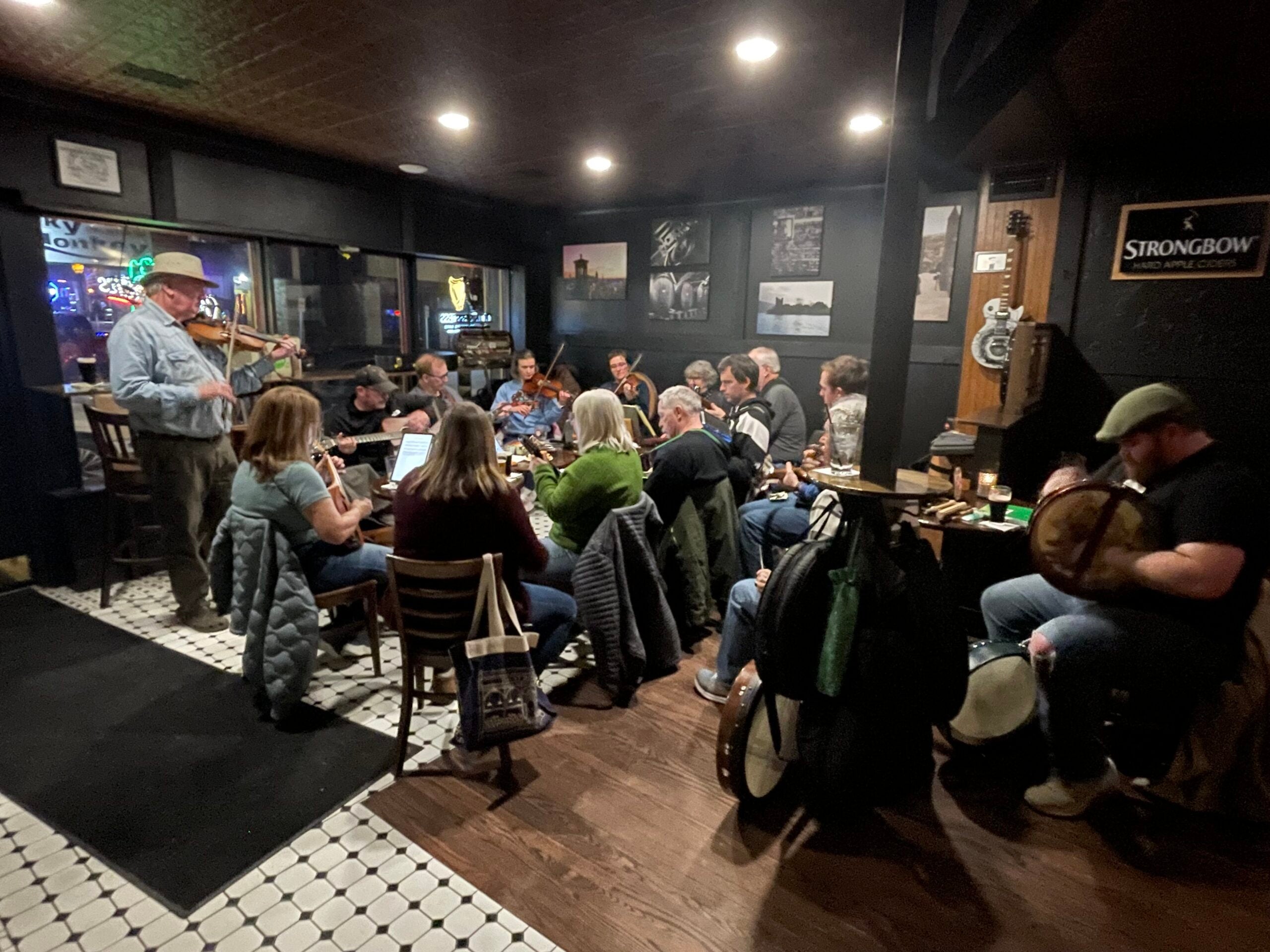
But my neck is stiff, my legs need to walk and my brain begs for a break. As I start to pack up, others settle in. I’ve heard they shift from Irish to old-time or folk and stay another few hours.
This weekly group offered me a warm Wisconsin welcome. They accepted my unconventional melodica and tolerated my shallow knowledge of Irish music. Despite the Guinness, I played mostly right notes. And I enjoyed the camaraderie of a group instead of practicing at home alone.
As I tip my pint to catch the last drop, Patrick grins. See you next week?
The din diminishes as the group dwindles. I deposit my glass on the bar top, meander to the back, and yank open the door. The sky is dark. I notice the quiet.

“Wisconsin Life” is a co-production of Wisconsin Public Radio and PBS Wisconsin. The project celebrates what makes the state unique through the diverse stories of its people, places, history and culture.