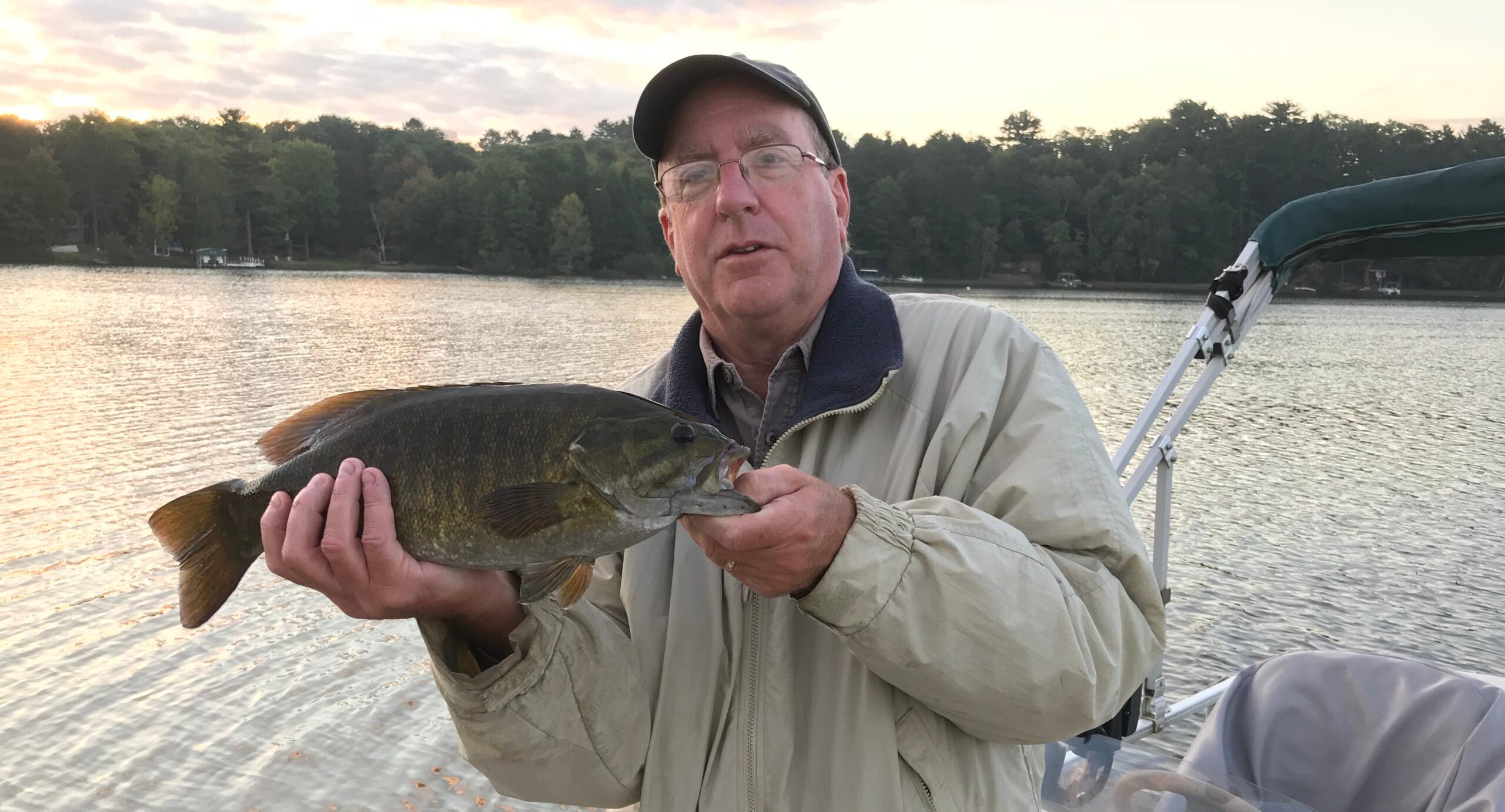
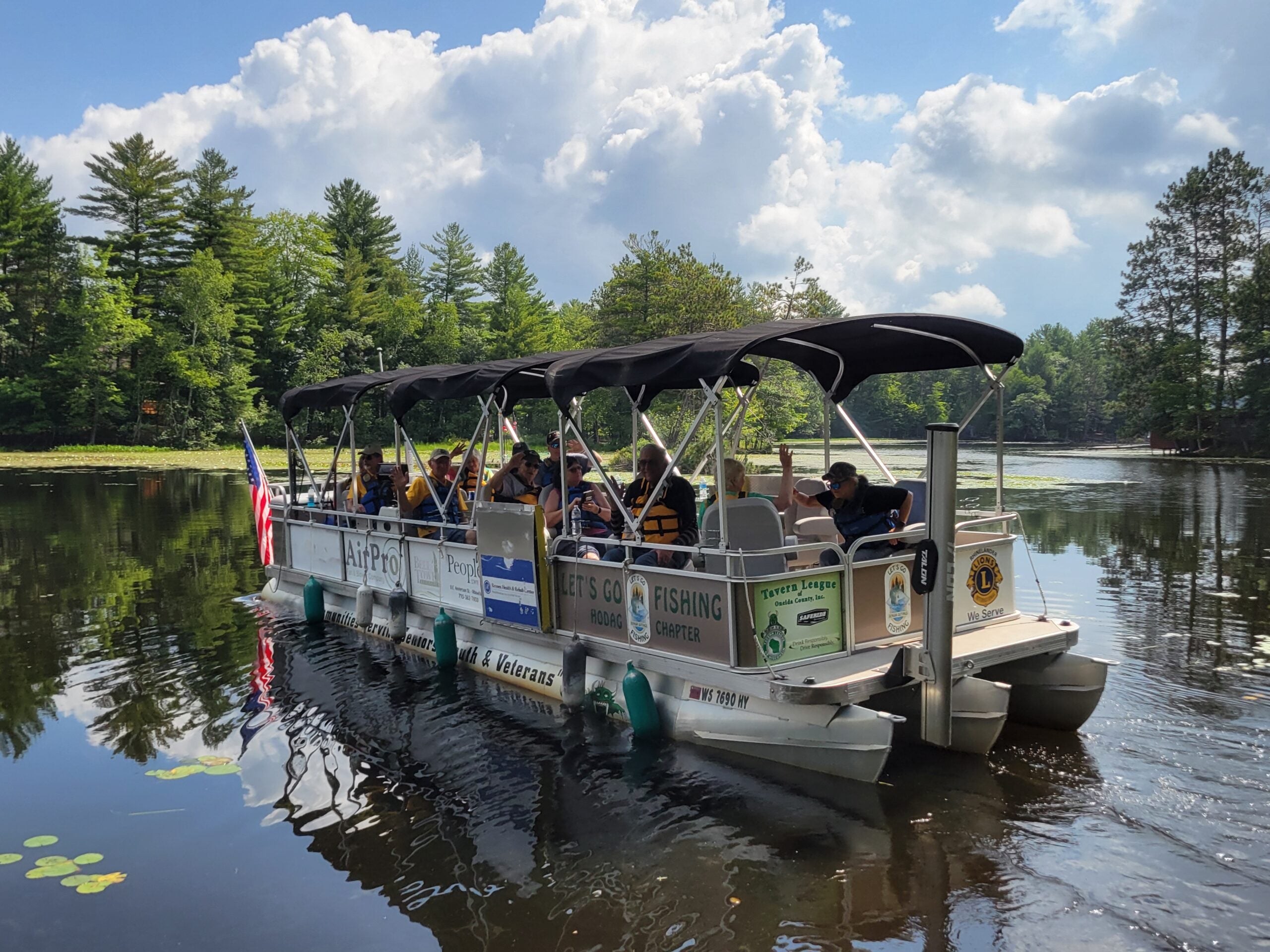
A nonprofit dedicated to getting seniors, veterans and people with disabilities out on the water is expanding to central Wisconsin, with a new chapter of Let’s Go Fishing set to launch in Wausau.
The group, which began in 2002 in Minnesota, uses specially equipped pontoon boats to bring people who may not otherwise have access to outdoor recreation onto area lakes and rivers. Sometimes, passengers fish; other times, they simply enjoy the experience of being on the water.
But the trips are about more than recreation. In a conversation on WPR’s “Morning Edition,” Let’s Go Fishing Chairman Joe Oprosko said time on the water can ease loneliness, spark memories, and bring joy to people who may otherwise feel isolated.
News with a little more humanity
WPR’s “Wisconsin Today” newsletter keeps you connected to the state you love without feeling overwhelmed. No paywall. No agenda. No corporate filter.
Oprosko said volunteers see remarkable transformations in their guests during outings, especially among people struggling with depression, disability or grief. In one case, a woman who had stopped speaking altogether began talking again after catching a fish and engaging with the boat’s crew.
For volunteers, the rewards are just as powerful. Oprosko said he leaves each trip feeling uplifted by the smiles of participants and the sense of connection the outings create.
“I take away all the smiles. I feel better after our trips,” he said. “What I get out of it is that no matter how bad my day is, it’s always better when I come off that boat. I just forget about everything that’s going on and I see that life isn’t so bad. When you come off that boat you feel better about yourself, for giving back.”
Rhinelander was the first Wisconsin city to start a chapter, and the organization has since grown to serve multiple communities in the Upper Midwest. The group expects to have boats on the water in Wausau by spring. Outings are free to participants.
The following interview was edited for brevity and clarity.
Shereen Siewert: What does loneliness look like in the lives of people you bring on the boat, and how does time on the water change that?
Joe Oprosko: The best example I can give you is what happened during COVID-19. Like the rest of the world, we had to stop doing our trips that summer. We went around to visit some of the homes of our guests just to say hello and show that we were still there. So many of them had pictures that we had provided from their trips. That hit a note with us, realizing how important those trips were to them.
For many of our guests, getting outside means looking out the window most of the time. Now, we make it possible for them to get out even using walkers or wheelchairs. They can mix with other people. We’re also trying to bring youth on as helpers on the boats to give some of that intergenerational connection that I think the world is missing these days.
SS: How do you explain the sense of hope or healing that happens on the water, especially for veterans or seniors who might be carrying a heavy burden?
JO: One of our guys, Steve, has a great story.
He had a woman on the boat who really struggled to get off the bus and on the water. She didn’t even really want to go. She was quiet, sat in the back, but Steve worked with her, and the mates were helping her.
Then, she caught a fish and got excited and finally smiled. About halfway through the trip, she started talking more. She talked about what a great day it was and said how much she enjoyed it.
After she left, her caregiver came back to talk to Steve and told him that this was the first time in seven months that her caregivers had heard her speak. She had just stopped talking in general and it was this experience that pulled her out of that.
SS: When you take someone on the water for the very first time, what’s the reaction like?
JO: We hear a lot of stories from the past. Almost every time we hear that our guests grew up on a lake, or fishing at a cabin but hadn’t been on the water for years. The memories just flood in.
I think that’s the reaction because in Minnesota and Wisconsin the lakes mean so much to us. The water is so nurturing and is nature’s way of healing us.
And when the memories come, the younger generation volunteers who are helping us put their phones down and listen. Those memories are what’s key.
SS: What moved you to personally get involved in this?
JO: Part of it is that I’m a perpetual volunteer. And I’ve always loved fishing. I was out on a lake in Eden Prairie, and I kept seeing this boat on the water.
One day I stopped and asked what was going on with that boat, and when I heard the stories, I thought to myself that it sounded pretty great.
I was at a point in my life where I wanted to pay it back a little bit more. My kids were in their early 20s, and I wanted them to see that as you get older you realize that when you’ve been blessed and have had a good life, it’s time to help others who may not have had that same experience, or are struggling.
It was the right timing and the right opportunity.
If you have an idea about something in central Wisconsin you think we should talk about on “Morning Edition,” send it to us at central@wpr.org.