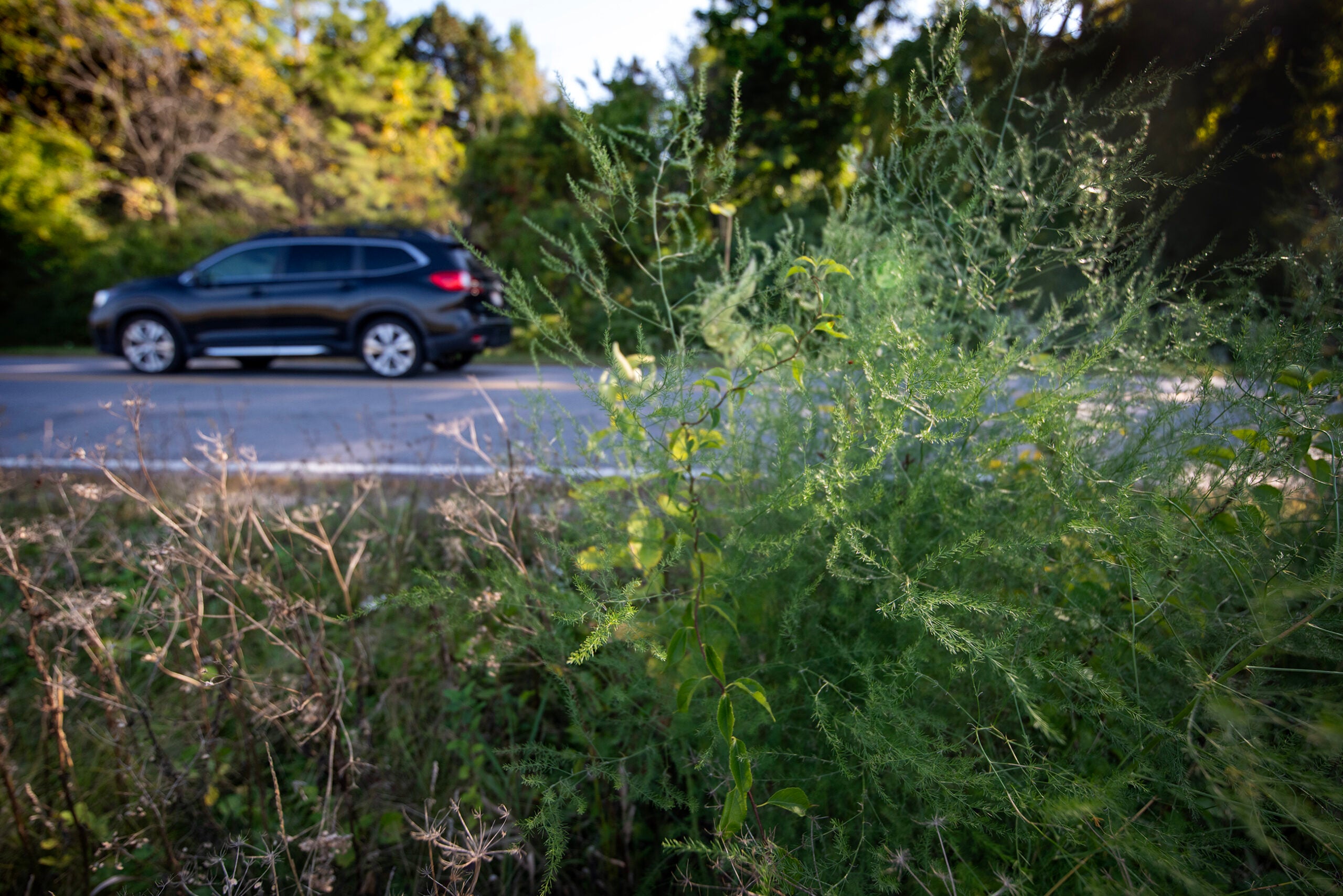
When you’re driving through Wisconsin, you might pass the time by trying to spot out-of-state license plates or unusual billboards.
Some Wisconsinites, however, are on the lookout for wild veggies — specifically, asparagus.
That includes 71-year-old Ann Meyer Schmidt. The Wautoma resident reached out to WHYsconsin to ask: Why is there so much asparagus growing along the roadsides in central Wisconsin?
News with a little more humanity
WPR’s “Wisconsin Today” newsletter keeps you connected to the state you love without feeling overwhelmed. No paywall. No agenda. No corporate filter.
It’s something that Schmidt has wondered about, ever since she was a kid taking road trips from her childhood home in the Waupun area.
To get to the root of that mystery, I hopped in the car with Mark Renz, a University of Wisconsin-Madison professor who specializes in plants and weeds with the Department of Plant and Agroecosystem Sciences.
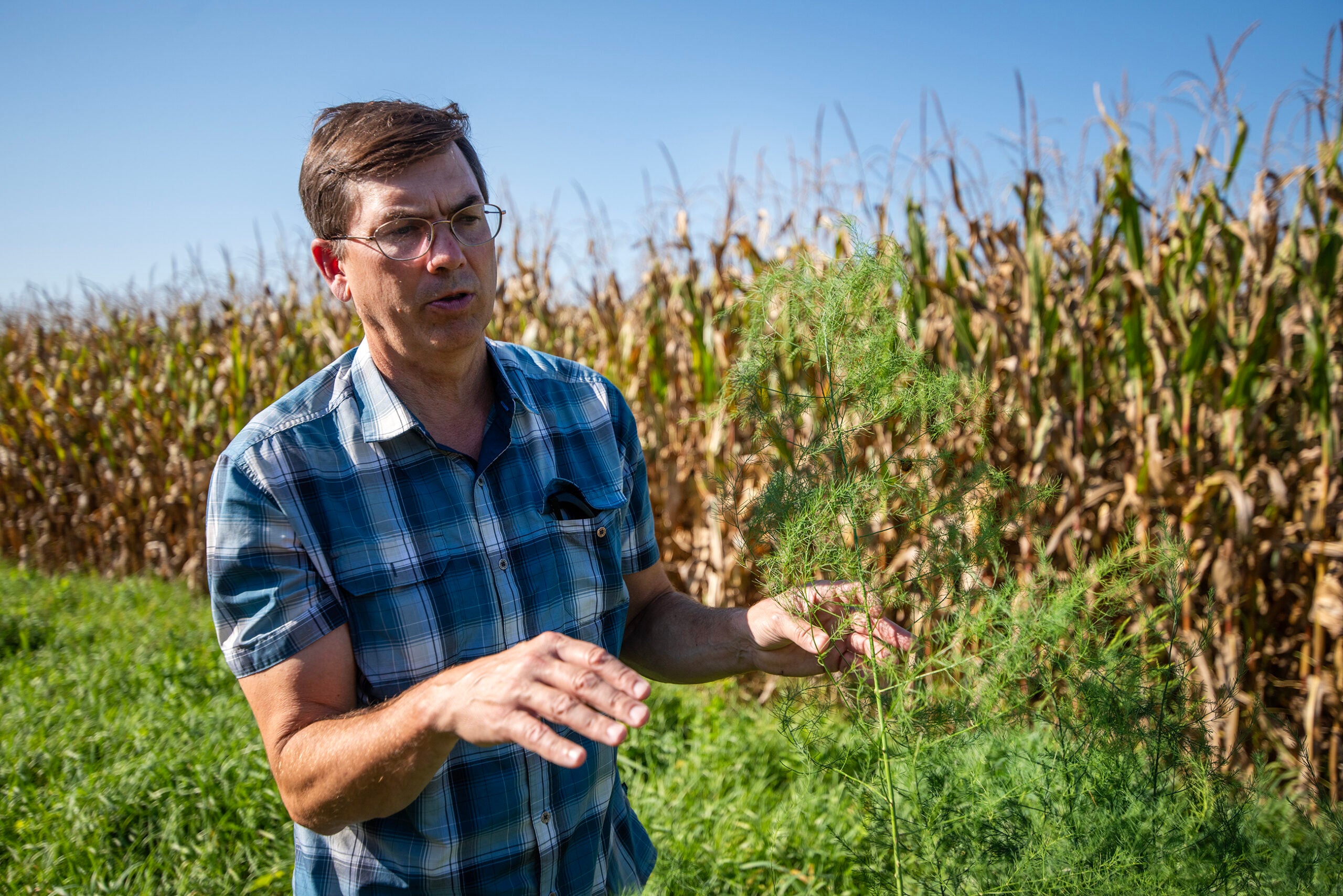
We pull over at the side of a quiet street just south of Madison, and Renz points out a green plant. It’s late September, which means the asparagus has started to flower. It’s nearly 4 feet tall with wispy-looking fronds.
To me, it looks a like lot dill.
“It’s quite distinctive,” Renz said. “That’s one of the reasons why it’s so easy to spot, because it looks so unique.”
Now, back to the question: Why is there so much roadside asparagus in central Wisconsin?
First, the phenomenon isn’t unique to central Wisconsin. Renz says there’s wild asparagus throughout the state and beyond.
“You could go to New York, Pennsylvania, Indiana, Illinois and you would see the same thing,” he said.
It’s a story that goes back decades to the farmers who planted the crop. Many of those homesteads are long gone, but the asparagus keeps growing.
“We took over old farmhouses and converted their gardens into the edge of the road,” Renz explained.
Asparagus is a perennial with long roots. Those roots allow the plant to come back year after year.
“Every 10 to 15 years, they redo the road. When they do that, they move the dirt and the soil,” Renz said. “That can sometimes break up those perennial parts into multiple parts and spread them a little bit.”
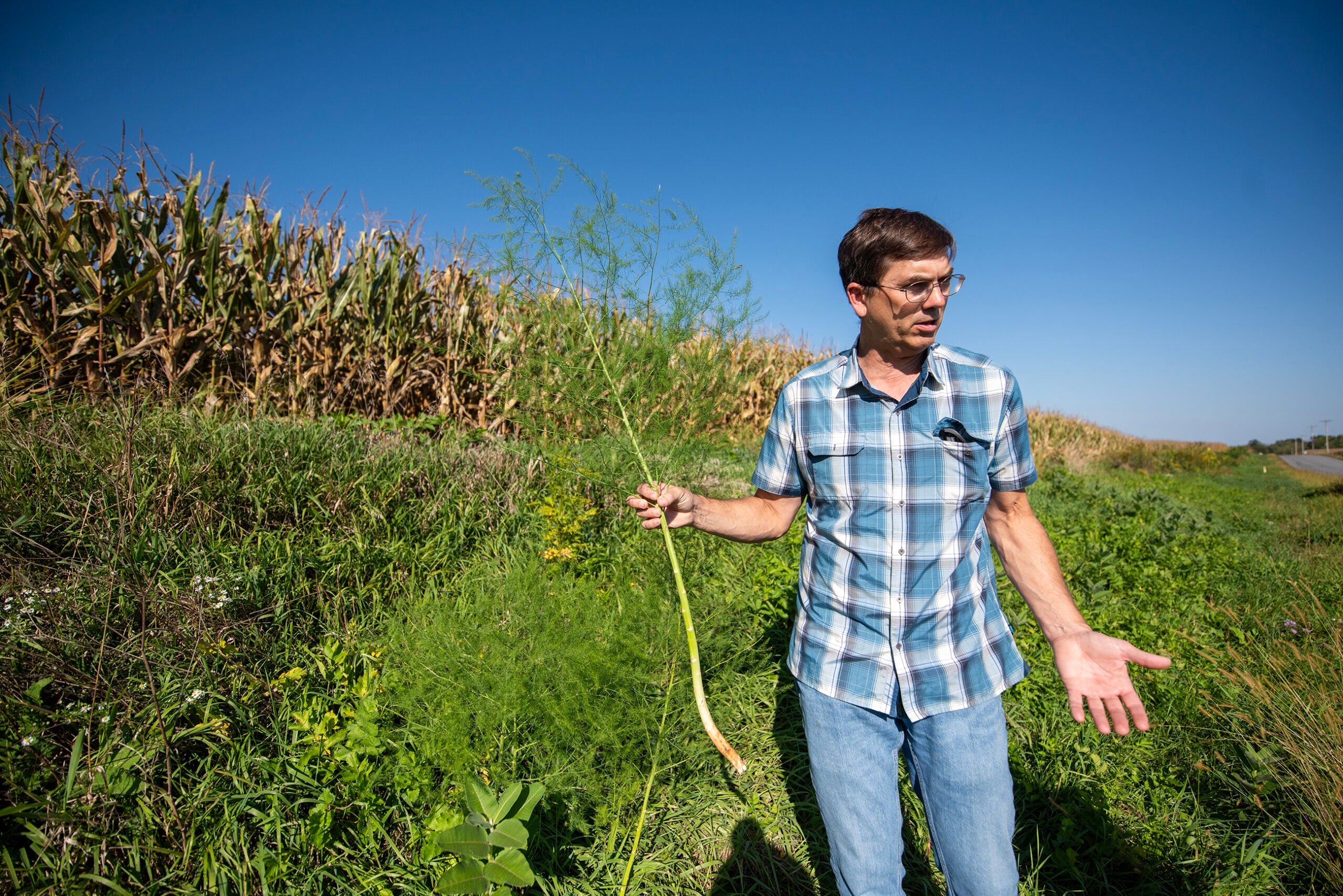
The veggies are ready to harvest in the spring, when the tasty spears begin poking a few inches out of the soil.
But the best time to scope out wild asparagus is in the fall, when the plant goes to seed and grows several feet tall.
By the time frost hits in mid-October, some asparagus turns from green to yellow, making it even easier to spot.
For Dennis Glover, spotting asparagus is a skill he honed in childhood. Now a La Crosse resident, Glover loves to forage in his spare time.
During trips to visit his grandparents near DeForest, Glover remembers his mom jumping out of the car to scoop up the vegetable.
“It always seemed like she was just a magician,” Glover remembered. “That she could see it — the first spears pop up in the spring.”
Glover often finds asparagus growing near fences or telephone lines. He says that’s because those are the places where birds like to sit.
“The birds will eat the seeds and then poop them out, basically into the ditch lines near old farms,” he said.
After washing the vegetable well, Renz likes to snack on his foraged asparagus that’s been grilled with salt and pepper. He recommends keeping asparagus fresh in the fridge by sealing inside a bag with the stalks wrapped in a damp paper towel.
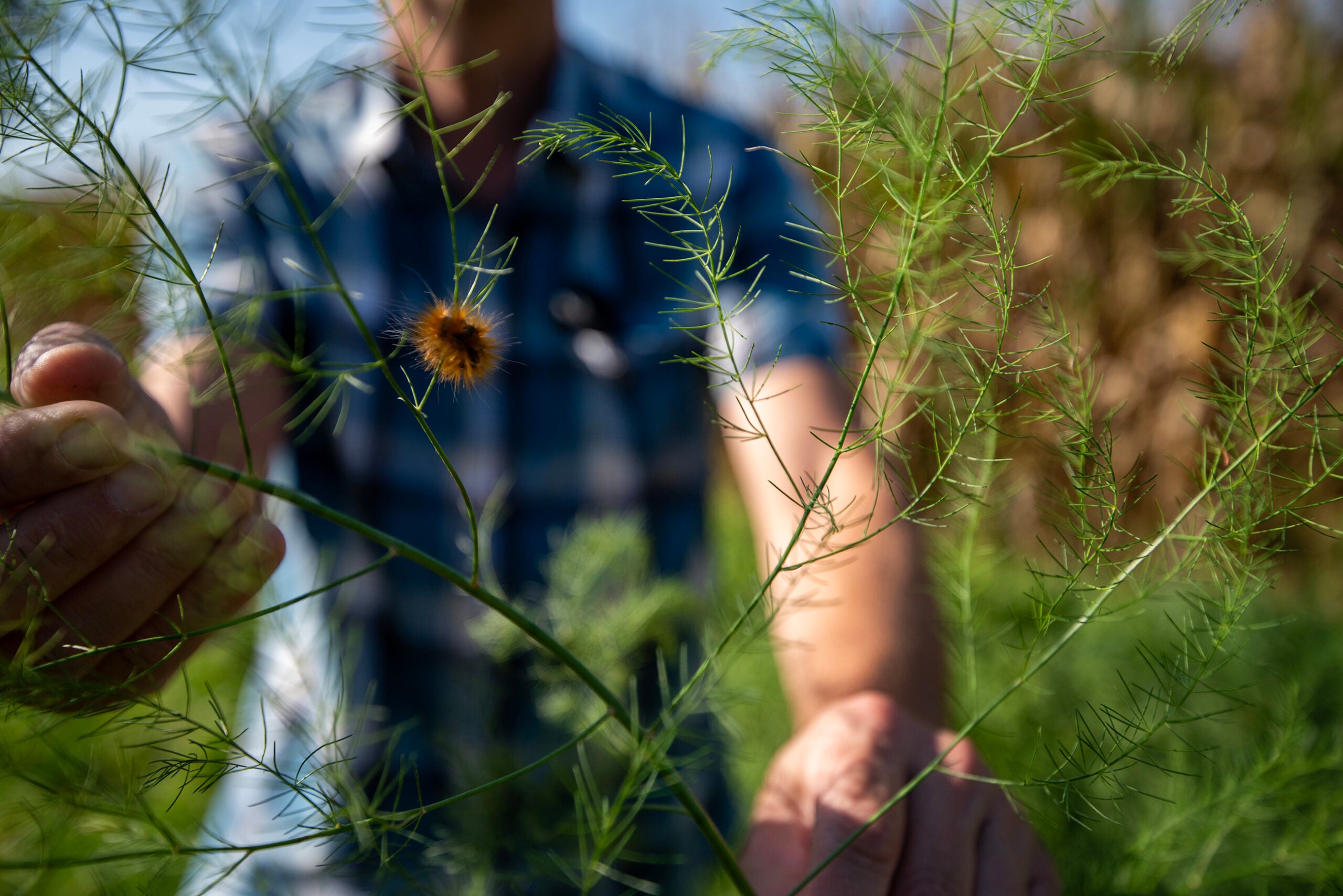
If you do eat wild asparagus, Renz, the UW professor, suggests being mindful of where you’re getting it from.
He cautioned against foraging alongside busy streets. Along with other pollutants, Renz warned that some roadsides are sprayed with herbicide to control weeds.
“We have stuff coming and washing off the roads, which could be oil,” Renz said. “We can have asbestos from brakes getting on here, and so we could be ingesting that.”
Asparagus flourishes in fields and prairies throughout Wisconsin — not just near roads, Renz noted. But we might associate the plant with roadsides because we’re more likely to notice the veggie while we’re driving.
And while asparagus is pretty common in this state, it’s by no means ubiquitous.
“We drove half a mile and we just saw one other (asparagus) plant, so it’s common, but not dominating the landscape,” Renz said.
Many home gardeners can identify asparagus. And Renz believes they may be more inclined to take note of it, compared to other plants.
After all, once you know what to look for, it’s hard to miss.
So the next time you’re driving through Wisconsin in the fall and you see a tall, floofy-looking plant, think about that asparagus and know that its roots may predate the road itself.
“Wisconsin Life” is a co-production of Wisconsin Public Radio and PBS Wisconsin. The project celebrates what makes the state unique through the diverse stories of its people, places, history and culture.

“Wisconsin Life” is a co-production of Wisconsin Public Radio and PBS Wisconsin. The project celebrates what makes the state unique through the diverse stories of its people, places, history and culture.