Horticulturalist Patti Nagai is used to giving a lot of complex gardening advice. After all, she spent more than 17 years as a horticulture educator for UW-Extension and is now a horticulturalist for Shady Lane Greenhouse in Menomonee Falls.
But when it comes to her own garden, she keeps it simple. That’s why garlic is Nagai’s new favorite crop.
“This is the vegetable that everybody should grow because it is so easy, and it truly just does its own thing,” Nagai said.
News with a little more humanity
WPR’s “Wisconsin Today” newsletter keeps you connected to the state you love without feeling overwhelmed. No paywall. No agenda. No corporate filter.
Nagai recently joined WPR’s “The Larry Meiller Show” to share her tips for growing this well-known bulb.
Start with garlic bulbs
There aren’t any garlic seeds — you need to propagate the plant from a bulb. There are two broad categories of garlic varieties: hardneck and softneck.
Nagai said she only grows hardneck varieties. They produce a woody stalk and perform best where winters are long and growing seasons are shorter.
“Our soil here in southeast Wisconsin is really better suited for the hardneck varieties,” Nagai said, “and so that’s what you’ll see grown at local farms.”
There are numerous hardneck varieties to choose from, Nagai said, and they’re planted, harvested and processed in much the same way.
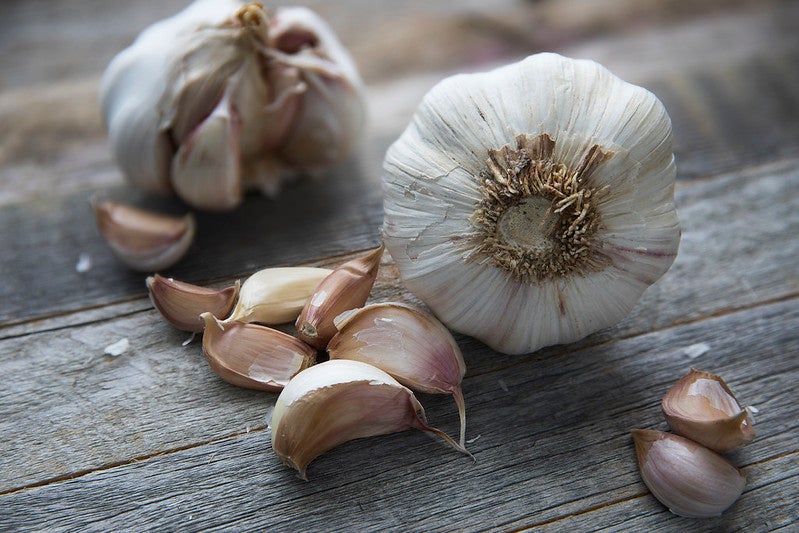
Nagai traveled to Copper Kettle Farm in Colgate to secure her personal favorite variety, music garlic. Though music can be hard to find, Nagai loves this variety because it produces enormous bulbs that are easy to peel, which makes them great for cooking.
Next, plant your garlic in the fall
Garlic grows well in full sun and well-drained soil. Nagai said to add nitrogen in the fall and spring if you’re concerned about soil fertility.
You can also grow garlic in raised beds or a really large pot. Just make sure the pot is large enough to insulate against repeated freezing and thawing, Nagai said.
And, as with any vegetable crop, it’s always a good idea to rotate where you plant garlic in your garden.
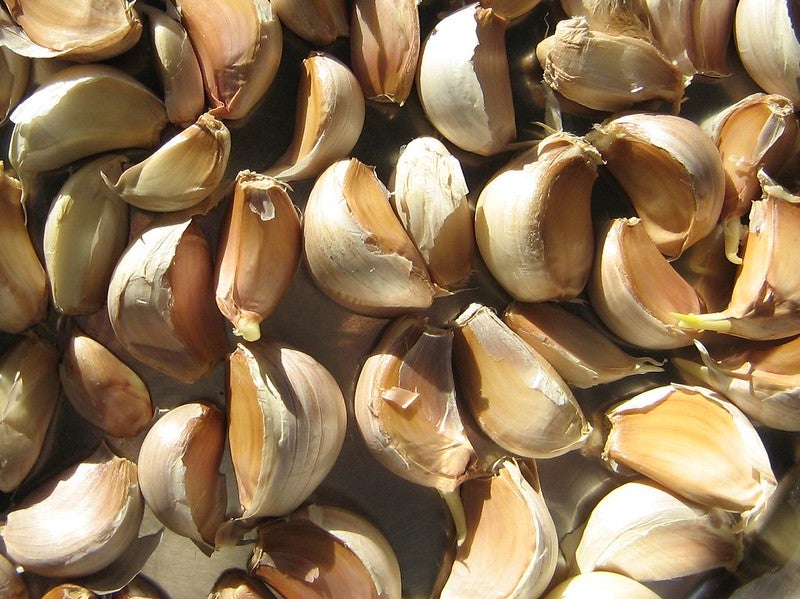
Plant garlic now, in the fall. Separate the bulb into cloves. The bigger the clove, the larger the bulb you’ll grow.
Put the cloves in the ground within a week or two of the first killing frost. The cold prevents the garlic from growing too fast and sending a shoot above ground, where the winter air would kill it.
Bury the individual cloves 2 to 3 inches deep in the soil and 6 inches apart. Nagai waters after planting and then forgets about them until the springtime.
“Just like a baby, it takes nine months to get a really good head of garlic,” Nagai said.
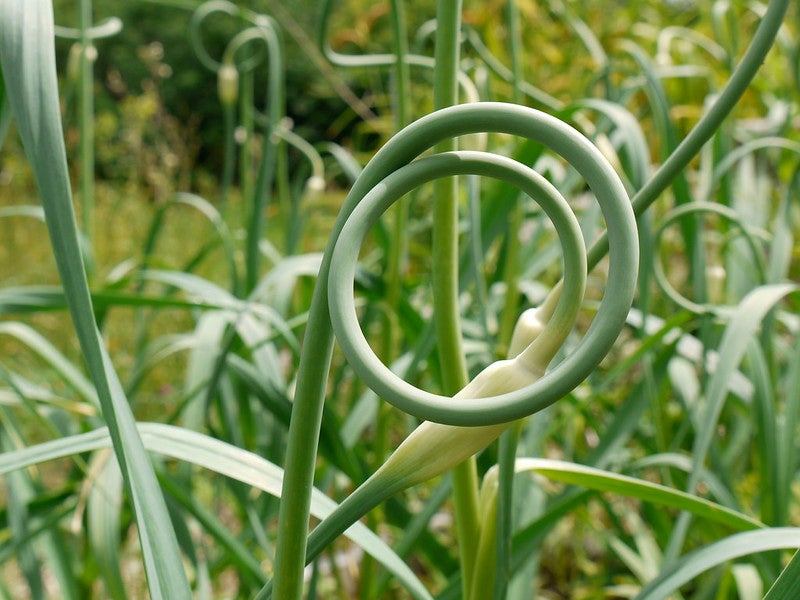
Once winter’s snow clears, garlic sprouts will peek out of the soil. They can grow to 3½-feet tall.
“They’re beautiful, nice little soldiers in your garden,” Nagai said.
Long shoots with buds will appear on the plants sometime in May. These are scapes. Remove them once they begin to curl. Nagai recommends using the scapes in your kitchen. They have a mild garlic flavor that works well in soups or sautéed with butter.
Harvest garlic in July. You’ll know it’s time to start digging when the foliage starts to fold over or turn brown.
After the harvest
Harvested garlic should cure for at least two weeks, Nagai said. Drying out the garlic helps it store longer.
Keep the stalks and roots on the garlic and store the bulbs in a hot and dry place. Nagai uses her garage. The garlic will develop a papery, protective covering. You can cut off the stalk and trim the roots after the two weeks are up.
“You brush the soil off of them, and they’re ready for storage,” Nagai said, “and they’ll last all winter unless you eat them all, which is often what happens in my house.”
Looking for garlicky culinary inspiration? Try roasting spaghetti squash with garlic and herbs. Or try this roasted garlic ice cream recipe found by WPR’s Lori Skelton, who has been making and enjoying garlic ice cream since she first tried it at a supper club in Mukwonago in the ’80s.