An invasive plant has been spotted in southcentral Wisconsin, and scientists are asking the public for help to prevent it from spreading across the region.
Japanese stiltgrass was spotted in Rock County last month.
Until recently, the non-native annual grass had only appeared in Wisconsin once in an isolated infestation in La Crosse County in 2020 that the Department of Natural Resources is working to eradicate.
News with a little more humanity
WPR’s “Wisconsin Today” newsletter keeps you connected to the state you love without feeling overwhelmed. No paywall. No agenda. No corporate filter.
Mark Renz, a University of Wisconsin–Madison Extension weed specialist and professor in the Department of Plant and Agroecosystem Sciences, said the grass is bad for a number of reasons.
Japanese stiltgrass is an annual grass, like crabgrass, that can grow in the woods.
“What it does is it produces a lot of fuel, and when that annual grass dies in the winter, that fuel persists, so it can increase the timeframe when fires naturally can occur in the forests,” Renz said.
The plant also alters nutrient cycling and soil microbes, and it reduces wildlife habitat, all of which decreases biodiversity, Renz said.
Staff from the University of Illinois, UW–Madison, and the Wisconsin Department of Natural Resources found the stiltgrass in a private woodland near Beloit in Rock County.
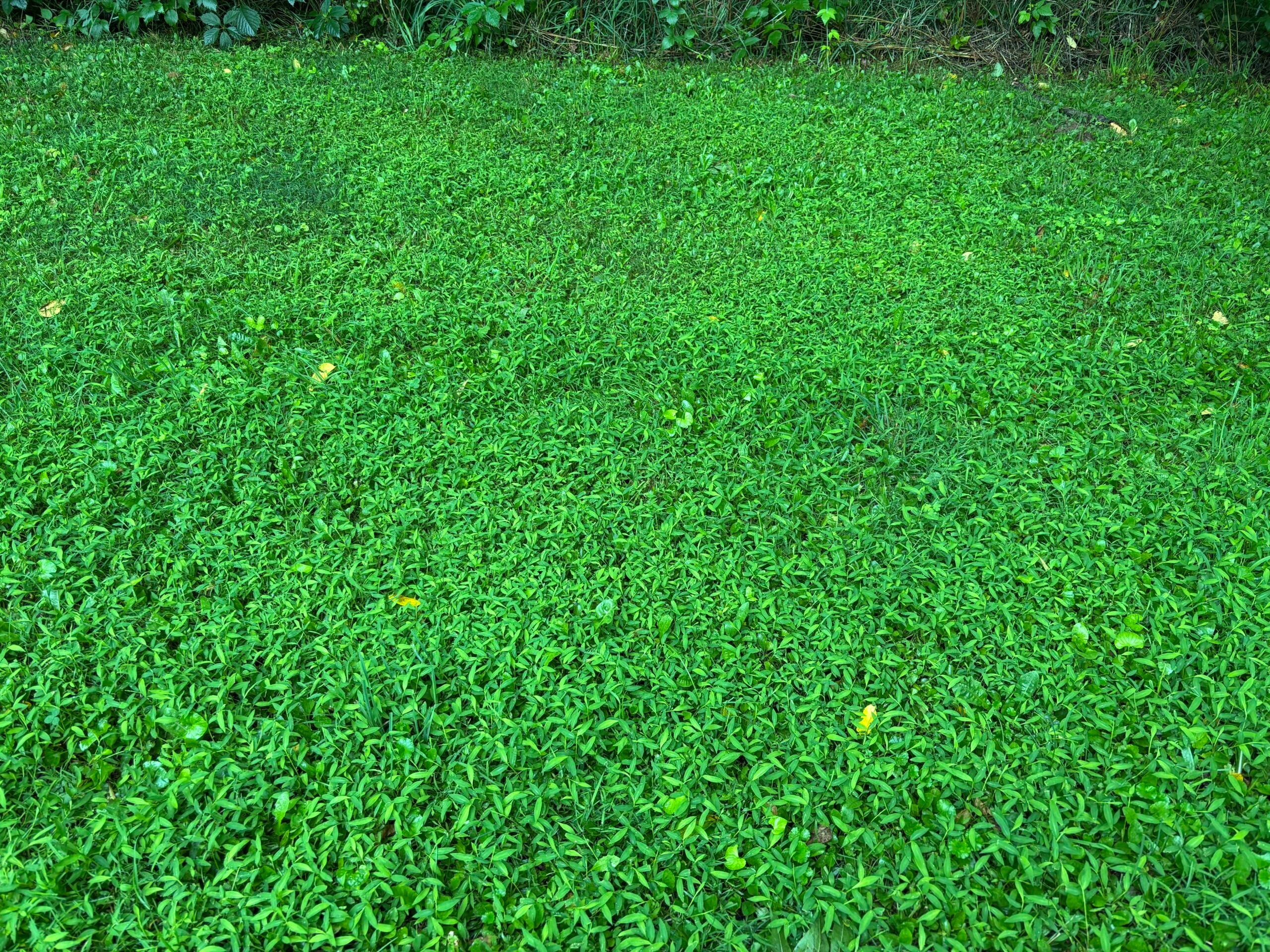
“It clearly has been at this site for many years, as it covers most of the property,” Renz said. “While it’s not clear how it was introduced to this site, I’m guessing it came from contaminated equipment or material from an infested forest to the south of us.”
The UW Extension and DNR are working with the property owner to control the stiltgrass.
But Renz said the plant is widespread in southern Illinois and is present in central and northern Illinois, so there will be more outbreaks.
The DNR and UW Extension are asking woodland owners and land stewards in southern Wisconsin, particularly in Rock, Grant, Lafayette, Green, Walworth, and Kenosha counties to search their neighborhoods for stiltgrass and report it.
How to identify stiltgrass
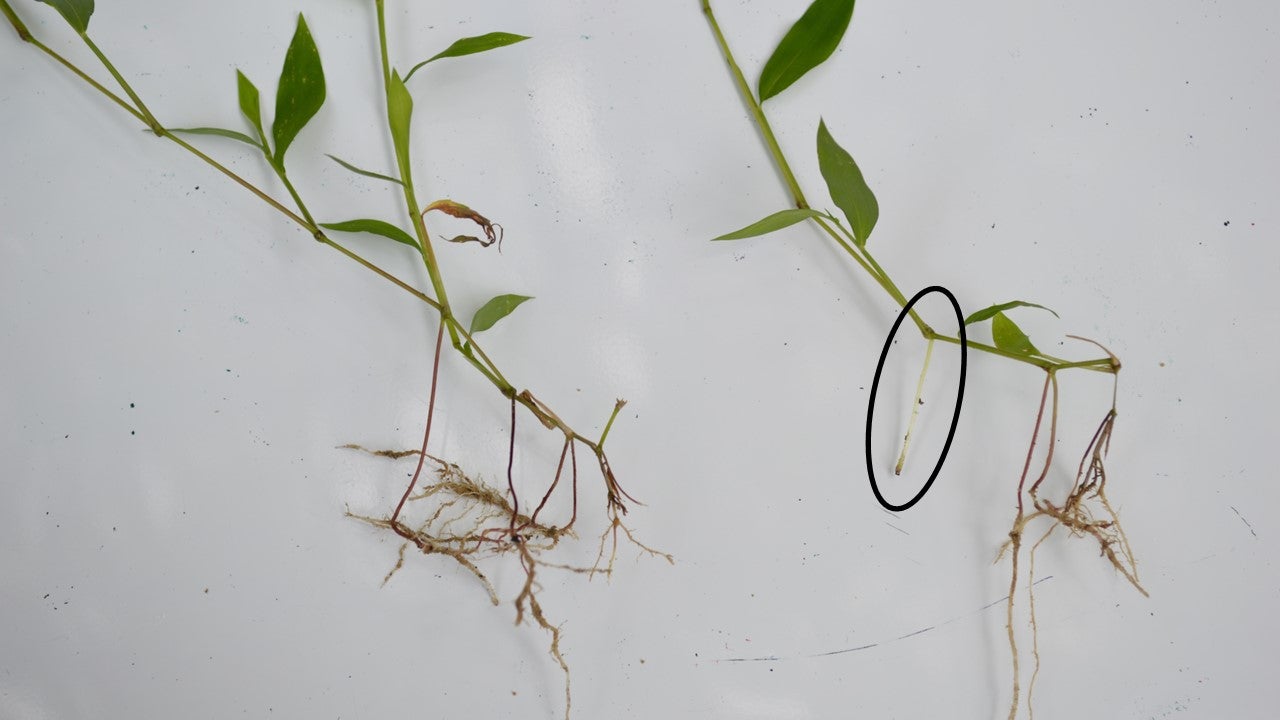
Stiltgrass grows 6 inches to 3 feet in length, stretching horizontally along the ground or on other plants. It has a thin, weak root system and has rootlets, or “stilt roots,” emerging from nodes along the lower sections of the stem.
The leaves are 2 to 4 inches long and ½ inch wide, have smooth edges leading to a point at both ends and are spaced along the length of the stem. Look for a silvery off-center midrib line, which similar-looking native grasses do not have.
Renz said the stiltgrass can spread, so it is important to clean shoes, clothes, pets, vehicles and equipment before traveling from one wooded area to another to prevent accidentally transporting the invasive species.
What to do if you find it
Stiltgrass flowers in September, so if you get out in the woods this month and find it, there is still time to start control actions before it produces seed.
If the plant is found:
- Take close-up photos of the grass as well as mid-range and zoomed-out photos that show the landscape.
- Write down the location, habitat, size and density of the infestation.
- Contact one of these experts to help confirm identification:
- UW Extension Forestry: email forestry@extension.wisc.edu or call Working Lands Forestry Educator Tony Johnson at 608-386-8900.
- Wisconsin DNR: email invasive.species@wisconsin.gov.

Wisconsin Public Radio, © Copyright 2026, Board of Regents of the University of Wisconsin System and Wisconsin Educational Communications Board.