
A small northern Wisconsin community whose name conjures thoughts of frigid cold and snow was anything but cool on June 22.
Dina Byrnes, who works at a greenhouse in the village of Winter, said customers who streamed in and out remarked on the heat all day. The store offered misters for sale at the checkout line to blow cool air on people. Some customers escaped to the shade of a woodland garden outside while children played in the surrounding ponds at the Winter Greenhouse.
“We had staff members going out and putting their feet in the ponds to cool off,” Byrnes said.
News with a little more humanity
WPR’s “Wisconsin Today” newsletter keeps you connected to the state you love without feeling overwhelmed. No paywall. No agenda. No corporate filter.
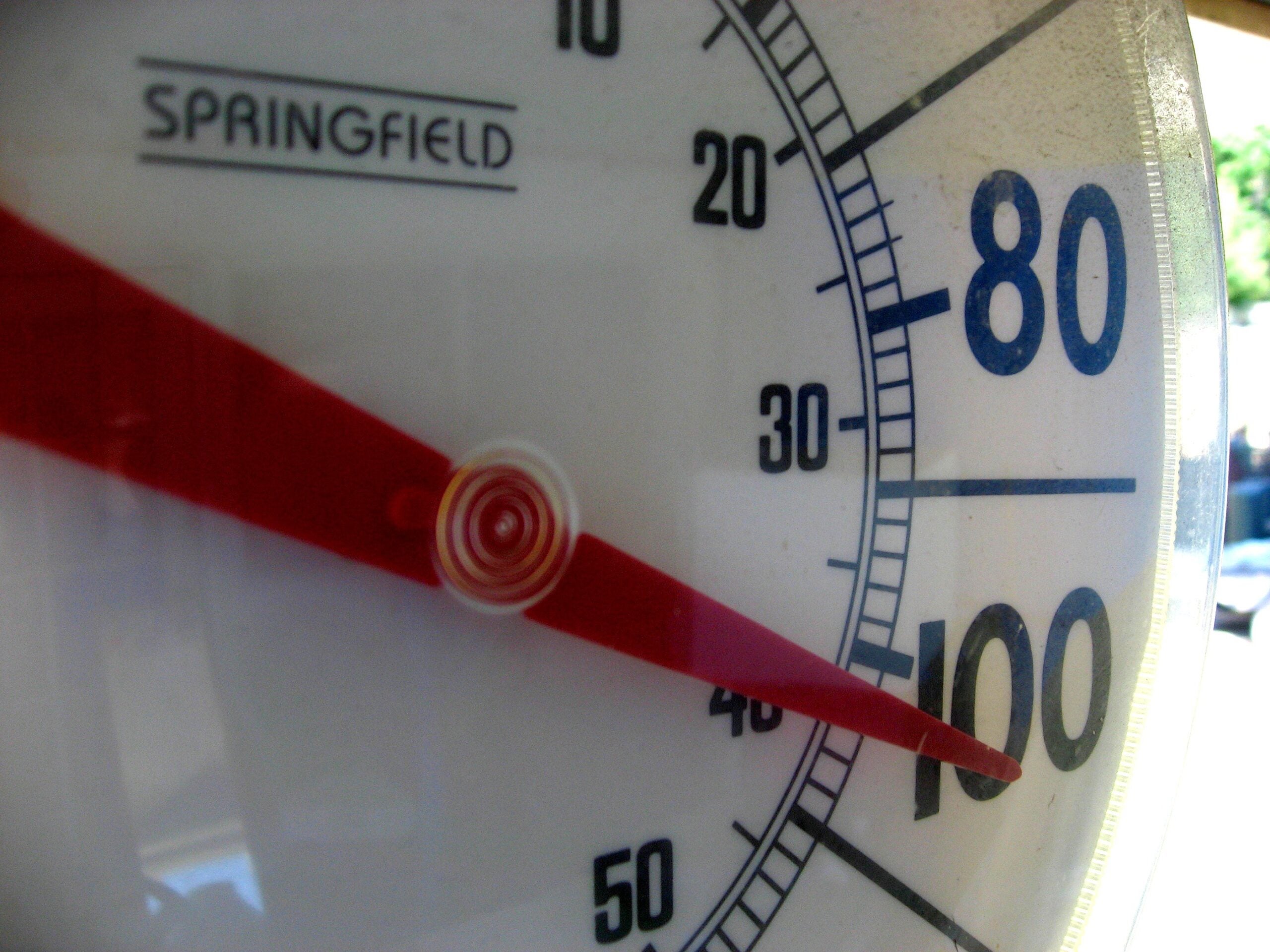
The Sawyer County village of Winter witnessed the state’s highest heat index of 111 degrees Fahrenheit during a heat wave late last month, according to a newly released report from the Wisconsin State Climatology Office. Heat index measures how hot it feels when humidity is combined with air temperature.
Amanda Schwabe, a state climate outreach specialist, said a heat index of 111 degrees is quite unusual for a place so far north.
“And of course, pretty ironic that (Winter is) one of the hottest places in the state during that heat wave,” Schwabe said.

The hot weather was driven by a heat dome that affected tens of millions of people nationwide. The large area of high pressure pushed heat from the Gulf and Atlantic coasts farther north, making it especially humid because those waters are warmer than average for this time of year. Schwabe said such heat domes appear to be lasting longer, and they may be more widespread.
The heat wave last month caused temperatures to spike more than 11 degrees above normal — which is 66.6 degrees — from June 20 to June 23. Eau Claire spent a record 80 hours straight at or above 80 degrees, nearly doubling the record set back in June 1991.
Several cities also broke daily records or tied all-time records for the warmest overnight low temperatures. Wausau, Green Bay and La Crosse all tied their previous records for the warmest overnight lows in the state’s recorded history with low temperatures of 78 degrees, 79 degrees and 80 degrees, respectively.
“That just meant we were getting no break from the heat, which isn’t good for your body,” Schwabe said.
Wisconsin climate scientists have found that the number of nights at or above 70 degrees Fahrenheit will likely quadruple by mid-century. That’s among the latest findings from Wisconsin’s Initiative on Climate Change Impacts. A 2024 report from Climate Central found eight cities in the state have already seen an average of nine to 14 more hot nights each year.

Dr. Elizabeth White, a family medicine physician in southwestern Wisconsin, said research shows the heat index has been rising over time. A 2020 report found that within 30 years, Milwaukee could see three times as many days with a heat index above 105 degrees. White said that can put people at risk for heat-related illnesses like heat stroke or heat exhaustion.
“That is really when our body’s physiologic mechanisms can no longer keep up with cooling our internal body temperature,” White said. “Individuals that are at higher risk may be so because of their occupation, such as our construction workers or our farm workers.”
Children and people who are pregnant are also at risk, along with those who have chronic medical conditions, such as mental health disorders, diabetes or heart disease.
White said hotter nights can prevent people from getting rest or recovering from daytime heat. Early signs of heat exhaustion or stroke may include feeling more tired than usual, dizzy or short of breath.
Wisconsin has also seen increasing reports of heat-related road damage, with 53 road-buckling events as of mid-June compared to 66 for all of last year, according to WISC-TV. Even so, Wisconsin didn’t see any record hot temperatures in the late June heat.
Overall, the month was slightly hotter and wetter than the normal compared to the prior three decades. Heavy rains following the heat wave in late June also broke multiple daily records, including in Madison, Wausau and La Crosse. Storms prompted widespread flooding in the region. Rainfall also helped improve drought conditions statewide.
Last month, the National Weather Service issued 90 severe thunderstorm warnings, exceeding the 30-year average. Wisconsin also recorded four small tornadoes in late June, pushing the state past its annual average to 26 tornadoes. Some parts of the state also saw some of its worst air quality in early June since 2023 due to smoke from Canadian wildfires.

Wisconsin Public Radio, © Copyright 2026, Board of Regents of the University of Wisconsin System and Wisconsin Educational Communications Board.