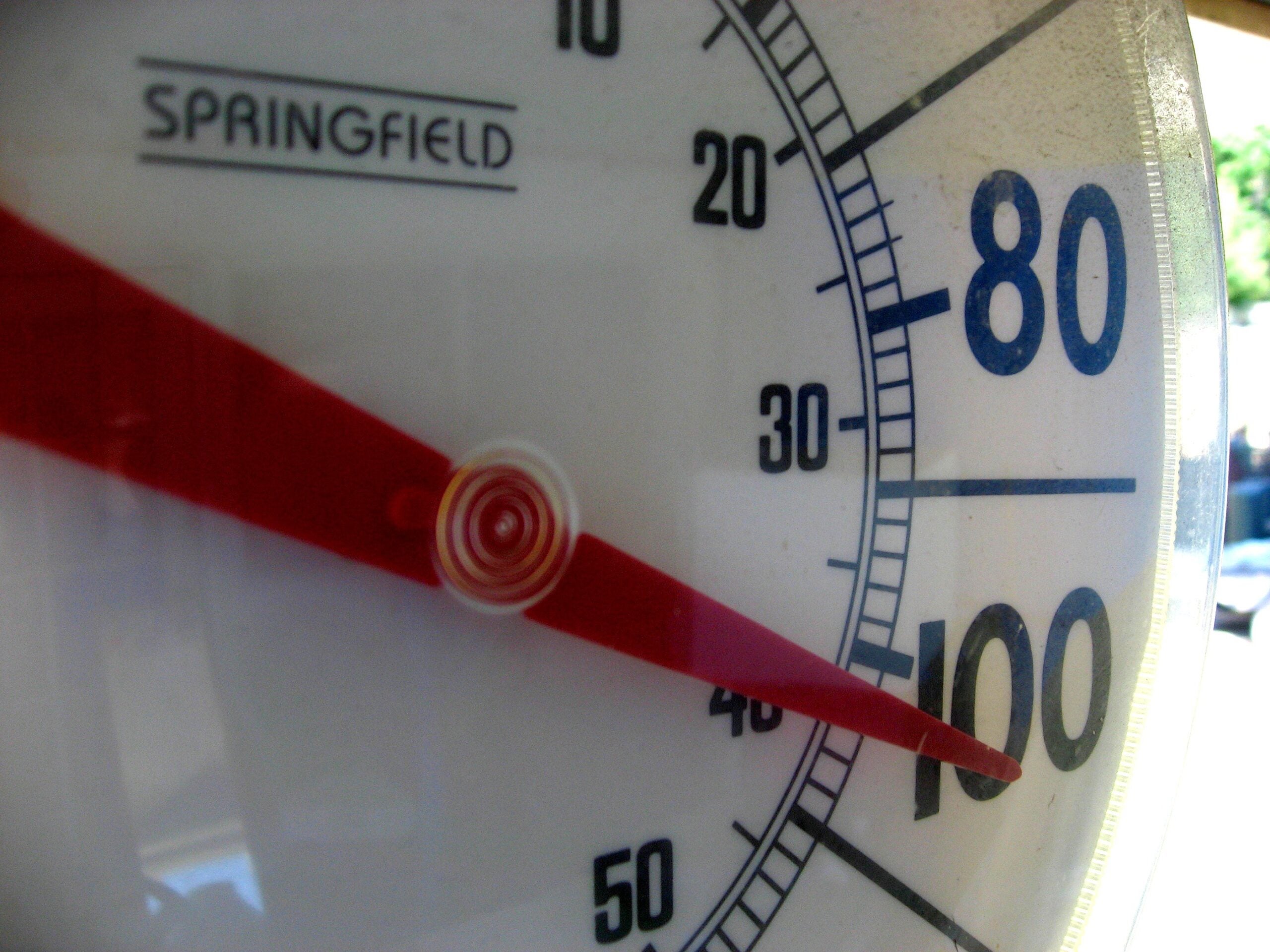

Much of Wisconsin is under a heat advisory Wednesday, and a new analysis by the nonprofit group Climate Central finds extreme heat streaks are becoming more common across the state and nation.
In central and southern Wisconsin, a heat advisory is in effect from noon until 8 p.m. Wednesday. The Milwaukee area is expected to see temperatures reach a high of 92 degrees. J.J. Wood, a meteorologist with the National Weather Service at the Milwaukee/Sullivan office, said the heat index could climb to 105 degrees due to the combined effect of heat and humidity.
“Central and southern Wisconsin would be most under the gun for the heat,” Wood said.
Far southeastern Wisconsin could see heat and humidity linger Thursday with a heat index of 100 degrees possible in the Milwaukee, Racine and Kenosha area.
As the heat rises, a Climate Central analysis finds multiday heat streaks are becoming more common. The independent group of scientists examined the frequency of heat streaks in 247 cities from 1970 to 2024. The findings were based on heat streaks with at least three days with temperatures exceeding the 90th percentile or the hottest temperatures recorded in the last three decades.
Shel Winkley, a Climate Central meteorologist, said they found extreme heat streaks increased in 80 percent of cities. On average, 198 cities — including Milwaukee — are experiencing two more extreme heat streaks each year.
“(Milwaukee is) seeing about seven per year when (you) used to find about four to five heat streaks per summer,” Winkley said. “Generally, you’re looking at as many as four to five heat streaks per year across most of the cities that we analyzed there in Wisconsin.”
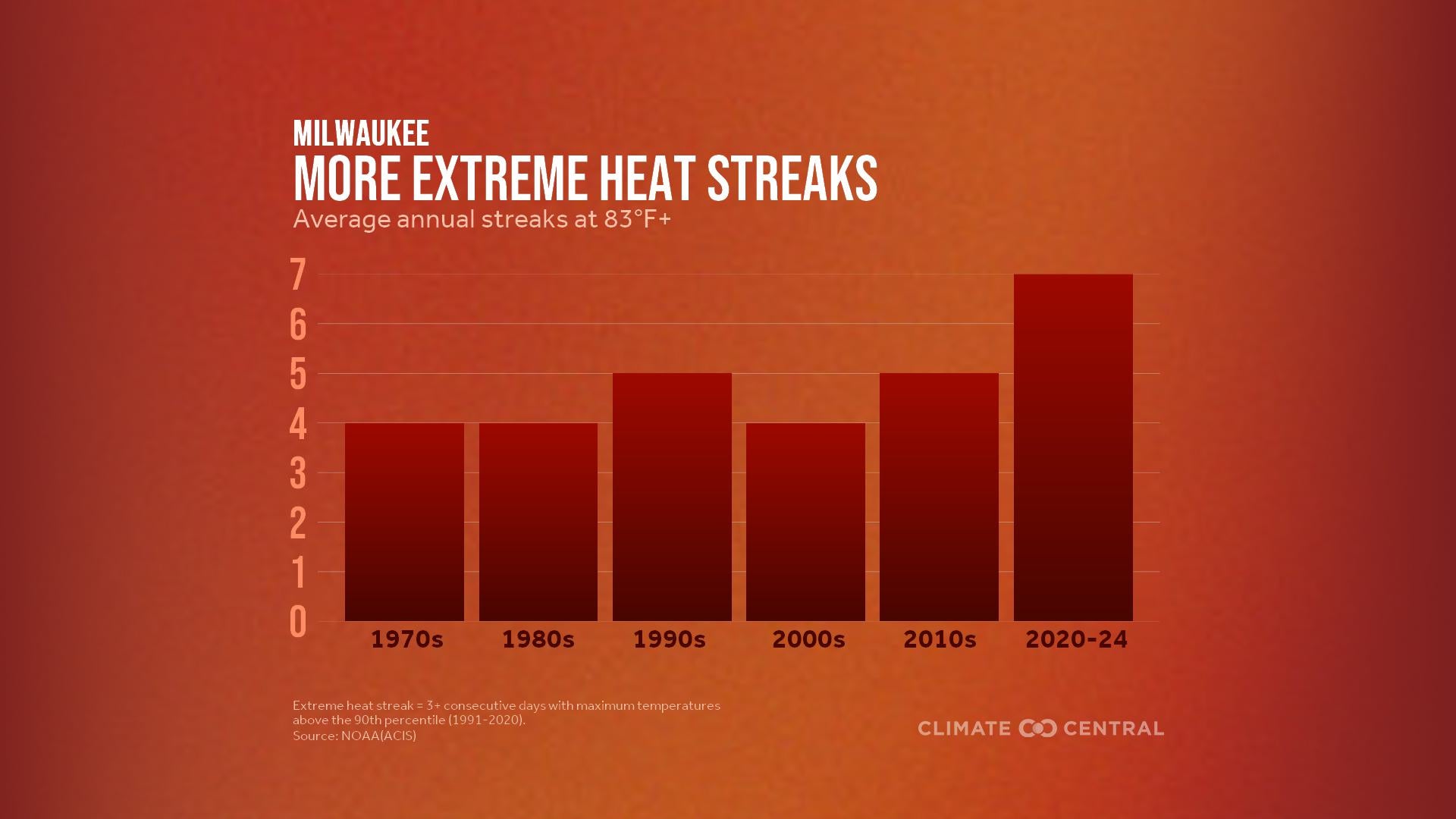
Those cities include Wausau, Green Bay and Madison. The La Crosse and Eau Claire area saw about six heat streaks in recent years compared to four decades ago. Winkley said the extremes are driven by heat-trapping pollution that’s driven temperatures higher, escalating heat risks.
“When you have these compounding days of heat, again three or more, that’s when that heat can really build up in your house, especially if it’s a humid heat wave that’s happening,” Winkley said. “So that’s where those heat illnesses can really come in, especially for more vulnerable communities.”
Winkley noted the elderly, pregnant women and children are more vulnerable to heat-related illnesses like heat exhaustion or stroke. During a late June heat wave, hospitals in Milwaukee County saw a spike in emergency room visits with 80 visits the week of June 19 to 25, according to a heat-related illness dashboard.
Wood advised people to limit their time outdoors, take frequent breaks and drink plenty of fluids.
“Try to stay in an air-conditioned area, if you can, and then check on those that may not have air conditioning, especially the elderly and younger people or people with certain medical conditions,” Wood said.
The Milwaukee Health Department lists public libraries in the city and five county-owned senior centers among its cooling sites. It also has a map of public places with air conditioning on its website. Milwaukee County Parks also lists dozens of indoor and outdoor pools, splash pads and beaches where people can keep cool. In Madison, public health officials advise people to check with senior and community centers, libraries and malls on options to stay cool.
As demand for cooling rises, Winkley noted that can lead to power outages. He said the findings underscore the need for a more resilient grid and shifting to renewable energy. He added that communities can also take steps to reduce the effects of extreme heat.
“Adding in more native green canopy space, cool roofs, green roofs, or reflective roofs,” Winkley said. “For you as a human being, just going out and maybe planting some native plants into your yard, into your neighborhood, that helps cool down the immediate area around your home.”
Heat streaks can also make air quality worse because heat and sunlight can fuel ground-level ozone or smog pollution, increasing health risks for people with respiratory illness.
Extreme heat is the No. 1 weather-related killer in the nation, and most recent data shows more than 2,300 people died from the heat in 2023.
News with a little more humanity
WPR’s “Wisconsin Today” newsletter keeps you connected to the state you love without feeling overwhelmed. No paywall. No agenda. No corporate filter.

Wisconsin Public Radio, © Copyright 2026, Board of Regents of the University of Wisconsin System and Wisconsin Educational Communications Board.