Transportation Secretary Sean Duffy recently unveiled a package of new initiatives, pilot programs and regulatory changes to the long-haul trucking industry. Wisconsin trucking companies say it’s a welcome relief from the challenges the industry has faced in recent years.
The changes include funding to create more truck parking, withdrawing a proposed rule that would limit truck speed and cracking down on illegal double-brokering. The package follows President Donald Trump’s recent executive order that calls for stricter enforcement of the existing requirement that truck drivers be able to read and speak English.
News with a little more humanity
WPR’s “Wisconsin Today” newsletter keeps you connected to the state you love without feeling overwhelmed. No paywall. No agenda. No corporate filter.
Dan Johnson is the president and CEO of the Wisconsin Motor Carriers Association, a nonprofit trade association representing about 900 companies in the transportation industry. He told WPR’s “Wisconsin Today” that the changes come as Wisconsin trucking companies slowly recover from a post-pandemic freight recession, where capacity for shipping was high but the volume of freight was low.
“The last couple of years have been a little difficult for some of our trucking companies in Wisconsin,” Johnson said. “But we are optimistic that things will start to improve.”
Pam Polyak, owner of Polyak Trucking in Lisbon, told “Wisconsin Today” that it feels like the federal government is finally taking the concerns of truck drivers seriously.
“I’m very excited for some of the new things that Sean Duffy has put out already, and he’s kind of hinting at more to come,” said Polyak.
Moving away from limitations on trucks and drivers
The package includes changes that remove what the Federal Motor Carrier Safety Administration calls “one-size-fits-all mandates.” One withdraws a proposed rule that would require the use of speed limiters — devices that restrict the maximum speed of a vehicle. Johnson expressed his support for that change.
“It doesn’t necessarily work,” Johnson said. “Driving too slow can also be a problem. And if you have trucks trying to pass each other, and they can’t pass each other because there are speed limiters in place, that could create congestion.”
Pilot programs in the package offer more flexibility to the limit on how long a driver is allowed to be on the road. Currently, a driver can’t drive more than 11 hours at a time and their workday must be completed within a 14-hour window. That rule is meant to prevent fatigue that could lead to road accidents.
One of the pilots introduces a “pause clock” option, which would allow drivers to pause the 14-hour workday window to account for delays, traffic or time spent resting.
Johnson said he doesn’t think it poses a safety issue to allow more flexibility for drivers.
“(This) lets the driver make the decision of what is best for their own sleep patterns and how they function, and (doesn’t) punish them for that,” Johnson said.
Truck parking will expand with additional federal funding
Johnson said truck parking is a major issue for truckers, and plans include spending $275 million to address that.
When drivers take their mandated breaks, it’s often difficult to find a safe spot to stop, Johnson said.
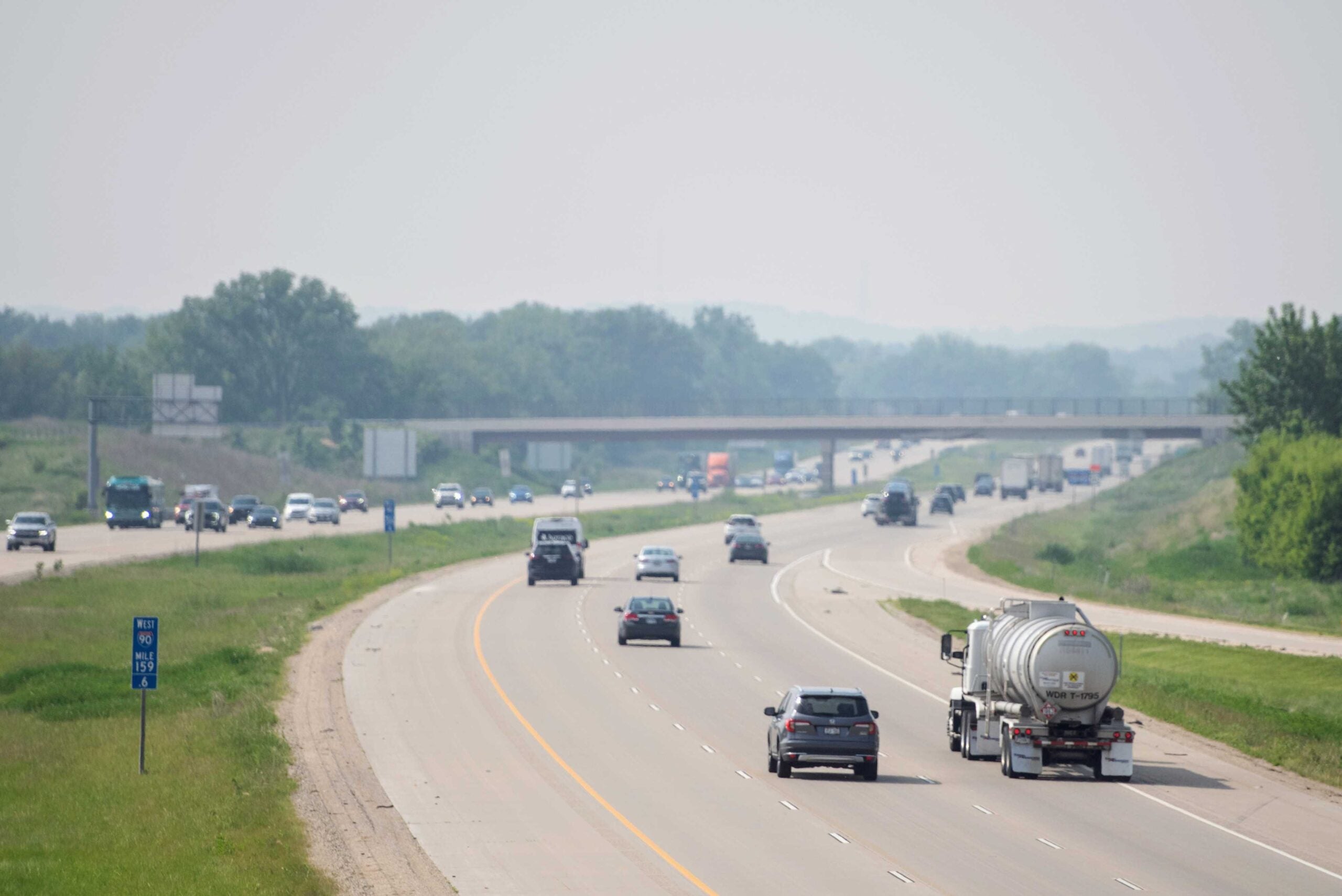
“We have a shortage of truck parking,” Johnson said. “Drivers are having to force themselves to stop (somewhere) they probably shouldn’t be stopping, (like) on the shoulder of an interstate or on an off-ramp.”
Plus, Johnson said, the lack of parking has an economic impact.
“If drivers know that there’s not going to be available parking for the next 200 miles, they might actually stop a couple hours short, and that’s going to create a serious delay in the supply chain.”
Wisconsin is in the process of upgrading a rest stop along I-90 near Sparta, increasing its truck parking capacity from 16 to 70 spots. In October, the state Department of Transportation received a federal grant to increase truck parking at two rest stops along I-43 between Green Bay and Manitowoc. Both projects were funded by the Bipartisan Infrastructure Law.
A majority of the funds, $180 million, will go towards parking in Florida. The rest will be available to other states through grants.
Transportation department pledges to crack down on freight fraud
Polyak Trucking has been the victim of so-called “ghost carriers” twice.
Despite being registered with the Federal Motor Carrier Safety Administration and having a USDOT Number, ghost carriers usually don’t have trucks or drivers. They get paid for a job, but when they’re supposed to pick up a load, they’re nowhere to be found. Sometimes, the load is even stolen.
“It kind of comes out of left field,” Polyak said. “One of the big things you have to be conscious of is what you’re hauling and if it has street value.”
Polyak said she’s seen a huge uptick in fraud in the last several years and expects Duffy’s changes will be helpful. The new package promises to crack down on “bad actors,” with a focus on the practice of double brokering, another type of freight fraud.
The package does not explicitly state what that “crackdown” will look like. But Polyak is excited about new criteria for registering with the Department of Transportation — like identity verification using facial recognition. Existing carriers will likely have to complete that identity verification by the end of the year.
“I think that could be a huge win for the industry,” Polyak said. “It’s going to weed out a lot of the ghost carriers that are out there right now.”