
When can someone be ordered to take medications against their will?
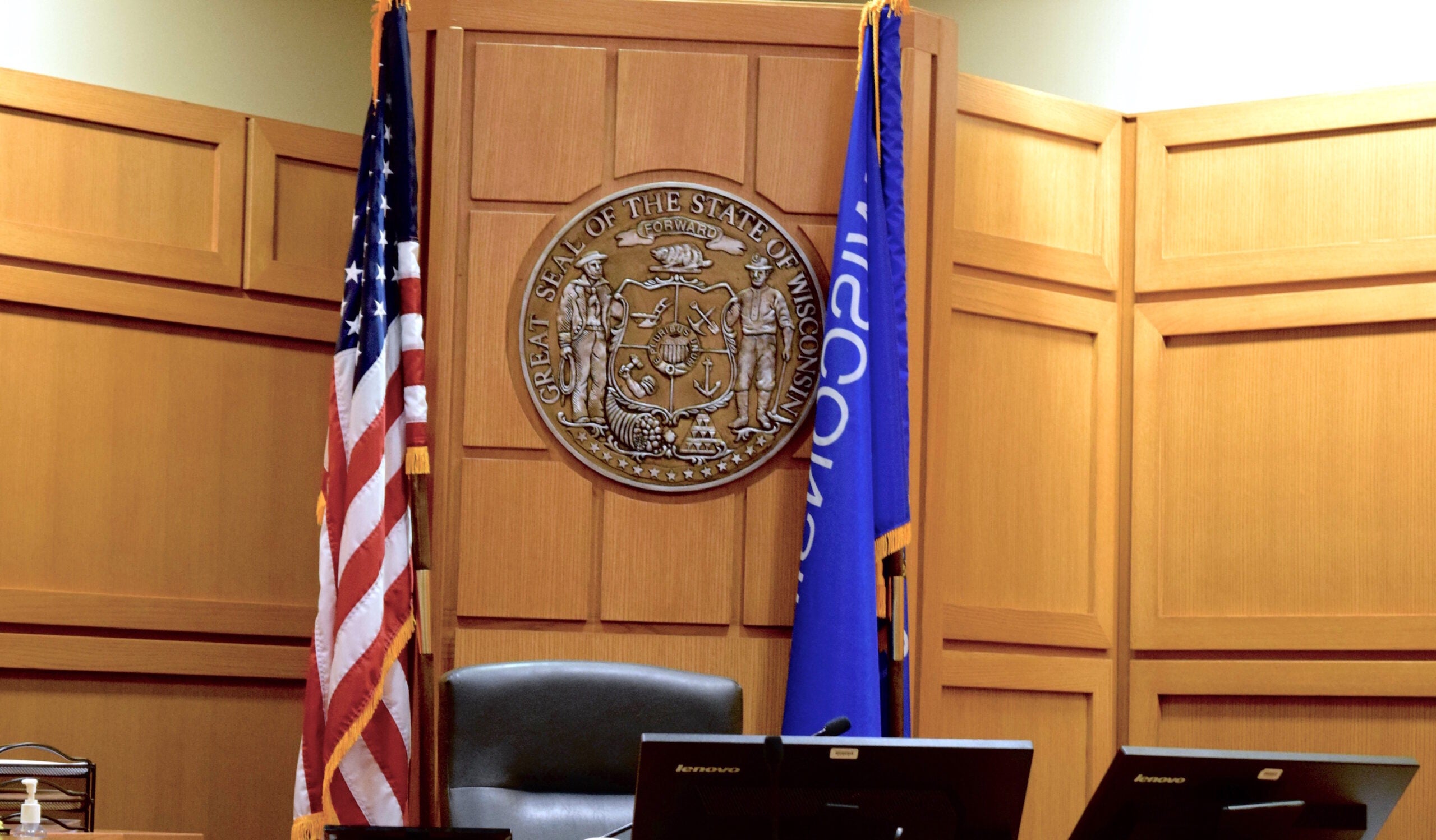
The Wisconsin Supreme Court is weighing that question when it comes to people facing criminal charges.
The case in question involves a man named Jared, who was 19 years old when he was arrested for battery against a police officer.
News with a little more humanity
WPR’s “Wisconsin Today” newsletter keeps you connected to the state you love without feeling overwhelmed. No paywall. No agenda. No corporate filter.
Jared’s mom had called police to their Milwaukee home in 2022 after Jared was threatening to kill family members during an apparent mental health crisis. After police arrived, Jared punched an officer in the face, according to a criminal complaint.
Jared has been diagnosed with multiple medical conditions, including schizophrenia. After he refused medication, a Milwaukee County judge ruled in 2023 that Jared would be ordered to take anti-psychotic meds with the goal of making him mentally competent to stand trial.
A Wisconsin appeals court later reversed that Milwaukee County ruling, however, prompting attorneys for the state to take the matter to the Wisconsin Supreme Court.
During arguments before Wisconsin justices on Monday, Wisconsin’s Attorney General’s office argued the lower court was right when it ordered Jared to take meds, while Jared’s public defenders argued that the government needed to meet a higher legal threshold before taking that action.
Kara Janson, an assistant Wisconsin attorney general, contended the case is no longer relevant, since the lower court order that would have compelled Jared to take medication has expired.
She also said the Milwaukee County court order met the criteria established under a U.S. Supreme Court ruling called Sell v. the United States. That includes showing that the state has an “important” interest in bringing the case to trial.
“Looking at the nature of the crime, it was violent,” Janson said. “He assaulted a police officer. He threatened to kill family members.”
“From the prosecution’s perspective,” she added, “we have numerous reasons why we prosecute crime, including protecting the public and seeking justice for crime victims. And from our perspective, those interests don’t change if the person is suffering from a mental health crisis.”
Lucas Swank, an assistant state public defender, said he isn’t disputing that the case against Jared is serious.
“I would not get in front of a bunch of judges and say that battery to law enforcement is not a serious crime,” Swank said Monday.
Swank argued, however, that the appeals court was correct when it determined that a psychiatrist wasn’t specific enough when he asked a Milwaukee County judge to order Jared to take medications.
“The state needs to prove to circuit courts, or convince them by clear and convincing evidence, that the medications being offered are appropriate.” Swank told justices.
The Wisconsin Psychiatric Association, however, submitted an amicus brief on behalf of the state.
In its ruling last year, the appeals court wrote that the medication plan submitted for Jared wasn’t “individualized” enough. The psychiatric association said psychiatrists need flexibility when submitting treatment plans.
“The court of appeals’ heightened standard for obtaining an involuntary medication order is not based in science, does not align with clinical practice, and places unnecessary and burdensome requirements on the treating psychiatrist,” the brief says. “It is not realistic that at the outset of treatment a treating provider would know every medication, and in what order and dose, a patient might need. Because psychiatrists cannot predict how a specific patient will respond to a specific medication, they should have at their disposal more options for medication, not fewer.”
Wisconsin’s Department of Health Services likewise submitted a friend-of-the-court brief, urging the state high court to reverse the appellate decision.
“The court of appeals’ expansive and detailed requirements for (applying the Sell case) create confusion for physicians, patients, and the lower courts,” the DHS brief says. “And the court’s application of (the Sell criteria) is out of touch with the fact that medical-ethics rules provide important safeguards for
physicians and patients in these cases, discounting the need for judges to second guess medical judgments by nitpicking proposed treatment plans.”
When it reversed the Milwaukee County order, the appeals court also found that there were mitigating circumstances in Jared’s case, including the fact that he would have a “strong” argument for being found not guilty by reason of insanity if the case did proceed to trial. Additionally, the appellate court noted that Jared spent more than 100 days in the Milwaukee County Jail before being transferred to the Mendota Mental Health Institute for inpatient treatment.
“We conclude that this unconstitutional detention further lessens the importance of the State’s interest in prosecuting Jared for purposes of Sell,” the appeals court wrote.

Wisconsin Public Radio, © Copyright 2026, Board of Regents of the University of Wisconsin System and Wisconsin Educational Communications Board.