For the first time in its history, the St. Croix Chippewa Indians of Wisconsin released lake sturgeon into Clam Lake as part of efforts to restore the ancient fish.
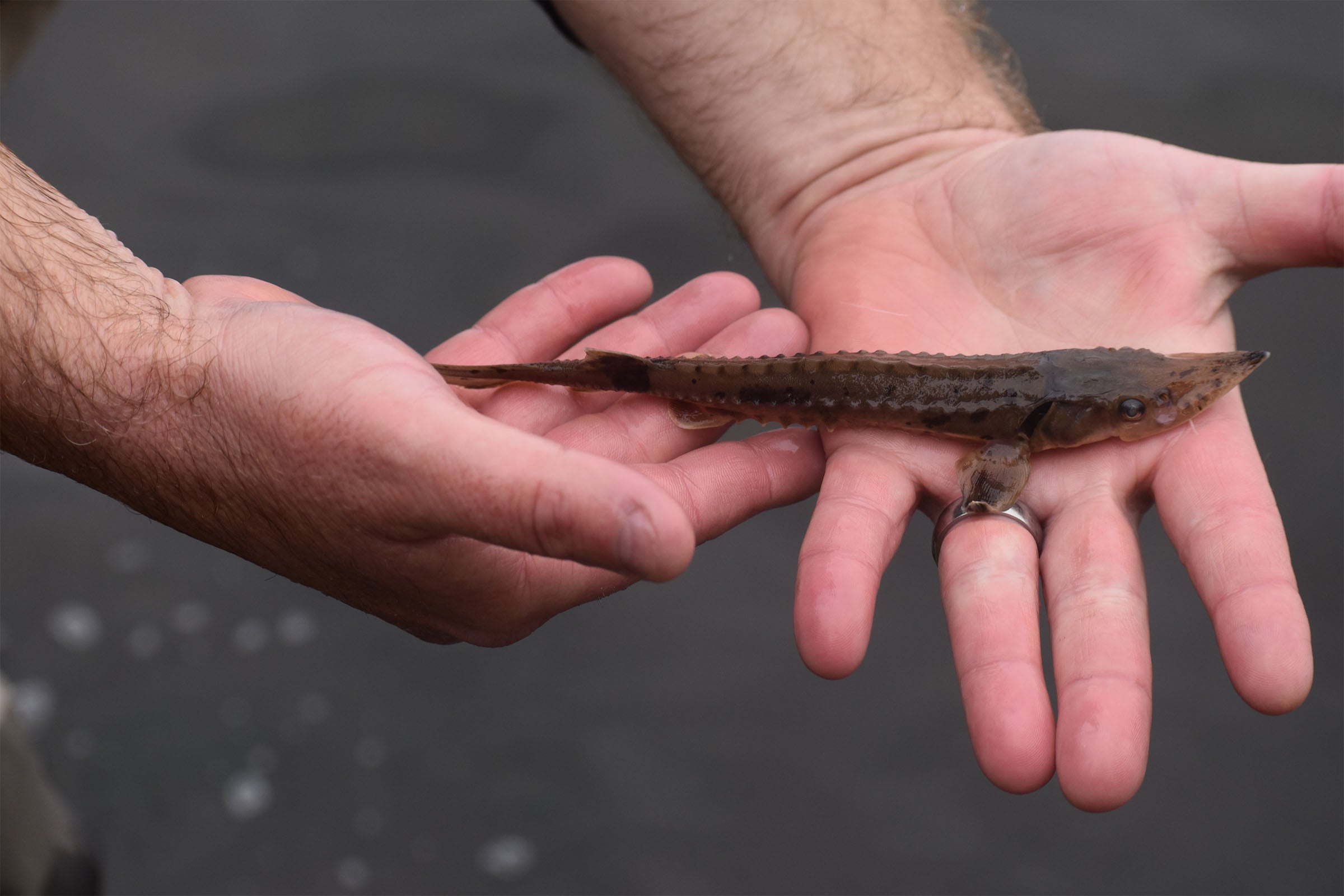
The tribe has been working for years to bring sturgeon, or “name” in Ojibwe, back to the Clam River system, which is home to a remnant population of the native fish. Lake sturgeon are an ancient species that have survived since dinosaurs roamed the Earth, at least 150 million years ago. They typically span 4 to 6 feet in length, and can live up to 150 years.
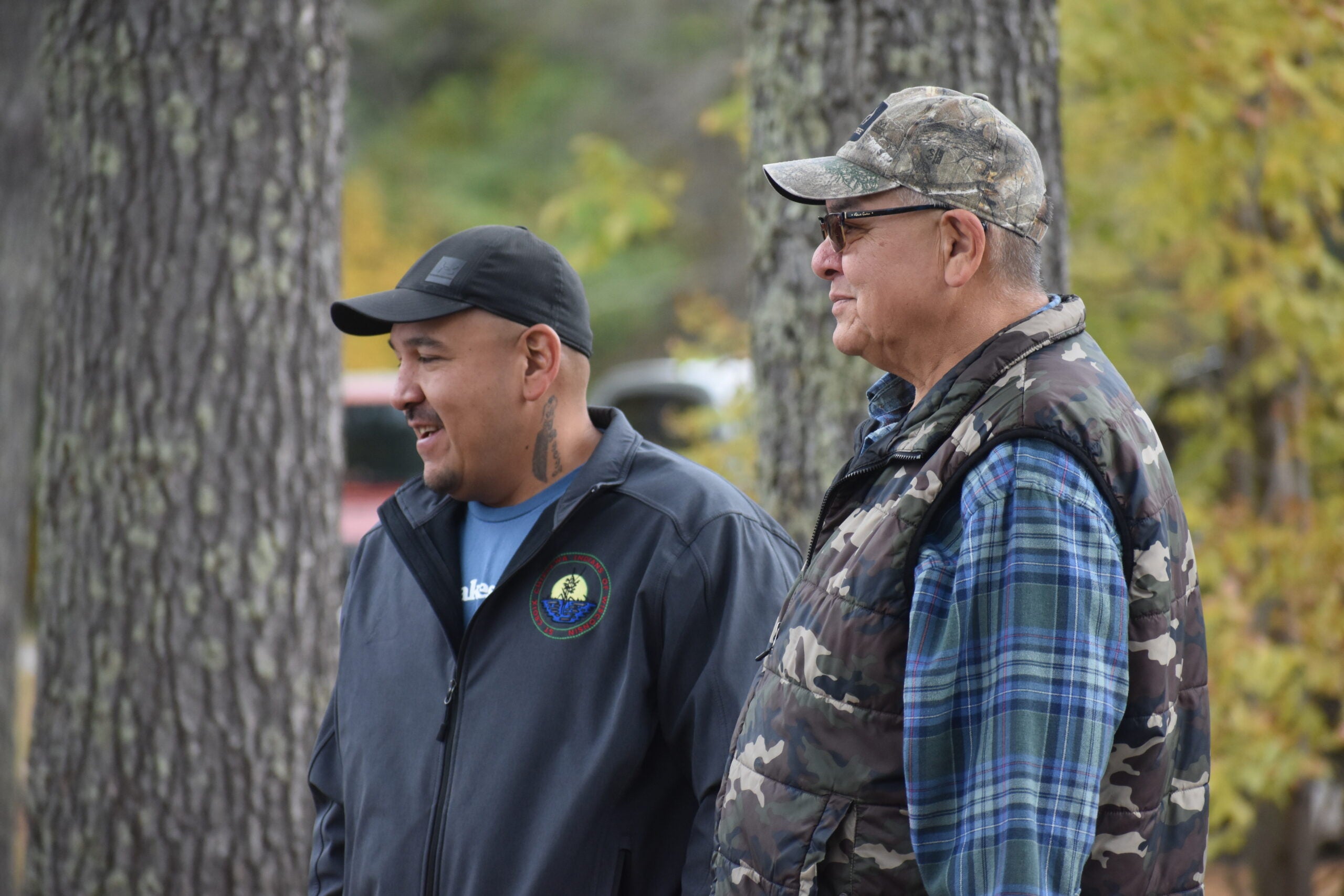
Tribal and community members gathered Tuesday at the boat landing in Clam Lake to witness the milestone moment. St. Croix Tribal Chairman Conrad St. John said sturgeon are culturally significant to the tribe, noting some tribal members belong to the sturgeon clan.
News with a little more humanity
WPR’s “Wisconsin Today” newsletter keeps you connected to the state you love without feeling overwhelmed. No paywall. No agenda. No corporate filter.
“It’s really a dinosaur. It’s been around a lot longer than humans have” St. John said. “We do actively harvest sturgeon in the spring. In order to keep those harvesting efforts available and an option for tribal members, we’d like to restore the resources (to) keep them plentiful for many generations to come.”
The St. Croix Chippewa began examining sturgeon numbers in the system around five years ago through an electrofishing survey that was supported by funding from the Bureau of Indian Affairs. Since then, the tribe has spent more than $1 million to expand its fish hatchery with the addition of a recirculating aquaculture system to raise sturgeon indoors.
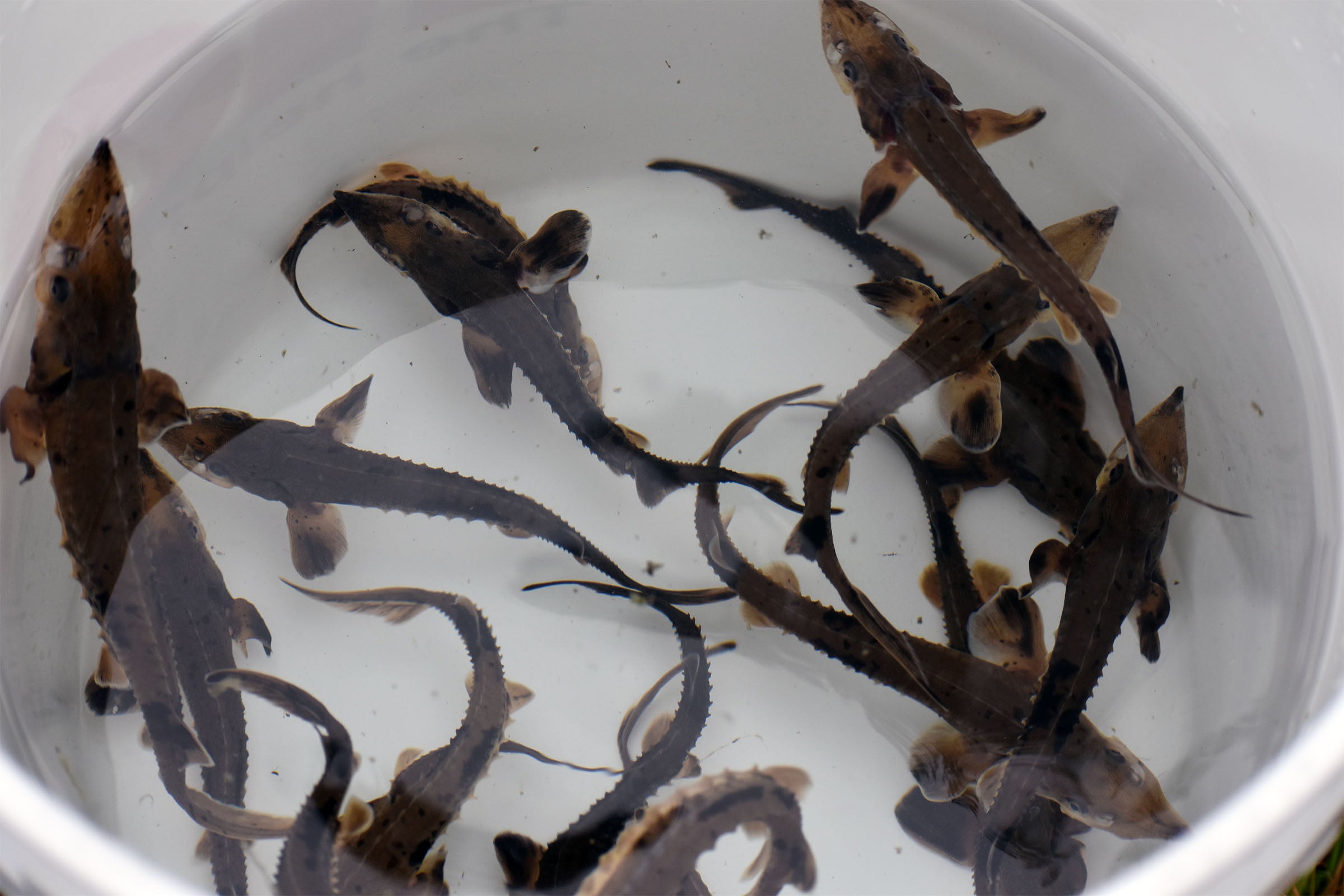
After finishing the expansion this spring, the tribe worked with the Wisconsin Department of Natural Resources to obtain sturgeon eggs from the nearby Yellow River system to begin raising the fish indoors. At the boat landing, 6-month-old sturgeon fingerlings swam in 5 gallon buckets that tribal and community members poured into the lake. They stocked around 400 fish, according to Jeremy Bloomquist, the tribe’s land and water resources manager.
“It’s an amazing day for us here at St Croix. It’s been a long time in the works,” Bloomquist said.
Darrin Olson of Osceola drove 50 miles to witness their release on his birthday.
“I fished here years ago,” Olson said. “I like the idea of stocking sturgeon.”
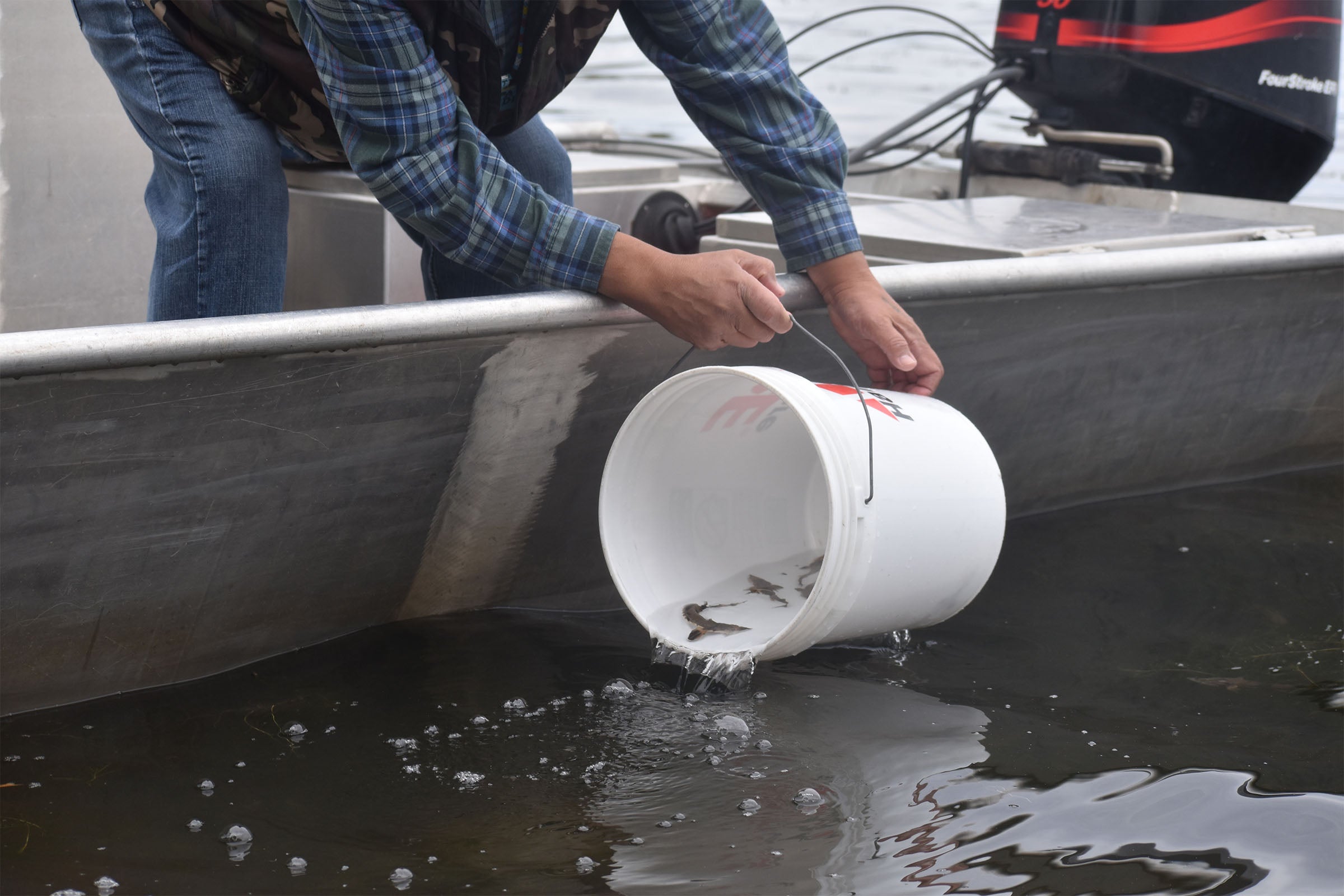
Leslie Billy, a St. Croix tribal council member, said it’s exciting to see the fish grow from little babies to a size ready for release.
“Our harvesters take quite a bit out of the Yellow Lake system, and the sizes that they bring out are probably 60 to 70 inches. Those are decades-old fish,” Billy said. “So to repopulate, to put back in what they take out, I think that’s amazing that we can do that.”
Bloomquist said they hope around 80 percent of the sturgeon released will survive, similar to stockings conducted elsewhere. Moving forward, the tribe plans to continue stocking sturgeon for the next 20-plus years to rehabilitate the population. Bloomquist said it takes about that long for female sturgeon to mature and then reproduce.
The St. Croix tribe joins others that have sought to restore sturgeon in the region. The Fond du Lac and Lac du Flambeau Bands of Lake Superior Chippewa are among tribes that have stocked the ancient fish in the St. Louis River and the Bear River in the Flambeau Chain, said Charlie Rasmussen, spokesperson for the Great Lakes Indian Fish and Wildlife Commission.
“They found a similar situation to a lot of places where dams and development prevented sturgeon from reaching historic spawning grounds. There were large fish in the systems that lived on over the years, but they weren’t able to spawn and reproduce,” Rasmussen said. “With the tribal programs, they’re helping restore sturgeon in between river segments and in the lakes as well.”
Lake sturgeon that remain represent around 1 percent of their historical numbers, according to the nonprofit Center for Biological Diversity. The group had petitioned the U.S. Fish and Wildlife Service to review whether the ancient fish should be listed as threatened or whether distinct populations are endangered due to dramatic declines in numbers. Last year, the agency decided lake sturgeon don’t need federal protections under the Endangered Species Act.
Prior to stocking sturgeon in Clam Lake, St. Croix Tribal Elder Bruce Sonnenberg said a prayer and offered tobacco, or “asemaa,” to show spirits that tribal members were asking in a good way to allow the fish to grow and continue to thrive. Sonnenberg, who is a member of the sturgeon clan, recalled fishing with his grandfather and grand-uncle, who used to say there were “fish longer than a boat” in Clam Lake.
“When you think about everything that’s used to help grow these sturgeon and other fisheries, any work that’s done in that capacity has all of my respect and all of my love,” Sonnenberg said. “It’s loving people, caring people, who want to keep all this alive.”

Editor’s note: An earlier version of this story reported that the St. Croix Chippewa first discovered sturgeon in the Clam River system five years ago, but the tribe knew a remnant population existed. The St. Croix Chippewa first began examining their numbers five years ago. In addition, the release of sturgeon took place off-reservation rather than on the tribe’s reservation as first reported.

Wisconsin Public Radio, © Copyright 2026, Board of Regents of the University of Wisconsin System and Wisconsin Educational Communications Board.