
This story was produced in collaboration with Great Lakes Now.
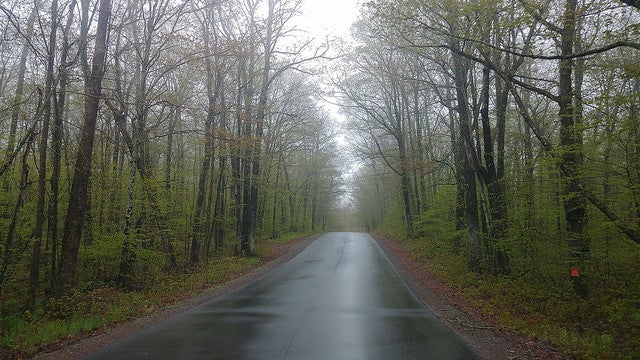
Once a month, researchers hike through the woods in the Baraboo Hills to check on small boxes strapped to tree trunks. The boxes hold microphones that are running 24 hours a day, capturing the soundscape of the forest.
To many people, the sounds of nature can be a relaxing break from everyday life. But for a research team at the University of Wisconsin-Madison, they could be an important way to learn about the health of forests.
News with a little more humanity
WPR’s “Wisconsin Today” newsletter keeps you connected to the state you love without feeling overwhelmed. No paywall. No agenda. No corporate filter.
The Soundscape Baselines Project is an effort to record a full year of audio in untouched forests all over the world. Bioacoustics enable researchers to get a fuller picture of the forest, the species that inhabit it and how they change over time, said Zuzana Burivalova, the project’s founder.
“If you are just looking like we might be looking through a lens of a camera, you have a pretty narrow view. You don’t see what’s behind you, or you don’t see up high in the canopy,” she said. “But with sound, you can hear in 360 degrees.”
Burivalova’s team and their partners are recording in six locations around the world: Ecuador, Peru, Gabon, Germany, Brunei and Wisconsin. While many of the places they record are deep within tropical forests, Burivalova said it’s helpful to have somewhere a little closer to home, like the six sites in the temperate forest of the Baraboo Hills.
“We can come back here in an afternoon,” she said. “Whereas it might not be so easy to experiment with a site in the Tiputini rainforest in Ecuador, where it takes days to get there.”
‘It really does give us a kind of a through line’
The biodiversity of the Baraboo Hills also made it a good fit for the project. The hills are home to some of the oldest forests in the state, according to Ann Calhoun from The Nature Conservancy, which manages about 10,000 acres of the area. Many of the species that conservationists are looking at need a huge area of forest to raise their young, she said, and the abundant white oaks in the area are key.
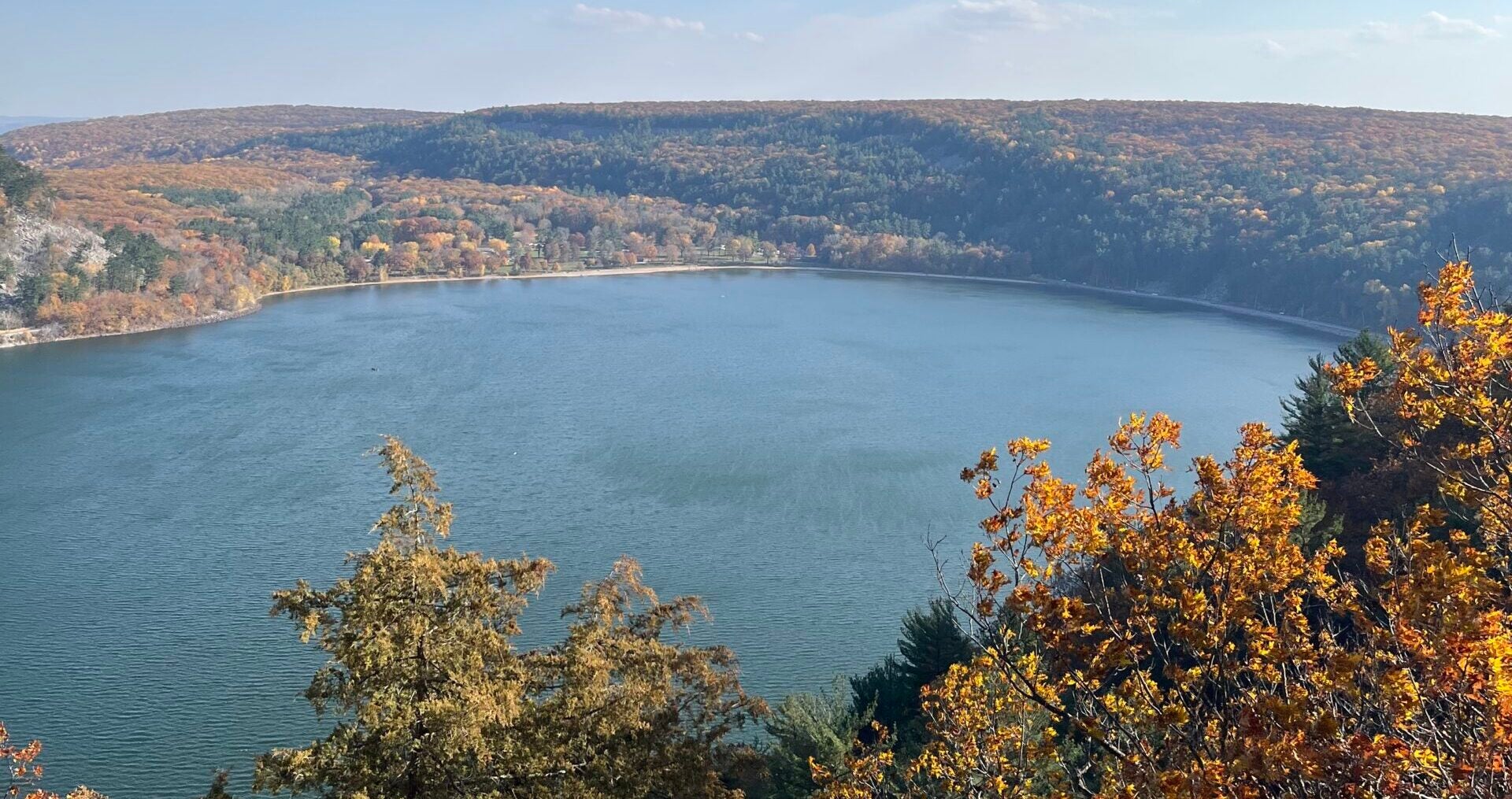
“If you zoomed out on Google Earth and looked at southern Wisconsin, the Baraboo Hills stand out as this really distinct green band of forest,” she said. “It’s the largest block of contiguous upland forest in southern Wisconsin.”
Over 135 bird species use the Baraboo Hills for nesting, Calhoun said, more than half the species that breed in Wisconsin. And now, the microphones are here recording all of it.
“It really does give us a kind of a through line and understanding (of) what occurs here, and how collecting that amount of information and data can be used to help inform stewardship and care for those sites long term,” she said.
The Nature Conservancy has done targeted clearing and prescribed burns in the area. Calhoun said for thousands of years under Indigenous stewardship, fire was just as important to forest maintenance as sunshine or rain.
“It’s just the element that humans can control,” she said.
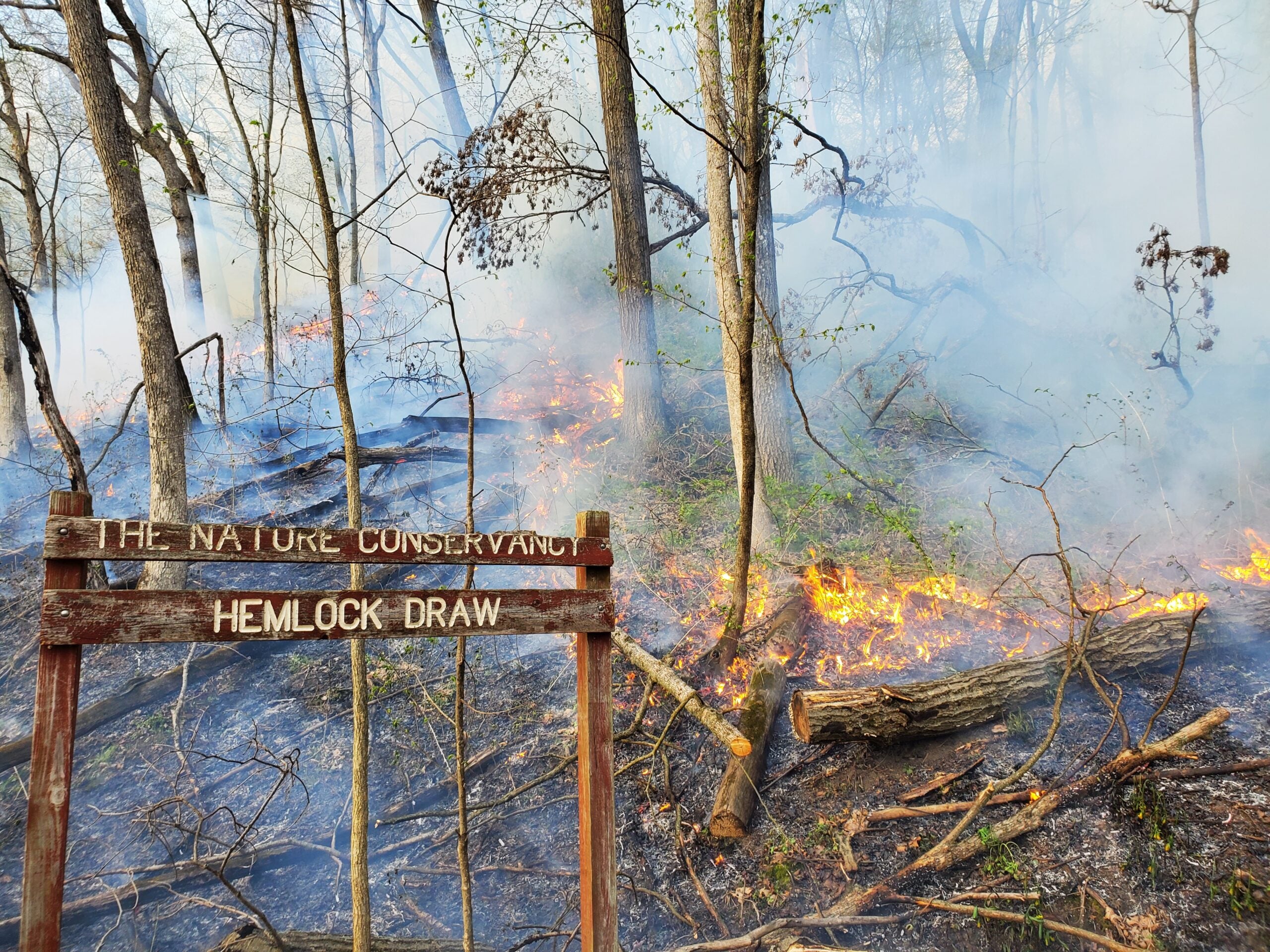
Research has shown that the management tactics are working. Bioacoustics, along with traditional bird surveys, showed managed areas of the hills tended to have more complex soundscapes and documented bird varieties than the unmanaged areas.
Researchers use machine learning to analyze forest recordings
On a late spring day with near-perfect weather, UW-Madison postdoctoral researcher and ecologist Laura Berman hiked out to one of the Baraboo Hills recording sites. But the boxes need to be checked once a month to swap out their batteries and memory cards. That means Berman sometimes makes the trek in the dead of winter, when the roads are closed and the trail is under a foot of snow.
The boxes themselves are waterproof, and “apparently very tasty to squirrels,” Berman said, noting that she always brings extra foam microphone covers in case one needs to be replaced. In more tropical locations, the team has learned to deal with other nuisances, like termites and elephants.
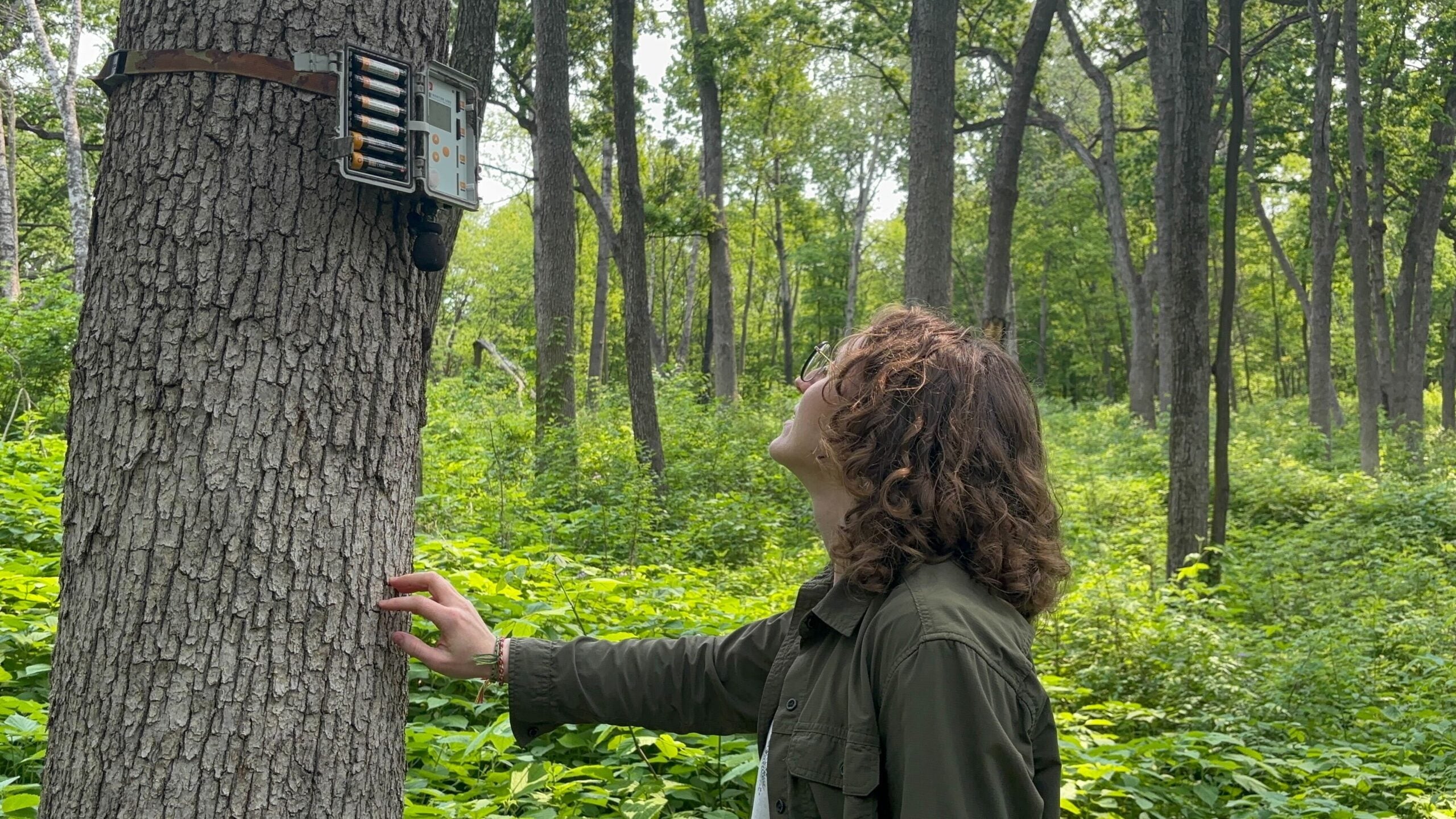
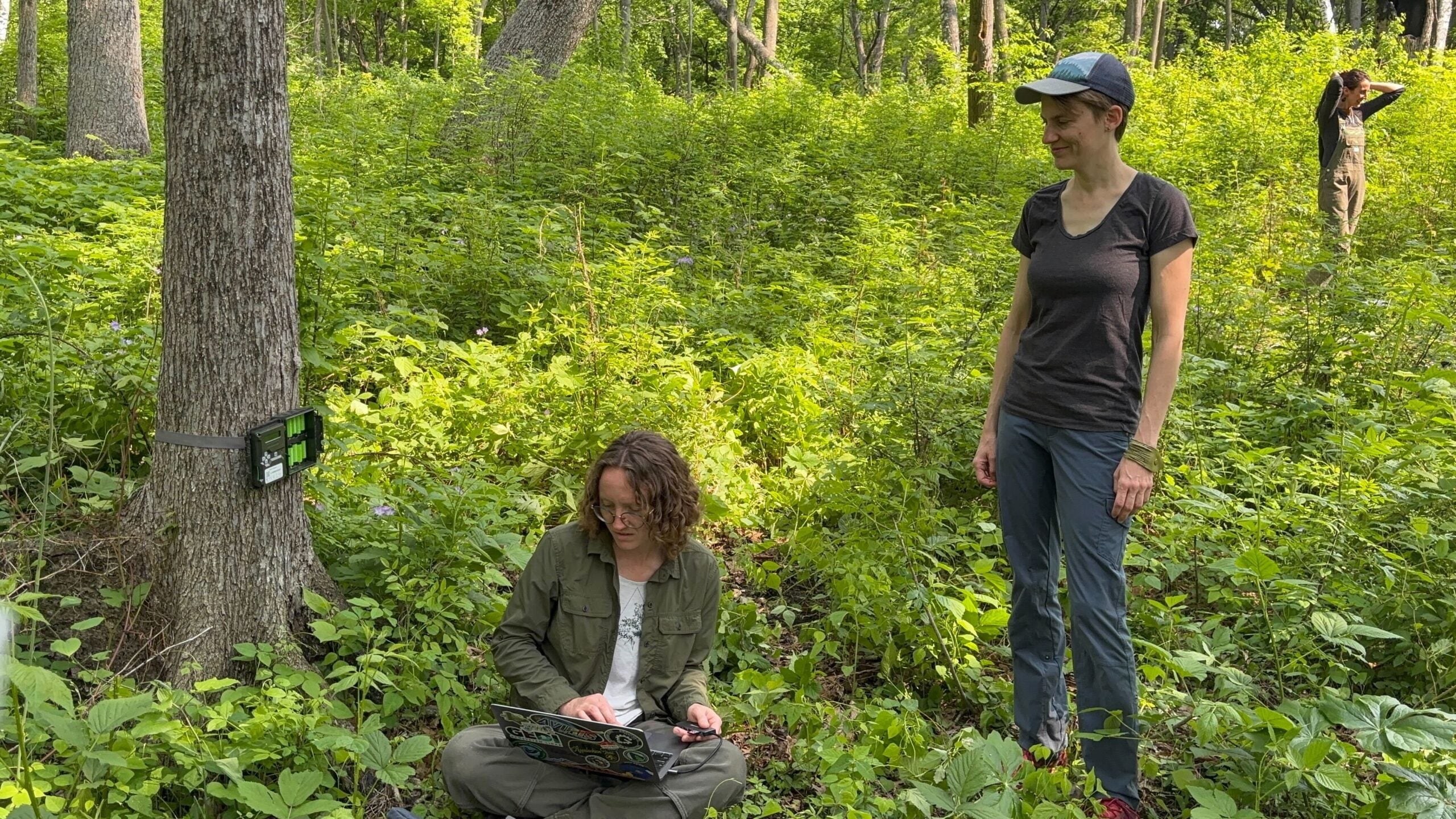
Each of the project’s six recording locations have six microphones, running 24/7, 365 days a year. The result is a huge amount of audio and data. In the lab on UW-Madison’s campus, Berman’s desk holds stacks of hard drives and memory cards — and that’s only a portion of what they’ve got.
The Baraboo Hills microphones captured more than 50,000 hours of audio in one year. And the Soundscape Baselines Project as a whole recorded more than 300,000 hours from all over the world. It would be too much for human researchers to listen through, Berman said. Instead, they use machine learning to analyze it.
“Even just continuous audio from one site for one year, if you wanted to listen to it all manually, it would take a year,” she said.
Berman pulls up a file and runs it through a tool that tells her what birds were present that day. The program tells her, with 80 percent certainty, that the song belongs to an eastern towhee. And when she plays it back, Berman confirms that the tool was correct.
Baseline research could be used for future discovery
The first year of the Soundscape Baselines Project is over, but many of the microphones are staying in place in the Baraboo Hills and forests around the world, and researchers are hoping to add more, Burivalova said.
The team is also working to launch a public website where, one day, users will be able to pick a date and time and listen to what the forest sounded like that day and what species were present.
And Burivalova hopes the data collected will be used by conservationists in the future. Having the baseline could help them learn about any number of things like the impacts of logging, or birds’ migratory patterns, or how climate change is impacting biodiversity, she said. Researchers suspect being able to compare years of data could uncover things they don’t yet know are there.
“These new technologies, like bioacoustics, artificial intelligence … they’re finally enabling us to really understand what is out there and how it’s changing,” she said.

Wisconsin Public Radio, © Copyright 2026, Board of Regents of the University of Wisconsin System and Wisconsin Educational Communications Board.