An emerging technology in lumber could have implications for Wisconsin’s forestry industry.
Mass timber is a process of strengthening wood, typically by gluing panels together to create dense layers of wood called cross-laminated timber or CLT.
CLT is “essentially plywood on steroids,” said Alex Anderson, forest products specialist for the state Department of Natural Resources. It’s strong enough to build skyscrapers, warehouses and other large-scale projects
News with a little more humanity
WPR’s “Wisconsin Today” newsletter keeps you connected to the state you love without feeling overwhelmed. No paywall. No agenda. No corporate filter.
And mass timber construction is a growing market. In October, sustainability advocates with the Trellis Group wrote that the number of new mass timber building projects in the U.S. has grown by about 20 percent each year in the last 10 years.
Wisconsin has had several high-profile examples of mass timber building projects, including the Children’s Museum of Eau Claire and Ascent, a 25-story apartment building in Milwaukee — the world’s tallest mass timber building. A new project in Milwaukee, the Edison, will supplant that record when completed.
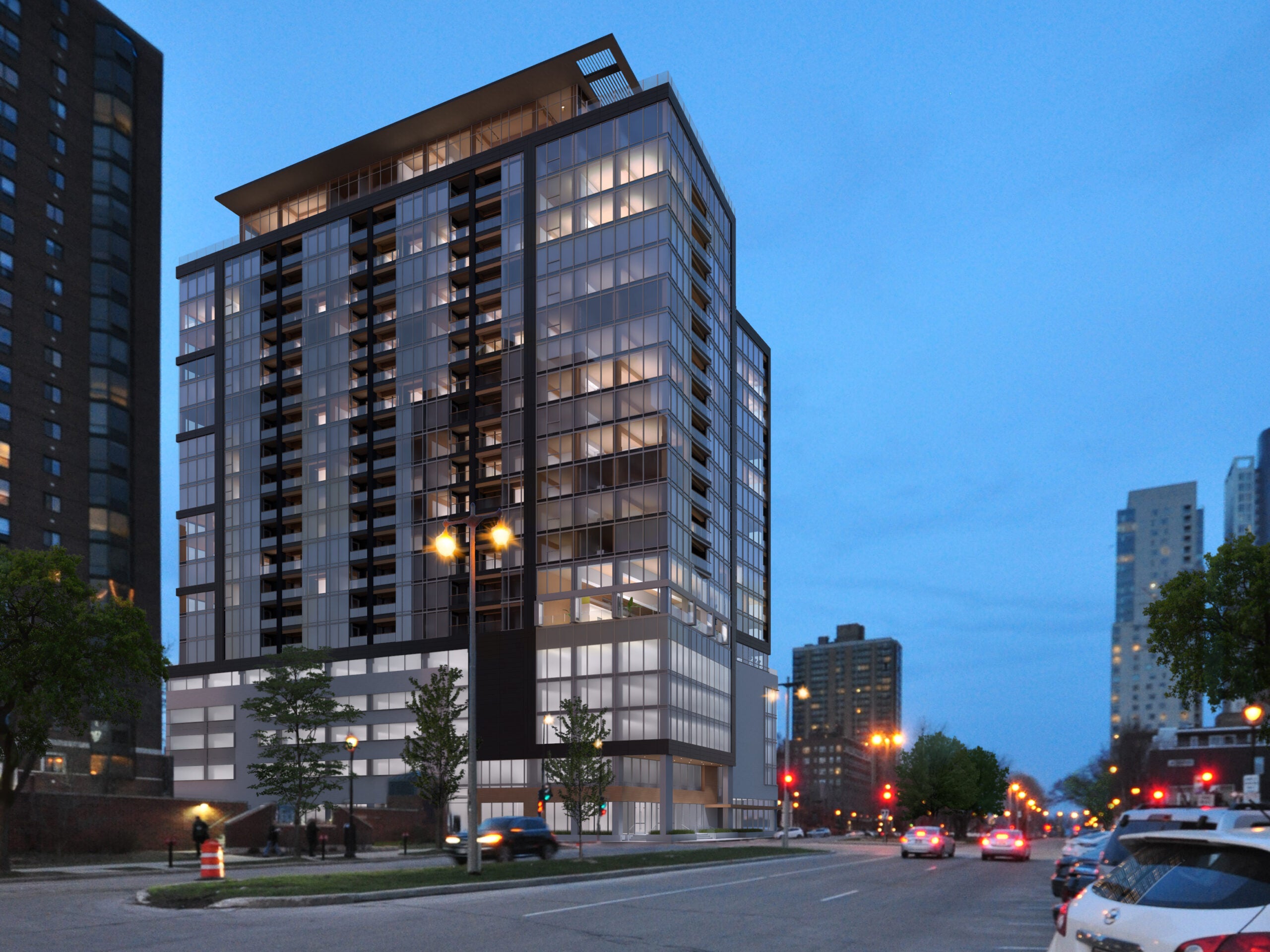
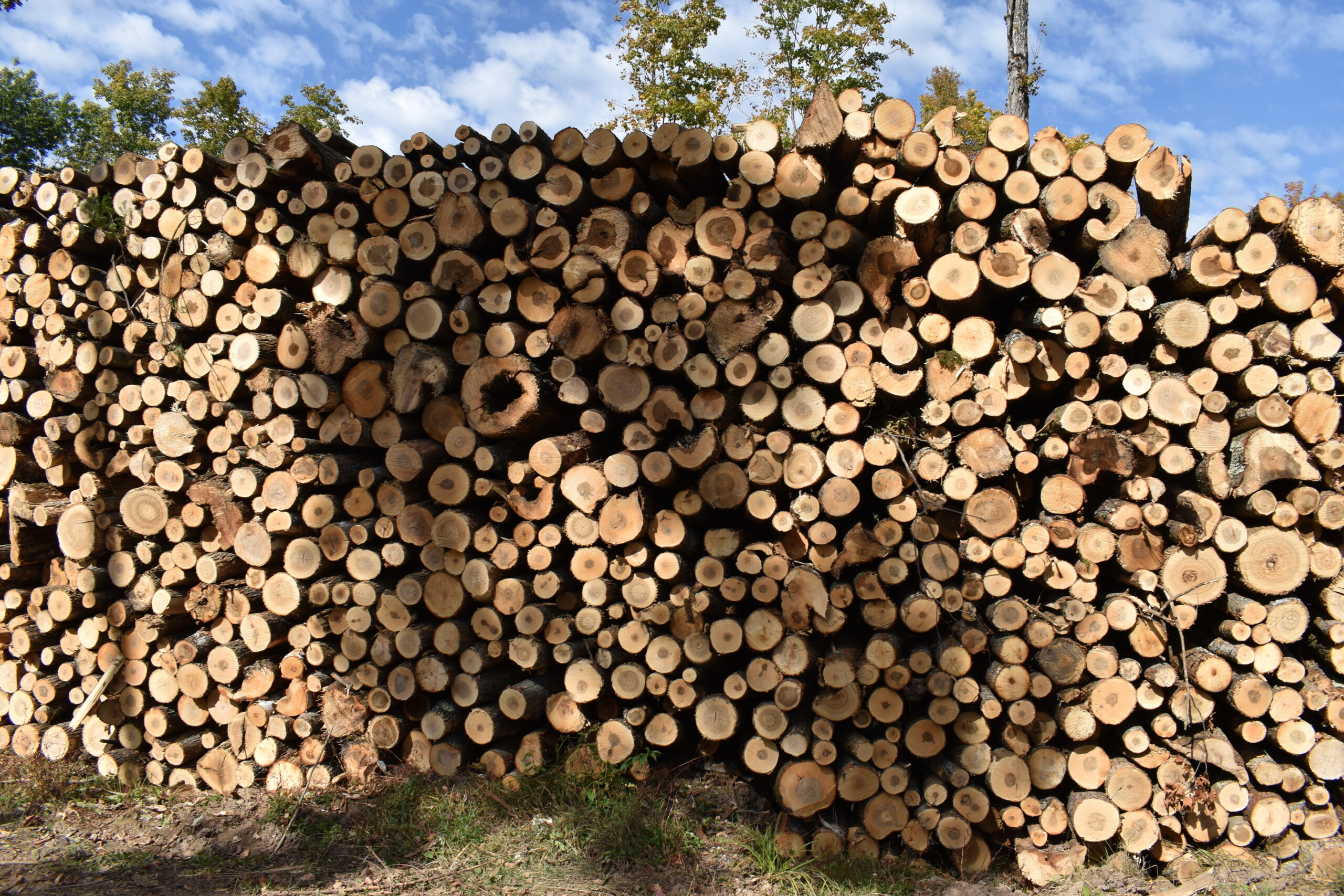
Forest products are a multibillion-dollar industry in Wisconsin, employing some 56,000 people. But so far, growth in mass timber in the state has been slow. Most of the wood used in mass timber construction in the U.S. is southern yellow pine grown in southern states or Douglas fir from the Pacific Northwest.
Wisconsin also competes with manufacturers of mass timber in Europe, where the material has been more widely embraced.
“Because Europe is so far ahead technologically,” Anderson said, “it was still cheaper in the Ascent building for them to ship panels all the way over from Austria … than to procure locally.”
Anderson said getting Wisconsin manufacturers more involved in the mass timber supply chain is “one of the challenges and one of the opportunities we have right now.”
Today, Wisconsin has only one glue-lamination or “glulam” plant. Timber Technologies in Colfax employs about 30 people. Co-owner Dale Schiferl said he’s seen demand increase in recent years as construction companies make “a real push for a product that is truly renewable, that actually stores carbon.”
But Schiferl said architecture firms and engineers are still more accustomed to designing with carbon-burning concrete and steel.
“People are creatures of habit,” he said.
Both Schiferl and Anderson said more testing is needed to bring more CLT to market with Wisconsin-grown trees such as red pine.
This fall, a report published online suggested demand for U.S. applications of mass timber could increase. Retail giant Amazon and the nonprofit Sustainable Northwest published a look at how Amazon could use mass timber in new warehouse construction — “potentially driving 10 percent of the market,” according to the report. This year, Walmart built the largest mass timber project in the U.S. on the campus of its Arkansas headquarters, which mass timber companies hailed as a sign of that company’s interest in the technology.
Anderson and Schiferl said as demand for mass timber grows, Wisconsin may see new entrants into the market. That could yield far-reaching benefits to the state, Schiferl said.
“Ideally, here’s how this would go,” Schiferl said. “You have a local Wisconsin landowner who is managing the forest. You have a Wisconsin logger … doing the cutting. A local Wisconsin trucking company is trucking the logs to the mill. The local Wisconsin mill is milling it into lumber. They send it to me, a local Wisconsin company. We add value to it by glue-laminating it. (Wisconsin helps) create the market for it, and we build a lot of structures.”
But getting to that future will require large investments, he said.
The potential for growth in the industry is “the million-dollar question,” Schiferl said.
“That’s always the hard question: If I build it, will they come?”

Wisconsin Public Radio, © Copyright 2026, Board of Regents of the University of Wisconsin System and Wisconsin Educational Communications Board.