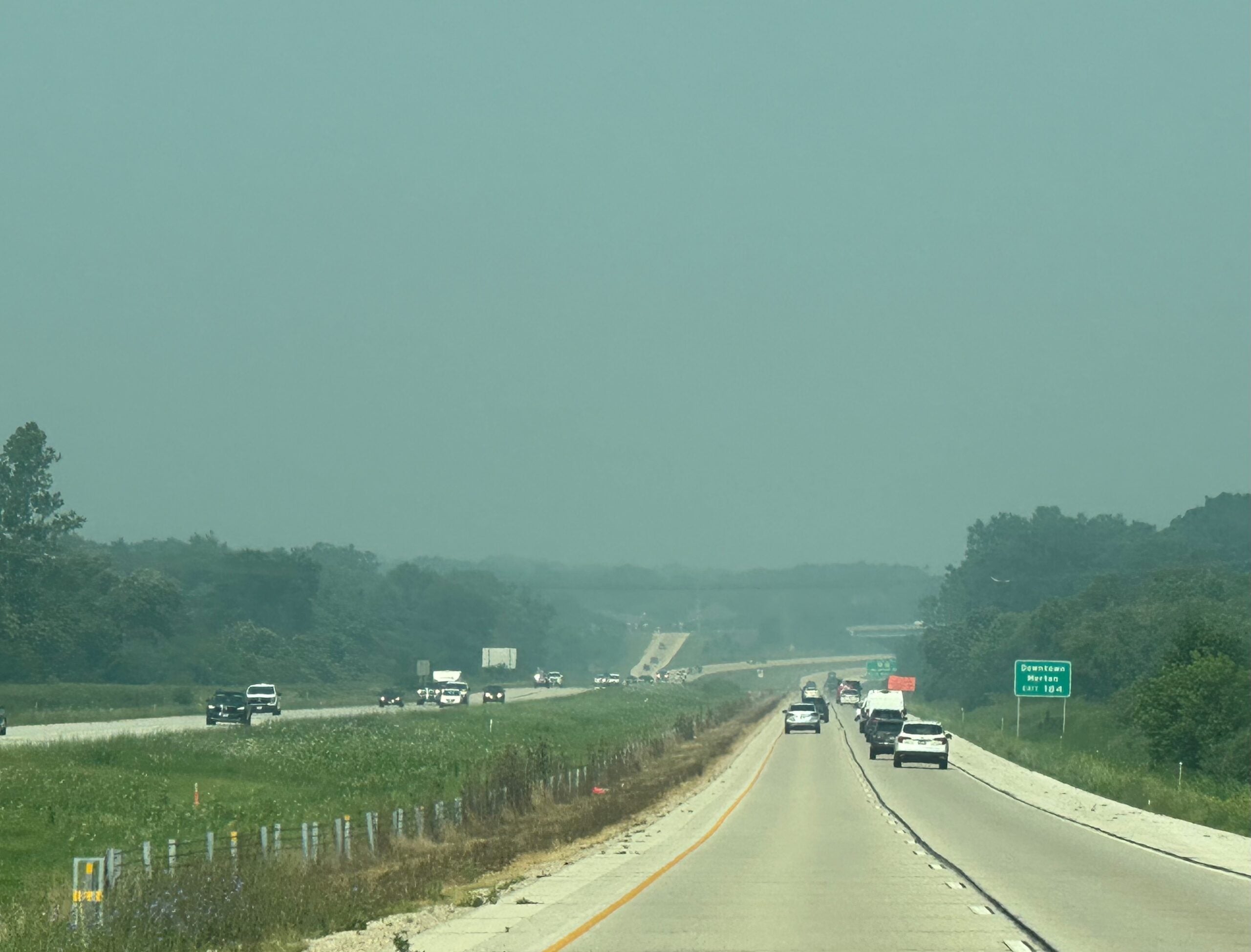
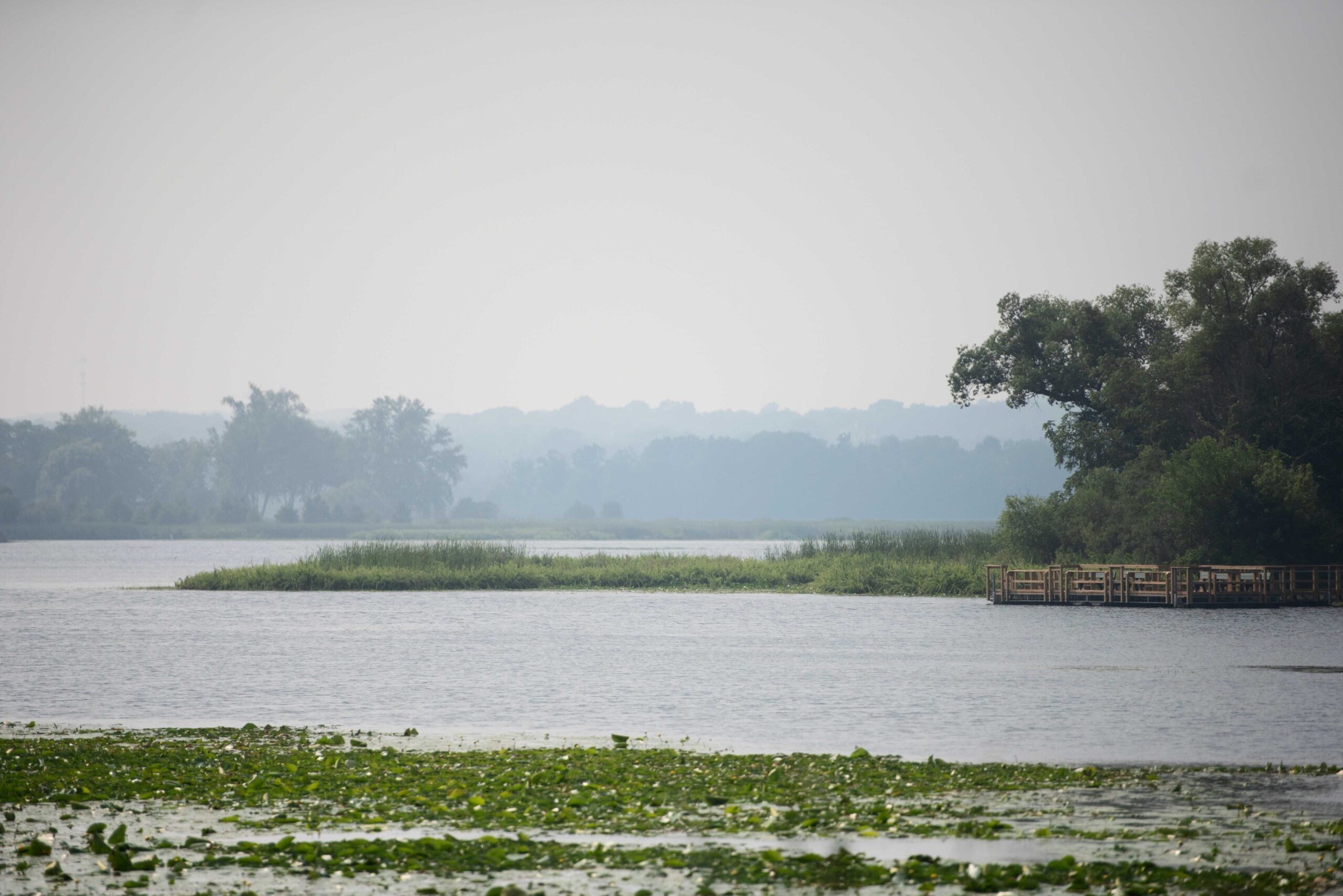
Smoky skies have now hovered over Wisconsin for more days than 2023, and the state is likely to break the previous record set 15 years ago.
As of Wednesday, Wisconsin has seen 22 days where wildfire smoke has prompted air quality alerts, according to the Wisconsin Department of Natural Resources.
Craig Czarnecki, outreach coordinator for the DNR’s air management program, said that’s one more than the state saw in 2023. It’s also one day shy of the record of 23 days set back in 2010.
While air quality has improved, Czarnecki said he would not be surprised if this year surpasses that record.
“Unfortunately, that potential remains high for wildfire smoke impacts here in Wisconsin throughout the rest of the summer,” Czarnecki said.
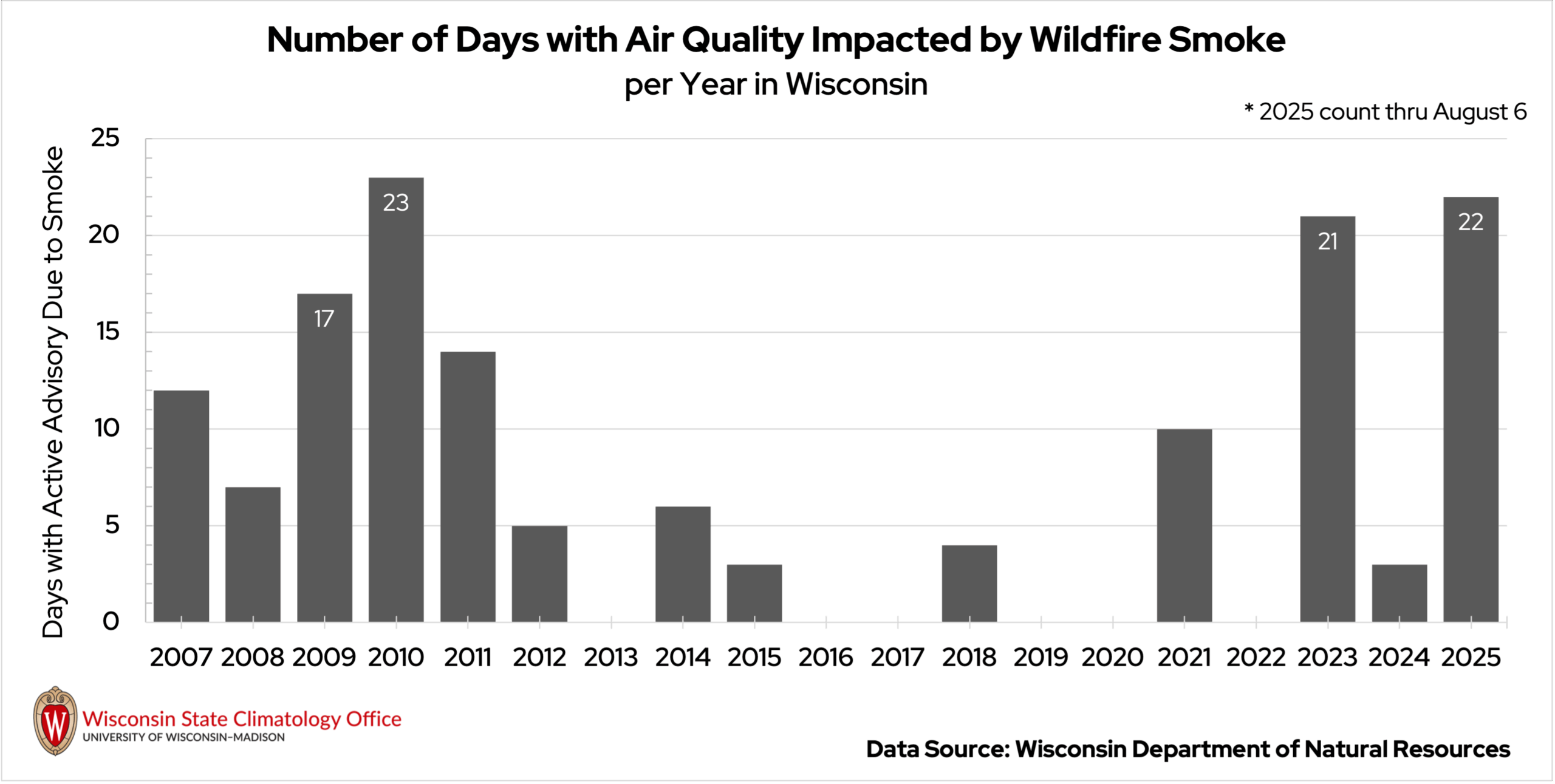
On Thursday, Milwaukee and other counties along Lake Michigan were facing their 8th straight day of poor air quality, but that’s due to ozone pollution. When it comes to wildfire smoke, Wisconsin has typically seen only a few days with impacts or none at all in the last decade.
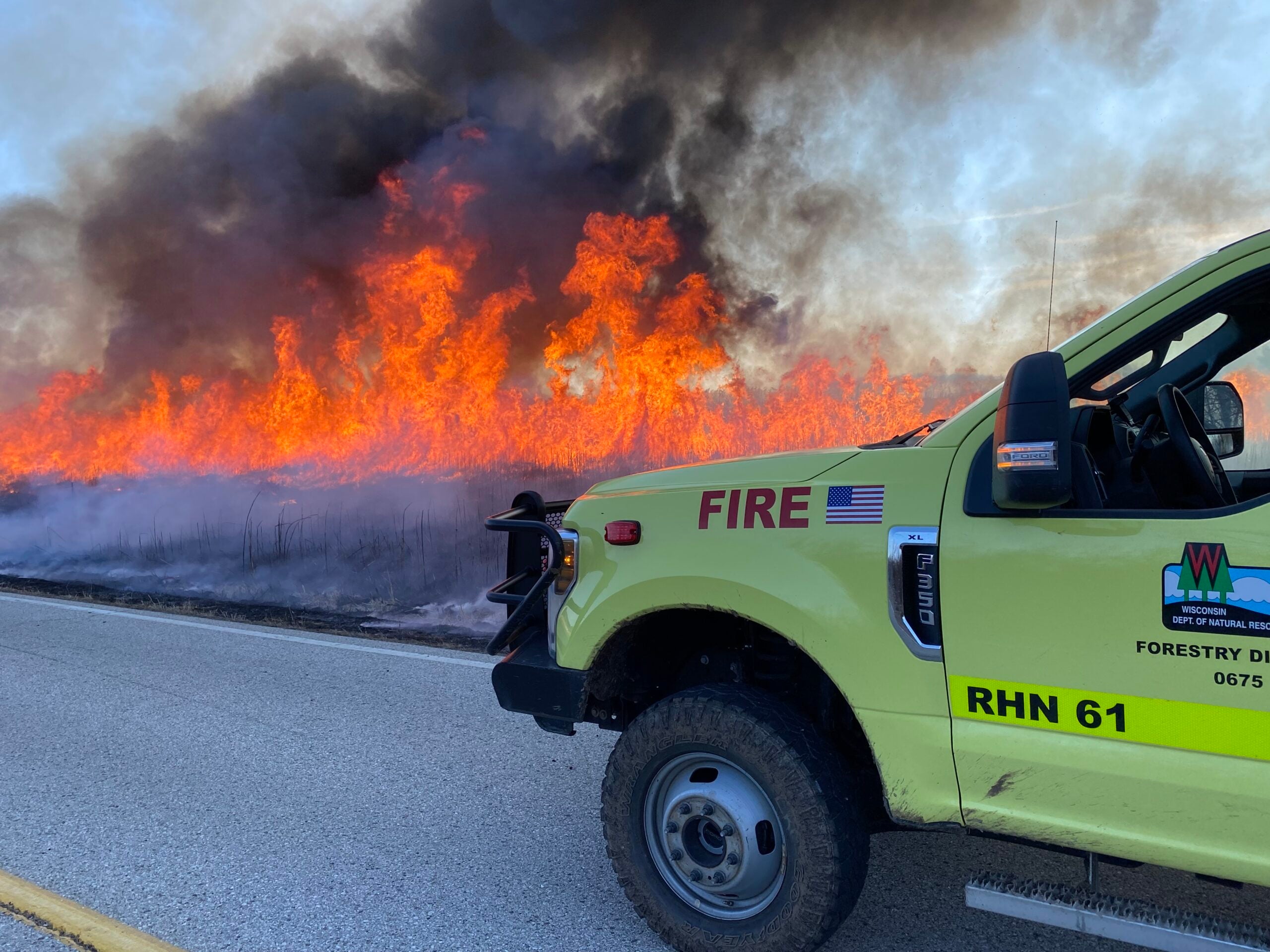
Canada is experiencing its second-worst wildfire season on record next to 2023 with more than 4,100 fires that have burned 17 million acres, according to the Canadian Interagency Forest Fire Centre. In the near future, forecasts show Canada will continue to see warmer-than-normal temperatures along with drier weather.
Wednesday marked a record nine days straight for air alerts issued in Wisconsin due to wildfire smoke, according to Amanda Schwabe, climate outreach specialist for the Wisconsin State Climatology Office. She said the longest stretch was previously four days in 2023, which is when the DNR first began issuing multiday advisories.
While the streak of polluted air has ended, Schwabe said there’s a high chance the state will see more effects from wildfire smoke this month.
“It doesn’t really seem like there’s any sign of wildfire activity slowing down during the month of August in Canada,” Schwabe said.
The nation faced warmer temperatures this spring, and a lack of snow melt prompted drier conditions that set the stage for wildfires to burn earlier this year. She said climate change is driving warmer and drier weather that makes wildfires more common.
News with a little more humanity
WPR’s “Wisconsin Today” newsletter keeps you connected to the state you love without feeling overwhelmed. No paywall. No agenda. No corporate filter.
“Typically in Canada, they would have a decent snow pack through the late winter and then into the early spring. Then all of that snow (melts) into the ground and keeps the ground nice and saturated and alleviates a lot of drought,” Schwabe said. “Without all of that snow pack, that really exacerbates the drought conditions.”
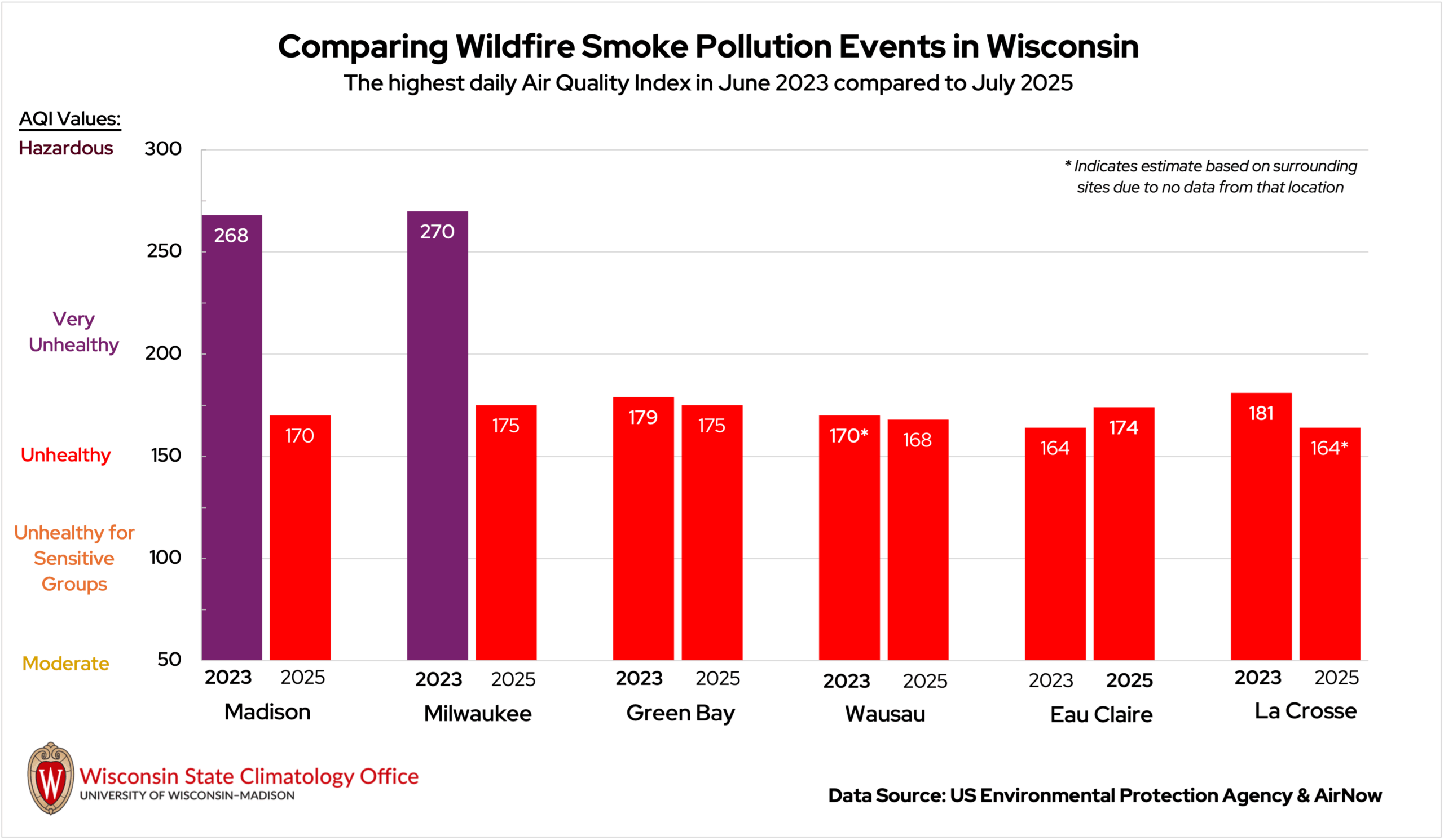
In recent weeks, Schwabe said eastern Wisconsin has been among the hardest hit with air quality index readings of more than 200, which indicates very unhealthy air quality. Last Thursday, Milwaukee and Green Bay had the most polluted air in the country.
Amid persistent smoke this year, federal and state lawmakers have called on the Canadian government to shift its forest management practices. On Wednesday, State Rep. Calvin Callahan, R-Tomahawk, joined GOP lawmakers in nearby states in filing a formal complaint against Canada.
“Our workers, families, and kids can’t afford to breathe toxic air day after day,” Callahan said in a statement. “Canada needs to step up and take responsibility before more Wisconsinites suffer.”
In a joint letter, the lawmakers urged the International Joint Commission to investigate Canada’s wildfire management practices. They also called on Environmental Protection Agency Administrator Lee Zeldin to work with the binational agency to evaluate the public health and environmental impacts of Canadian wildfire smoke on the U.S.
Republican Congressman Tony Wied from Wisconsin also wrote a letter to the Canadian ambassador Thursday, imploring the nation to use all means “to both prevent and mitigate wildfires in the future.”
As wildfires continue to burn, that means more smoke. Czarnecki said a high pressure system had caused smoke to hover over Wisconsin and the Upper Midwest. Southerly winds have since pushed smoke out of the state.
Even so, Dr. Joan Schiller, a member of Healthy Climate Wisconsin, said wildfire smoke is more dangerous than burning fossil fuels because it contains more harmful compounds. Schiller is a retired medical oncologist who worked at the University of Wisconsin’s Carbone Cancer Center.
She said the smoke contains tiny particles of pollution that are smaller than a strand of hair, which can be dangerous when inhaled.
“They get all the way into our lungs, to the very end of our lungs, in the alveoli, and they can cause damage right there,” Schiller said. “They can also get into the circulation and cause damage.”
She added that wildfire smoke has been linked to lung cancer, and wood burning has also been tied to breast cancer. Health experts at Stanford University have said that an air quality index of 150 for several days is equal to smoking seven cigarettes each day if someone were outside the entire time.
Children, older adults, pregnant women, outdoor workers and people with respiratory illnesses like asthma are most at risk from poor air quality. Such pollution can worsen asthma or lead to increased risks of heart disease. Symptoms may include coughing, wheezing and difficulty breathing.
A team of climate scientists estimated more than 30 residents have died in Wisconsin due to complications from wildfire smoke, according to a recent climate report. Health professionals urge people to stay indoors as much as possible on days with poor air quality.

Wisconsin Public Radio, © Copyright 2026, Board of Regents of the University of Wisconsin System and Wisconsin Educational Communications Board.