Over the summer, you may have planned for a day at the beach only to find the water smelly or scummy — or closed down due to toxic algal blooms. But a new strategy to clean up lakes is in the works in central Wisconsin.
Reports of algal blooms are increasing over time as climate change makes for warmer and wetter conditions and runoff creates more lake pollution, according to the Wisconsin Department of Natural Resources.
In recent years, some communities in Wisconsin have tried using barriers and filters to keep swimming areas clean, to mixed results. Now, the Tri-Lakes Management District in Adams County is trying out nanobubble technology as a possible solution.
News with a little more humanity
WPR’s “Wisconsin Today” newsletter keeps you connected to the state you love without feeling overwhelmed. No paywall. No agenda. No corporate filter.
The process involves using machines to pump minuscule oxygen bubbles into the water, hopefully slowing algae growth, improving water clarity and decreasing the amount of muck on the lake bottom.
Carl Hasdal is board chair for both the Tri-Lakes Management District and the town of Rome. He’s been leading the charge to implement nanobubble technology in Rome’s lakes. In the three decades he’s spent living on or near the lakes, he’s seen them change for the worse.
“You could actually see the bottom 10, 15 years ago. You could see all the fish nests in the spring,” Hasdal told WPR’s “Wisconsin Today.” “That’s all gone. The muck is built up. The water’s moving slowly, and we have a severe algae problem at times.”
In Rome, most of the town’s residential value comes from the area around the lakes, Hasdal said. To him, cleaning up the lakes is an urgent matter.
“The town was built around these lakes,” Hasdal said. “If the lakes die, the town dies.”
The new version of an old technology
Within the town of Rome in central Wisconsin sit three main lakes, all of them man-made: Lake Arrowhead, Lake Sherwood and Lake Camelot. They total about 900 acres, and they’re what the DNR calls eutrophic, Hasdal said.
“Basically, they are dying, mainly from contamination of nitrates and phosphates,” Hasdal said.
That contamination comes mainly from runoff from nearby lawns and upstream farms.
Hasdal has been exploring solutions for years in his roles with the boards for the town of Rome and the management district, which is a taxing authority that works to care for the health of the three lakes. But until now, he only found “Band-Aid solutions.” He thinks nanobubbles are different.

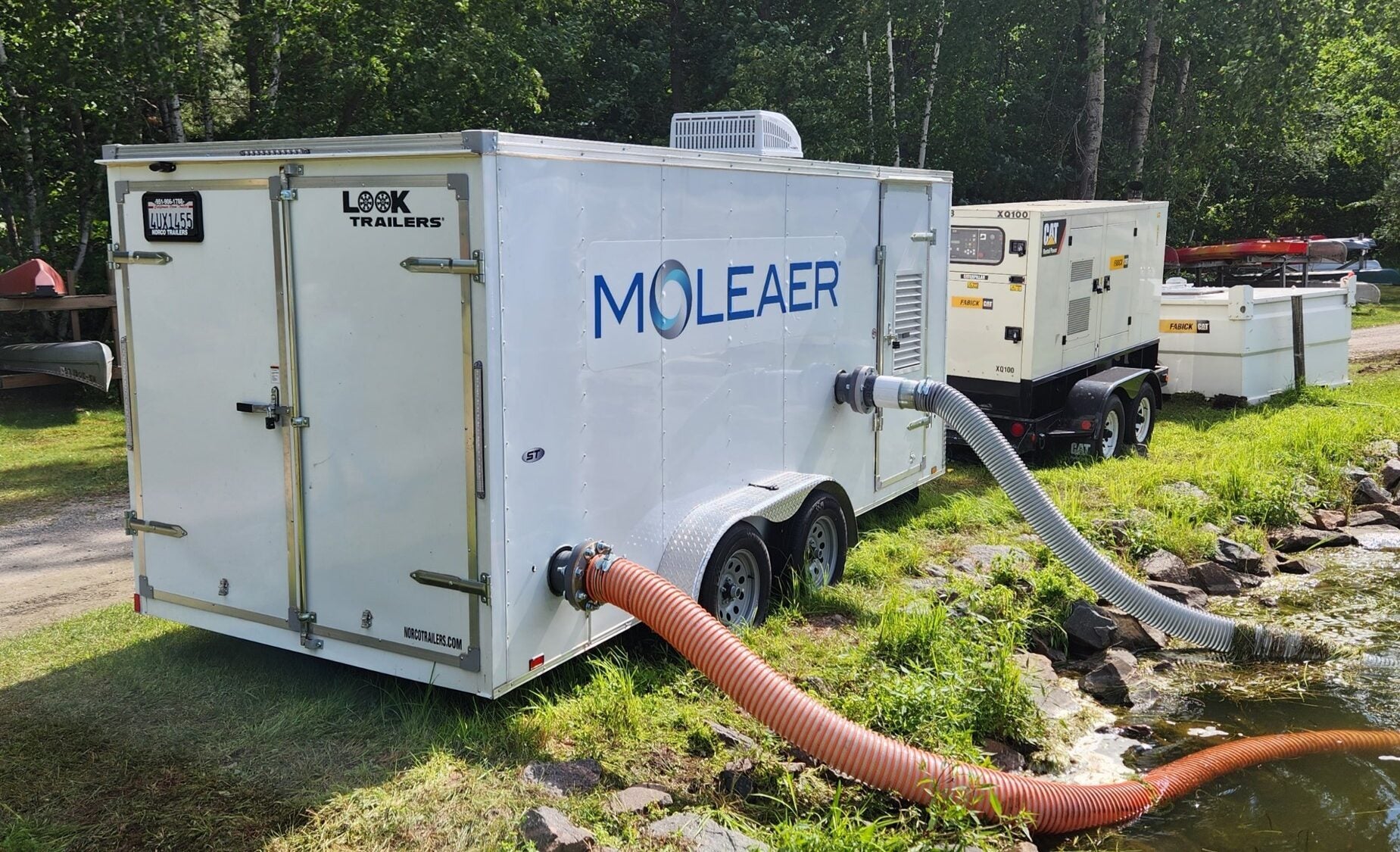
The nanobubble machines are built by a company called Moleaer. But when a representative came out to visit the tri-lakes, they told Hasdal that they were 95 percent sure their machines could clean up the lakes.
Nanobubbles are a new iteration of an old technology, said resource engineer and limnologist Anne Wilkinson. She works for EOR, a water resource-based engineering and environmental consulting firm that’s working with the Tri-Lakes Management District on the project.
“Aeration is a common lake management technology, and this is just a new way of delivering that aeration into the lake,” Wilkinson said.
Oxygenating the water interrupts nutrient cycles that promote algae growth and promotes oxygen-consuming microorganisms that break down “muck” in the water. Oxygen-rich environments are also healthy for aquatic wildlife.
But the size of the oxygen nanobubbles — about 2,500 times smaller than a grain of sand — makes it so that they stay in the water for much longer than larger bubbles, which tend to float to the top and burst before they can deliver many benefits.
The tri-lakes nanobubble experiment
The technology was first demonstrated in Rome two years ago at a marina on Lake Arrowhead. One Moleaer unit and the addition of a small amount of ozone to the bubbles — an optional addition that enhances the bubbles’ effectiveness — improved the water clarity by over 3 feet of depth.
It also compacted the muck at the bottom of the marina by more than 10 inches, said EOR project manager Jay Michels.
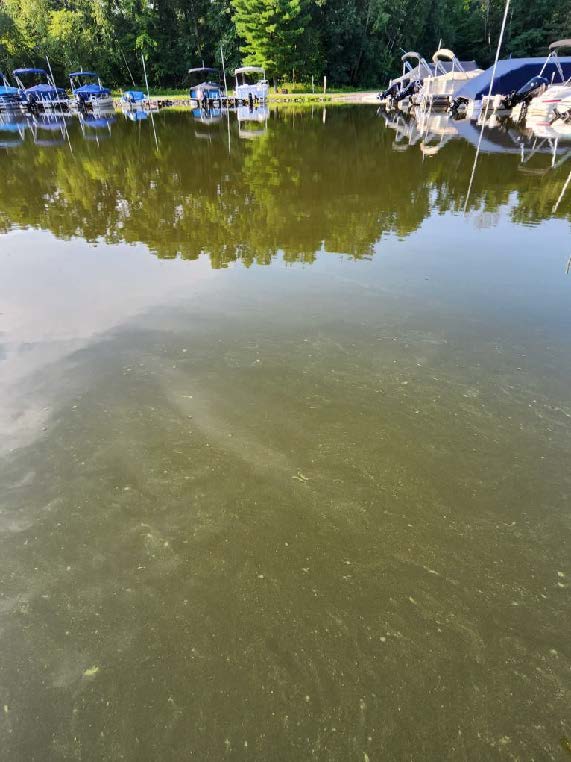
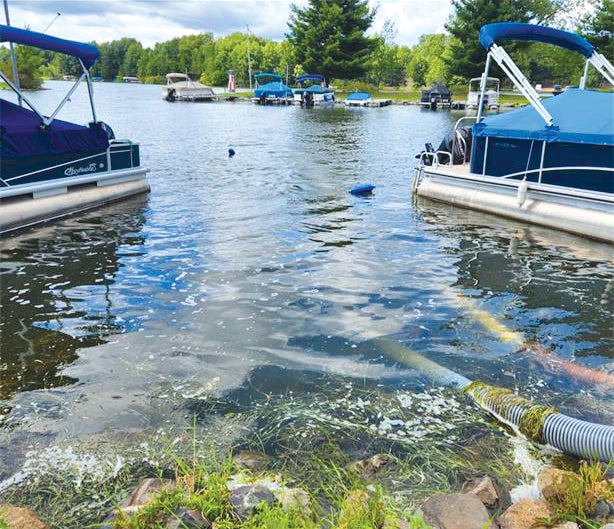
The water in the marina on Lake Arrowhead the day before, left, and the day after, right, the Moleaer nanobubble units started up. Photos courtesy of Moleaer
“I’ve been doing this a long time, and I’ve never seen anything work quite like that,” Michels said.
This summer, the Tri-Lakes Management District installed one large Moleaer unit on Lake Camelot and 10 small units in various bays on Lake Sherwood. Altogether, they’ve spent a little over $1.6 million on the project, Hasdal said.
EOR has been working with the University of Wisconsin-Stevens Point to test the environmental impacts of the nanobubbles and prove to the state DNR that it’s safe. While they’re still analyzing the initial data, Michels said the results so far are promising.
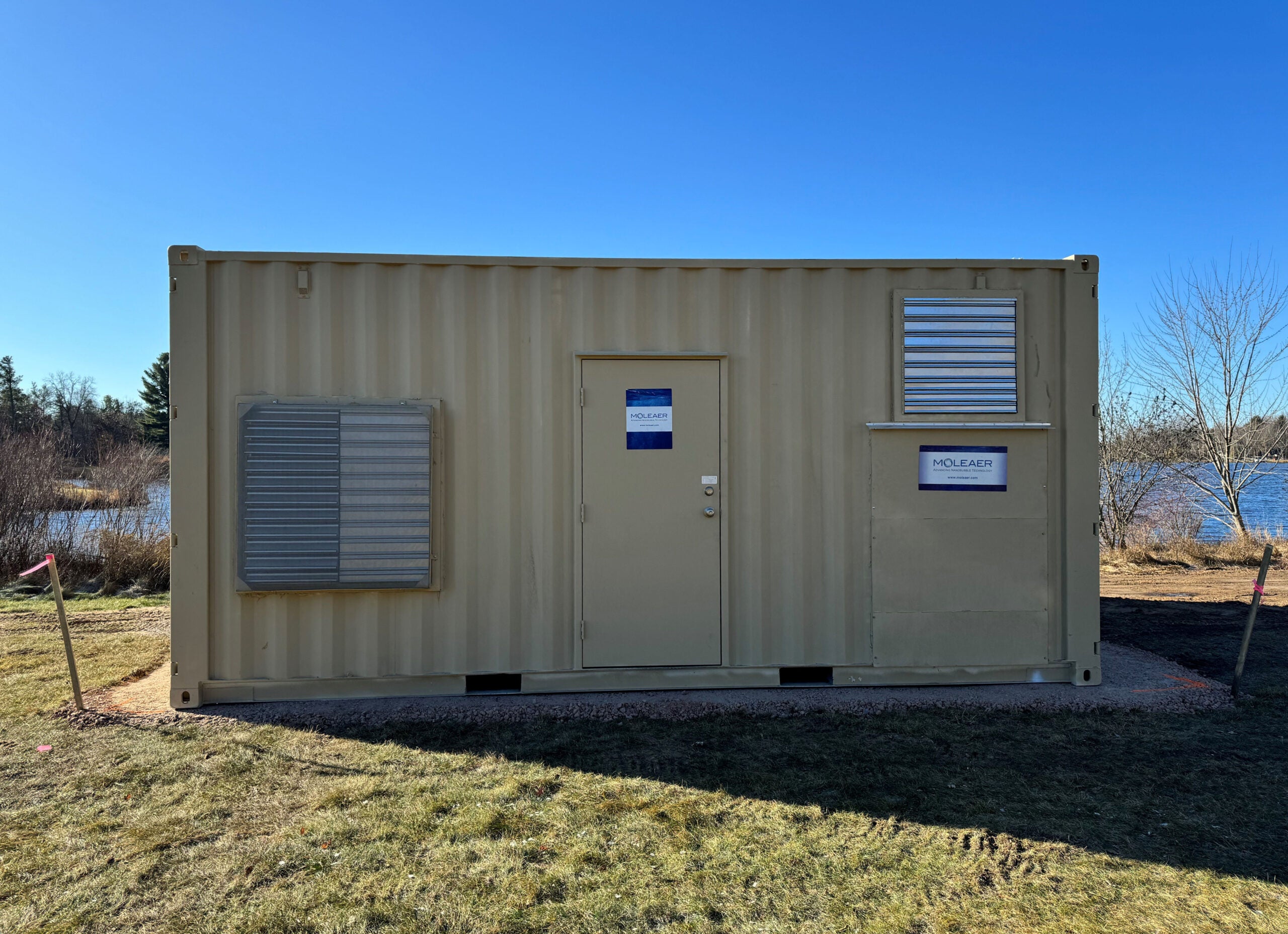
“Generally, our results have shown that we’re not having any negative impacts. And I think that is eye-opening to the folks at the DNR,” Michels said.
Other communities in Wisconsin have shown interest in following in Rome’s footsteps. Moleaer Business Development Manager Jon Morales said dozens of people and municipalities in Wisconsin have approached Moleaer about trying out the technology on their own ponds and lakes.
Hasdal is optimistic he’s finally found a solution to algal blooms and lake muck for waterfront communities in Wisconsin.
“Once you start seeing clear water rather than the green stuff, you feel a whole lot more confident that there’s not going to be any issues with your children, your kids, your dogs and pets,” Hasdal said. “It’s a positive all the way around.”