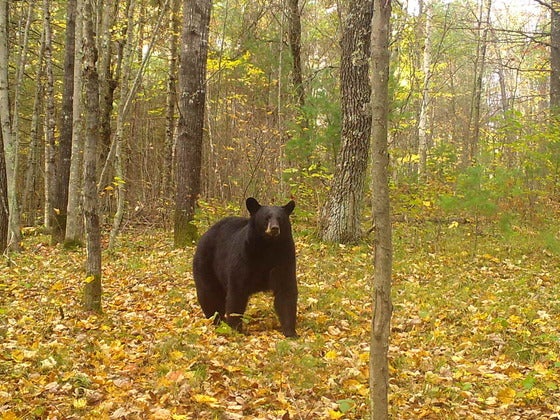
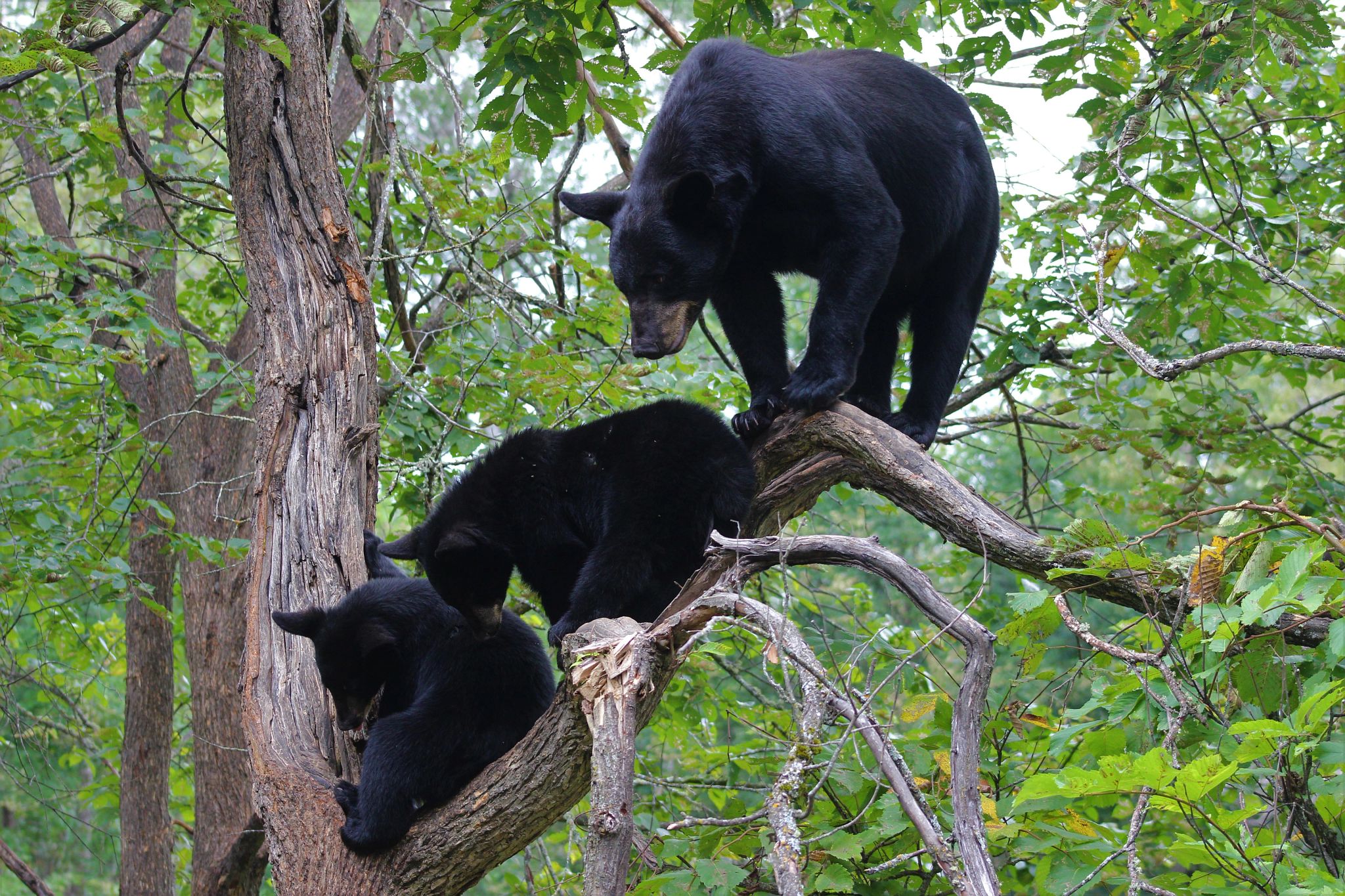
Wisconsin hunters will have a better chance to harvest black bears this fall due to a record number of licenses and higher quota approved Wednesday by the state’s Natural Resources Board.
The board unanimously signed off on a quota of 4,160 bears and 15,245 licenses for the fall bear hunt, following recommendations from the Wisconsin Department of Natural Resources.
The harvest target is up 2 percent from last year’s quota of 4,075 bears. But most significantly, the DNR is increasing the number of bear tags by about 16 percent from last year. DNR Large Carnivore Specialist Randy Johnson said that’s the highest number of bear licenses ever issued in Wisconsin.
News with a little more humanity
WPR’s “Wisconsin Today” newsletter keeps you connected to the state you love without feeling overwhelmed. No paywall. No agenda. No corporate filter.
“Most of that increase is in the southern part of the state, where there’s low success rates, allowing us to provide this opportunity,” Johnson said. “Hopefully, (it) will result in a little bit higher harvest in some of those zones to help us level off some of that population growth.”
Fewer than 10 percent of bear hunters in southern Wisconsin had success last year. Statewide, 28 percent of hunters got a bear, down slightly from the five-year average of 32 percent.
Last fall, hunters killed 3,724 bears during the bear season, which was roughly on par with the state’s five-year average. A record 146,000 people applied for a bear license in 2025. Wisconsin had around 24,000 black bears as of fall 2025.
The Wisconsin Conservation Congress and Wisconsin Bear Hunters Association supported the DNR’s recommendations.
However, Melissa Smith with the Great Lakes Wildlife Alliance accused the DNR of catering to bear-hunting interests at the expense of sound wildlife management.
The DNR is seeking to maintain the bear population in four of the state’s six management zones. However, wildlife regulators want to continue ongoing efforts in place since 2021 to decrease the population in Zone D that covers northwestern Wisconsin counties, including parts of Sawyer, Rusk and Washburn counties.
Those counties had the most agricultural damage complaints due to bears. Last year, at least 180 bears were removed from crops in that management zone and relocated. That’s according to data from the U.S. Department of Agriculture Wildlife Services program.
Models suggest the bear population has declined around 25 percent in that zone since 2020 and ag damage complaints are trending downward.
Statewide, the DNR had 280 enrollments in the wildlife damage program last year due to agricultural damage from bears. Overall, USDA figures show Wisconsin had a total of 847 bear complaints for all types of damage. Douglas, Sawyer and Bayfield counties reported the most nuisance and property damage complaints.
The 2026 bear season will run from Sept. 9 to Oct. 13.

Wisconsin Public Radio, © Copyright 2026, Board of Regents of the University of Wisconsin System and Wisconsin Educational Communications Board.