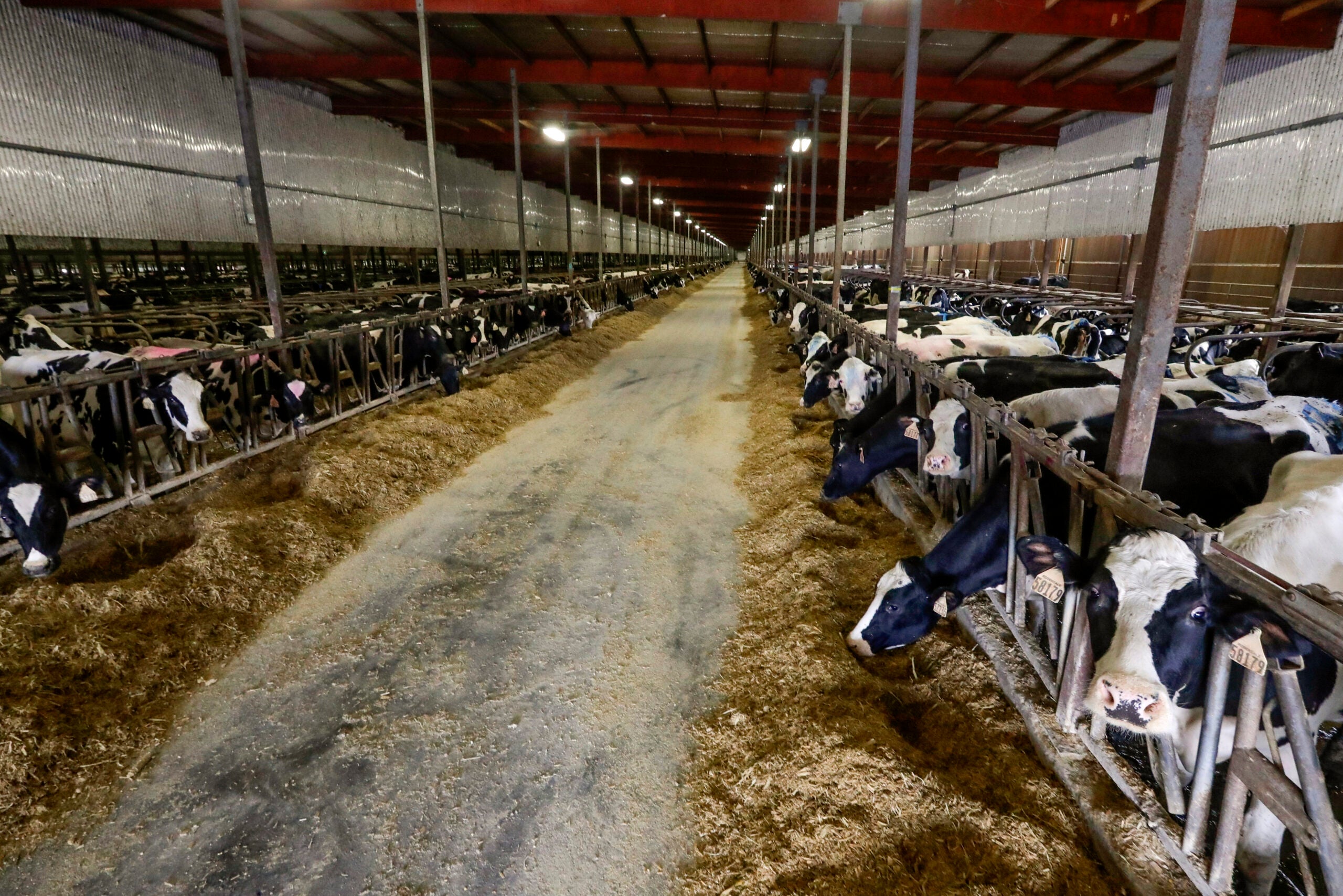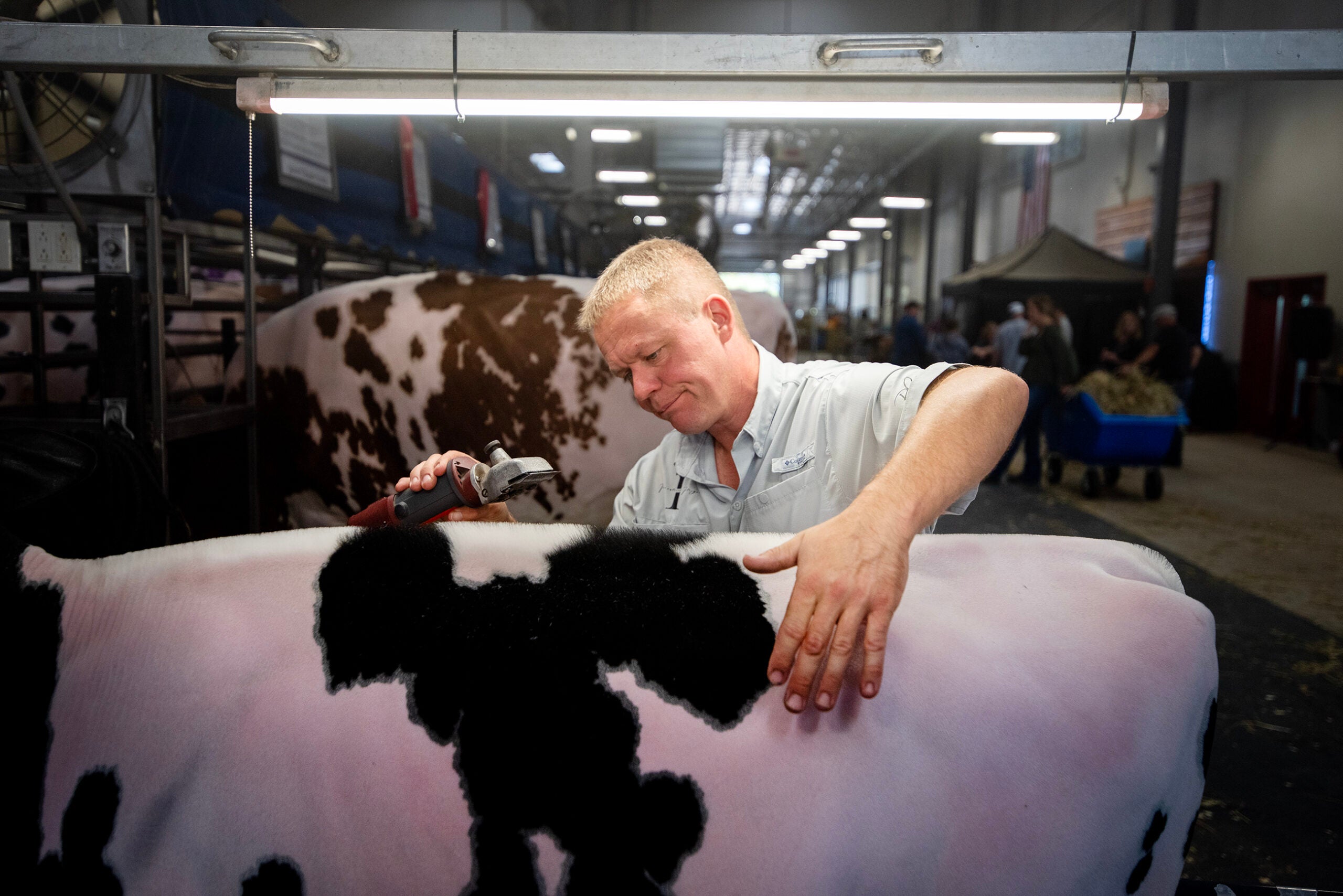

Decades ago, the liquid byproduct from cheesemaking, whey, was considered a waste product. Some farmers spread it on their fields or fed it to their hogs.
Today, it’s a different story. A surge in protein demand has led to a spike in whey production. It is found in shakes and supplements and emphasized in obesity treatment.
In January 2003, production plants produced about 8 million pounds of high-protein whey powder. That number jumped to 48 million pounds in the month of May alone, according to The New York Times analyst of data from the United States Department of Agriculture.
News with a little more humanity
WPR’s “Wisconsin Today” newsletter keeps you connected to the state you love without feeling overwhelmed. No paywall. No agenda. No corporate filter.
Ken Heiman became a licensed cheesemaker at the age of 16. Today, he is a master cheesemaker and is a co-owner of Nasonville Dairy in Marshfield. The plant produces 185,000 pounds of cheese daily.
But about 23 percent of the dollars coming into the business come from whey.
“It’ll continue to grow, to a point that we don’t know where that point is,” he said on WPR’s “Wisconsin Today.”
Kevin Draper is a New York Times business correspondent covering the agricultural industry. He traveled to central Wisconsin to report for his article, “America’s Protein Obsession Is Transforming the Dairy Industry.” He and Heiman spoke with WPR’s “Wisconsin Today.”
This interview has been edited for clarity and brevity.
KAK: Kevin, you have been tracing how whey has become a big business. Can you give us some numbers? How big?
KD: It’s anywhere from a $5 to $10 billion business a year. The important thing to know is that basically everyone projects that in the next decade that’s going to double.
This thing is growing 10 percent or more every single year and is expected to continue doing that for the foreseeable future.
KAK: Why is that?
KD: It’s sort of a convergence of a number of factors. One is sort of just the technological and scientific ability to consistently get that really high protein whey, but really it’s a demand story.
It is more people demanding these protein products.
We have an aging population and as you age, you often lose muscle mass so doctors are increasingly advising their patients to do things like lift weights. You know, not necessarily deadlift hundreds of pounds, but do a little bit of weightlifting and eat a little bit more protein.
The trendy diets, or food styles that people are into tend to emphasize protein.
Then, a big part of this is Ozempic and these other weight loss drugs.
When you take them, you lose weight and a lot of that weight you lose is muscle. So just like with aging patients, doctors are prescribing patients on these drugs a regimen of weightlifting or other high impact exercise activities and they need to eat more protein.
KAK: Ken, when your family bought Nasonville more than 60 years ago, how was whey being used then? And how does that compare to now?
KH: There was no comparison. When we bought the plant whey was an absolute byproduct. And what I mean by a byproduct is it had no value to me. I would actually take it out on the land and spread it or I would take it out and feed it to hogs.
KAK: So when the whey leaves your plant, who is your customer? Where does it go?
KH: A lot of ours will go to Actus Nutrition. They have plants in Minnesota, Fond du Lac and some in Iowa.
When you build a plant that’s unique to a certain protein, you become immersed in that, and that becomes your whole livelihood. What this allows us to do is we became the supplier to Actus. And what Actus does is they find out which item they’re going to need the most of.
KAK: Kevin, let’s go up the supply chain here. How is demand for whey affecting farmers with dairy cattle?
KD: Yeah, it’s sort of a convoluted process in how dairy farmers get paid for their milk, but they are, for sure, seeing the impact of whey.
But basically, dairy farmers get a pretty low price for their milk, and they do not particularly have a lot of room to maneuver. There is more supply, usually, than demand, and so they have to accept the price that they’re given.
Whey used to make up somewhere about 5 to 6 percentage points of the milk check that a farmer got. Now that has sort of doubled. It depends on the month, but we’re talking 10, 11 or 12 percent of the check they receive is made up from whey.
It’s not that they’ve gotten rich off that. It’s sort of more that that has kept them afloat.
KAK: Ken, do you have an eye on international demand for whey?
KH: Our people in China that buy from us on the cheese side have pretty much come to a screeching halt at the moment. But on the whey protein side they’re still buying. For them there’s enough value there to make it worthwhile.
They complain a lot about the whey protein price but they continue to buy although I’m sure it’s down.
Ken, being a family business you’re always thinking about the next generation of owners. Do you think whey is going to be that transition for the next generation of Nasonville Dairy?
KH: I don’t think there’s a question about that. I think it’s absolutely true. Whey is representing a bigger and bigger piece of the milk check. This is where the future is.