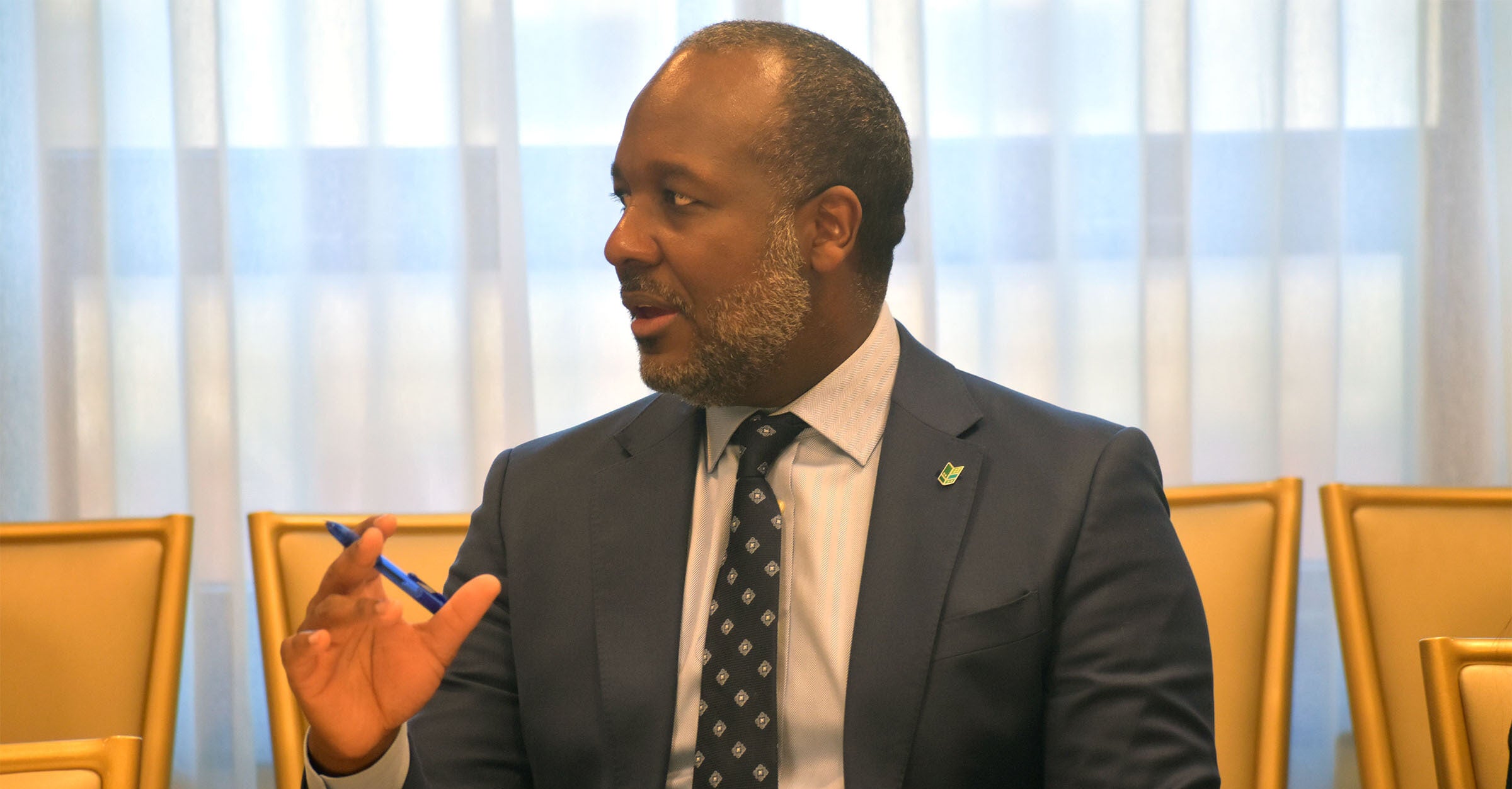
For Elmer Moore Jr., many problems that people face in life can be traced back to one issue: housing.
“There is no instance where the investment of housing has not worked out better for a community,” said Moore, who is the chief executive officer and executive director of the Wisconsin Housing and Economic Development Authority, or WHEDA.
“We believe that safe, affordable, sustainable housing is at the very foundation of what people need to thrive,” Moore told WPR’s “Wisconsin Today.” “If you didn’t sleep well, if you woke up cold, if you were battling the elements, how can we expect a child to perform well in school? How can we expect someone to maintain any level of quality health? How can we expect them to perform at work and so on?”
News with a little more humanity
WPR’s “Wisconsin Today” newsletter keeps you connected to the state you love without feeling overwhelmed. No paywall. No agenda. No corporate filter.
Communities around the state and country face a severe housing shortage. The Wisconsin Realtors Association estimates that the state needs to create 140,000 new housing units by 2030. And the real estate company Zillow found that the country needs 4.7 million more units than it has.
Green Bay recently loosened zoning regulations in an attempt to increase density by making it easier to build three- and four-unit buildings and granny flats in its single-family neighborhoods. Moore applauded Green Bay’s efforts and said he’d like to see other cities follow its example.
Moore spoke about how Wisconsin and its communities can create more housing units.
The following has been edited for clarity and brevity.
Kate Archer Kent: Communities all over Wisconsin are struggling with how to provide more housing. Can you explain the role of WHEDA in creating more housing?
Elmer Moore Jr.: WHEDA is our state’s housing finance agency, so we are one of 57 housing finance agencies across the country. We create and provide the necessary products to make home ownership and the development of rental housing possible for families that earn low and moderate incomes. We do that in four ways. We offer mortgages to families who earn less than 140 percent of the area median income. These are folks with good paying jobs, but not necessarily making the incomes necessary for the outrageous cost of homeownership these days.
We are also the state’s exclusive administrator for housing tax credits. So using state resources and federal resources, we offer tax credits that make it possible for developers to build housing that will be offered to folks at restricted rents. We also lend money to those developers. And we have a compliance function. We make sure that the housing that we finance is operating up to the spec that folks deserve.
KAK: Have there been financial challenges for developers to get these housing units up in communities, especially in rural areas?
EM: It’s been an increasingly difficult challenge across the country and certainly in Wisconsin for the last two decades nearly. The cost of construction, the cost of labor, materials and everything else make production of housing units prohibitively expensive. It’s often very difficult for developers to just use a loan and tax credits to actually make rental housing that will operate profitably. We thought this was a story that would end with the conclusion of the pandemic and it just hasn’t. Between interest rates, the supply chain, cost of labor and so many other factors, it’s an incredibly difficult time to develop new housing.
KAK: There are places when you look out across the country — Minneapolis, California, Oregon — that have gone even further than what Green Bay is doing, either eliminating or greatly reducing single family zoning. Should Wisconsin follow suit?
EM: There are so many communities across the state that would benefit from these kinds of zoning reforms. We’d love to see Green Bay leading the charge. Everyone is going to be closely watching how it impacts the experience of living there, and I suspect that many communities will follow suit, because what they’ll discover is, by encouraging gentle density, by allowing for (Accessory Dwelling Units, or ADUs) they can solve a lot of their own problems relative to population growth, rehousing aging folks that are living in two-story homes that aren’t truly accessible for them, and it will increase affordability.
KAK: There’s this national “Abundance” movement that argues that strict local and state regulations have kept communities from building the developments that they need, and this movement proposes making it easier to put up new housing in places that are really thriving, communities that are booming. How accurate is this narrative?
EM: In the interest of developing a set of rules that will protect all the necessary factors that can protect the way that we live, it’s easy to make a process overly cumbersome. It’s easy to make a process highly inefficient. The strongest takeaway from “Abundance” should be: Let’s use technology, let’s use data and let’s use desire to be more efficient to make processes that serve the people better.