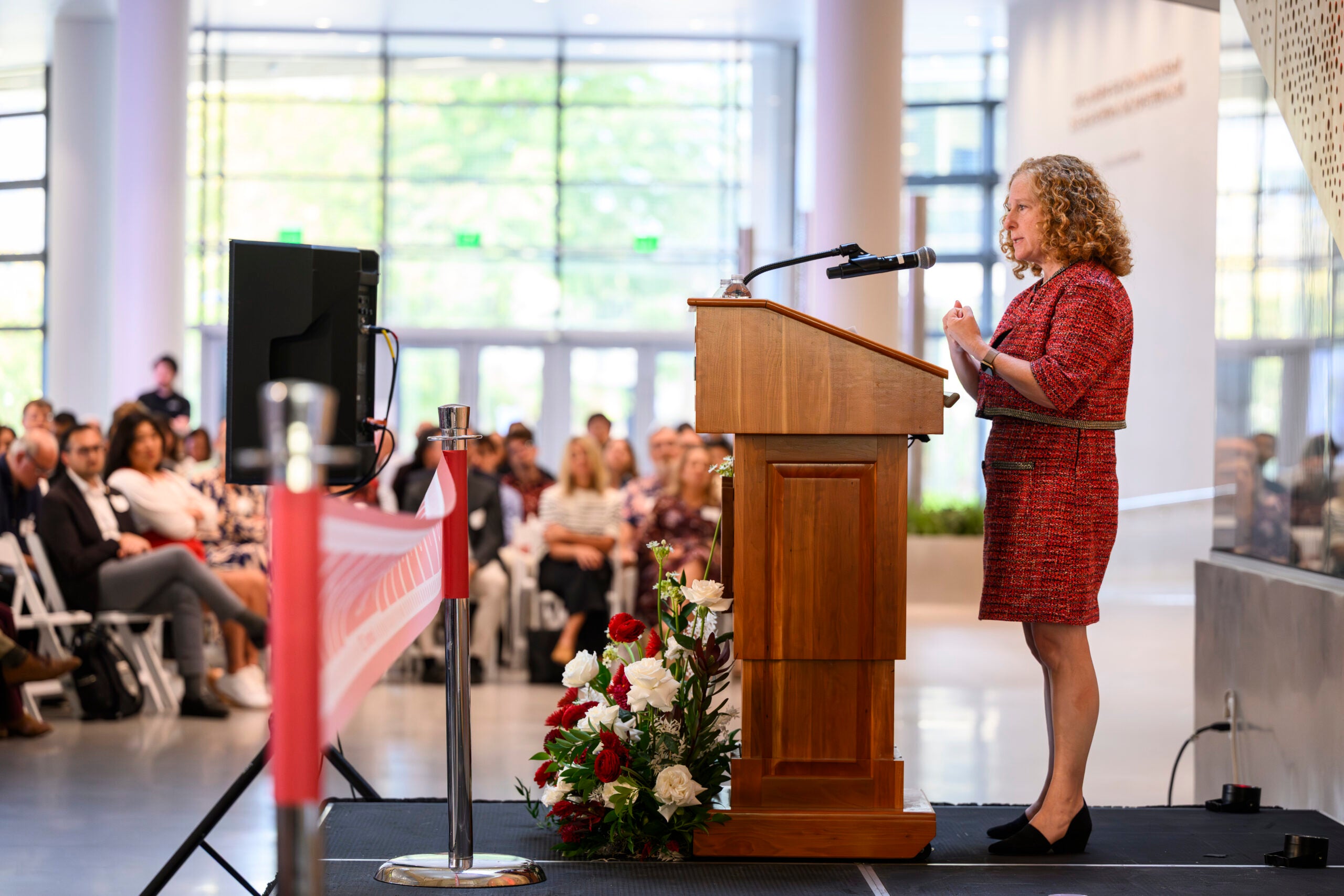
Chancellor Jennifer Mnookin, who leads the University of Wisconsin-Madison, sees opening a new College of Computing and Artificial Intelligence as the right move to support in-demand majors and says funding the school won’t come at the expense of other areas of the university.
Last week, the Board of Regents approved a proposal to form the new college — the first time UW-Madison has created a new academic division since 1983, when it opened the School of Veterinary Medicine.
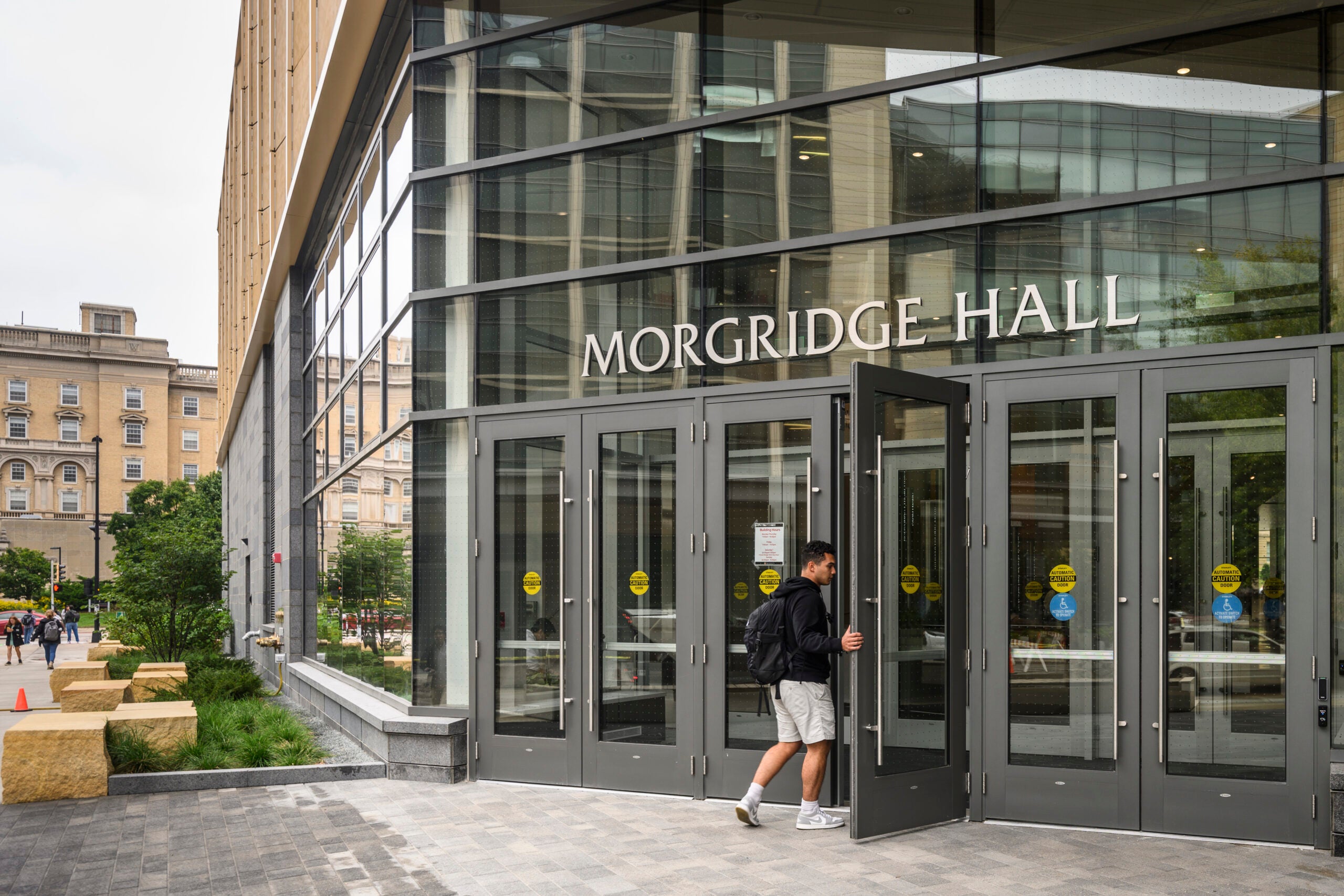
Campus leaders say the move is in response to growing enrollment in computer science and related majors, which are currently housed in the College of Letters and Science alongside the humanities, life sciences and social sciences. The new college focused on AI will be housed in Morgridge Hall, a $267-million facility that opened in August.
News with a little more humanity
WPR’s “Wisconsin Today” newsletter keeps you connected to the state you love without feeling overwhelmed. No paywall. No agenda. No corporate filter.
Mnookin joined “Wisconsin Today” to talk about why campus leaders are making this investment in the study of AI.
The following interview has been edited for brevity and clarity.
Kate Archer Kent: It’s a really big deal to launch a new academic division. Why make this move now?
Jennifer Mnookin: It’s something that really builds on years of vision and hard work as we’ve been growing our strength in computer science and related disciplines.
And then we’ve also seen that artificial intelligence is starting to touch everything — all disciplines, so many places in the workforce — and this seemed like the right moment to pull all of that together, both for a new college that will train students who might major in these disciplines, but also serve as a hub for our whole campus and, frankly, broader communities as well.
KAK: This college would be the new home for the School of Computer, Data and Information Sciences, which was started in 2019 and is currently part of the College of Letters and Science. What are the benefits of starting a whole new college rather than letting the computer science program continue to thrive where it is?
JM: Well, it certainly is thriving where it is, and I think it will thrive in this new way as well. And I think it will also continue to have a great deal of connectivity with Letters and Science and all across our campus.
But at scale, we now have 3,000 computer science majors. It’s almost tripled since 2015. It’s become our largest major. Data science is one of our fastest-growing majors and has 1,700 students. Information Science has about 500 students — it just started in 2022 as a major. And then we have many more students from all across our university who are taking classes in these disciplines or doing certificates, which is our word for minor.
So at this scale, it just made a lot of sense to make it a free-standing college where we can focus on meeting our student needs, our faculty needs, and also creating connectivity all across campus, with Letters and Science, but also all of our other schools and colleges.
KAK: Computer science grads are facing the worst entry-level job market in years. Are you worried about overproducing computer science majors relative to market demands?
JM: I think that there’s going to continue to be a lot of opportunity for those who study computer science. But we are seeing students interested in doing two majors — computer science and something else — so that they can combine computer science, or data science, with another area of substantive knowledge as well.
It wouldn’t surprise me if that is a growing trend, especially in a time when AI is able to do some kinds of coding that junior computer scientists used to do. So I think we’re going to see a changed job market, but I’m confident that knowledge of and expertise in computing and artificial intelligence, along with related disciplines, are going to continue to be extremely valuable spaces of study for our students and for those entering the workforce across a whole array of domains.
KAK: There is concern about these computing schools siloing computer science majors, keeping them from being engaged deeply with other disciplines like the humanities and social sciences.
JM: We’re going to be doing just the opposite. We are committed to this new college being a hub for the whole university — not a silo, not a fortress. There will be no moat around it. Rather, we’re going to be building it to make sure that there’s significant connectivity.
And then also, we look at questions not just about how AI is increasing and growing, but also some of the ethical questions around: How do you use AI responsibly? And what does this mean across all disciplines? So I envision that there will be just as much or more linkage between AI and the humanities, the arts, the sciences, our School of Medicine and Public Health, and we’re all very committed to ensuring that the college is built with a focus on those forms of connectivity.
KAK: This news comes in a very difficult budget environment, as you know. Departments across campus were asked to reduce their budgets by 5 to 7 percent, with some departments seeing layoffs. How are you and other campus leaders weighing this decision in the midst of a budget challenge in other areas of the university?
JM: Thank you for the important question. We’re committed to making sure that we can continue to build for our future, and that it does not come at the expense of the many strengths all across our university.
We’ll be moving, obviously, some positions and some budget from Letters and Science to this new College of Computing, but that will come from the parts of the budget that are already going to these areas. And we’re also committed to growing philanthropic support and private corporate support to help support the college.
So I’m confident that we’re going to be able to do this in a way that doesn’t detract from the great many incredibly important strengths all across our campus.
It’s also very important in times of budget challenge that we continue to make sensible fiscal decisions, but that we also build for our shared future, for the sake of our university, our state, our students and future opportunities.
KAK: Around the state, people are concerned about the encroachment of AI, especially when it comes to all of the data centers that are popping up around Wisconsin. There have been protests of these data centers. How are you making the case to Wisconsinites about why the UW needs to make this further investment in AI?
JM: Well, I think AI is touching so many aspects of all of our lives, and that’s not going away. We need to assess how we do that and how we do that well, and all of the important issues around questions of sustainability, questions of what kinds of skills do students and the workforce need in order to succeed?
But the answer can’t be to turn away from these important areas. There’s just no question that every major industry is being touched by technology, and AI literacy and expertise are going to be essential for our economic sustainability and our future.
So we hope and expect that this new college will help ensure that Wisconsin companies and communities don’t get left behind in that digital transformation, but rather that we’re ready to face it head on.
KAK: While computer science majors are booming, there are other majors that are shrinking. UW system administrators are developing this new metric for determining when to cut academic programs. What would you say to people here who are concerned about seeing programs like French or German or Filipino language classes going away while the university invests in a new AI college?
JM: I think it’s really important to recognize that we’re not just treating artificial intelligence as a panacea or as a plus, but rather as something that’s impacting all kinds of things, including possibly even learning languages, learning foreign languages, how we do the arts.
We need humanities to be part of our AI infrastructure. University students do make their own decisions about what to study and what to learn, and universities need to be responsive to that. So there are marketplace dimensions to what we do, but we’re also not simply a marketplace. We are repositories of knowledge and learning, and we need to recognize that both of those are extremely important.
So I actually think that as we think about AI and what it means for our future, there’s a good deal of space for the humanities and the arts and the social sciences, as well as the sciences, to be a very important part of that conversation, of that research and even modes of study. Critical thinking skills, the ability to write and think — these needs are not going away simply because we have large language models.