In Milwaukee Tuesday, a group of business leaders gathered to talk about the economic opportunities of data center developments in Wisconsin.
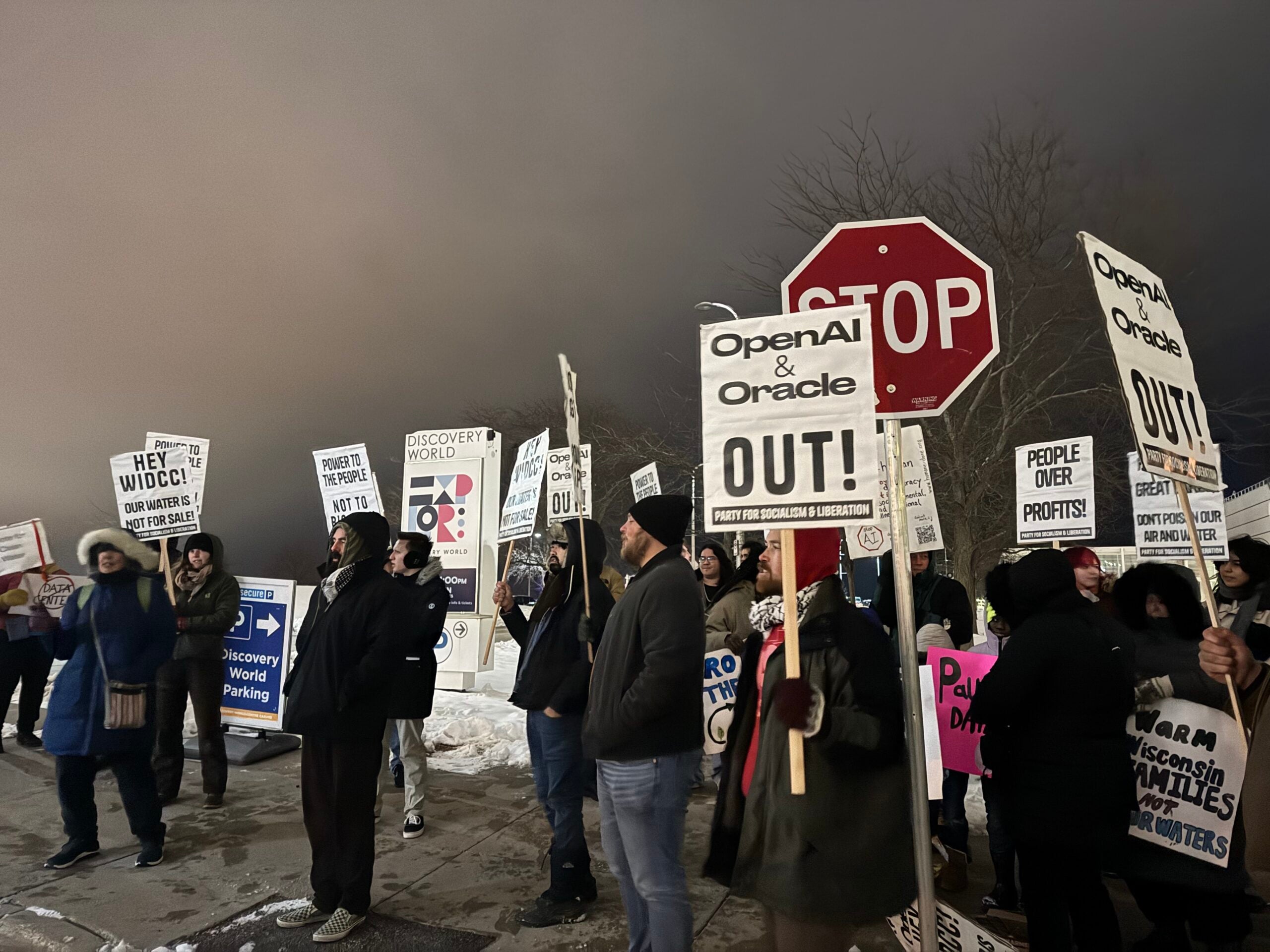
While the panel discussion hosted by BizTimes Media was going on inside the Discovery World Science and Technology Museum, a small group of protesters gathered outside to push back against the growth of data center development in the state.
It was one of the protests organized in seven communities Monday and Tuesday as part of an organized day of action aimed at bringing attention to the potential negative impacts of the developments.
News with a little more humanity
WPR’s “Wisconsin Today” newsletter keeps you connected to the state you love without feeling overwhelmed. No paywall. No agenda. No corporate filter.
Erica Steib is with the Milwaukee branch of the Party for Socialism and Liberation, which helped organize the protests. She was one of over 50 people outside the Discovery Center Tuesday afternoon.
“We’re here because we are just raising that call that people don’t want these (data centers) in any Wisconsin towns,” Steib said. “They don’t belong here.”
But supporters say the developments will boost economic development, grow communities’ tax revenue and create jobs.
During the panel discussion, Dale Lewis, the director of data centers for the Wisconsin-based The Boldt Company, said the projects can positively impact several sectors, including manufacturing, restaurants, hotels and housing.
“I don’t see the industry slowing down, and there’s just a massive amount of opportunity for the construction industry for one, and then every other industry,” Lewis said.
Tricia Braun, the executive director of the Wisconsin Data Center Coalition, said the state’s manufacturing sector will reap the benefits of the developments. She believes Wisconsin businesses, like security companies and even fencing companies, will be positively impacted.
“This is where I think Wisconsin has the opportunity to benefit, even more than other states, because of the concentration we have of manufacturers that are really ripe for this kind of an opportunity and looking for ways to diversify what they’ve already been doing, into more of this technology focused space,” Braun said.
Wisconsinites have been showing up to local meetings to raise concerns about the environmental impacts and the energy and water demand for data center campuses for months.
On Monday, around 20 people gathered in Kenosha to protest a planned Microsoft data center in the city.
“I still am not okay with Microsoft coming in and strategically placing themselves in our community to take advantage of our water,” said Olivia Walker, the founder of Kenoshans Unite Against Microsoft Data Center.
Walker said she also wants to see more transparency from the tech giant and the city about plans for the development. Microsoft purchased around 240 acres for the campus in January.
In a statement, a Microsoft spokesperson said the company will “be sure to share more information with the community as soon as we have a development plan for this site.”
Walker said she’s encouraged that other Wisconsin communities are also fighting against data center proposals.
“I hate that so many towns are being affected by these data centers already, but it’s very encouraging to know that Kenosha is not alone in this fight,” Walker said.

People also gathered in Beaver Dam on Monday night to speak out against plans for a $1 billion Meta data center there. Other protests were held Tuesday in Menomonie, Janesville, Madison and Port Washington.
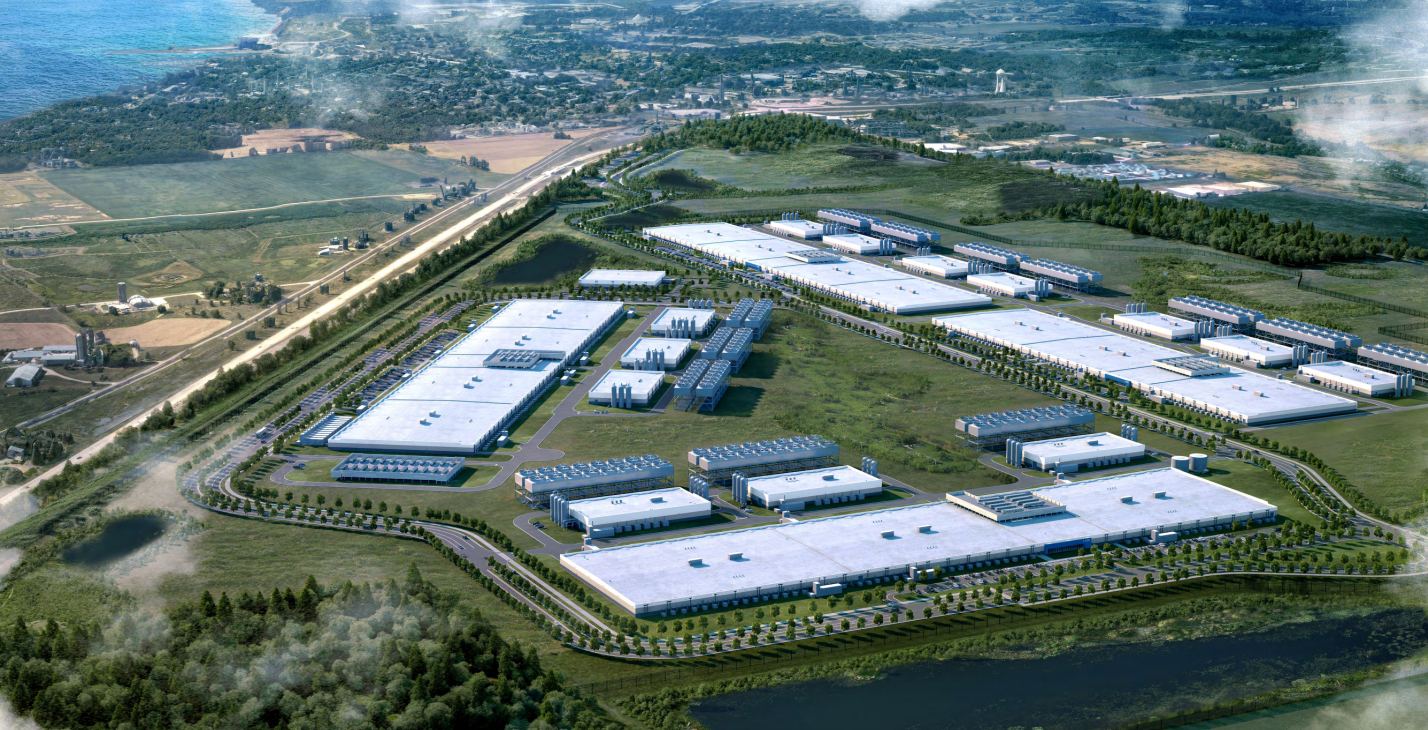
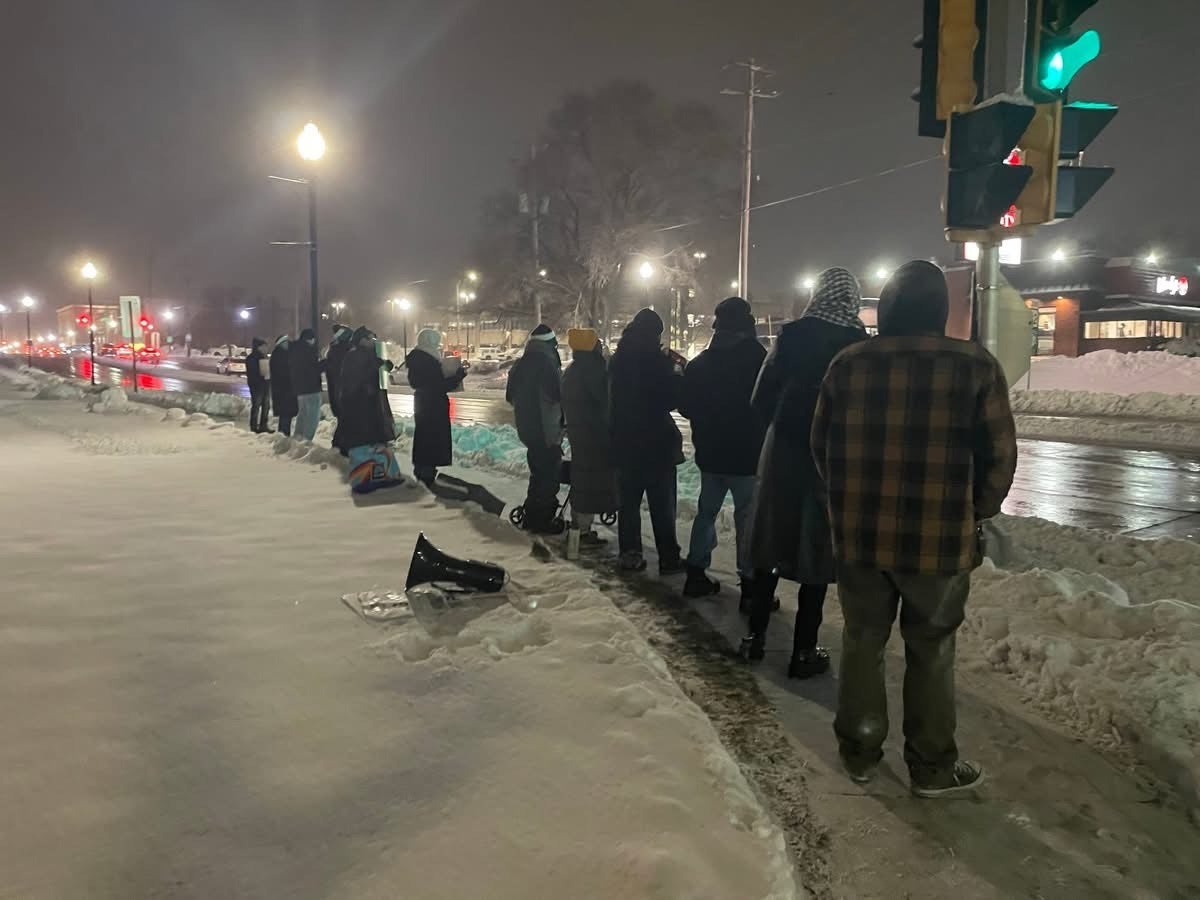
Christine Le Jeune is with Great Lakes Neighbors United, a group of residents opposed to the $15 billion data center campus for OpenAI and Oracle in Port Washington. Le Jeune said more than 20 people showed up to a protest before the Port Washington Common Council meeting Tuesday night.
While speaking on WPR’s “Wisconsin Today,” Le Jeune said she believes opposition is widespread.
“This issue has high visibility,” Le Jeune said. “I believe it will also be a very hot election issue as well. This also extends past political boundaries. It’s incredibly bipartisan.”
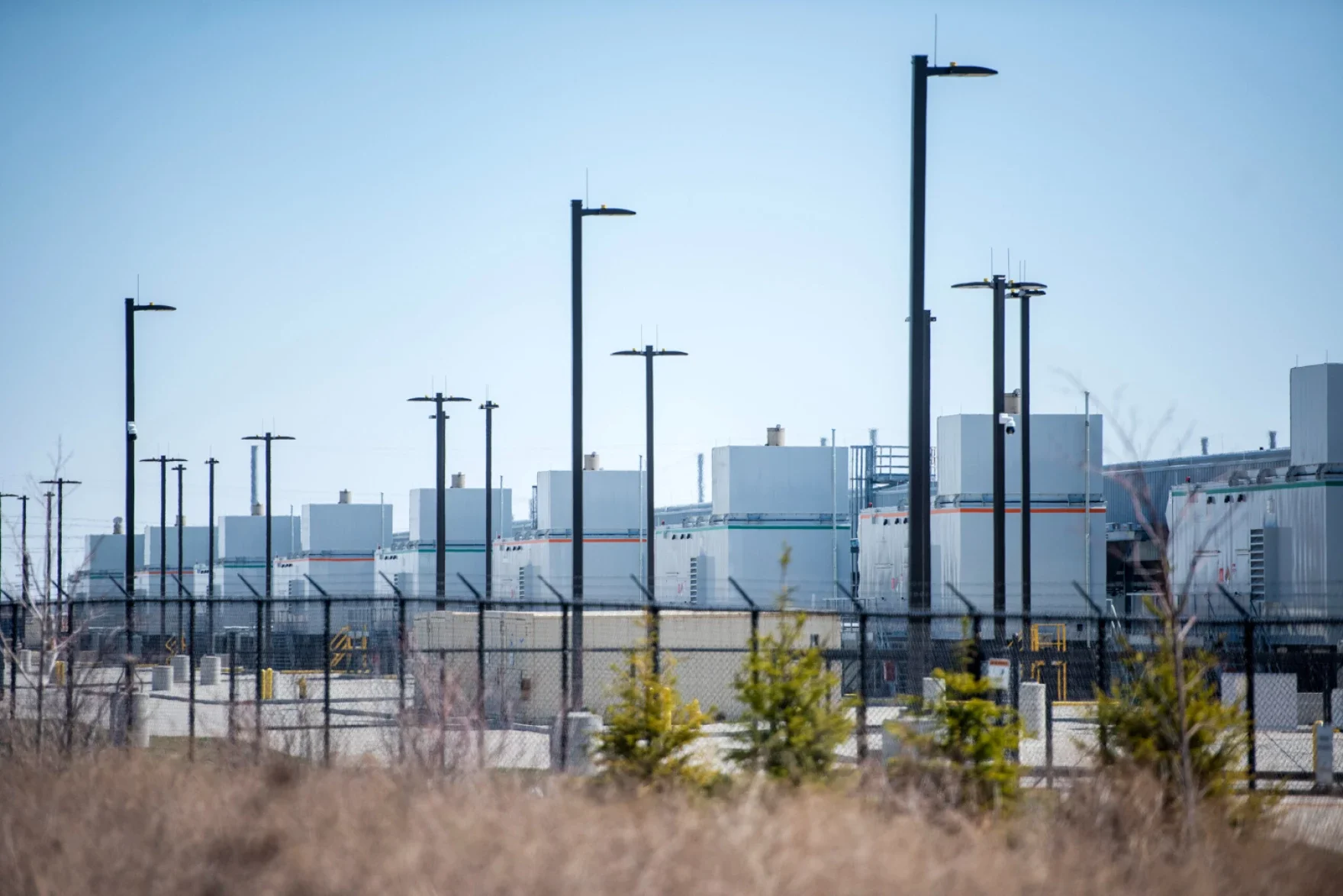
At Tuesday’s business community event, Kaitlin Monaghan, the senior director of public policy North America for Vantage Data Centers, said 1,000 people will work at the the data center campus the company is developing in Port Washington.
“So a thousand jobs in a relatively small city is going to have a tremendous impact,” Monaghan said during a panel. “The city and county and the schools will also feel the tax revenue and a more diversified and resilient economy.”

Wisconsin Public Radio, © Copyright 2026, Board of Regents of the University of Wisconsin System and Wisconsin Educational Communications Board.