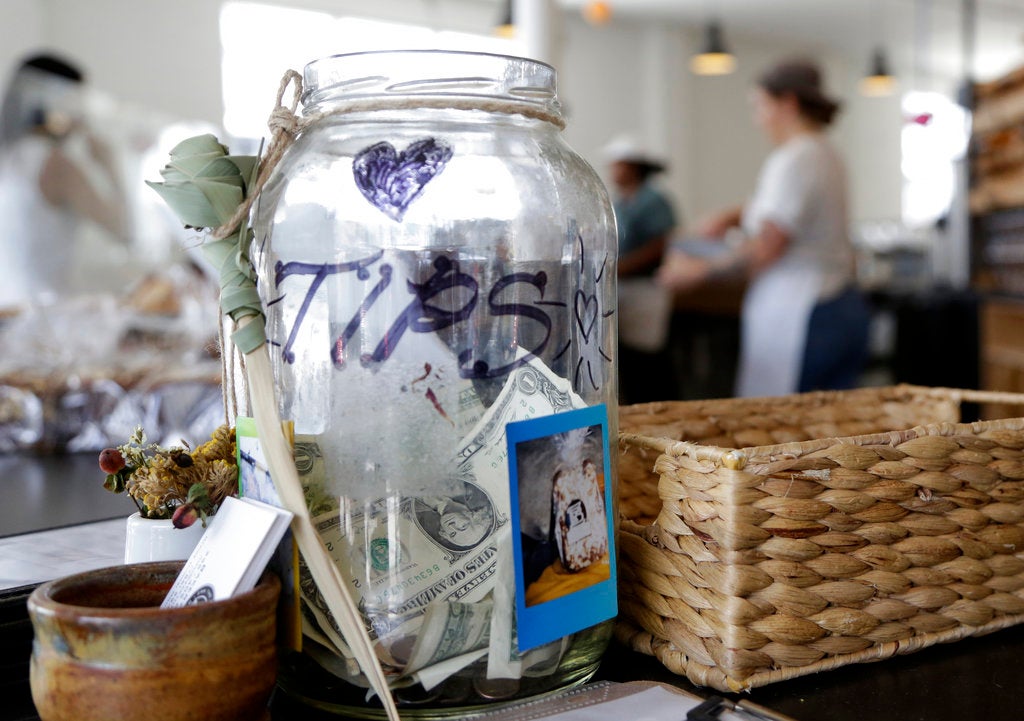
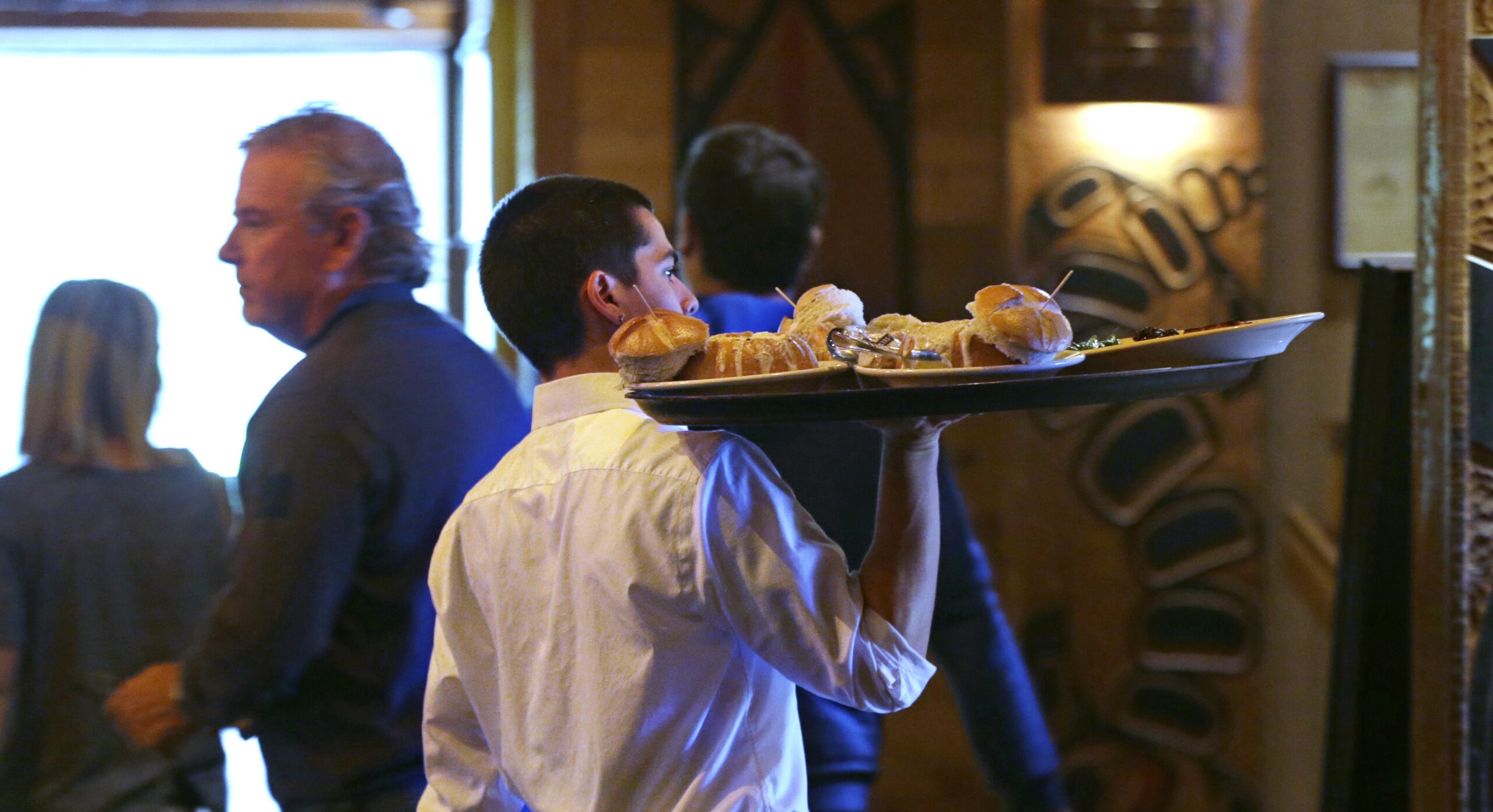
Madison resident Patrick Collins grew up working in the service industry as a busser, dishwasher, server and bartender. He said tips he earned serving and bartending helped him support himself when he was a graduate student at the University of Wisconsin-Madison.
“When I wasn’t working on my degree, I was working, serving tables during brunches or dinners, trying to get as much cash as I could,” Collins said.
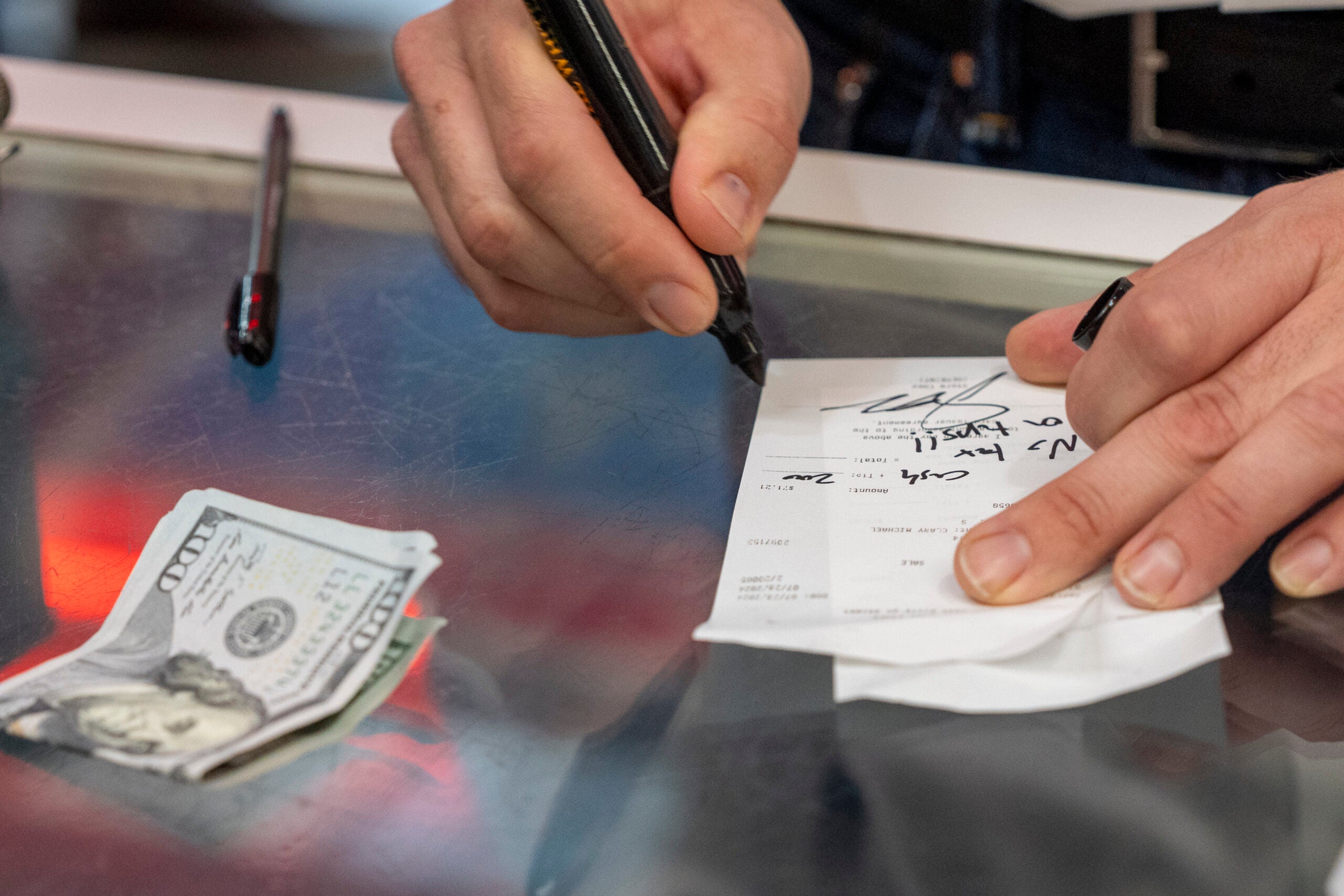
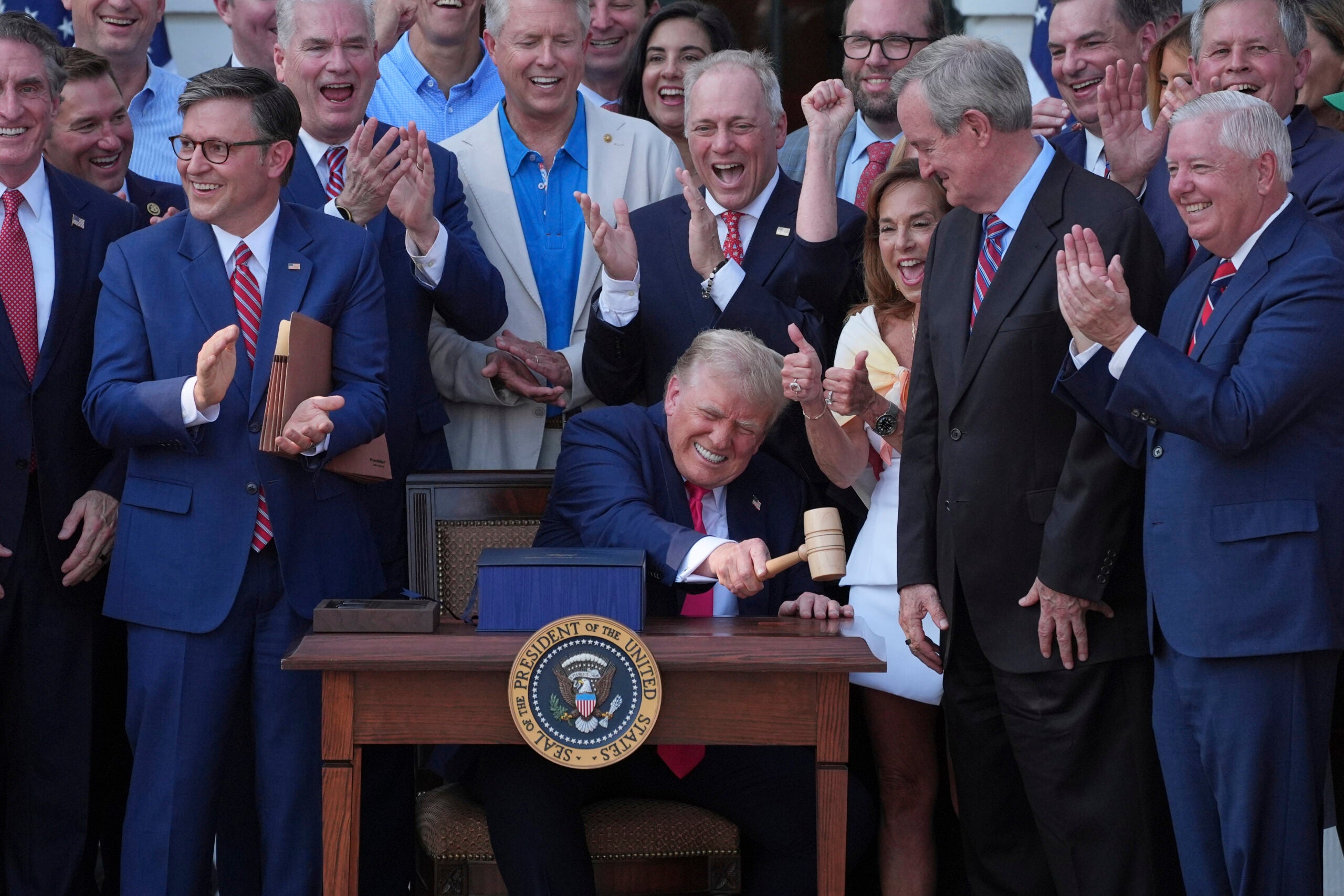
President Donald Trump’s sweeping One Big Beautiful Bill Act, signed into law July 4, will allow servers to deduct up to $25,000 earned in tips from federal income tax through 2028.
News with a little more humanity
WPR’s “Wisconsin Today” newsletter keeps you connected to the state you love without feeling overwhelmed. No paywall. No agenda. No corporate filter.
Collins said the policy would’ve been a big help when he was in grad school, but he’s happy it’s in place for the state’s more than 50,000 tipped workers.
“It’d be better if it wasn’t temporary,” he said. “To me, it looks more like a political kind of football or cudgel, rather than a long-term tax break to people who are truly running around, busting their a–.”
The massive tax and spending law indefinitely extended the 2017 tax cuts on individuals, while also including targeted tax breaks that will largely expire by the end of Trump’s second term in office.
“It’s worth remembering what those [2017] changes were,” said Ross Milton, an assistant professor at the La Follette School of Public Affairs at UW-Madison. “Those were some tax cuts for middle-income households and pretty large tax cuts for high-income households, and those are being extended permanently as part of this new act.”
While the law allows workers in traditionally tipped roles, like servers or hair stylists, to deduct tips from federal income tax, those earnings will still face state income tax and taxes that go toward Social Security, said Kristine Hillmer, president of the Wisconsin Restaurant Association.
She also said the IRS has not yet issued guidance for the provision related to tips, so it’s hard to tell what the full effect of the policy will be and whether “there’s any hoops folks need to go through or not.”
Even so, the White House has said Americans on average will receive about $1,675 more per year as a result of the “no tax on tips” policy.
“It really depends upon the kind of restaurant you’re in, how many hours you are in and so on,” Hillmer said. “But I would never sneeze at $1,675 potentially adding to a take-home pay for a full-time server. That could be real money to a lot of families.”
The Yale Budget Lab estimates tipped workers accounted for 2.5 percent of the U.S. workforce and less than 4 percent of the share of workers making less than $25 per hour. In fact, more than one-third of tipped workers already paid no federal income taxes in 2022 because their incomes were so low, the Budget Lab found.
Beyond tipped work, the White House has also repeatedly falsely claimed the One Big Beautiful Bill Act included “no tax on Social Security.”
The law included a targeted $6,000 tax break for seniors through 2028, according to the nonprofit Tax Foundation. But Alex Muresianu, a senior policy analyst at the Tax Foundation, said it’s “emphatically not true” that the bill includes no tax on Social Security.
“Because the senior deduction phases out at higher incomes, the senior deduction is less beneficial than what no tax on Social Security benefits would be,” Muresianu said. “There is something for seniors, but it is not no tax on Social Security.”
Other provisions in the law include:
- Deductions on overtime pay up to $12,500 per taxpayer through 2028
- Deductions of up to $10,000 on auto loan interest for new vehicles with final assembly in the United States through 2028
- Permanent deductions on business income that shows up on individual income tax forms
- And immediate expensing of certain types of business investment expenditures
“If you’re going to assess the Trump administration’s effect on business investment, it would be wrong to just look at what the policies in this bill do,” said Milton of UW-Madison. “The tax bill, I think, it’s pretty easy to read it and see what is going to happen. But everything else that’s going on with tariffs makes it very hard to predict how much money your business will earn in the future.”
Even with targeted tax breaks for certain earners, the law is still a “regressive” tax policy, like the 2017 tax cut, because it gives slightly larger tax cuts for the high earners than low earners, said John Ricco, associate director of policy analysis at the Yale Budget Lab. Additionally, the new bill makes spending cuts to social programs like Medicaid and SNAP.
An analysis by the Budget Lab found the bill would result in an income decline of 2.9 percent for the bottom one-fifth of earners, while increasing incomes for the top 1 percent of earners by 1.9 percent. That takes both changes to tax policy, as well as Medicaid and SNAP cuts, into account.
“That represents a straightforward decline in the amount of resources those households have access to,” Ricco said. “This is a regressive effect because [SNAP and Medicaid] are means-tested programs, so they accrue most notably to the low end of income distribution.”
The Tax Foundation’s modeling of the One Big Beautiful Bill Act estimated that income gains for the top 80 percent of earners would be between 4 to 6 percent next year, while the bottom 20 percent of earners were projected to see their incomes increase by 2.6 percent. By 2034, the Tax Foundation estimates incomes for the bottom 20 percent are projected to fall by 0.4 percent in one model or increase by 0.5 percent in another model that accounts for economic growth.
“Just looking at the aggregate changes within given income percentiles is not like a perfect view of how the bill treats people, and it’s not just different by different income levels,” Muresianu said. “It’s also different by the sources of your personal income or, in the case of the senior deduction, your age.”
The tax and spending bill also is projected to increase the federal budget deficit by more than $3.9 trillion, which could lead to higher interest rates and make it harder for the country to pay down its debt in the long-term, experts said.
The Trump administration has said it will use tariffs to pay for the spending in the megabill. But the Budget Lab said tariffs are another regressive policy, meaning the price increases they cause will be more acutely felt by lower earners.
“Lower income households tend to consume a greater fraction of their annual income than higher income households,” Ricco said. “A tax on consumption, which is roughly what a tariff is, will end up looking regressive. We find that all but the top [two-fifths of earners] would just be made worse off by the combination of these policies.”

Wisconsin Public Radio, © Copyright 2026, Board of Regents of the University of Wisconsin System and Wisconsin Educational Communications Board.