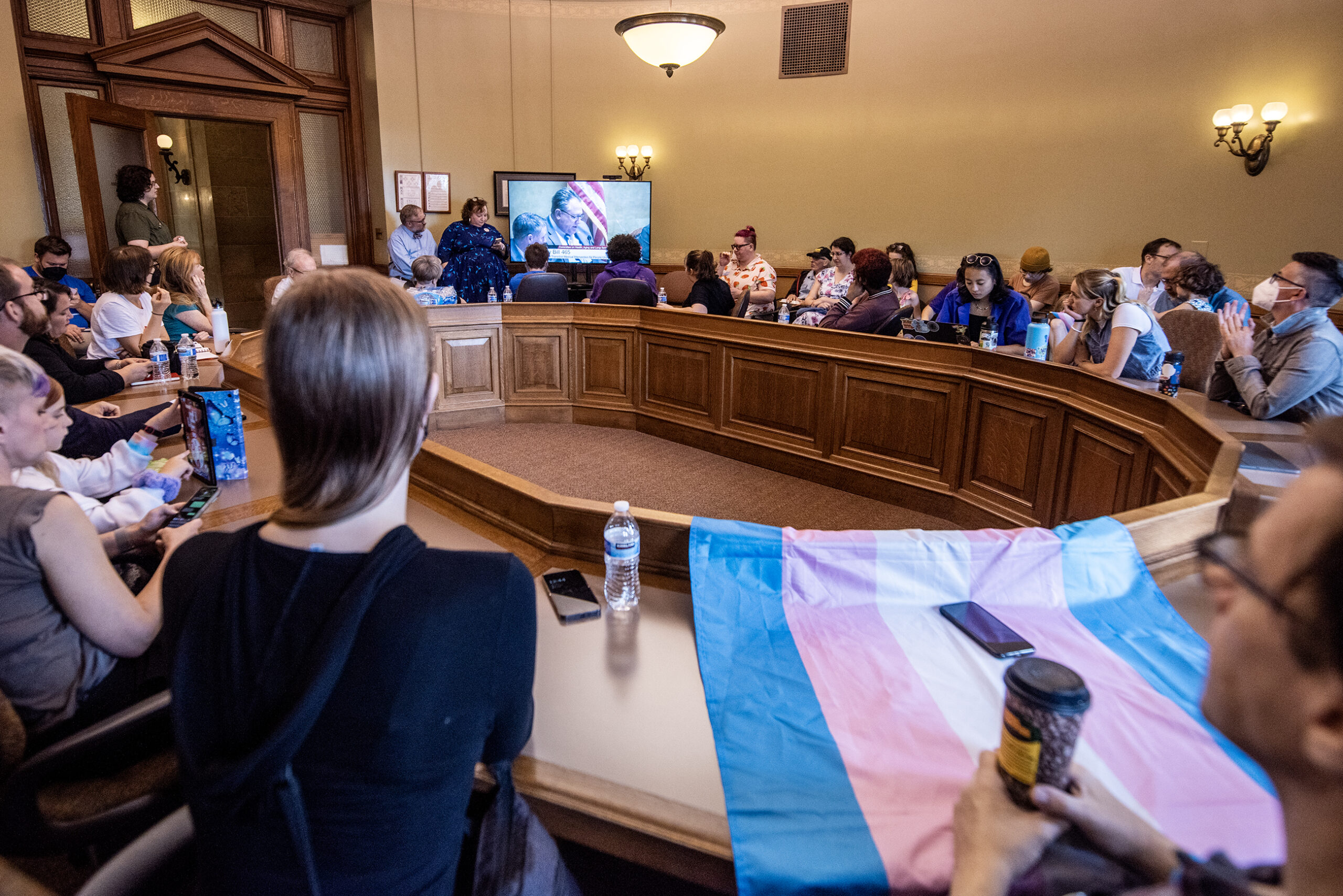

Activists packed a hearing room at the state Capitol Wednesday as state lawmakers took testimony on three proposed bills that would restrict transgender students’ participation in school sports and prohibit minors from accessing gender-affirming health care.
The Wisconsin Senate’s labor committee heard hours of testimony on the proposed state legislation. Conservative organizations argued that the medical bill protects children from making irreversible health care decisions, and that the sports bills protect girls’ ability to compete. Opponents of the legislation argue that the medical bill will harm trans kids’ mental health, and that the sports bills demonize trans students over an activity that is quite rare.
As written, the sports bills would require public K-12 schools and state university and colleges to restrict who can play on which sports teams. The legislation would only allow people to play on sports teams that correspond with the sex designated on their birth certificates. The bills also specifically restrict people born male from playing on girls’ and women’s sports teams, and from using girls’ and women’s locker rooms.
News with a little more humanity
WPR’s “Wisconsin Today” newsletter keeps you connected to the state you love without feeling overwhelmed. No paywall. No agenda. No corporate filter.
Supporters said maintaining clear distinctions among sports teams allow girls and women to succeed on their own terms, and to reap a wide range of rewards, from self-confidence to college scholarships, that could be lost if the playing field changes.
“I was given the chance to grow through sports because women had their own protected category. That protection mattered. It made competition fair and it made success meaningful,” said Keeley Knobloch, a former college runner.
Opponents said verifying the birth gender of a child could be logistically challenging in the case of changed birth certificates, or open the door for children’s bodies to be scrutinized by adults.
“Are educators and coaches then forced to ask invasive questions and conduct physical exams? Which students will be checked — maybe those who not do not look like or dress like other athletes?” said Sen. Melissa Ratcliff, D-Cottage Grove, who chairs the Legislature’s Transgender Parent and Non-Binary Advocacy Caucus.
“These bills don’t address any of that, and why don’t they?” she added. “Because it’s not a serious piece of legislation. It’s a tool to politicize students, students who already face so many difficulties.”
The gender-affirming health care bill would ban some medical procedures — such as hormone therapy, puberty blockers, and sometimes surgeries — from being practiced on minors. A medical provider would lose their license if they provided those services to minors “for the purpose of changing the minor’s body to correspond to a sex that is discordant with the minor’s biological sex.”
Rep. Scott Allen, R-Waukesha, who coauthored the bill, said it’s aimed at allowing kids to develop before making major life decisions.
“This bill isn’t about judgment or exclusion. It’s about protection and care,” he said. “Kids with their still-developing hearts and minds can’t fully grasp what they’re agreeing to.”
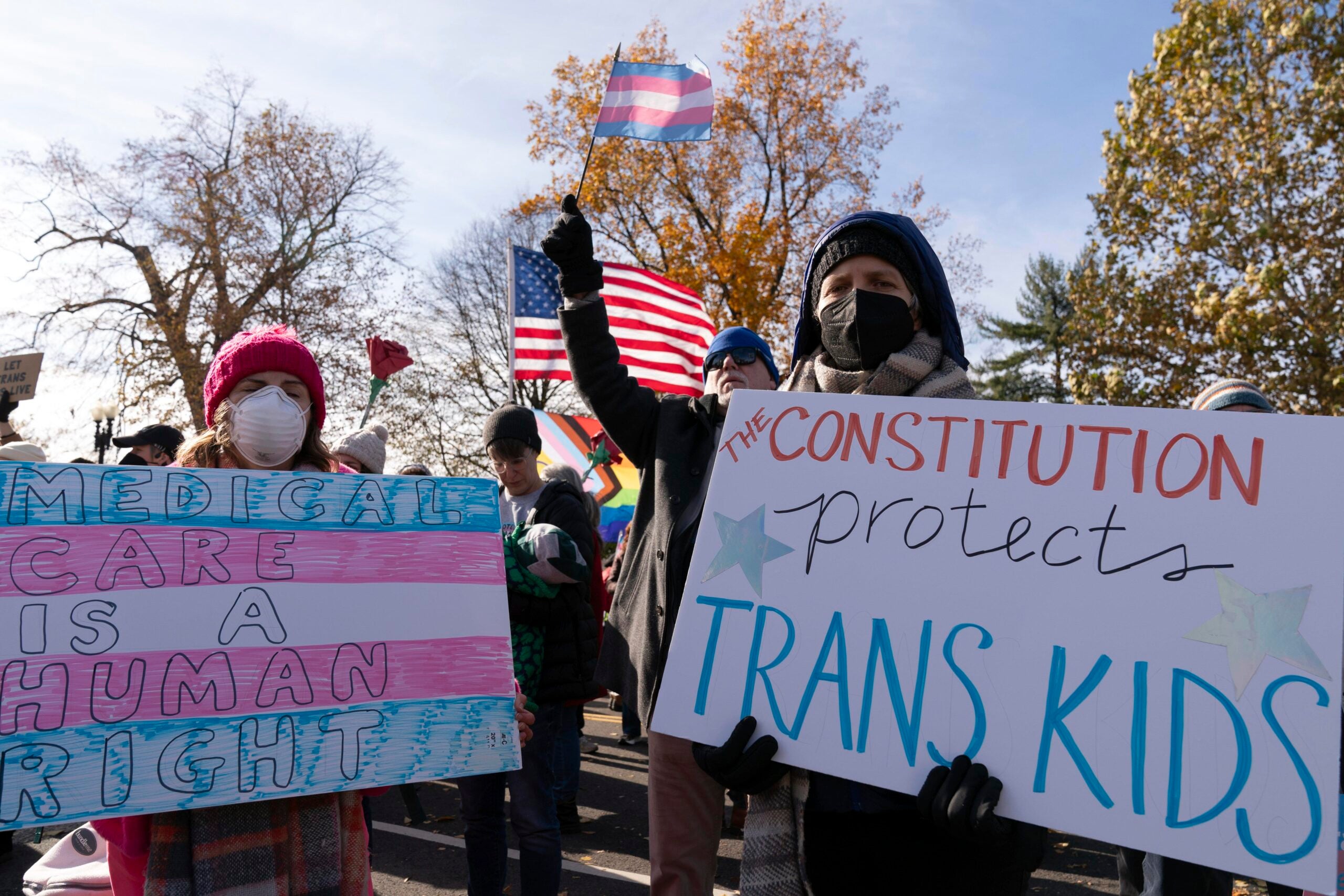
Trans rights activists said that parents and doctors are best positioned to decide what a child needs.
“Trans kids know who they are. Their medical providers know what they need. Their families just want to meet their needs,” said Abigail Swetz, executive director of Fair Wisconsin, an LGBTQ activism group. “Stop inserting politicians into their lifesaving health care. No one needs that. Injecting politics into health care forces trans kids to fight to just exist when other kids do not have to do that.”
Gender issues have been a national political wedge issue
If the bills, which already cleared the Assembly, pass the Senate, they are almost certain to be vetoed by Gov. Tony Evers, who has repeatedly promised to veto any legislation that he sees as harmful toward LGBTQ Wisconsinites. He has previously vetoed similar restrictions on transgender students in sports and a similar ban on gender affirming health care, as well as a proposal to block Medicaid coverage for gender-affirming care.
Nevertheless, they reflect an important wedge issue heading into an election year. Gender issues have been a cornerstone of President Donald Trump’s cultural agenda in the White House. That’s left some Democrats nationally grappling with whether their party should moderate its positions on transgender rights.
In his first months in office, Trump signed executive orders limiting minors’ access to gender-affirming care and restricting funds from institutions if they don’t bar people born male from sports teams designated for girls or women.
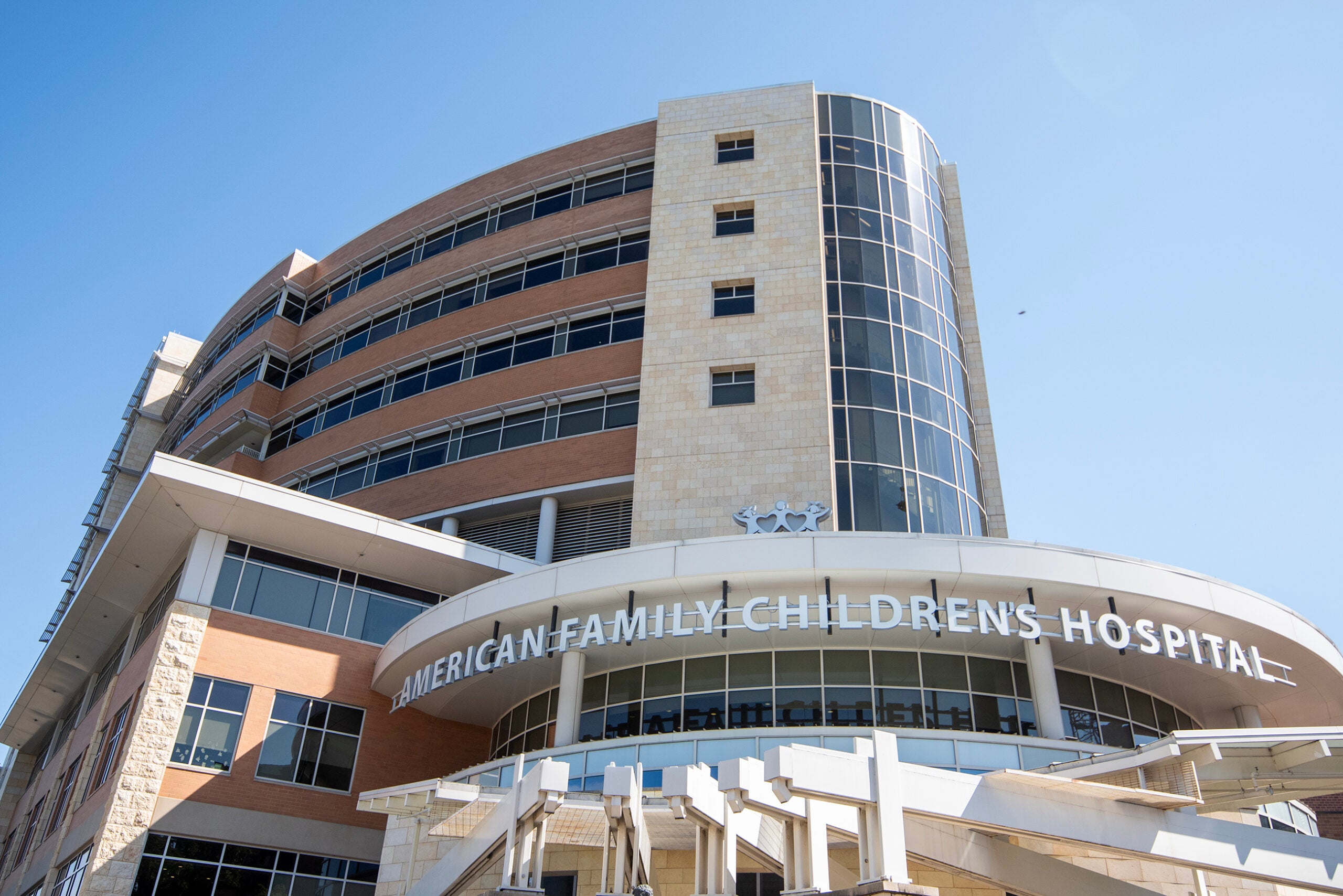
And last month, the Trump administration announced plans to block all Medicaid and Medicare funding for any services at hospitals that provide gender-affirming care to minors. UW Health and Children’s Wisconsin both cited recent federal changes when they announced earlier this week they’ll stop offering those services.
Meanwhile, the US Supreme Court seems likely to uphold state bans on transgender students playing on sports teams that don’t match their birth sex. That ruling could have wide implications for states like Wisconsin that don’t have their own bans on the books.

Wisconsin Public Radio, © Copyright 2026, Board of Regents of the University of Wisconsin System and Wisconsin Educational Communications Board.