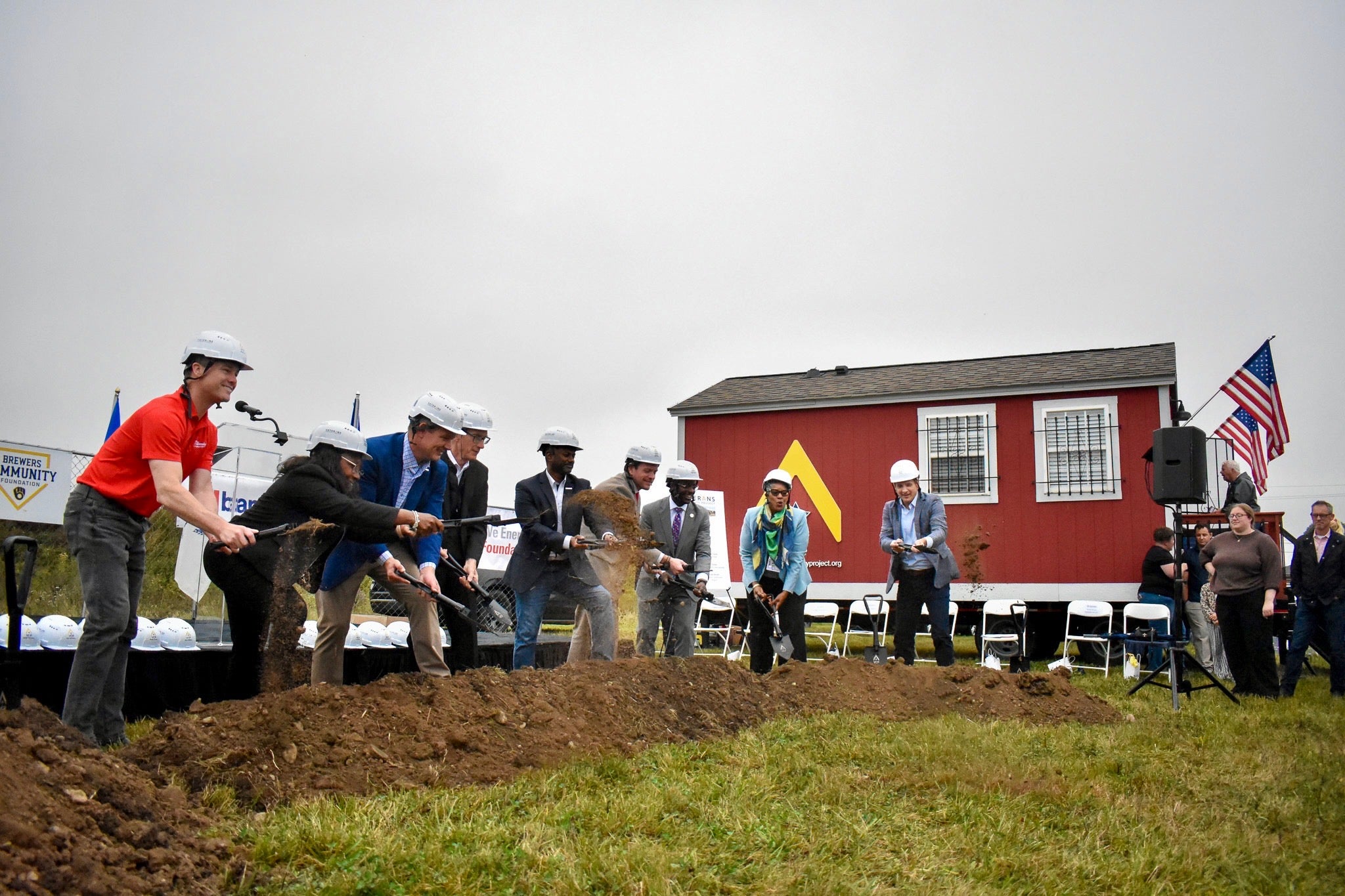
Construction is set to begin soon for a project in Milwaukee aimed at getting homeless veterans off the street and into housing.
The development, spearheaded by Veterans Community Project, will bring 40 tiny homes to a 7-acre site on Milwaukee’s northwest side. Each tiny home will be anywhere from 240 to 320 square feet and will come fully furnished.
Bryan Meyer, Veterans Community Project cofounder and CEO, said people in the program will be able to live there for free with access to case managers to help get them into permanent housing.
News with a little more humanity
WPR’s “Wisconsin Today” newsletter keeps you connected to the state you love without feeling overwhelmed. No paywall. No agenda. No corporate filter.
“We want to give them the opportunity to focus on the more important things that are going to lead to long-term sustainability,” Meyer said.
The $11.7 million project received $2.5 million in the 2025-27 Wisconsin biennial budget. Gov. Tony Evers spoke about that investment during a groundbreaking ceremony Monday. During his remarks, he said the project “provides real solutions for veterans, starting with housing.”
“These tiny homes represent more than a roof over head and a safe place to sleep at night,” Evers said. “They represent a foundation for veterans to receive the support needed to secure employment, the opportunity for community and many more things — and a chance to heal also.”
There are over 32,000 homeless veterans living across the nation, according to the 2024 U.S. Department of Housing and Urban Development point in time count. More than 300,000 veterans call Wisconsin home, according to 2023 U.S. Department of Veterans Affairs data.
State Sen. Patrick Testin, R-Stevens Point, a supporter of the project, said some veterans have difficulty accessing or navigating state or federal programs when they get back home.
“While we do have tremendous programs, many of our veterans who come back and have struggles — whether it’s homelessness, mental health issues, opioid addiction — it can be very difficult to navigate some of these bureaucratic programs,” Testin said. “The wraparound services that VCP (Veterans Community Project) provides really gets veterans back on their feet to be productive members of society.”
Support services will be available on the site
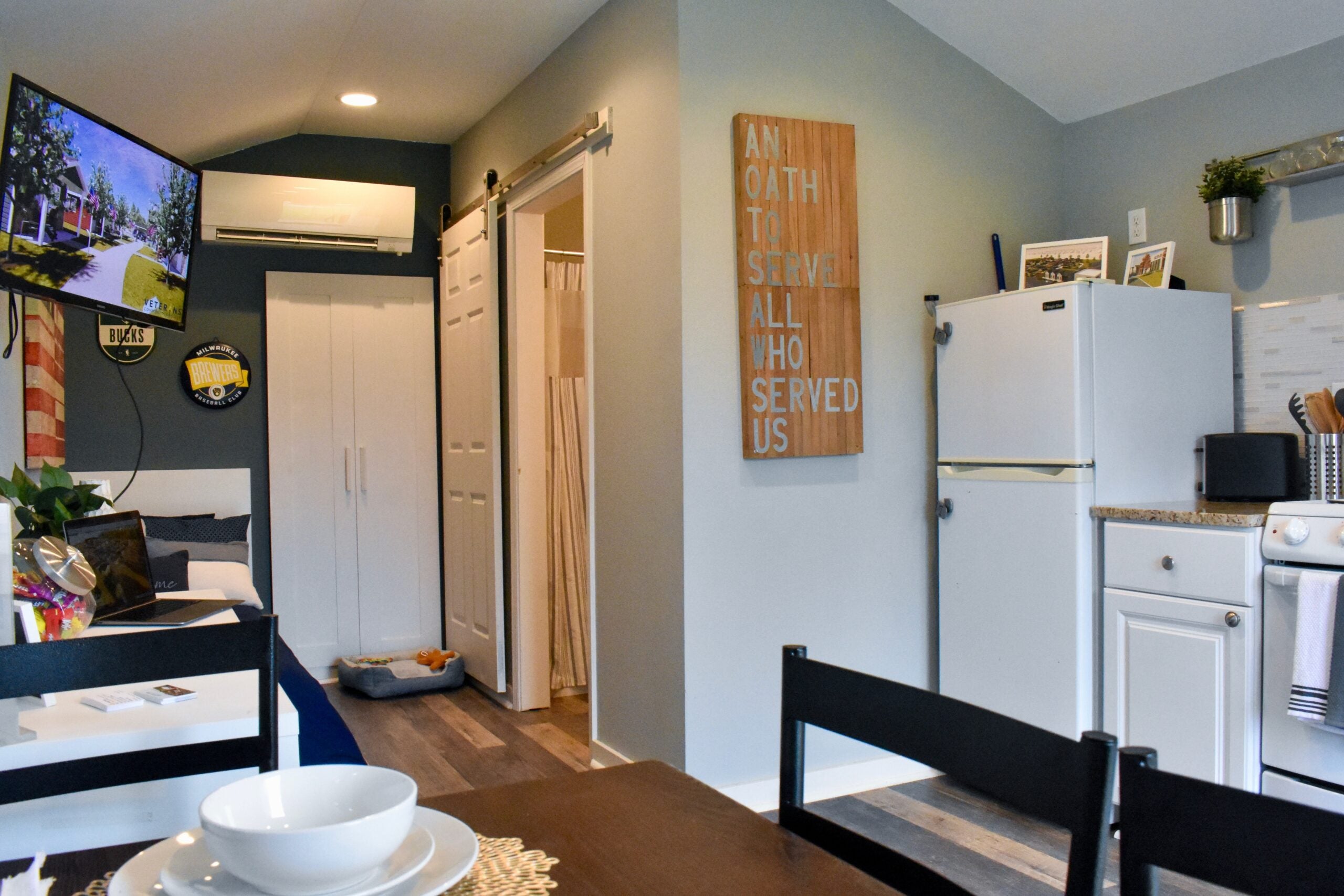
Milwaukee’s project will include 30 individual tiny home units and 10 family tiny home units, two of which will be compliant with the Americans with Disabilities Act. Each tiny home will have a bed, table, chairs, a recliner, fridge, cooking supplies, a TV and more. There will also be a building at the center of the development that will be a “hub” for supportive services.
“With case management offices, classrooms, and a fellowship hall, the space fosters stability, healing, and social support,” according to Veterans Community Project.
People will have to pass a screening process before they move in. The main qualification is that they’re a veteran who lacks access to safe or secure housing, Meyer said. He added that could include a veteran who is couch surfing or who is living out of their car.
“We don’t want to wait for somebody to necessarily hit the streets homeless,” Meyer said.
Veterans Community Project, a nonprofit started by veterans, has five other tiny home projects nationwide. Their first project was in Kansas City in 2018.
People who have lived at those tiny homes will generally stay there for 14 to 16 months, Meyer said. He said they don’t force people to move out before they’re ready.
“So long as they’re working with their case managers and taking the necessary steps, our promise back to them is we’re going to stick with you as long as it takes,” Meyer said.
“Whatever that long-term goal is for that individual, that’s what we’re trying to transition them out into,” he added.
The majority of people who have lived at the other developments are 50 to 60 years old, Meyer said. But he said they are also serving younger veterans who have served more recently in the Iraq War or the Afghanistan War.
“You’re in a community with nothing but other veterans, so you all have that shared experience in military service,” Meyer said about the tiny home development.
What’s next?
Fundraising for the project is almost halfway complete, Meyer said. Even so, initial construction work on the site will start soon. Meyer said the tiny homes should start going up on the site this spring.
During the groundbreaking ceremony, Testin said he believes the project could be a “model” for other communities in the state. Meyer said he’s open to bringing another tiny home project to Wisconsin.
“Every city, every community has a homeless veteran population and issue,” Meyer said. “The size and scale are a little bit different.”
Editor’s note: This story has been updated to attribute quotes to Bryan Meyer, Veterans Community Project cofounder and CEO.

Wisconsin Public Radio, © Copyright 2026, Board of Regents of the University of Wisconsin System and Wisconsin Educational Communications Board.