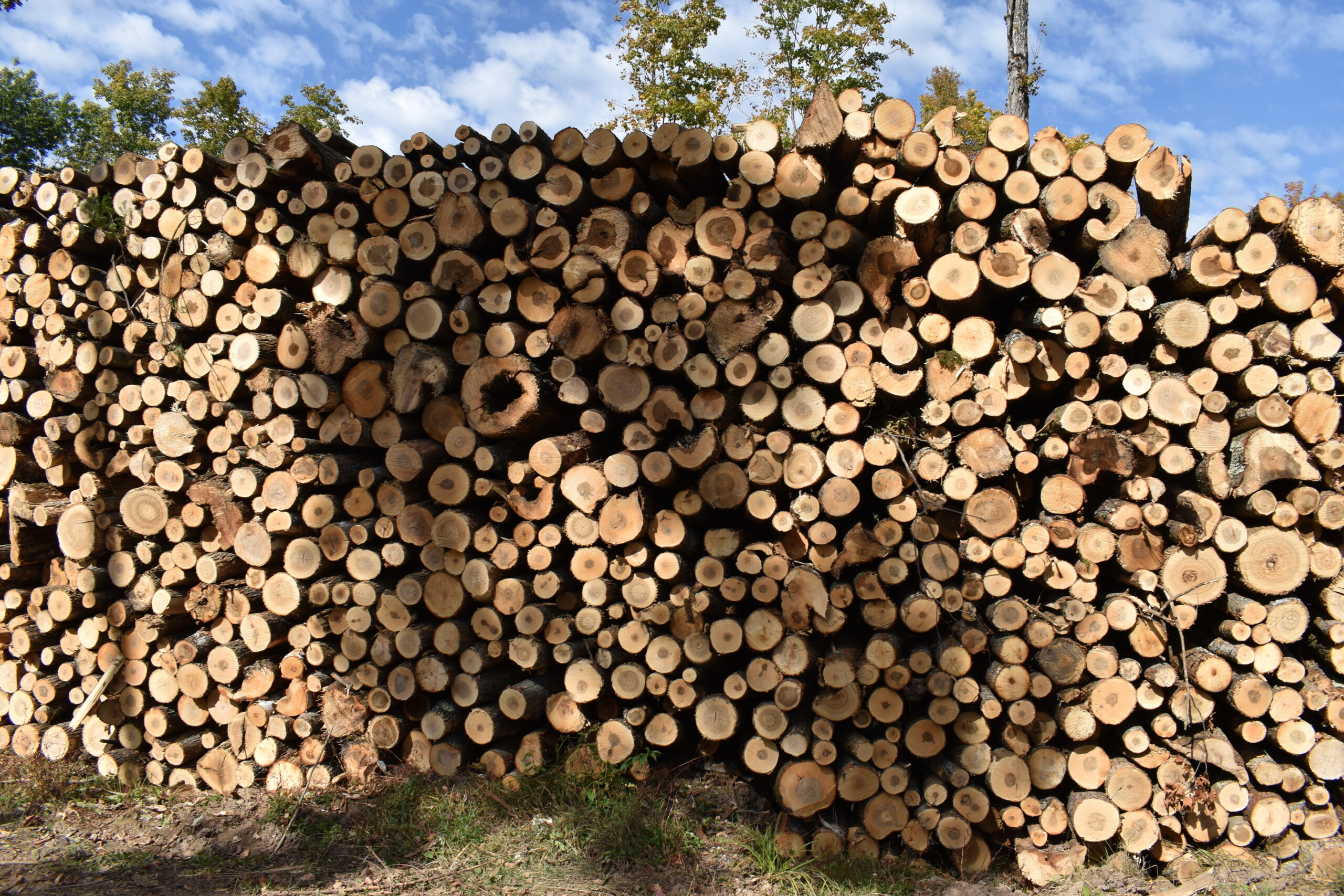
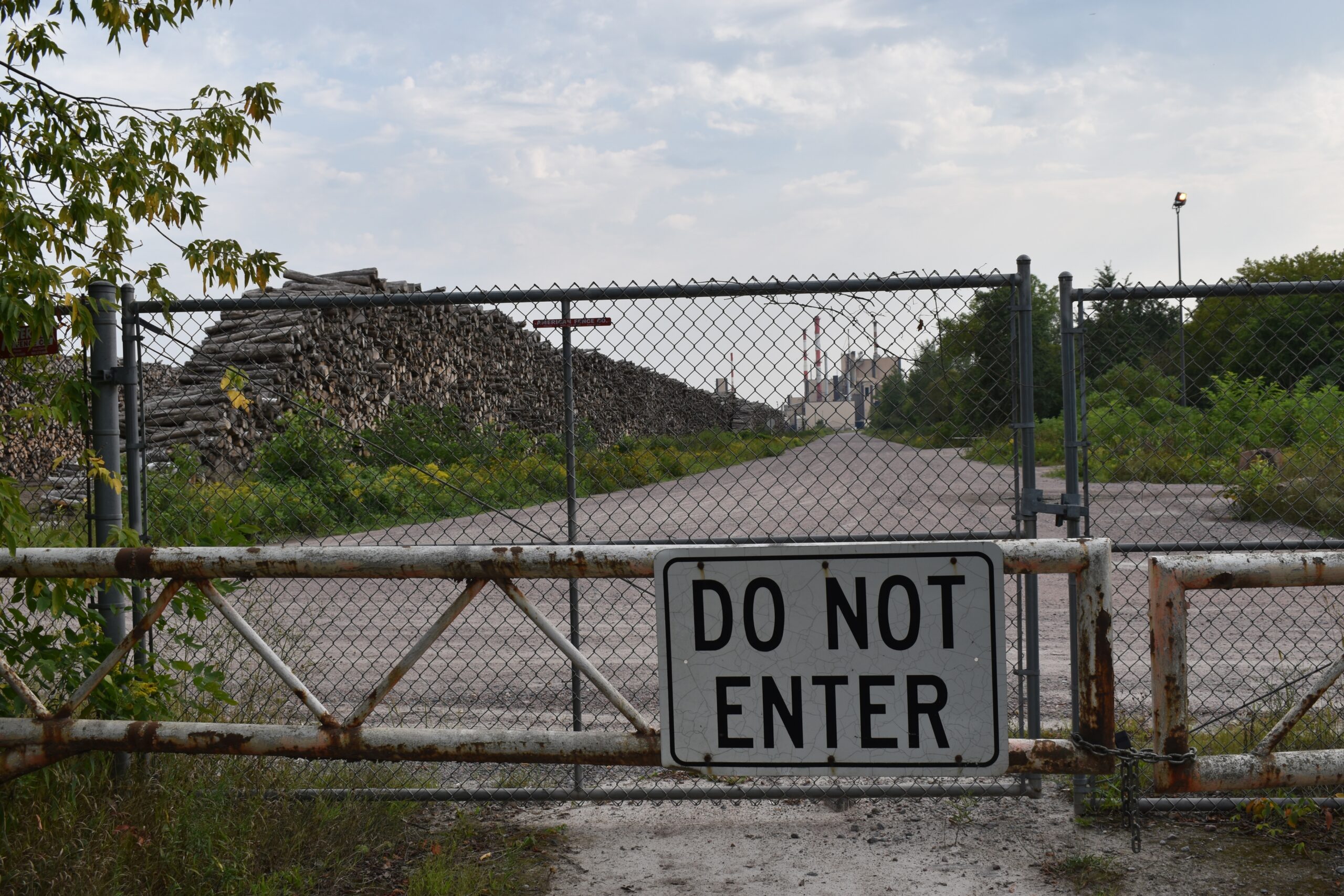
A mill in Shawano County will be reopening after closing about a year ago.
It’s the first chip mill in the U.S. purchased by a logger co-op.
Even though the mill is in Shawano County, its opening has an impact on the timber industry across the Northwoods. In the last five years, mills in Park Falls, Wisconsin Rapids and Duluth have shut down.
News with a little more humanity
WPR’s “Wisconsin Today” newsletter keeps you connected to the state you love without feeling overwhelmed. No paywall. No agenda. No corporate filter.
It means fewer places to process timber and haulers having to drive loads farther.
“Transportation is a big cost, so the more mill capacity we can have at a local level, that reduces transportation, it brings the cost of raw material down, and it helps, overall, to keep the industries that are there operating,” said Henry Schienebeck, executive director of the Great Lakes Timber Professionals Association and the Forest Industry Safety Training Alliance, or FISTA.
In 2021, he said FISTA trained about 1,700 loggers in sustainable forestry. This year about 1,100 went through the training.
“That tells me that loggers are looking for other things to do,” Schienebeck said. “There’s a lot of people that retired, because the average age of a logger is 54 to 56. There’s a lot of them in that upper, they’re just like, ‘You know what? There’s no markets really. I’m old enough. I did my thing. I can retire.’”
Timber Professionals Cooperative Enterprises is set to revitalize the sawmill with an $800,000 loan from the U.S. Department of Agriculture Rural Development’s Timber Production Expansion Guaranteed Loan Program.
“We want to see the timber industry grow. There’s been there’s a lot of challenges with the timber industry, but it’s a big part of Wisconsin history,” said Andrew Iverson, state director for Rural Development in Wisconsin. “It’s a big part of our environment. It’s about forestry health. It’s about supporting local rural communities and then providing America with American made products.”
Iverson spoke to the Great Lakes Timber Professionals Association Board this week about the loan program and other ways Rural Development can support the timber industry.
The Trump Administration has called for increased timber production across U.S. forestland, but with mill closures, there isn’t currently as much infrastructure as their used to be to support the numbers the administration is calling for.
Iverson said investment in rural communities, like the Shawano County mill, can make a difference.
“It’s important to get out there and educate individuals, especially leaders in their respective industry, about the different programs that we offer with USDA Rural Development,” said Iverson.
Schienebeck says he wasn’t aware of some of the different programs Rural Development offers. He and others on the board are hoping the conversation will especially lead to more financial support for those looking to upgrade their equipment, of which Schienebeck gets calls about at least once a week.
“If we can educate our members, and they can go to their bank and say, ‘Well, did you know this program, this program, this program,’ and it might open up more doors than we can even think about today,” said Schienebeck.
The Timber Production Expansion Guaranteed Loan Program is funded through the USDA Forest Service.
Originally published by WXPR as part of the Wisconsin News Collaborative.

Wisconsin Public Radio, © Copyright 2026, Board of Regents of the University of Wisconsin System and Wisconsin Educational Communications Board.