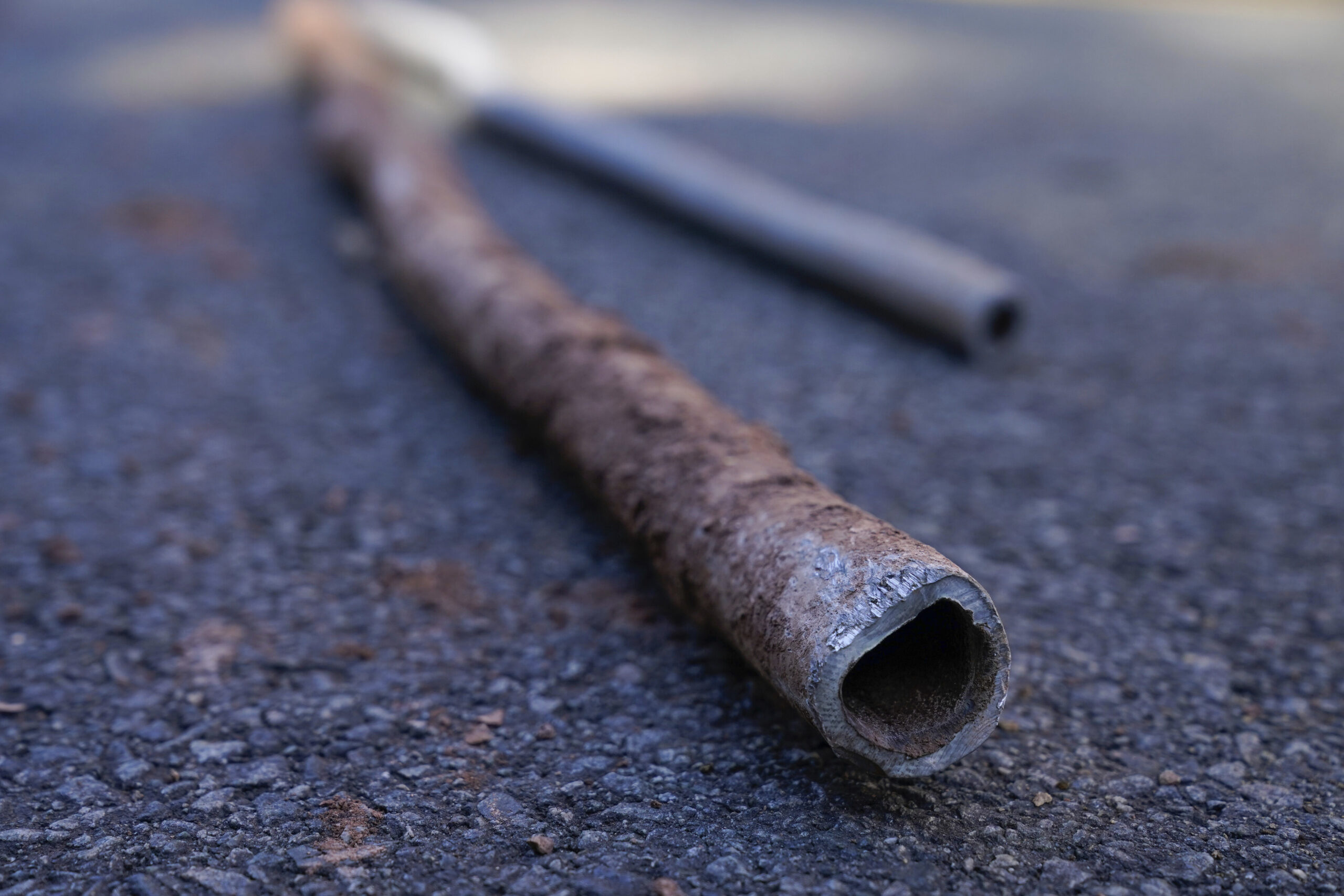

For the first time, Superior’s private water utility will be able to apply for forgivable loans to help customers replace lead pipes in the city.
Gov. Tony Evers last week signed a bill authored by Sen. Romaine Quinn, R-Birchwood, and Rep. Chanz Green, R-Grand View, that makes Superior Water Light & Power Company eligible for forgivable loans under the state’s Safe Drinking Water Loan Program. State law had barred privately owned water systems from receiving loan forgiveness.
The Superior company is the state’s only private water utility.
News with a little more humanity
WPR’s “Wisconsin Today” newsletter keeps you connected to the state you love without feeling overwhelmed. No paywall. No agenda. No corporate filter.
The governor signed off on the legislation after the city of Superior and the company entered into a last-minute deal on the replacement of lead lines. Amid frustration over rate hikes, a majority of the Superior City Council voted against a resolution to support the bill in February because the city is exploring buying the utility.
On Tuesday, Evers toured work on a busy thoroughfare in Superior where the utility and city have been working to replace utility-owned and customer-side lead service lines. He called the deal and changes to state law a win for Superior, saying no one wants kids drinking water from lead pipes.
“Everybody knows that. So we have to move beyond that and figure out how to make it as financially reasonable as possible,” Evers said.

Under the cooperative agreement, the city and utility will coordinate on projects to replace customer-owned lead lines. The city will contract for that work with the lowest responsible bidder, and the utility will reimburse the city with any loan forgiveness funding received from the state.
Superior Mayor Jim Paine said local leaders believed the bill didn’t go far enough to protect the utility’s 10,000 water customers without allowing local control and oversight. He said the city’s deal with Superior Water Light & Power changed that.
“It’s a good deal, and most importantly, we get to remove lead lines at no cost to citizens,” Paine said.
The utility estimates 800 customers have lead service lines in Superior and the utility owns around 3,700 lead pipes. The company’s president, Rob Sandstrom, said the agreement with the city puts customers first.
“It’s a win for the city. It’s a win for our customers. It’s a win for the company as well,” Sandstrom said.
He added that GOP lawmakers in northern Wisconsin were instrumental in changing state law to allow Superior residents to receive the same access to funding as other communities. Quinn applauded the signing of the bill into law in a July 1 statement.
“Safe drinking water is vital to all Wisconsinites, no matter which part of the state you live in,” Quinn said. “All residents across the state should receive the same access to safe drinking water funds. That’s why this legislation to include residents in Superior is so important.”
Last year, the Environmental Protection Agency issued a rule that required drinking water systems to identify and replace lead pipes within 10 years. Congress allocated $15 billion to help communities remove lead pipes when it passed the bipartisan infrastructure law in 2021.
Wisconsin received $83 million to replace lead service lines in the most recent funding round through the end of June. The state Department of Natural Resources expects to receive a similar amount in the next round.
According to the DNR, the utility has applied for more than $8.5 million in the next round of funding, which would be split 50-50 between utility-side and customer-side lines. If approved, Paine said the money would fund work to replace residential lead lines in the northern part of the city, which includes close to half of all Superior’s customer-owned lead lines.
The utility previously estimated it could cost as much as $44 million to replace all lead lines, but that’s expected to be less after passage of the bill. Any state loans received for customer-owned lead lines are expected to cover up to 75 percent, and the city would pick up the rest of the bill.

Paine and Sandstrom credited the work of Rep. Angela Stroud, D-Ashland, to broker a deal between the city and utility to garner support for the bill. Many members of the City Council were concerned the bill’s passage would inflate the value of the company because state law allows compensation for the utility’s assets.
But Stroud said without access to forgivable loans, ratepayers would likely end up paying more in their rates for the required upgrades.
“We’re going to harm customers if we don’t get access to this money. But by getting access to this money, we need to have as many guardrails around it as possible, should the city then seek to acquire it,” Stroud said. “That work that we did took a long time.”
Stroud said any public money used to replace utility-owned lines will not be passed on to ratepayers. In the meantime, the city is looking to contract with a consultant that will conduct a feasibility study of its potential acquisition of the water utility. The company maintains it’s best suited to continue serving residents.

Wisconsin Public Radio, © Copyright 2026, Board of Regents of the University of Wisconsin System and Wisconsin Educational Communications Board.