
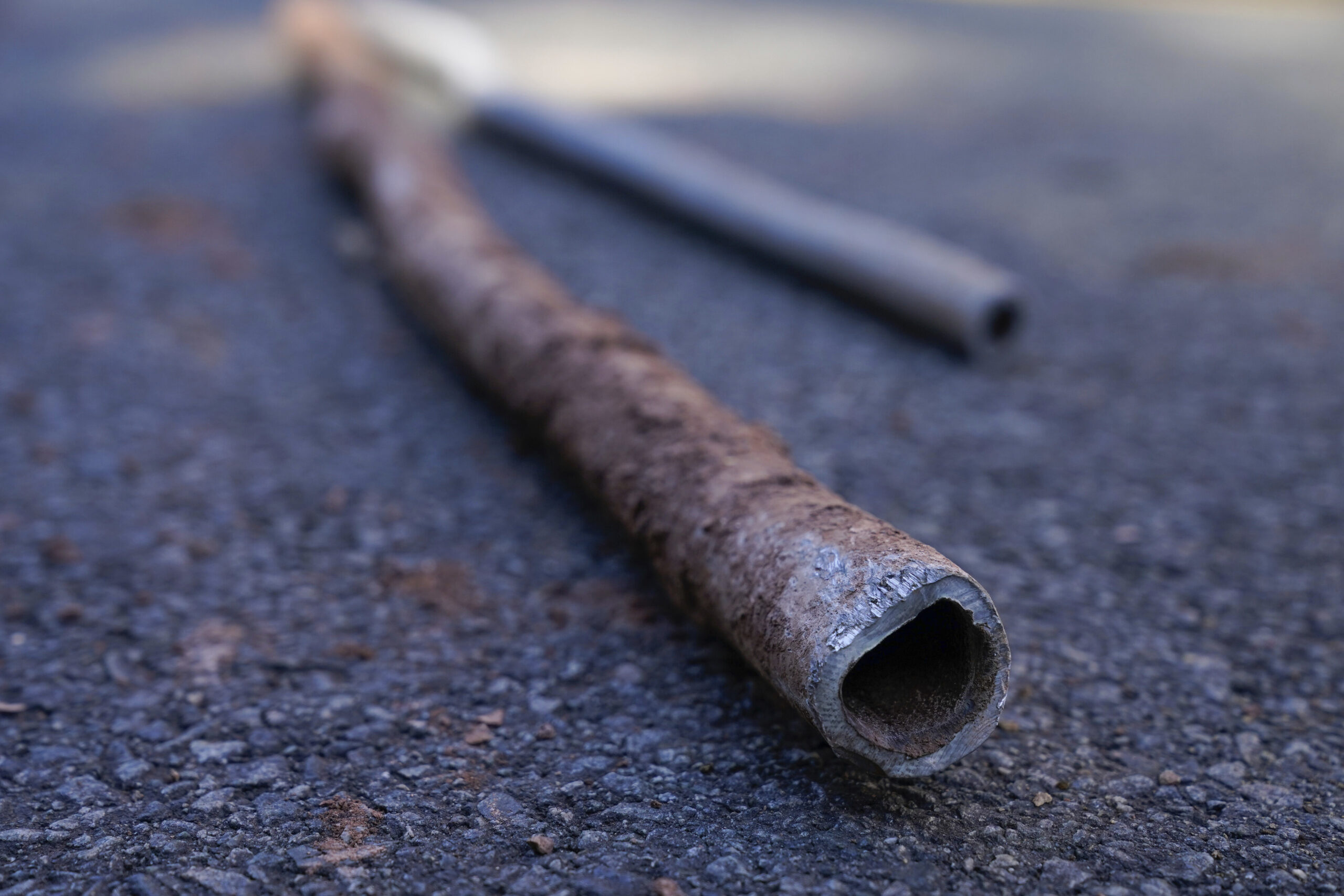
Residents of the city of Superior who have lead water pipes coming into their homes have long faced a unique situation: not only are the pipes a health hazard, but removing them could cost homeowners a significant amount due to a quirk in state law.
That was a clause that denied government assistance to customers of any private water utility, which in Wisconsin includes only one company, Superior Water, Light & Power. For years, the utility has sought to change the law, a position that in recent months has been opposed by the Superior City Council.
“My understanding is the City Council was opposed to this law for a couple of reasons, one being that the city is interested in acquiring the water utility,” said state Rep. Angela Stroud, a Democrat whose district includes the city of Superior. “The concern was if the city wants to acquire the water utility, we should be cautious about using public money to potentially inflate the value of that utility right before acquisition.”
News with a little more humanity
WPR’s “Wisconsin Today” newsletter keeps you connected to the state you love without feeling overwhelmed. No paywall. No agenda. No corporate filter.
That concern has been alleviated with a deal between the city and the utility, which Stroud is credited with helping to broker. Also, a bill removing the government funding prohibition related to private water companies, sponsored by state Sen. Romaine Quinn and Rep. Chanz Green, both Republicans, has been signed into law by Gov. Tony Evers.
The three lawmakers spoke about the deal and law change with WPR’s Robin Washington on “Morning Edition.”
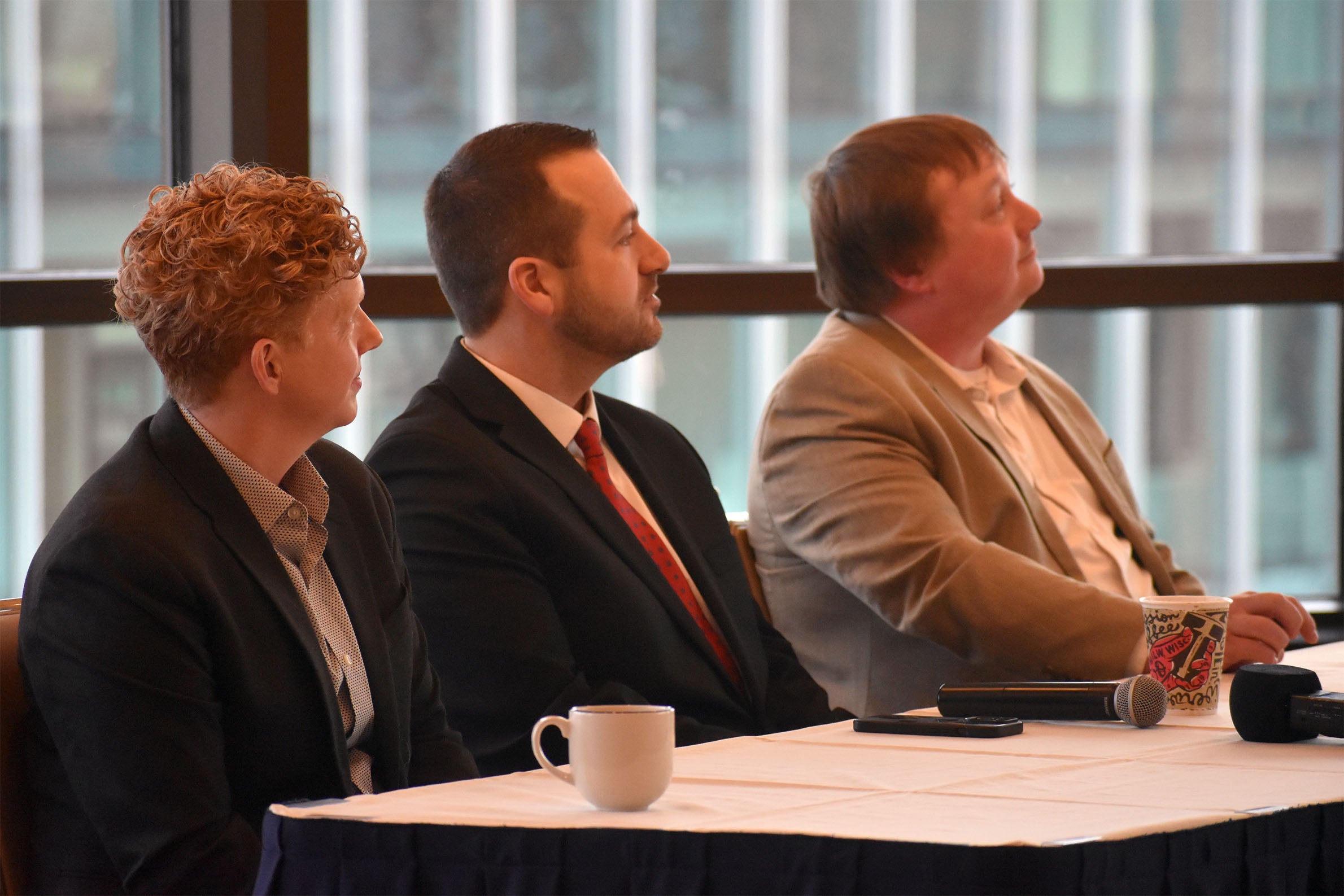
The following interview has been edited for brevity and clarity.
Robin Washington: Rep. Green, what led you to sponsor the bill, especially since your district is adjacent to, but outside of, the city of Superior?
Rep. Chanz Green: I was interested in it because this is what I did prior to joining the Legislature. I worked for the city of Ashland as a utility manager for about three years and I worked for the city of Amery for about 15 years prior to that. This is what I did for a living — removing lead laterals and removing lead lines from water.
I’ve seen the benefit of this funding, but a municipality in northern Wisconsin was being excluded. I didn’t think that was fair.
Sen. Quinn said, “We’re going to need to take this up.” It was on Superior’s priority list in years past and I thought, “Absolutely, let’s make it happen.”
RW: Sen. Quinn, you filed the bill in the Senate. Was it a hard sell there?
Sen. Romaine Quinn: It’s difficult to get anyone to really care about northern Wisconsin. To have an issue that only impacted one community made it even more difficult. It’s not so much that there was opposition but that people just frankly didn’t care because it didn’t impact them, their community or their district.
But we cashed in a lot of chips, and that’s what you do. You build relationships with other colleagues to get things over the finish line.
RW: The deal between the city and the utility is that the city will contract for work to replace the lead lines through a bidding process, and the utility will reimburse the city with any forgivable loan funds received from the state. What does that mean for Superior Water, Light & Power customers?
AS: The deal between the city and the utility is huge. If we had just passed the bill without the deal, the average homeowner would be paying $2,500 to cover their cost of replacing the lead lines that run to their house. This deal means that around 800 people will save an average of $2,500 each.
Unfortunately, that deal hadn’t been signed yet when (Quinn’s and Green’s) bills came to the floor, so I still had to vote no. We were in the midst of some pretty significant negotiations at that time. But I stayed in touch with the governor and I was really grateful that he agreed that so long as there was a deal, this was a bill worth signing. In the end he signed it.
RQ: I never thought the governor was going to veto it because I think he saw the value of it. I don’t know why he’d want to leave Superior out in the cold, and he didn’t.
CG: Regardless of whether the city and the utility made a deal, the bill would have saved all ratepayers in the city of Superior about $1.8 million over the next 10 years. A deal could be brokered at any point, and luckily, that happened. But at the end of the day, our goal was to open up the funding and make sure that the constituents had access to it.
If you have an idea about something in northern Wisconsin you think we should talk about on Morning Edition, send it to us at northern@wpr.org.