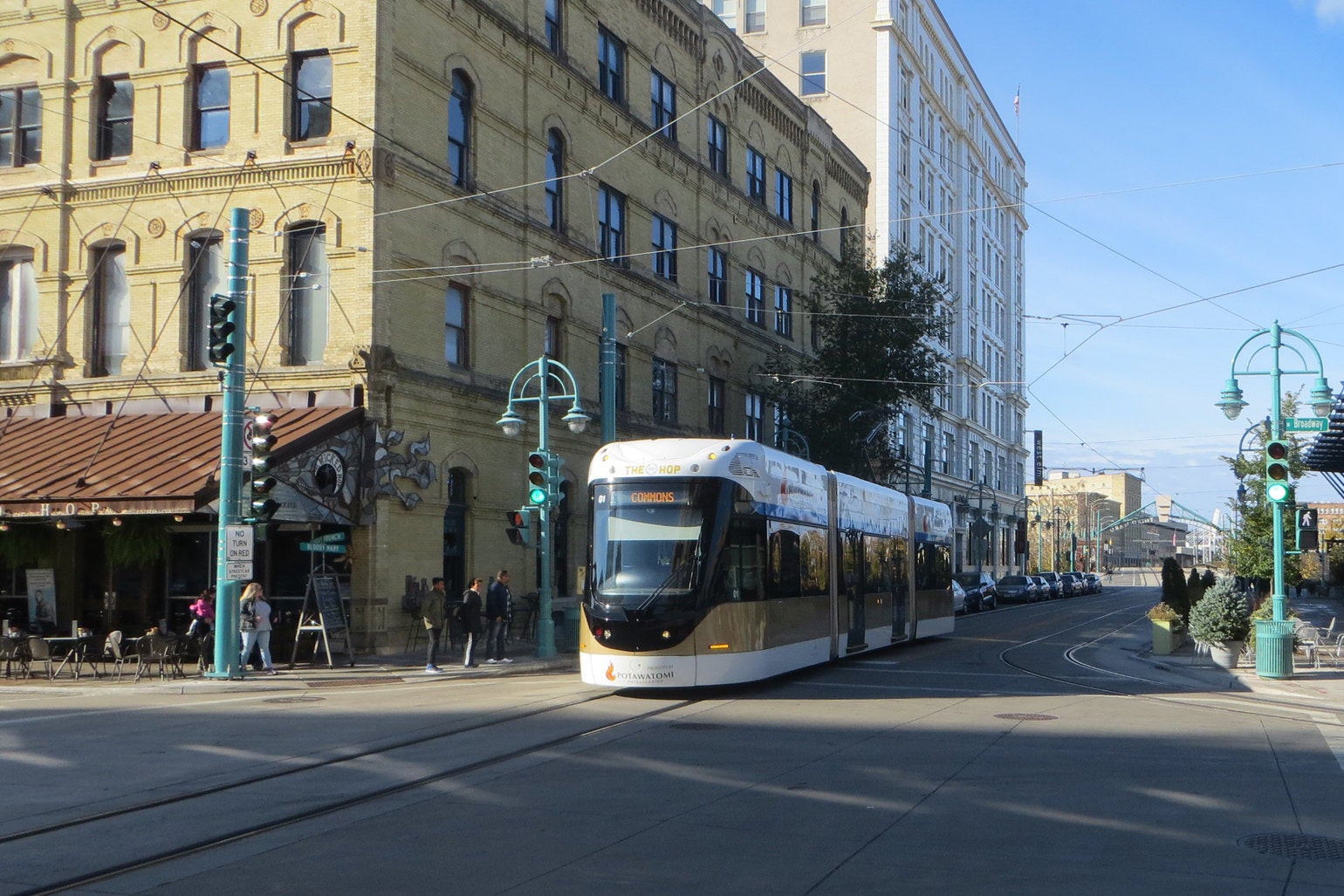
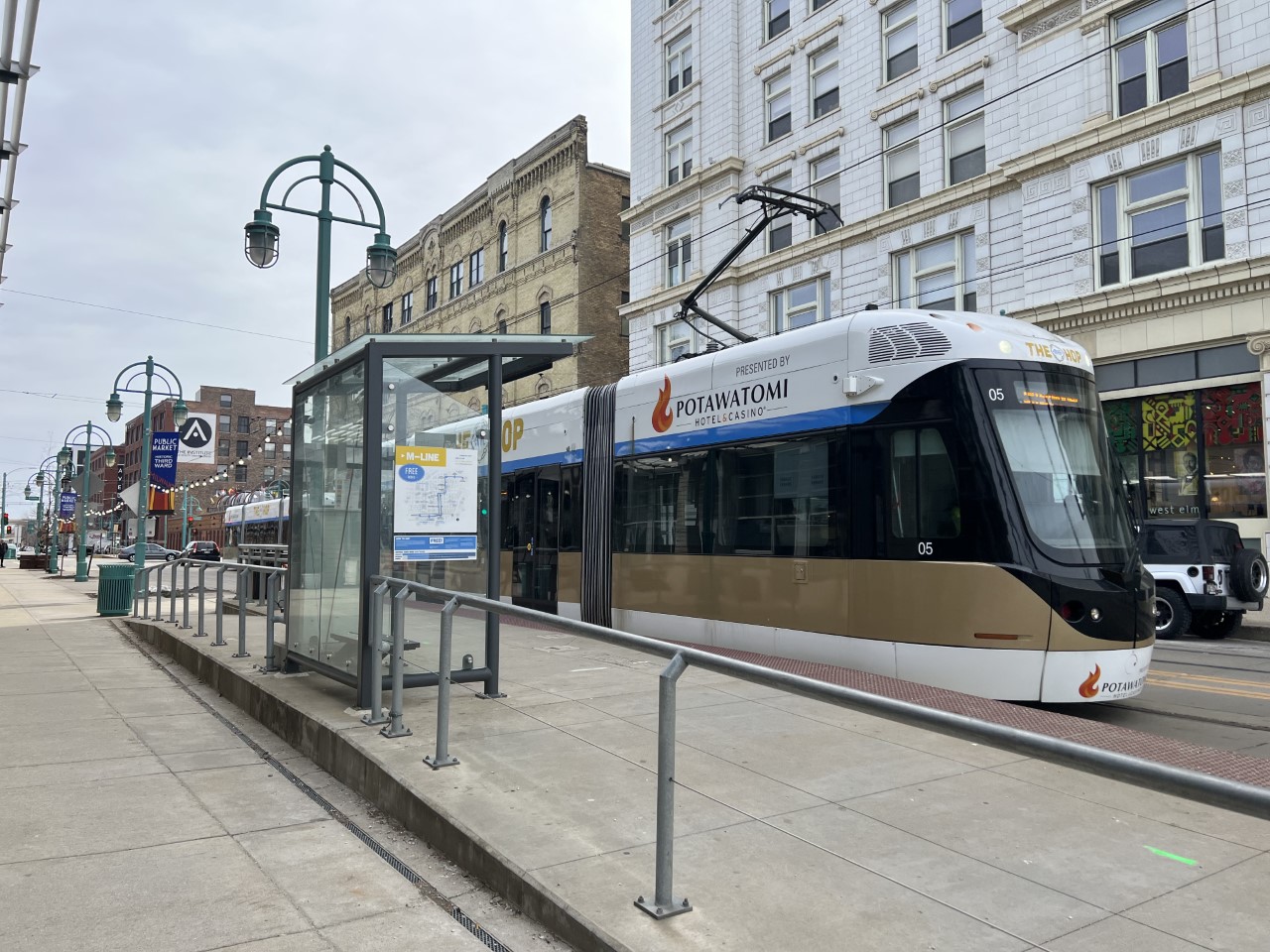
Milwaukee officials are again discussing the future of the city’s streetcar after state lawmakers limited the options for expanding its route into other neighborhoods.
The cost to operate the streetcar, named The Hop, is projected to be $6.9 million in 2026. Some of that cost is offset by grants and a sponsorship with Potawatomi Casino Hotel. But the city is facing a $4.2 million deficit for the streetcar next year, according to a Legislative Reference Bureau budget review document.
During a recent city finance and personnel committee meeting, Milwaukee Alder Scott Spiker said that “net loss” of over $4 million is frustrating.
News with a little more humanity
WPR’s “Wisconsin Today” newsletter keeps you connected to the state you love without feeling overwhelmed. No paywall. No agenda. No corporate filter.
“That’s $4 million we don’t put towards libraries. That’s $4 million we don’t put towards streets. That’s $4 million we don’t put towards new fire trucks,” Spiker said. “And our needs are growing, and our status quo is slowly killing us.”
The discussion around the streetcar comes as Milwaukee’s fire chief has been sounding the alarm about the need for new fire trucks and engines. Meanwhile, the Milwaukee Public Library system is facing budget cuts of over $700,000 in the 2026 proposed city budget, according to a Wisconsin Policy Forum budget brief.
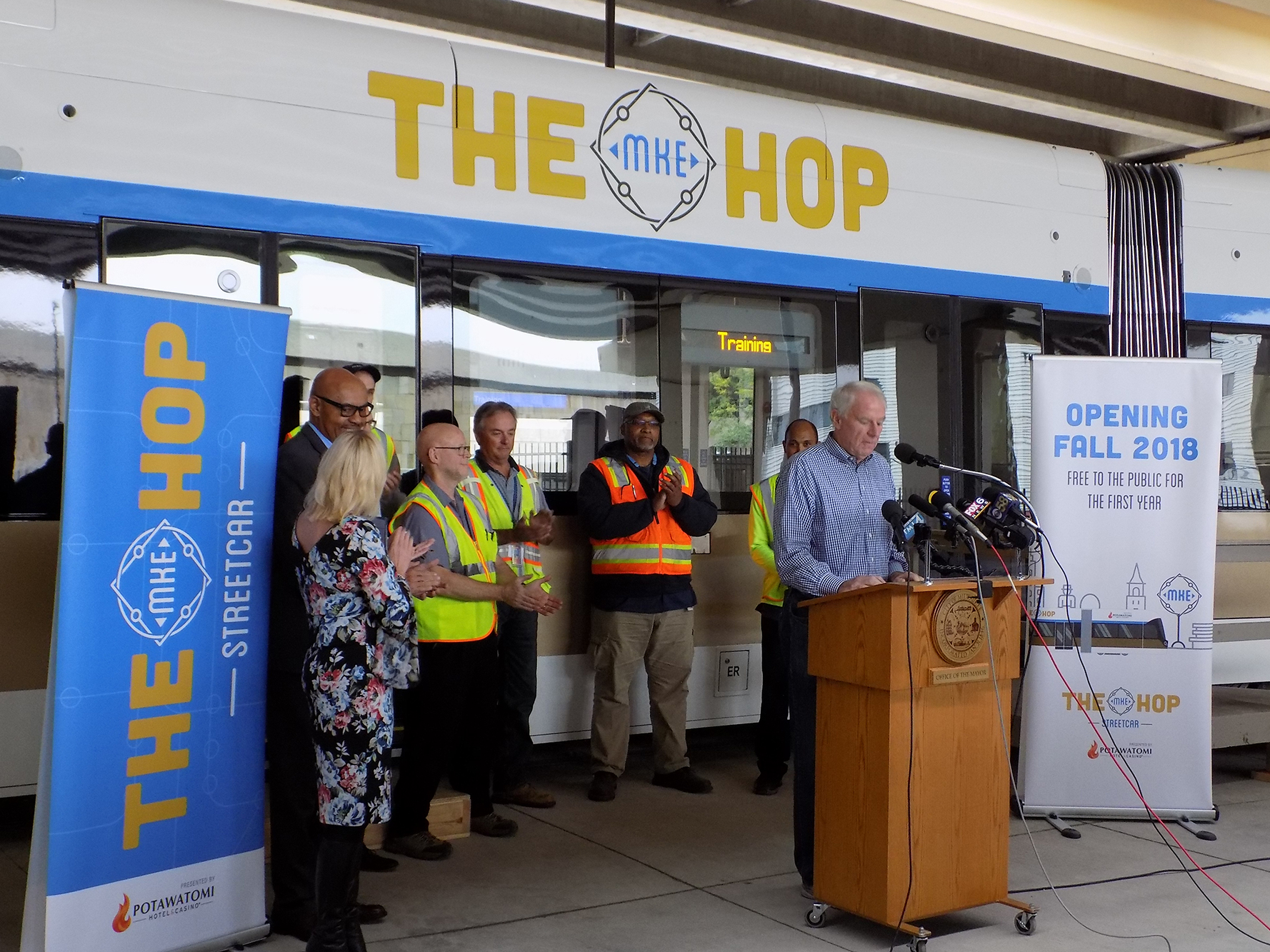
The Hop, which is free for riders, began service in 2018 with high hopes. The streetcar line used tax incremental financing to help fund its initial construction.
But Wisconsin Act 12, signed into law in 2023, limits how the city can fund expansion of the service. The law says the city can’t use “moneys raised by levying taxes for … developing, operating, or maintaining” the streetcar. It also says the city cannot use a tax incremental financing district for “direct or indirect expenses related to developing, constructing, or operating” the service.
The Hop currently has a 2.1-mile route in downtown Milwaukee. Some supporters had been hopeful it could be expanded into more neighborhoods, but Spiker said any future expansion is essentially “dead in its tracks.”
“You have a loop that goes 2 miles, locked in, and there’s no prospect for expanding it,” Spiker said.
“Is the streetcar worth it?” Spiker said. “Is it worth $4 million for what it does?”
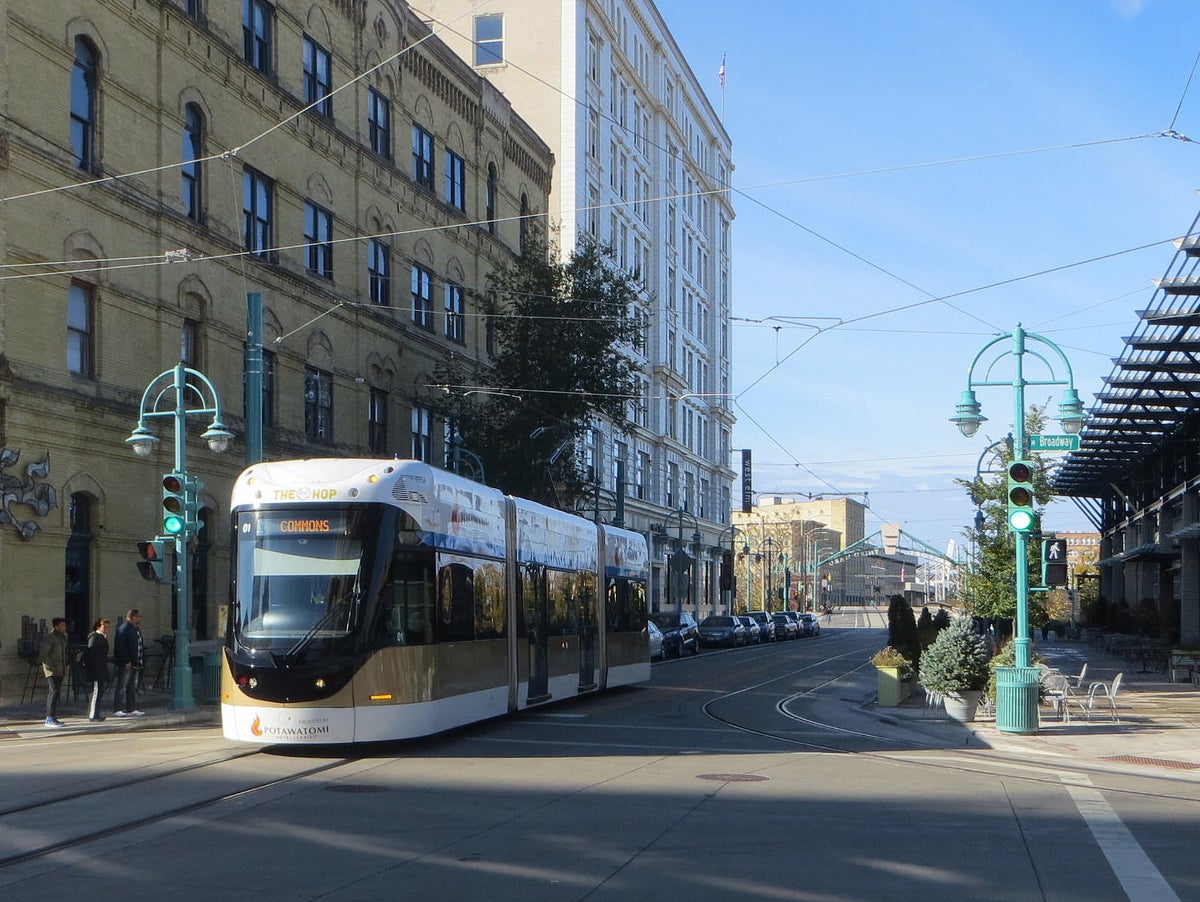
State Republican lawmakers have also complained about the streetcar in recent years, with Assembly Speaker Robin Vos calling it a “boondoggle.” But many city alders still support The Hop, as some say it has spurred economic growth downtown.
“The Milwaukee streetcar is not a drain on city resources,” Milwaukee Alder Peter Burgelis said. “It’s a strategic investment that strengthens … the downtown economy.”
Burgelis said the area where The Hop runs has made that area “more connected, walkable and attractive to employees, visitors and residents alike.”
“The streetcar helps power momentum that we’re seeing downtown,” he added.
Milwaukee Alder Marina Dimitrijevic said she also wants to see The Hop’s route expanded, possibly to Milwaukee’s Mitchell International Airport.
“We’ve got to be patient, but we’ve got to really build the city that we want to see,” Dimitrijevic said.
Ridership has been on the rise since 2021. The Hop provided 532,460 rides in 2024, up from 494,445 in 2023. However, ridership is projected to be at 490,000 in 2025, according to city data.
Milwaukee Department of Public Works Commissioner Jerrel Kruschke said data has shown that 40 percent of riders who use the streetcar do not own a car.
“It’s providing an option for people, and the goal is to get into the neighborhoods,” Kruschke said.
Expansion could be difficult
Kruschke did say that although the city cannot use tax incremental financing for future expansions, city officials could still seek out federal grants. But Spiker said getting federal funding for public transit projects could be challenging currently, pointing to the recent rescission of a $36 million federal grant for a street reconstruction project in the city.
“Obviously, there’s a current administration that exists in our federal government that’s challenging,” Kruschke said. “Does that change every four years? Absolutely. Is there changes in our state government that happen? Absolutely.”
If the city were to cut the service altogether, Kruschke said they would owe the federal government an estimated $48 million. That’s because of past federal funding Milwaukee has received for the streetcar project.
“If you (the common council) decided, ‘I don’t want to run it today,’ that’s a $48 million check we have cut tomorrow,” Kruschke said. “So where that funding comes from — that’s a big question.”
Funding for streetcar operations is included in the city’s transportation fund. That fund largely consists of money received from parking citations and parking meters. The Milwaukee Department of Public Works plans to issue 65,000 more parking citations next year compared to this year, according to a budget document.
“It was always intended, the transportation fund would subsidize the streetcar,” Kruschke said during the committee meeting.

Wisconsin Public Radio, © Copyright 2026, Board of Regents of the University of Wisconsin System and Wisconsin Educational Communications Board.