U.S. stocks recovered on Wednesday after several days of steep drops as President Donald Trump announced a 90-day pause to many of his new import tariffs.
This volatility in the market has many people nervous about the future of their 401(k)s and other retirement accounts tied to the stock market.
Emily Guy Birken is a personal finance writer based in Milwaukee who has written several books about retirement. She told WPR’s “Wisconsin Today” that this is different from what the country saw with the 2008 recession or the stock market crash brought on by the COVID-19 pandemic in 2020.
News with a little more humanity
WPR’s “Wisconsin Today” newsletter keeps you connected to the state you love without feeling overwhelmed. No paywall. No agenda. No corporate filter.
“The current turbulence in the market is unlike anything I’ve personally ever seen,” she said. “We have to go all the way back to 1929 to see something similar.”
According to 2020 data from the U.S. Census Bureau, about 35 percent of working Americans have a 401(k) or similar retirement account. Over the past week, 401(k)s have taken a hard hit, leading some to worry and make hasty decisions.
Guy Birken joined “Wisconsin Today” on Wednesday morning to share some advice for navigating this moment of financial uncertainty.
Don’t panic
While Guy Birken said that the week’s wild stock market fluctuations are unprecedented in her lifetime, it doesn’t mean that “all is lost.”
“I can completely understand why everyone who is looking at their 401(k) balance is going ‘Oh no, what am I going to do?’” she said. “But I do want to reassure people, this is not the beginning of the end. … It doesn’t mean that you’re going to be unable to retire.”
Especially for people who aren’t planning to retire soon, they can wait for the market to recover and then reassess their investments.
If you are planning to retire soon
This week’s stock market upheaval could be particularly stressful for those looking to retire soon.
“The people who are approaching retirement right now are understandably biting their fingernails,” Guy Birken said.
However, she said it’s important to remember that you won’t need all of your retirement savings right away, so you aren’t stuck with today’s market conditions forever.
“There is money that you are going to allow to continue to grow, for you to access in your 80s and 90s,” she said. “So you do still have time for recovery, even if your retirement date is tomorrow, because not all of that money is needed tomorrow.”
One option is to move money to more conservative investments like bonds or Treasury securities that will maintain their principal balance regardless of market fluctuations.
“It is a way to make sure you have money to live on immediately after you retire, even if the market is just bonkers,” she said.
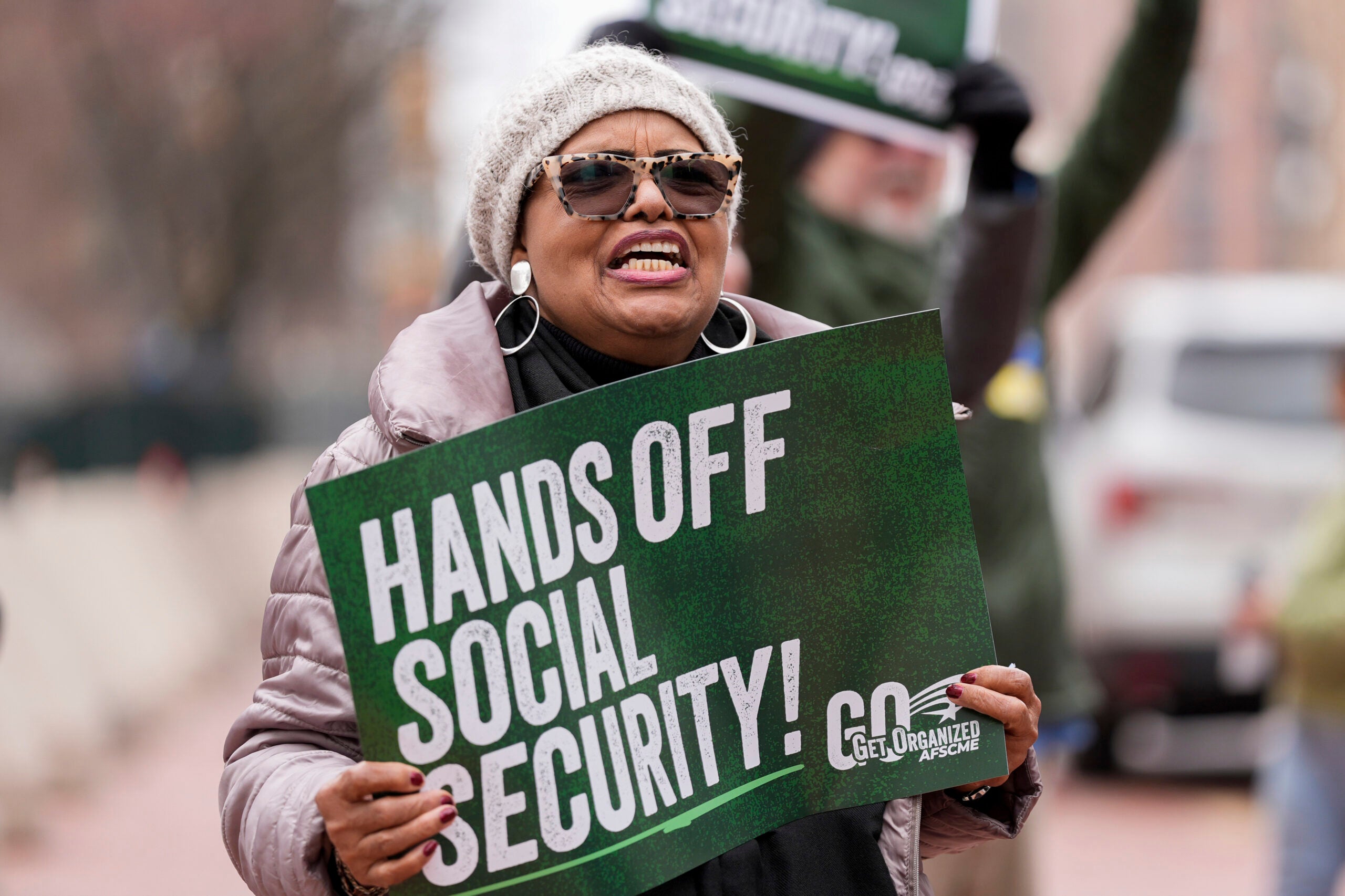
What about Social Security?
Guy Birken is a major proponent of the Social Security program, which provides retirement benefits to over 1 million Wisconsinites, according to a 2023 report.
Because it doesn’t experience the ups and downs of the stock market, Social Security has greater reliability and is “something we can count on,” she said.
“I like to tell people, if Social Security isn’t there for you when you retire, we’ve got bigger problems,” she said. “Like, a meteor heading to Earth — that kind of bigger problems.”
Guy Birken recommends signing up for a “my Social Security” account, where people can view their work history and estimate the future benefits they will receive.
“You can play around with it and see: What happens if you take Social Security early? What happens if you wait until age 70 to take it?” Guy Birken said. “That can really ease a lot of fears.”
However, she cautioned that people shouldn’t rely on Social Security benefits as their sole financial plan for retirement.
“It’s better to consider that as like the gravy on the meatloaf that is your retirement portfolio,” she said.
Could we be headed for a recession?
The likelihood of a recession has gone up significantly since Trump announced the new tariffs, with financial firm J.P. Morgan raising their odds of a global recession from 40 percent to 60 percent.
“I think it is very likely that a recession could be on its way,” Guy Birken said.
That said, she believes that a recession is not “the boogeyman,” and people can take steps to protect their financial future.
“A recession is not great news,” she said. “It’s not something anybody is jumping for joy over, but it is survivable.”