An effort in Washington to limit how members of Congress engage in stock trading has the backing of a bipartisan mix of former Wisconsin lawmakers.
The “Restore Trust in Congress Act” would bar members of Congress and their immediate families from trading stocks, an effort to improve public trust in the body and eliminate conflicts of interest.
Ninety former members of Congress authored a letter asking House leadership to move the bill forward.
News with a little more humanity
WPR’s “Wisconsin Today” newsletter keeps you connected to the state you love without feeling overwhelmed. No paywall. No agenda. No corporate filter.
“Enacting this critical reform would be a powerful step toward rebuilding that trust, addressing real and perceived conflicts of interest, and demonstrating that members of Congress prioritize the institution’s integrity and their commitment to their constituents above personal gain,” reads the letter, which was signed by 60 Democrats, 28 Republicans and two Independents.
The list included four people who used to represent Wisconsin in Congress: former U.S. Rep. Ron Kind and former U.S. Sen. Russ Feingold, both Democrats, and former U.S. Reps. Steve Gunderson and Reid Ribble, both Republicans.
“I just think for the integrity of the institution, it would be better not to allow individual stock trades,” Ribble told WPR.
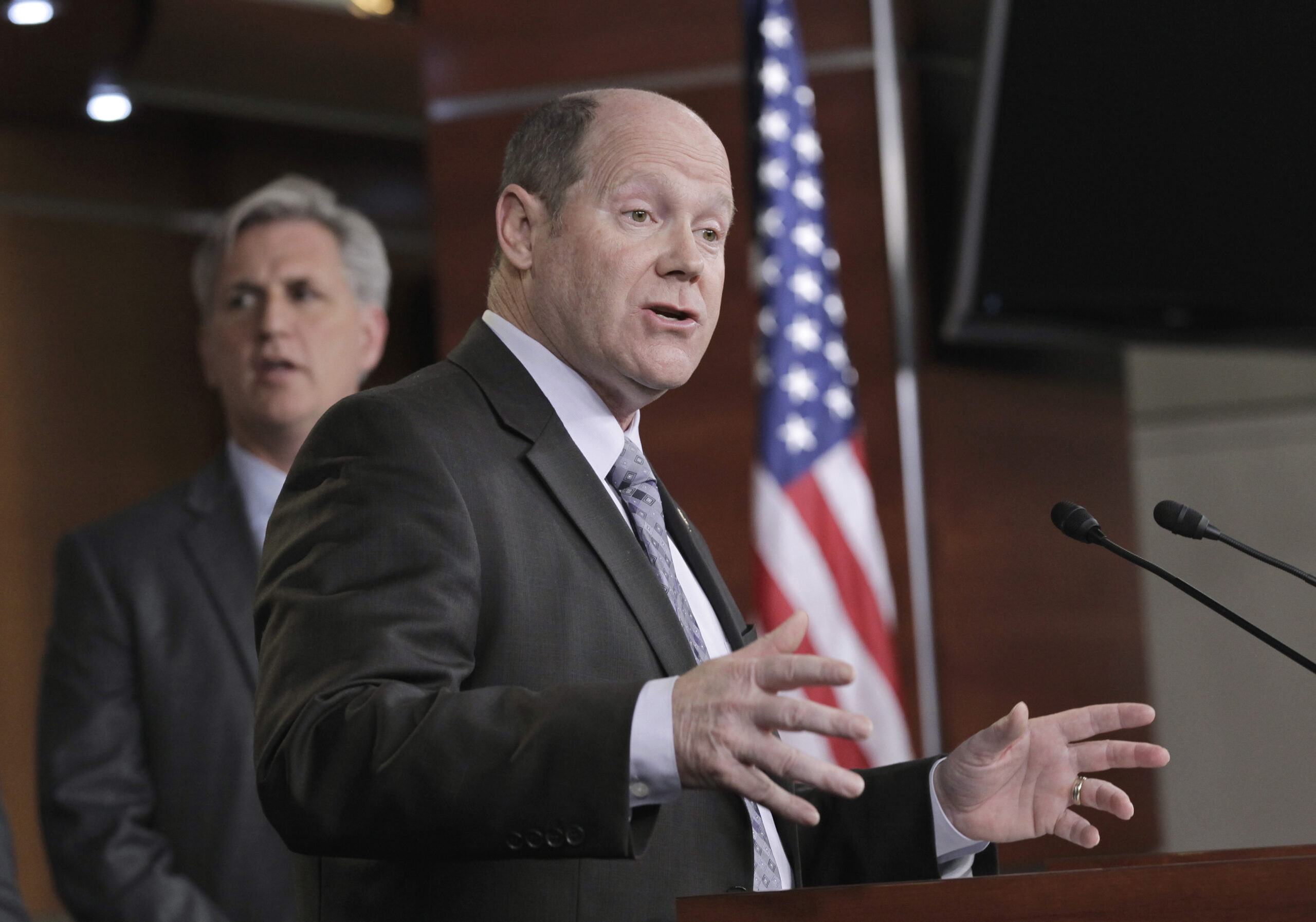
Ribble, who represented Wisconsin’s 8th Congressional District from 2011 to 2017, said he did not always support such a ban, but now thinks it would go a long way toward improving trust in Congress.
“This would be a small step to try to restore that trust back so that the voters have more confidence that members are not enriching themselves,” he said.
According to the Pew Research Center, public trust in Congress is at historic lows. Since 2007, less than 30 percent of Americans report trusting government most or all of the time.
Meanwhile, there is widespread and bipartisan support for limiting federal lawmakers’ investments, studies show.
As written, the House’s Restore Trust in Congress bill prevents members of Congress and their immediate families from trading stocks, securities, futures and commodities while in office. New lawmakers would be required to divest from those holdings, or place them in a blind trust, within 90 days of taking office. Existing lawmakers would have to sell them, or place them in a blind trust, within 180 days of the law taking effect.
In the open letter, the former lawmakers called on House Speaker Mike Johnson, R-La., and Minority Leader Hakeem Jeffries, D-N.Y., to encourage support for the bill and work to ensure “its passage before the end of the year.”
Critics of the effort say that salaries for members of Congress have been frozen since 2009, and trading stocks is one of the only ways for them to earn income beyond their $174,000 congressional salaries.
Ribble said he understands the financial challenges that some members of Congress can face as they maintain residences in both Washington, D.C. and their home districts. But, he said, as everyday Americans struggle with rising costs, the perception of government officials enriching themselves encourages populist outrage.
“The American people are very upset,” he said. “They’re upset with inflation, they’re upset with what it costs to live today, what it costs for health care, what it costs to buy a home, what it costs to buy food.”
The letter comes five years after U.S. Senators were investigated for alleged insider trading in the early days of the COVID-19 pandemic. That investigation focused on their decisions to sell stocks shortly before markets tanked because of the pandemic.
The chair of the Senate Intelligence Committee, Richard Burr, R-N.C., for instance, sold between $628,000 and $1.72 million in individual stock on Feb. 13, 2020. Sen. Dianne Feinstein, D-Calif., sold between $1.6 million and $6 million in a cell therapy company around the same time. Both said they followed required disclosure laws, and DOJ investigations into them were closed.
While members of Congress have been barred since 2012 from using their privileged information to gain profit, investigations have found that dozens of federal lawmakers have violated disclosure requirements, and face few consequences.
More recently, a Wall Street Journal analysis found that House lawmakers bought and sold hundreds of stocks in the days leading up to President Donald Trump’s announcement of sweeping tariffs in April.
The proposed Restore Trust in Congress Act, which was introduced in September, is different than other stock-ban attempts, which were largely built along party lines. And it is different than a Senate version of a ban, originally named for former Democratic House Speaker Nancy Pelosi, which includes a carve-out for President Donald Trump. The authors of the December letter praised the bipartisan process by which the House proposal emerged.
Ribble said he understands this effort to be the legislation’s best chance in years.
“The American people right now are more supportive of this than ever, and so I’m a big believer, on legislative reforms like this, to strike when the iron is really hot,” he said.
If the bipartisan House version gets a vote and passes, it would need to also pass the Senate and then be signed by Trump.

Wisconsin Public Radio, © Copyright 2026, Board of Regents of the University of Wisconsin System and Wisconsin Educational Communications Board.