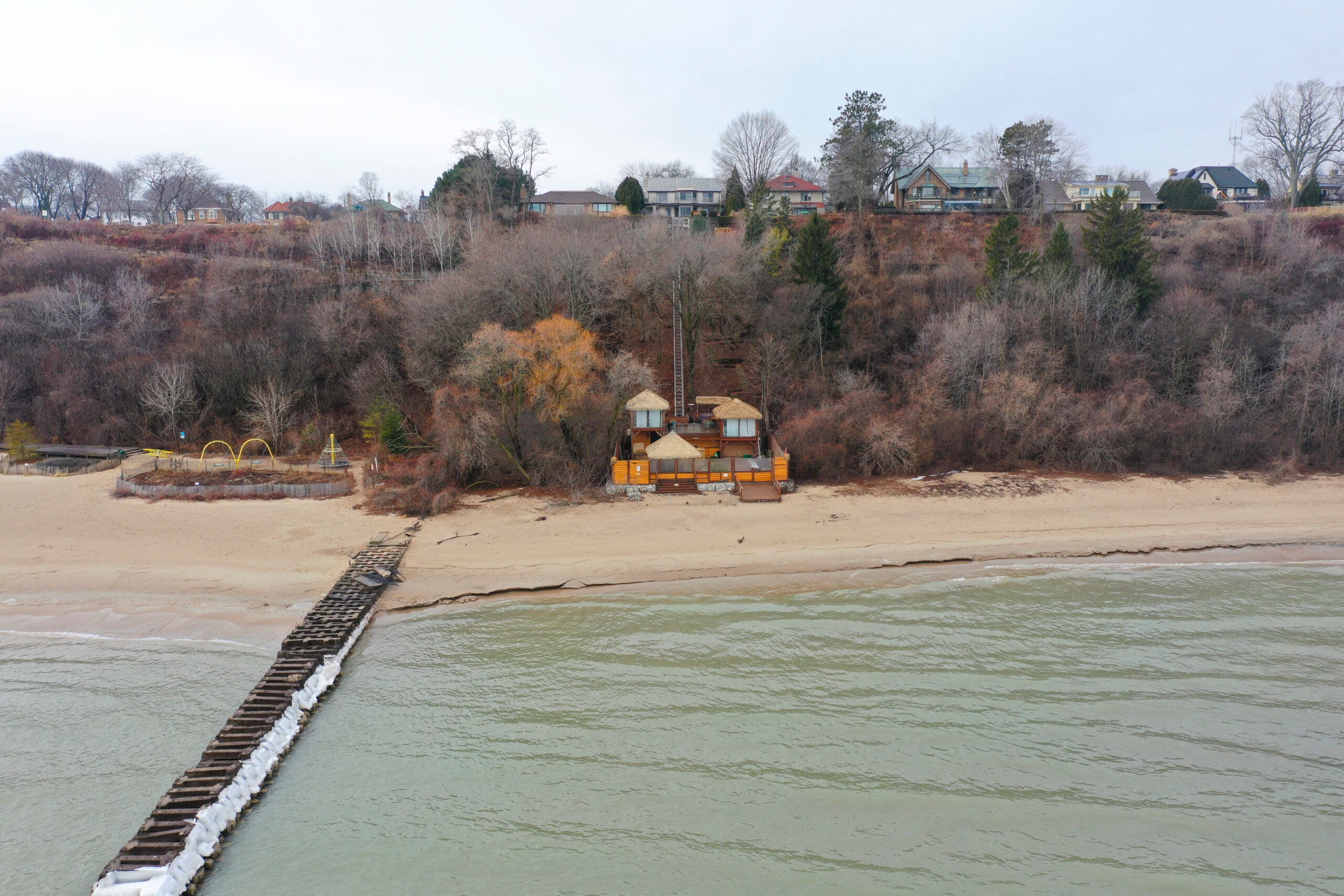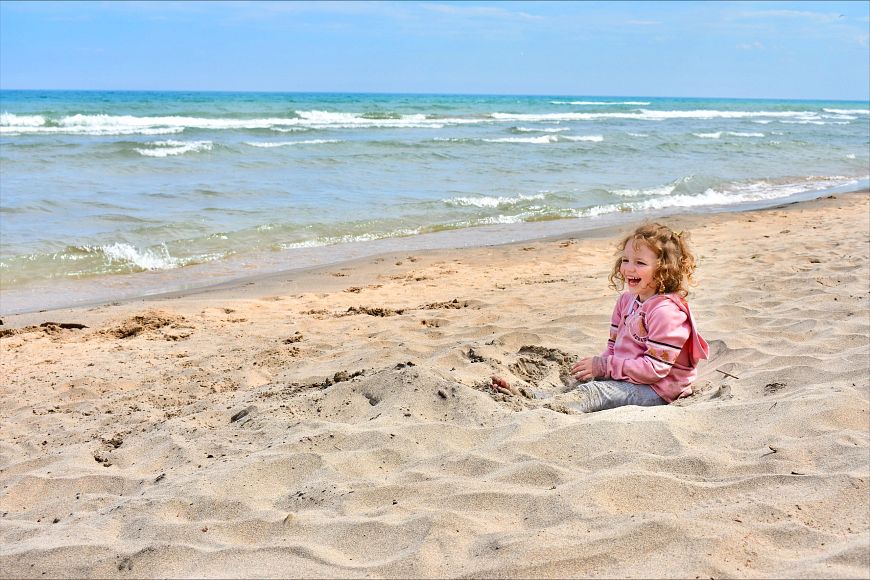
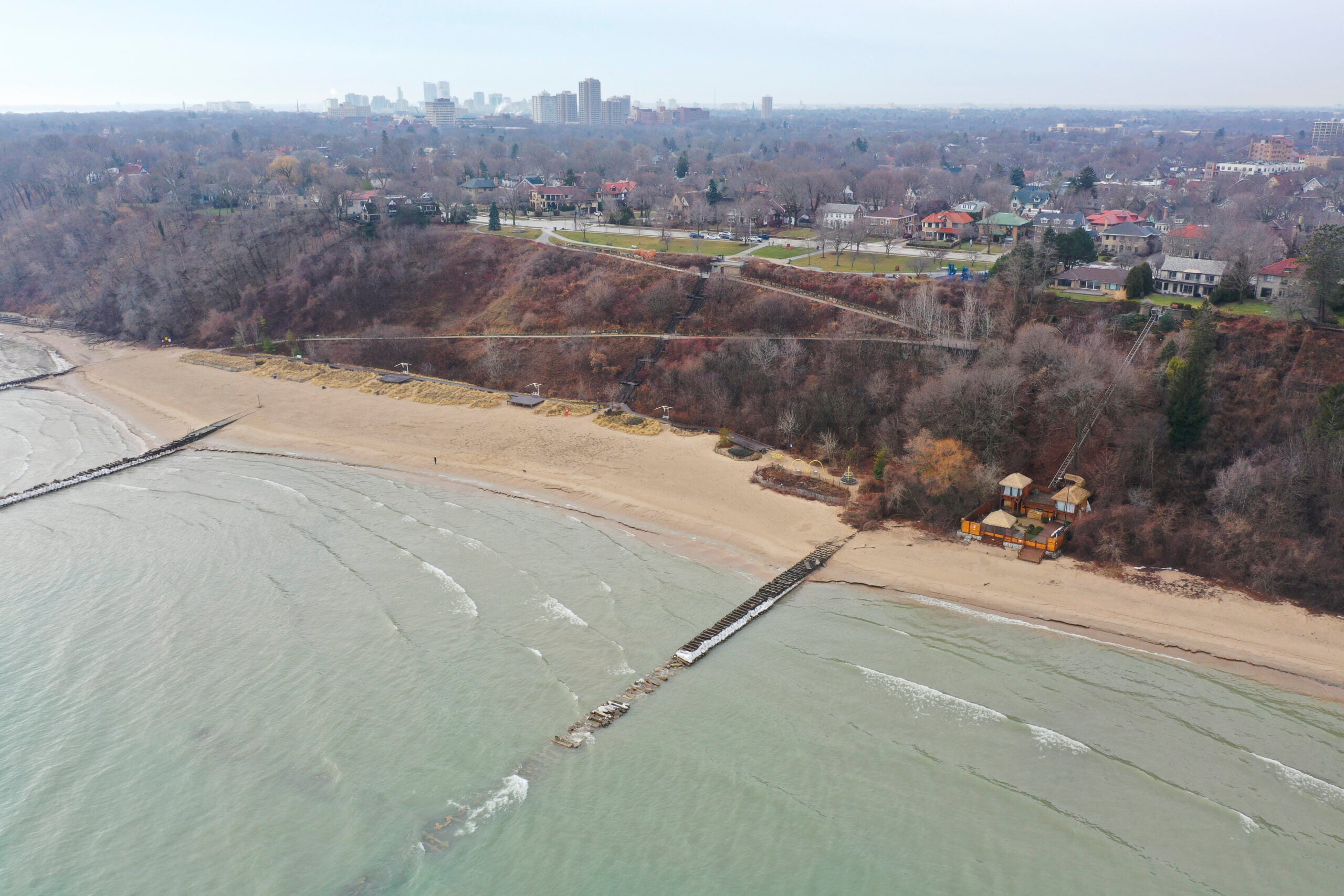
A Shorewood man plans to appeal a municipal judge’s decision that found him guilty of trespassing on a Lake Michigan beach, hoping the case will make its way to the Wisconsin Supreme Court to decide public versus private beach access in the state.
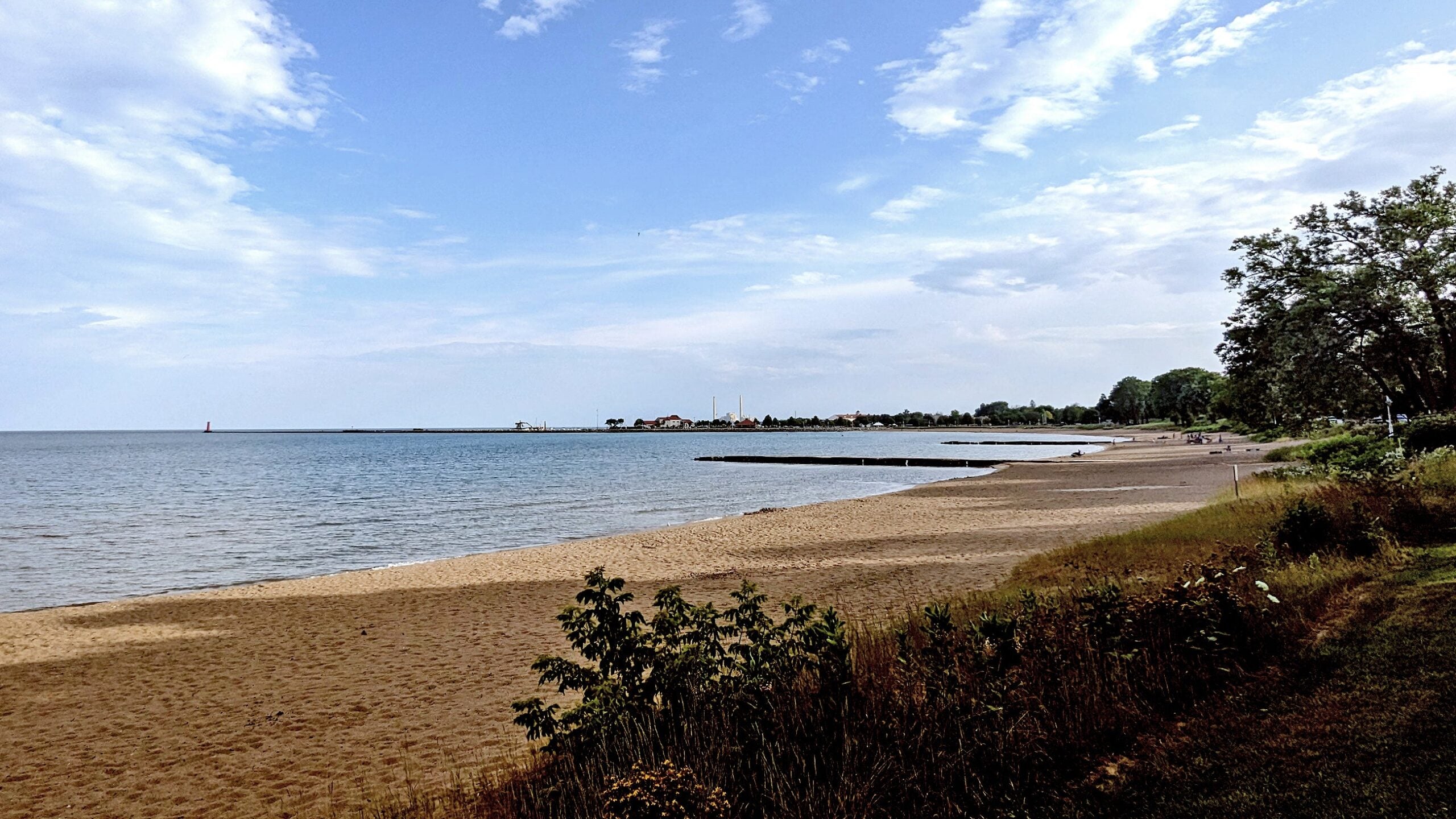
For decades, Paul Florsheim has enjoyed walking along the shoreline of Lake Michigan past Atwater Beach in Shorewood. He was doing just that last summer when a homeowner who lives near the beach and along the shoreline waved him down and asked him if he had seen the nearby no trespassing sign.
He had. But he chose to ignore it.
News with a little more humanity
WPR’s “Wisconsin Today” newsletter keeps you connected to the state you love without feeling overwhelmed. No paywall. No agenda. No corporate filter.
“I was quite sure that that beach — the part along the water — was not his, and that anybody could walk there,” Florsheim said.
Shortly after that incident, Florsheim received a $313 trespassing citation from the Shorewood Police Department. But instead of paying the ticket, he decided to fight it in court.
In December, he represented himself during a Shorewood Municipal Court hearing. Florsheim, who is a professor at the University of Wisconsin-Milwaukee, argued the part of the beach where he was walking was public land, and he was allowed to be there.
“This is ridiculous, this is part of the public trust,” he said.
The public trust doctrine protects the public’s rights on navigable waterways in Wisconsin.
At the hearing, Florsheim argued the doctrine protects his right to walk along the shoreline up to the ordinary high-water mark. That mark is defined as the area on a shoreline where the water leaves a “distinct mark either by erosion, destruction of terrestrial vegetation or other easily recognized characteristic,” according to the Wisconsin Department of Natural Resources.
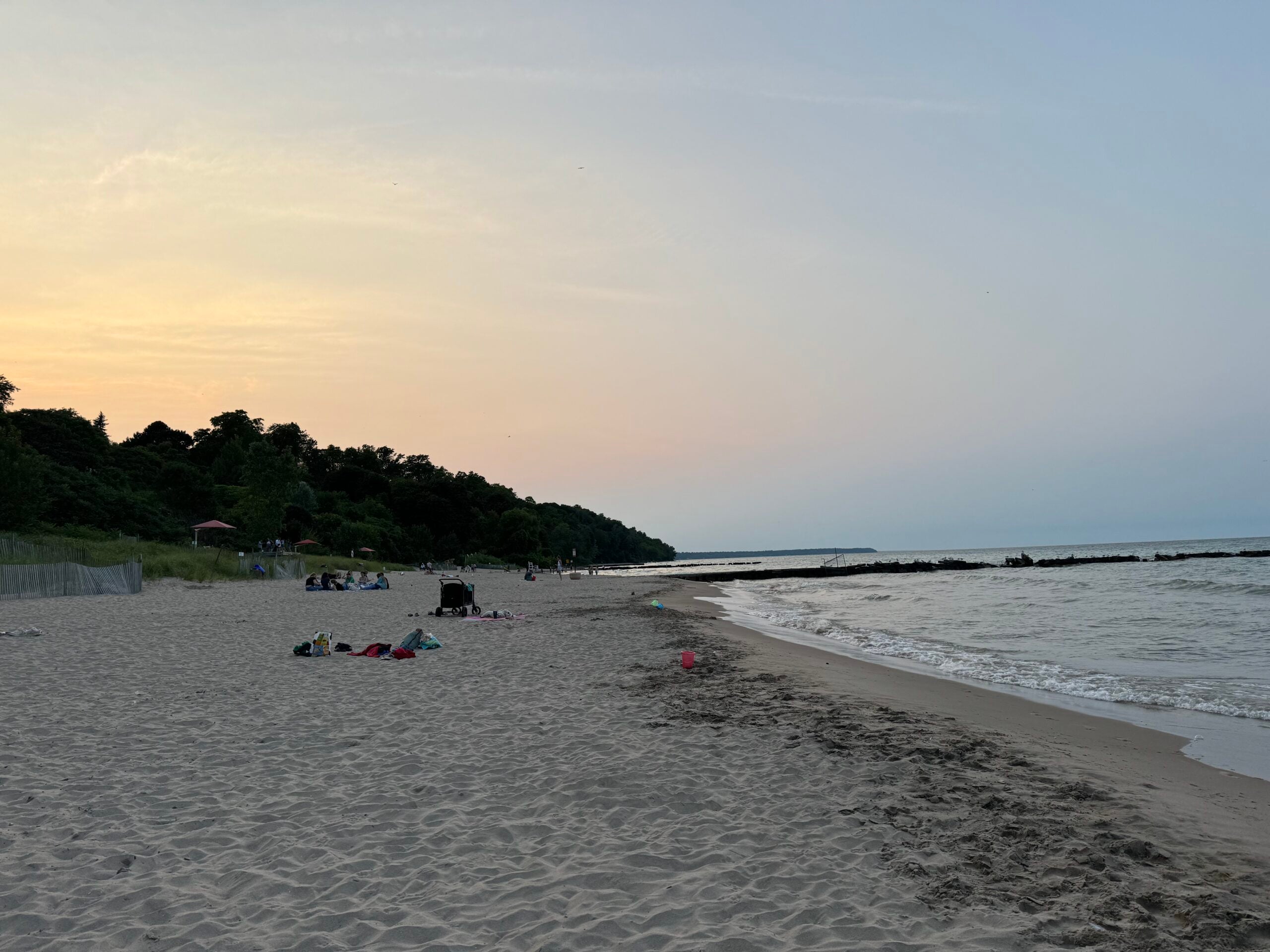
However, Shorewood Municipal Judge Margo Kirchner ruled against Florsheim this week and found him guilty of trespassing. In her decision, Kirchner cited a 1923 Wisconsin Supreme Court ruling, Doemel v. Jantz, which found that the public cannot walk on the area of the shoreline between the high water mark and the edge of the water. It said that private property owners have exclusive rights to that area.
“Under Doemel, regardless of what Florsheim could do in the water, he could not walk on the beach without trespassing,” Kirchner wrote in her decision.
She added that Florsheim had “no valid defense under the public trust doctrine.”
Florsheim said he plans to appeal the decision. He has high hopes that the case may get to the Wisconsin Supreme Court, so the court can weigh in on the issue.
“It’s not just my issue,” Florsheim said. “Other people want to walk, and other people feel quite adamantly that everyone should have the right to walk on the beach.”
David Strifling, a law professor and director of Marquette Law School’s Water Law and Policy Initiative, said he’s been following the case for months.
“It’s very relatable to be walking along the lakeshore and you’re in a public area, and then all of a sudden you look to the landward side and there are private homes there, and you wonder, ‘Hey, can I really be here, am I allowed to be here?’” Strifling said. “I think it’s a common situation that we’ve all found ourselves in.”
Rob Lee, a senior staff attorney at Midwest Environmental Advocates, said the Wisconsin Supreme Court could provide more insight into the issue.
“I think it’s time for the court to revisit this question and establish clearer guidelines on the difference between riparian rights and the public trust rights,” Lee said.
The 1923 Wisconsin Supreme Court decision related to a dispute along Lake Winnebago, an inland lake. Professor Melissa Scanlan, the director of the Center for Water Policy at UW-Milwaukee, said the state’s highest court has not yet decided whether the public trust doctrine “protects the rights of the public to walk along the shores of the Great Lakes.”
“When I first heard about this case, I thought this might be the one that goes up through our court system to finally review and settle that question,” Scanlan said.
“I think that there’s a strong public interest in getting this question answered,” she added.
Similar cases have been decided in Indiana and Michigan, two neighboring states that border Lake Michigan. In those states, Strifling said the public has the right to walk along the beach below the ordinary high-water mark.
In her decision, Kirchner wrote that in Wisconsin, the Doemel decision is the law of the land. As a municipal judge, she wrote that she could not disregard that decision, “whether rightly or wrongly decided. I must follow it.”
“Perhaps Doemel should be overruled,” Kirchner wrote in the decision.
Village attorney Nathan Bayer said the village reached out to Florsheim to try and reach a resolution regarding his citation before the December court hearing.
“I have respect for the fact that he wanted to turn this into a test case,” Bayer said.
“I don’t begrudge anybody taking the opportunity to challenge that established law and certainly take no offense to it,” he added. “But as written, we’re duty bound to enforce the ordinances, upon complaints of neighboring property owners.”
Florsheim’s appeal will first go to the Milwaukee County Circuit Court. He said he may seek legal help on the issue after he represented himself during the December court hearing.

Wisconsin Public Radio, © Copyright 2026, Board of Regents of the University of Wisconsin System and Wisconsin Educational Communications Board.