
In April, a contractor in Green Bay received an unusual email. It looked like it was from the city — it had the right color scheme, the right logos, a believable email address.
It demanded a sizable wire transfer to pay a permit fee.
In reality, it was the first in a group of scam emails sent to people involved with city agencies. Since last week, two appointees to city boards have gotten similar emails.
News with a little more humanity
WPR’s “Wisconsin Today” newsletter keeps you connected to the state you love without feeling overwhelmed. No paywall. No agenda. No corporate filter.
They prompted the city of Green Bay to issue an alert Tuesday.
“This one is very well-fashioned, very well-done, I’ve got to say,” said Michael Bergman, Green Bay’s communications director.
He said the emails used public information — like permit applications and public meeting records — to tailor demands to the targets.
“I would have to take a second before I figured it out, that this was a phishing scam,” he said.
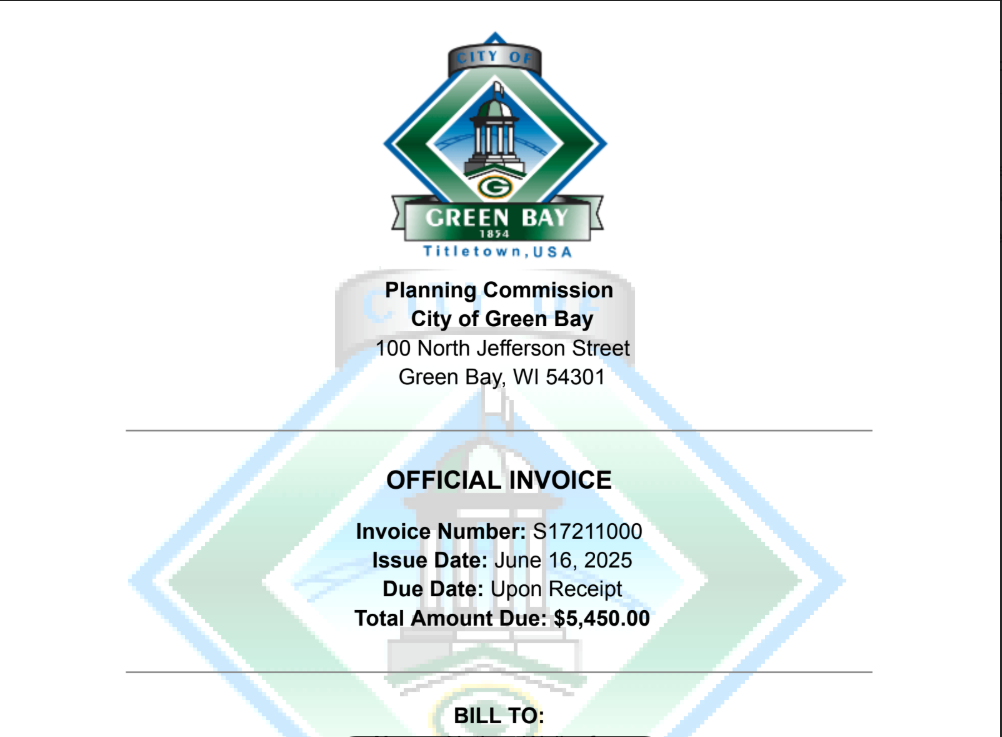
Phishing is a scam that tricks targets into sending money or giving up personal information by impersonating a reputable source, like a bank or government agency.
Bergman said the emails have two tells. First, Green Bay never asks for any payments over wire transfer. Second, the scam email’s domain — cityofgreenbay.wi.gov — is not the city’s, which is greenbaywi.gov.
He also called demanding fees from appointees to city bodies “very suspect.”
“We don’t charge you to sit on our city commissions or committees,” he said, chuckling. “We’d like to be able to pay you to do so, not the other way around.”
Bergman encouraged targets to contact the city to check if emails are legitimate, and to compare the email address of the sender with the city’s.
“We are very thankful that, as far as we know, no one has actually sent any money on this,” Bergman said.
According to Michelle Reinen, who leads the Division of Trade and Consumer Protection at the Wisconsin Department of Agriculture, Trade and Consumer Protection, these attacks are common.
“Impersonating government is very popular. They usually impersonate government or very large, popular, well-known companies,” she said.
On June 9, the city government of Monona posted an alert pointing to a similar phishing scam operating in the Madison suburb.
“If you receive an email requesting that you wire payment for a City of Monona permit, DO NOT wire money. This is a fraudulent email,” it said.
Wisconsin Public Radio, © Copyright 2026, Board of Regents of the University of Wisconsin System and Wisconsin Educational Communications Board.