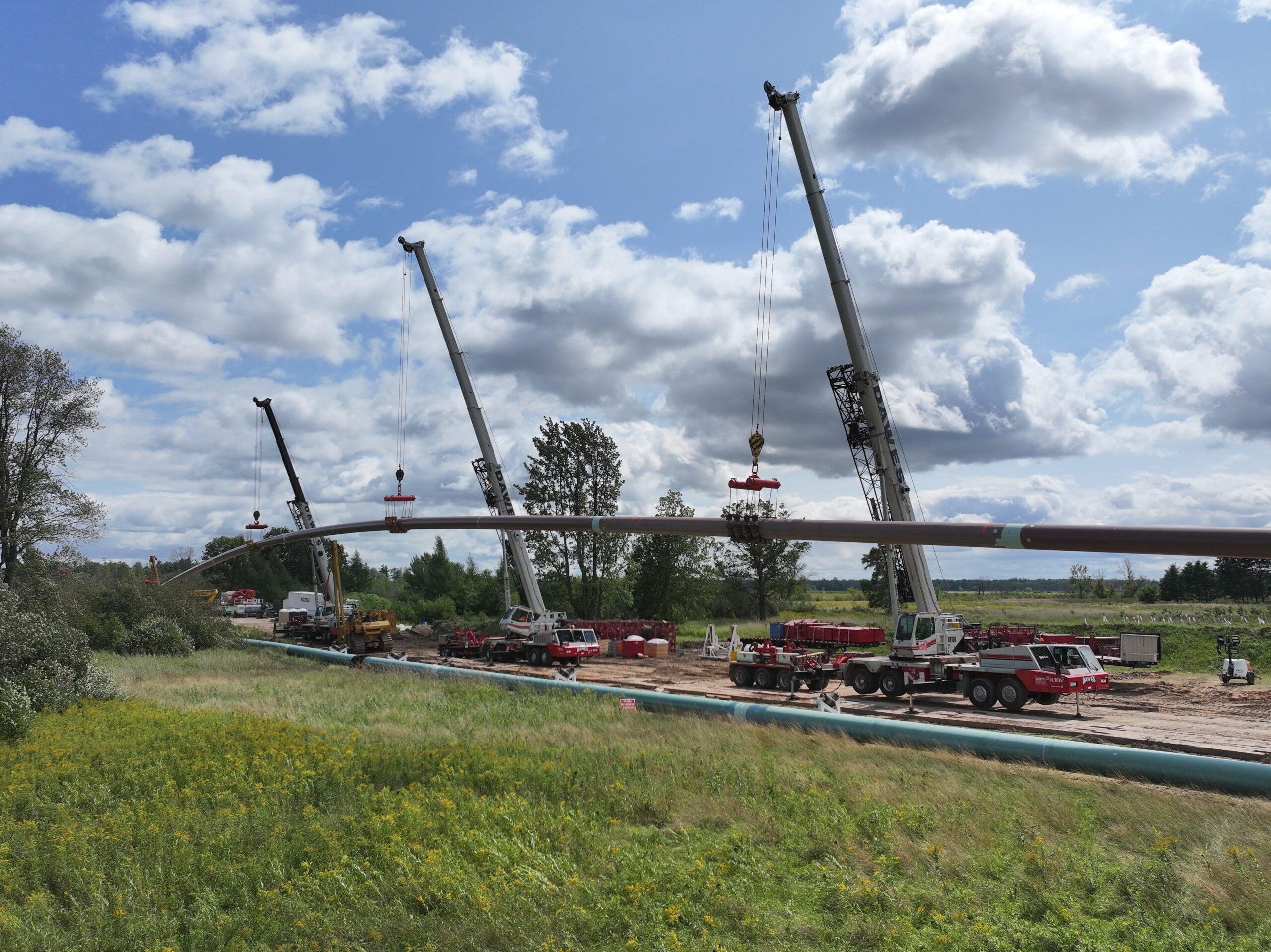
A $700 million natural gas pipeline enhancement project designed to improve reliability and meet rising demand came online in Wisconsin and northern Illinois at the start of the month.
TC Energy, a Canadian company with a U.S. headquarters in Texas, announced the completion of the project on Monday.
The “Wisconsin Reliability Project” replaced about 51 miles of aging pipeline across Wisconsin and northern Illinois with modern infrastructure. The company said the change would improve safety and reliability.
News with a little more humanity
WPR’s “Wisconsin Today” newsletter keeps you connected to the state you love without feeling overwhelmed. No paywall. No agenda. No corporate filter.
TC Energy also upgraded natural gas compression facilities in Kewaskum and Weyauwega, as well as meter stations in Lena, Merrill, Oshkosh, South Wausau, Stevens Point and Two Rivers.
The company received approvals from federal regulators for the project in 2023 and 2024, according to a fact sheet from the company. Construction began last year and the project came into service on Nov. 1.
According to TC Energy, the pipeline will help meet a projected 45 percent increase in demand for natural gas in Wisconsin over the next decade.
Jon Draeger, vice president of U.S. Projects for TC Energy, said in a statement that reliable energy fuels everything from factories to farms.
“The Wisconsin Reliability Project connects our state to the energy it needs while creating well-paying jobs for local workers and generating millions in tax revenue that supports our schools and communities for generations to come,” Draeger stated.
During construction, the project generated around $1.1 billion in economic output, supported 4,300 jobs and contributed $68 million in state and local tax revenue, the company said.
A spokesperson for TC Energy declined to provide an interview on Tuesday.
In a statement, Mike Hooper, president of We Energies and Wisconsin Public Service, said strengthening natural gas infrastructure helps protect customers from outages, especially those caused by extreme weather.
A We Energies spokesperson declined to comment further.
Tom Content, executive director of the Citizens Utility Board of Wisconsin, said pipeline projects like this one help support reliability. He cited a December 2022 incident where We Energies called on customers to conserve natural gas due to an equipment failure with a pipeline in Illinois.
“More investment has certainly been the response to that crisis,” Content said. “But all this investment in our natural gas infrastructure is going to be a driver of increases for utility bills going forward.”
State Rep. Dave Steffen, R-Howard, chairs the Assembly’s energy and utilities committee. He told WPR that the 45 percent increase in natural gas demand in Wisconsin is fueled by increased demand for energy from data centers and the phase-out of coal as an energy source.
“There needs to be energy to replace that, and natural gas is the next best option relating to coal that we currently have available in Wisconsin,” he said.
Steffen said the state will need an “all of the above” approach to energy, mixing natural gas, renewables and nuclear. He said nuclear and natural gas are important sources of baseload power, meaning they can generate energy without sun or wind.
“There is no singular option that meets all of the needs of Wisconsin, so we will continue to be looking at all options of providing energy,” he said. “The more diverse our portfolio, the more stable the pricing and reliability is throughout the grid.”
On the other side of the political aisle, state Sen. Kristin Dassler-Alfheim, D-Appleton, said in a statement that the Wisconsin Reliability Project helps support reliable, affordable energy at a time when energy demand is growing both in Wisconsin and nationally.
“It’s wonderful to see the private sector taking the initiative to address it in a way that is respectful of both local communities and the surrounding environment,” she said. “Using Wisconsin workers to build the line further increases the commitment and prosperity for our communities.”
Environmental groups have been critical of state utilities’ plans to expand natural gas infrastructure, framing those projects as shifting from one fossil fuel to another. Those groups have said burning more natural gas will worsen the effects of climate change, lead to pollution and harmful health effects.
In addition to the Wisconsin Reliability Project, TC Energy has two more projects in development that will touch Wisconsin. Those are Heartland and Northwoods projects, which have a combined investment of $1.8 billion, or $900 million each.
The Heartland project would construct 68.9 miles of new pipeline and replace 1.5 miles of existing pipeline in Wisconsin and Illinois, according to the company. That project could come into service in 2027.
The Northwoods project expands TC Energy’s pipeline system to increase natural gas capacity for electricity generation in response to rising demand in the Midwest from data centers and industrial generation, according to the company. That project could come into service by late 2029.
While those pipeline projects are regulated at the federal level, Content says state regulators will need to keep customers in mind in approving local utilities’ planned natural gas projects.
If state regulators aren’t careful, he said natural gas generation projects could lead to “unnecessarily” higher prices.
“All this infrastructure is really needed because of tech companies that want the state to jump through hoops and move fast to build their data centers and build all the energy infrastructure that goes with it, and it’s a staggering amount of energy,” Content said.

Wisconsin Public Radio, © Copyright 2026, Board of Regents of the University of Wisconsin System and Wisconsin Educational Communications Board.