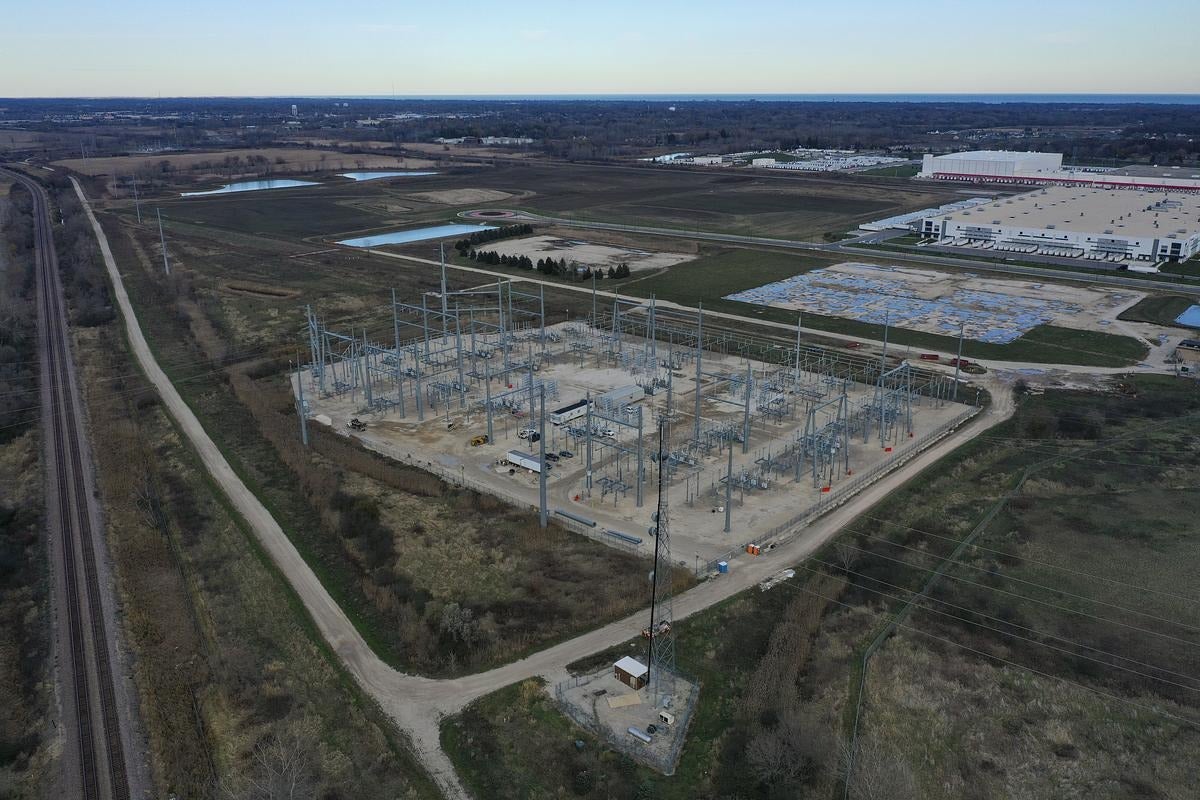
A Chicago-based energy developer is looking to build a natural gas power plant in Kenosha County capable of producing more than 1 gigawatt of electricity.
Invenergy submitted a preliminary engineering plan to state regulators for the Red Oak Ridge Energy Center, a proposed natural gas plant in the town of Paris. It’s the first step in seeking state approval for the project.
It’s the second new power plant planned in Paris. The Public Service Commission of Wisconsin approved a We Energies plan for construction of a gas-fired power plant in the community in May.
News with a little more humanity
WPR’s “Wisconsin Today” newsletter keeps you connected to the state you love without feeling overwhelmed. No paywall. No agenda. No corporate filter.
According to the engineering plan for the most recent project, Invenergy hopes to submit a formal application to the PSC in the third quarter of this year. The developer hopes to begin construction in mid-2027 and complete the project by 2030.
The engineering plan does not include an estimated cost. No utility is attached to the project yet, though it is being proposed in We Energies’ service area.
“As Wisconsin’s energy needs continue to grow, it is clear that additional quick-start, always available generation will be essential to provide customers the reliable power they depend on,” Brendan Conway, a spokesperson for We Energies, stated when asked about the project. “We are aware of Invenergy’s plans but do not have any further information to share at this time.”
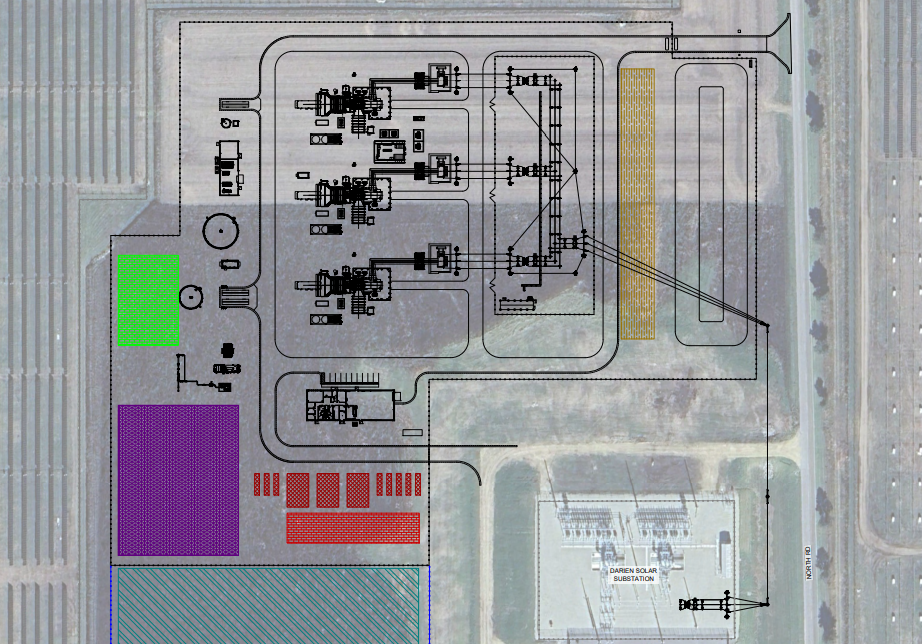
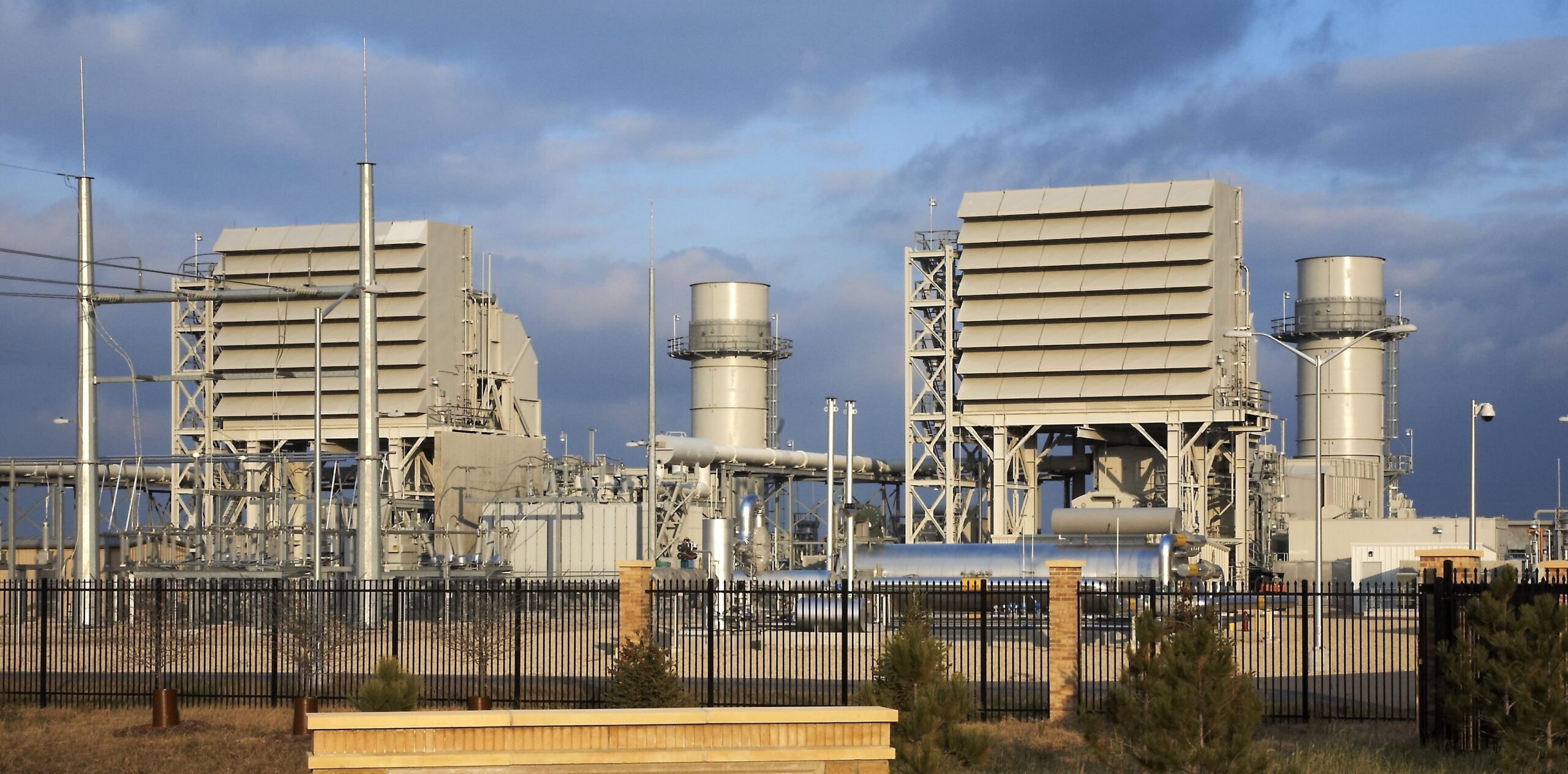
If approved, the facility would include five gas turbines and hydrogen-cooled generators, and would have a generation potential of 1,210 megawatts, or 1.2 gigawatts, according to the engineering plan. For context, 1 gigawatt is enough to power 100 million LED lightbulbs, or as much as half the energy generated by the Hoover Dam, according to the U.S. Department of Energy.
Even with the project’s large generation potential, Invenergy has described it as a “peaker plant,” meaning it would be run intermittently to meet spikes in electricity demand.
“We are in the early stages of developing a proposed peaker facility to support Wisconsin homes and businesses amid unprecedented electricity demand growth, and we look forward to working with local leaders and residents to invest in the community and create well-paying, local jobs,” Daniel Birmingham, lead developer of the Red Oak Ridge project, said in a statement.
Red Oak Ridge was also one of 10 projects selected by the Midwest grid operator for a temporary program that aims to fast-track the approval process for getting new electricity generation facilities connected to the grid. It will not affect the timeline for the state Public Service Commission’s approval process.
The new Kenosha County proposal comes as utilities and developers are working to build energy generation facilities to meet rising energy demand from data centers and other industrial development in southeast Wisconsin.
The first four data center buildings from a planned campus in Port Washington are expected to need 1.3 gigawatts of energy. The first phase of Microsoft’s data centers in Mount Pleasant is expected to use 450 megawatts annually, enough to power more than 300,000 homes.
Earlier this year, the Public Service Commission gave We Energies approval to build two new natural gas plants, one in the city of Oak Creek and one in the town of Paris. Invenergy is also looking to build a 324-megawatt natural gas power plant on the site of the Darien Solar Energy Center in Walworth County.
The natural gas projects have drawn criticism from environmental groups, who argue bringing more fossil fuel plants online will worsen the effects of climate change.

Amy Barrieaux, a spokesperson for the nonprofit Clean Wisconsin, said gas power plants “are really terrible for our climate” because methane is a potent greenhouse gas.
“When you’re fracking for natural gas (and) when you’re transporting it, doing those activities releases a lot of methane into the atmosphere,” she said. “And methane over the next 20 years is going to have an 80 times greater warming potential in our atmosphere than CO2.”
She also said the 1.2 gigawatt proposal in Kenosha County is a “huge fossil fuel plant” planned at a time when “we know we cannot be burning any more fossil fuels” without worsening the effects of climate change.
“We know better than this,” she said. “Every single person who’s involved with building this gas plant knows better than this.”
While environmental groups have generally opposed new gas plants, labor groups have largely supported them.
Steve Kwaterski, a spokesperson for the Wisconsin Laborers’ District Council, said his members have worked on both renewable energy and natural gas projects. He said both types of energy infrastructure provide good-paying construction jobs and pathways to apprenticeship through “long-running projects that can last a few years.”
“No dentist works on the same tooth, day in and day out. The same goes for members of our union and those who work in the construction industry,” Kwaterski said.
He also said he expects the new natural gas project in Kenosha County would provide hundreds of construction jobs.
George Stoner, president of the village of Somers, which borders Paris, wrote a letter to state regulators supporting the 1.2 gigawatt project. In his letter, he called the proposal “an important natural gas electric generation resource” for the community and the southeast Wisconsin region.
“The project will help support the availability of energy to produce electricity for homeowners, farms, and industry,” Stoner wrote. “I personally met with Invenergy to discuss this proposed project. They are fully committed to transparency and community engagement.”

Wisconsin Public Radio, © Copyright 2026, Board of Regents of the University of Wisconsin System and Wisconsin Educational Communications Board.