More counties and municipalities in Wisconsin are turning to a local wheel tax to help pay for repairs to roads and public transit.
State law allows communities to collect vehicle registration fees, known as a wheel tax, on top of the state’s annual vehicle registration fee — which is $85 for automobiles. The revenue collected from the local wheel tax must be used for “transportation related purposes,” according to the Wisconsin Department of Transportation.
In 2011, only four Wisconsin communities had a local wheel tax, according to a Wisconsin Policy Forum report. Currently, 51 municipalities and 14 counties have a local wheel tax.
News with a little more humanity
WPR’s “Wisconsin Today” newsletter keeps you connected to the state you love without feeling overwhelmed. No paywall. No agenda. No corporate filter.
Tyler Byrnes, a senior research associate at Wisconsin Policy Forum, said 10 municipalities have implemented a local wheel tax in the past year alone. Wisconsin communities are still turning to the wheel tax even after a sweeping measure to send more money to local governments was passed in 2023.
“This is further evidence of the few opportunities municipalities have to fund critical local services beyond, say, the property tax,” said Zach Vruwink, chief operating officer at the League of Wisconsin Municipalities.
Counties and municipalities rely heavily on the property tax to provide services for residents. But state law limits how much local governments can raise their property tax levies without voter approval.
“So every dollar that a city or a county raises from its wheel tax is a dollar that they don’t have to raise from somewhere else to pay for the roads, to pay for transit — some of these transportation priorities,” said Jason Stein, president of Wisconsin Policy Forum.
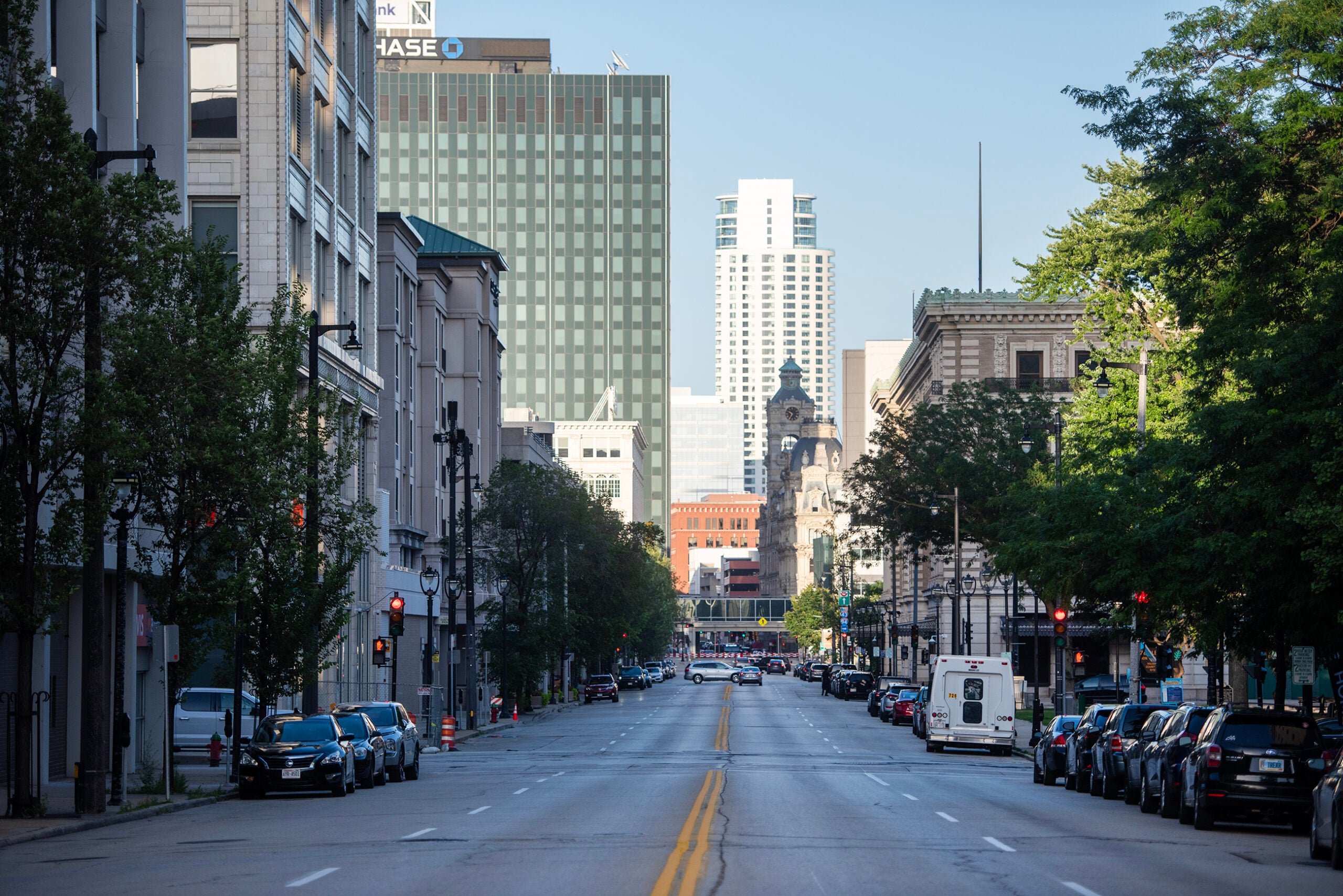
Local wheel tax collections currently range from $10 to $40 per vehicle across the state. In 2024, counties and municipalities collected $66.7 million from the local wheel tax, according to research from Wisconsin Policy Forum.
Eau Claire, Milwaukee look to increase local wheel tax
At least two cities — Eau Claire and Milwaukee — are currently looking to increase their local wheel tax.
In Eau Claire, the tax would increase from $24 to $50 under city manager Stephanie Hirsch’s proposed 2026 city budget. In a city update message from Hirsch, she wrote that the increase would generate over $1 million for the city next year.
In that message, she also wrote that she knows the increase will “impact our residents.”
“Knowing this, we continue to work to spend every dollar with as much care as possible to maximize the impact on local services and minimize the impact on residents,” Hirsch wrote.
If the increase goes into effect in Eau Claire, residents would pay $165 in vehicle registration fees per vehicle every year because Eau Claire County also has a $30 wheel tax. That would make the city the most expensive place to register a vehicle in the state, according to Byrnes.
A spokesperson for Hirsch didn’t respond to WPR’s request for comment for this story.
Milwaukee Mayor Cavalier Johnson is also seeking to raise the local wheel tax by $10, from $30 to $40. The increase could generate $2.7 million for Milwaukee in the 2026 city budget.
In his budget address to the Milwaukee Common Council, Johnson said the proposed increase would bring Milwaukee’s local wheel tax, “in line with a number of communities across Wisconsin.”
Some Milwaukee alders speak out against proposed tax hike
The Milwaukee Common Council has to approve a resolution in order to increase the local wheel tax. During a recent city meeting, some alders spoke out against the hike and said they wanted more time to discuss the issue with residents.
“That’s another burden that we’re putting on our residents, our citizens,” Milwaukee Alder Larresa Taylor said about the increase. “And I really would like to not put another burden on the people in our city.”
Milwaukee County also has a wheel tax of $30. If the proposed increase goes into effect in the city, residents would pay $155 in annual registration fees per vehicle.
Alder Peter Burgelis also said he wants to hear more input from residents on the issue. The council is set to vote on the recommended 2026 city budget in the coming weeks.
“I don’t think that anyone thinks we should be investing less in our roads,” Burgelis said. “This (wheel tax) is one way we can help pay for that, but the discussion can’t happen at the very last moment. We have to engage our residents.”

Wisconsin Public Radio, © Copyright 2026, Board of Regents of the University of Wisconsin System and Wisconsin Educational Communications Board.