State agencies are teaming up to prevent an invasive forest pest from making its way into Wisconsin and threatening millions of the state’s hemlock trees.
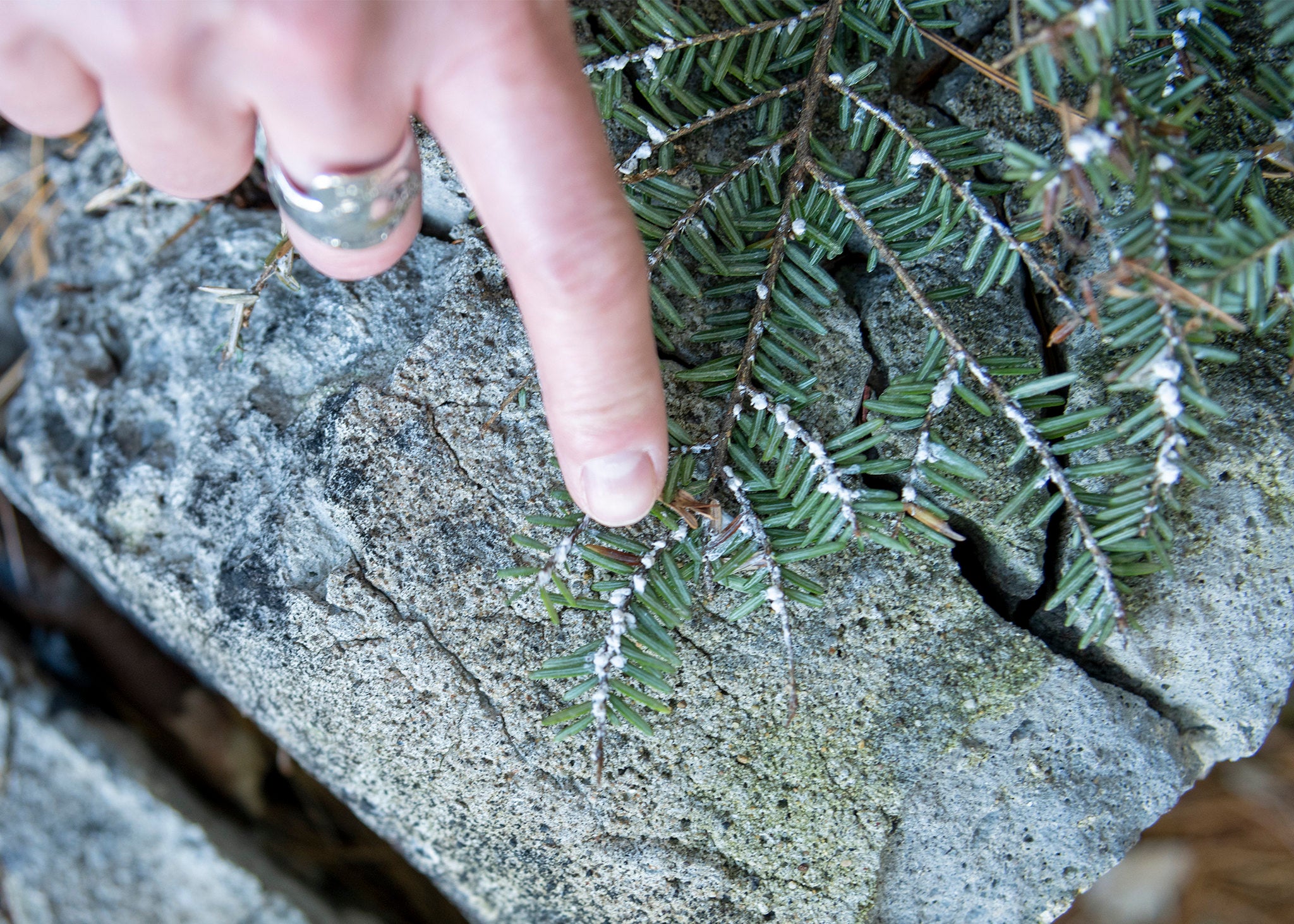
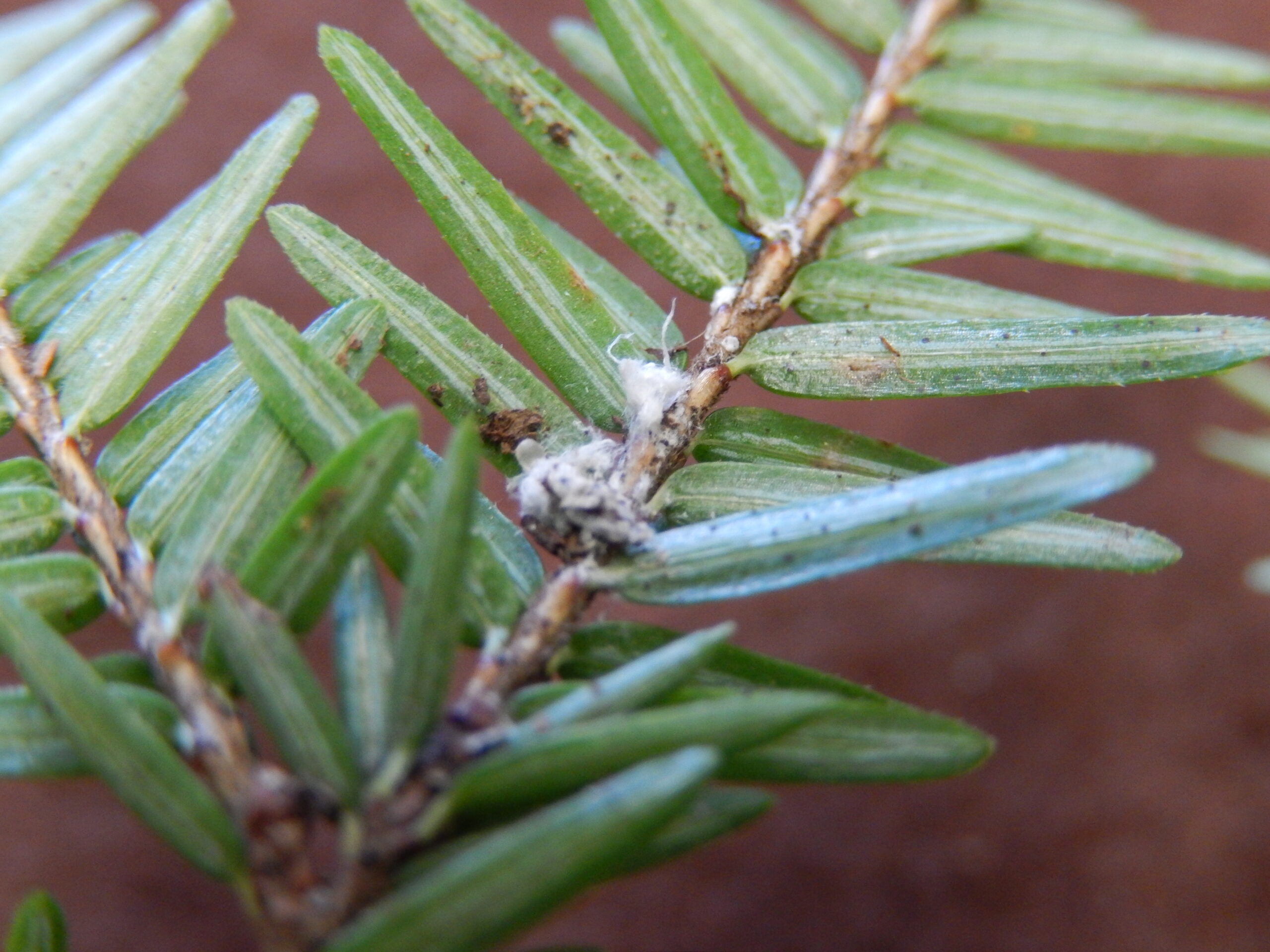
The Wisconsin Department of Natural Resources and Department of Agriculture, Trade and Consumer Protection are on the lookout for hemlock woolly adelgid. The tiny, aphid-like insects are just millimeters long, and they’re usually identified by their woolly egg sacs on the underside of branches.
The pest, which is native to Asia, first showed up in the western United States in the 1920s. While it hasn’t yet been found in Wisconsin forests, the pest has been spotted during inspections of the state’s tree nurseries four times since 2017.
News with a little more humanity
WPR’s “Wisconsin Today” newsletter keeps you connected to the state you love without feeling overwhelmed. No paywall. No agenda. No corporate filter.
State regulators say the invasive insect is “knocking at our door.” In nearby Michigan, the pest has become established in 11 counties primarily along the Lake Michigan shoreline, according to Michael Falk, DATCP’s forest pest unit supervisor.
“Once it infests hemlock, without any intervention, it’s going to kill the trees,” Falk said. “It’s just not something anyone would want to happen here in Wisconsin.”
A state quarantine exists that ensures nurseries, forest product companies and Christmas tree growers avoid introducing hemlock woolly adelgid on seedlings, lumber or firewood from infested areas. Falk said staff this year conducted around 700 inspections of nurseries for forest pests.
One 2017 study found invasive forest pests cost local governments around $1.7 billion in damage control and around $830 million in lost property values each year.
Agencies to use innovative tool for early detection of forest pest
As part of efforts to keep the pest at bay, in the spring DNR and DATCP will start setting 3D printed traps that hold four microscope slides that are coated in petroleum jelly. The idea is that insects or fluff from the egg sacs may land on the traps. They could then be analyzed in a lab for signs of their environmental DNA, said Mike Hillstrom, the DNR’s invasive forest pest coordinator.
“We’re going to be looking at about 30 sites … for this insect to make sure it’s not out on the landscape somewhere where we don’t know about it,” Hillstrom said.
Traps will be set along the Lake Michigan shoreline from the Sheboygan area to Door County, as well as along the Wisconsin River near the Wisconsin Dells.
The insects have killed millions of trees in the eastern U.S. and threaten 80 million eastern hemlock trees in Wisconsin. A single egg sac may contain as many as 300 eggs. Hundreds of thousands of the insects can feed on the trees with their needle-like mouth parts, said PJ Liesch, an entomologist with the University of Wisconsin-Madison Division of Extension.
“It’s a whole bunch of them ganging up on the trees,” Liesch said. “Together, that combined feeding damage over time causes those hemlock trees to decline and ultimately die.”
Hemlock trees are important for forest health by keeping streams cool and clean, as well as providing habitat for fish and wildlife. While they are not in high demand for timber, Hillstrom said the forest products industry could prove vital for fighting off the insect by thinning other trees to promote healthier forests if or when the pest is introduced.
“I don’t want to say it’s inevitable, but it’s highly likely it’s going to show up at some point,” Hillstrom said.
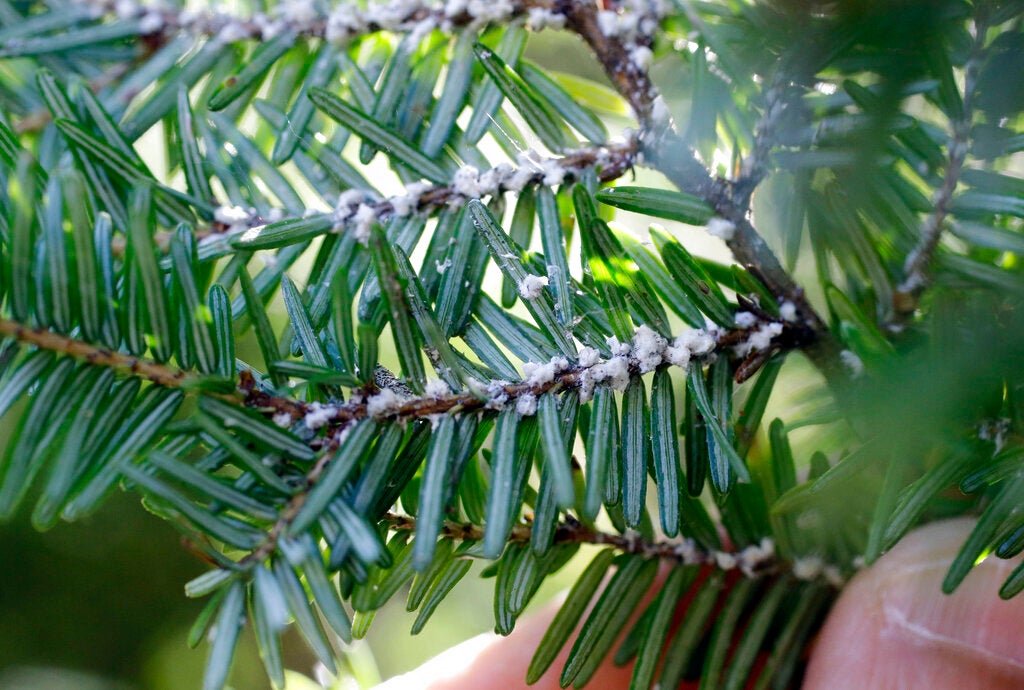
State regulators say it can take anywhere from four to 15 years after the initial infestation before trees die. There’s hope that the pests may not become established in the state because cold Wisconsin winters reduce their survival. However, Liesch said research shows that climate change may affect conditions limiting their spread.
“If we keep getting milder winters, that is only providing a better habitat for insects like this,” Liesch said.
Editor’s note: An earlier version of this story said state and federal quarantines exist for HWA, but only a state quarantine is in place. The story has been updated.

Wisconsin Public Radio, © Copyright 2026, Board of Regents of the University of Wisconsin System and Wisconsin Educational Communications Board.