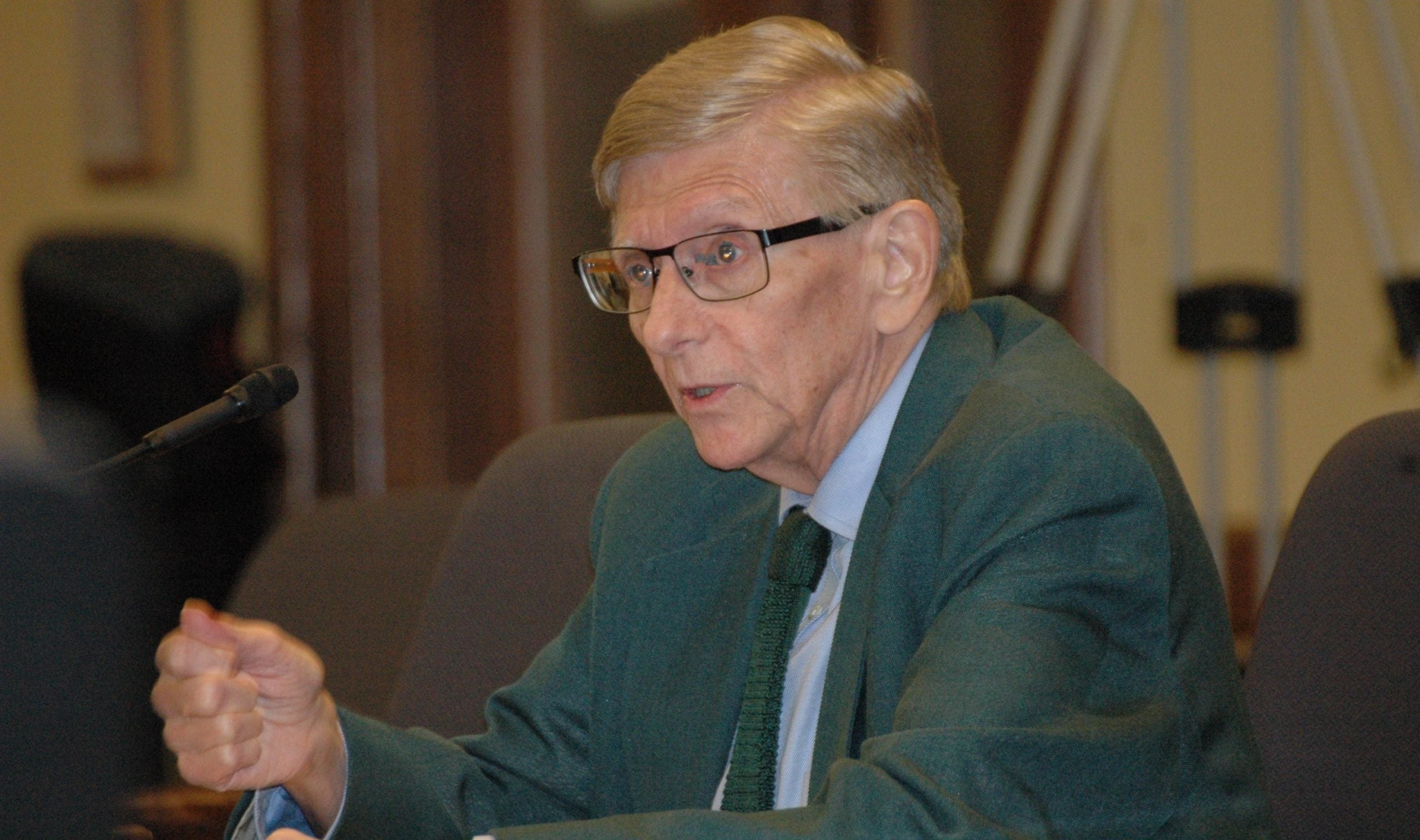
George Meyer, an influential leader in Wisconsin in conservation, died from a rare form of cancer Wednesday in Madison surrounded by his family. He was 78.
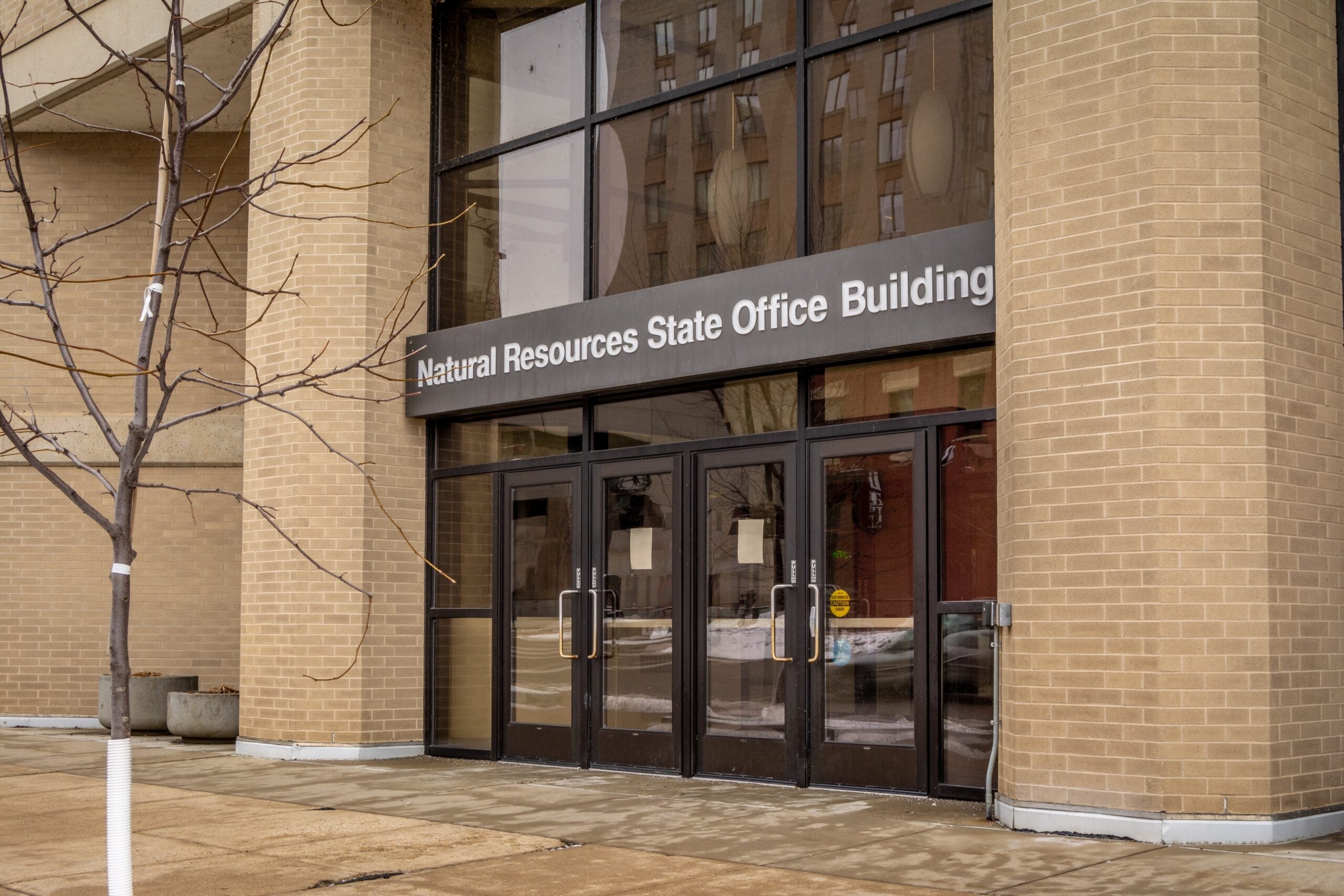
For 50 years, Meyer influenced conservation at the Wisconsin Department of Natural Resources. He began his career with the agency as a staff attorney in 1972.
“When I started, it was really an exciting age,” Meyer told WPR’s “The Morning Show” in 2023. “Many laws were just coming on board: Clean Water Act, Clean Air Act, Endangered Species Act, (Knowles-Nelson Stewardship Fund) was coming on. It was a time of expansion and good, solid funding for conservation.”
News with a little more humanity
WPR’s “Wisconsin Today” newsletter keeps you connected to the state you love without feeling overwhelmed. No paywall. No agenda. No corporate filter.
Meyer later served as administrator of the agency’s enforcement division in 1980 before he became the last DNR secretary to be appointed by the Natural Resources Board in 1993. He held that position until 2001.
During his tenure at DNR, Meyer confronted some of the most challenging and controversial issues affecting the state’s natural resources.
He navigated the state’s implementation of a landmark court decision that found Wisconsin’s Ojibwe tribes had the right to fish, hunt and gather on off-reservation lands, sparking the “Walleye Wars.” In the 1980s, tribal members faced harassment at boat landings as they sought to spearfish on off-reservation lakes.
“If former DNR Secretary Buzz Besadny was ‘Wisconsin’s Father Nature,’ then George Meyer was ‘Wisconsin’s Force of Nature’ working tirelessly to protect our natural resources,” wrote Tom Hauge, wildlife work group chair for Wisconsin’s Green Fire.
Meyer also helped the state develop a nationally recognized wetland-protection framework, according to the Wisconsin Wildlife Federation. Following his work at the DNR, Meyer served as the first executive director of the Wisconsin Wildlife Federation.
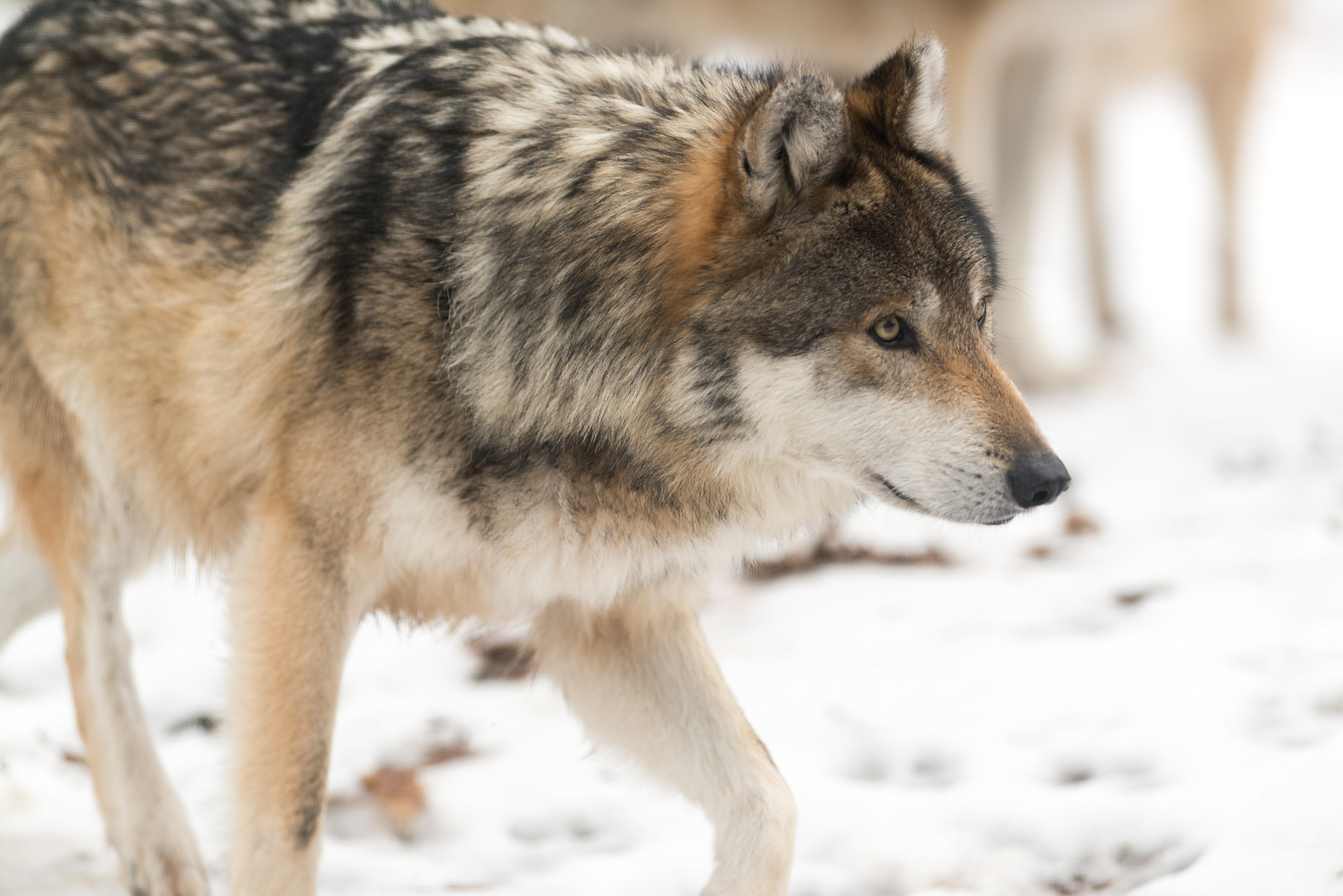
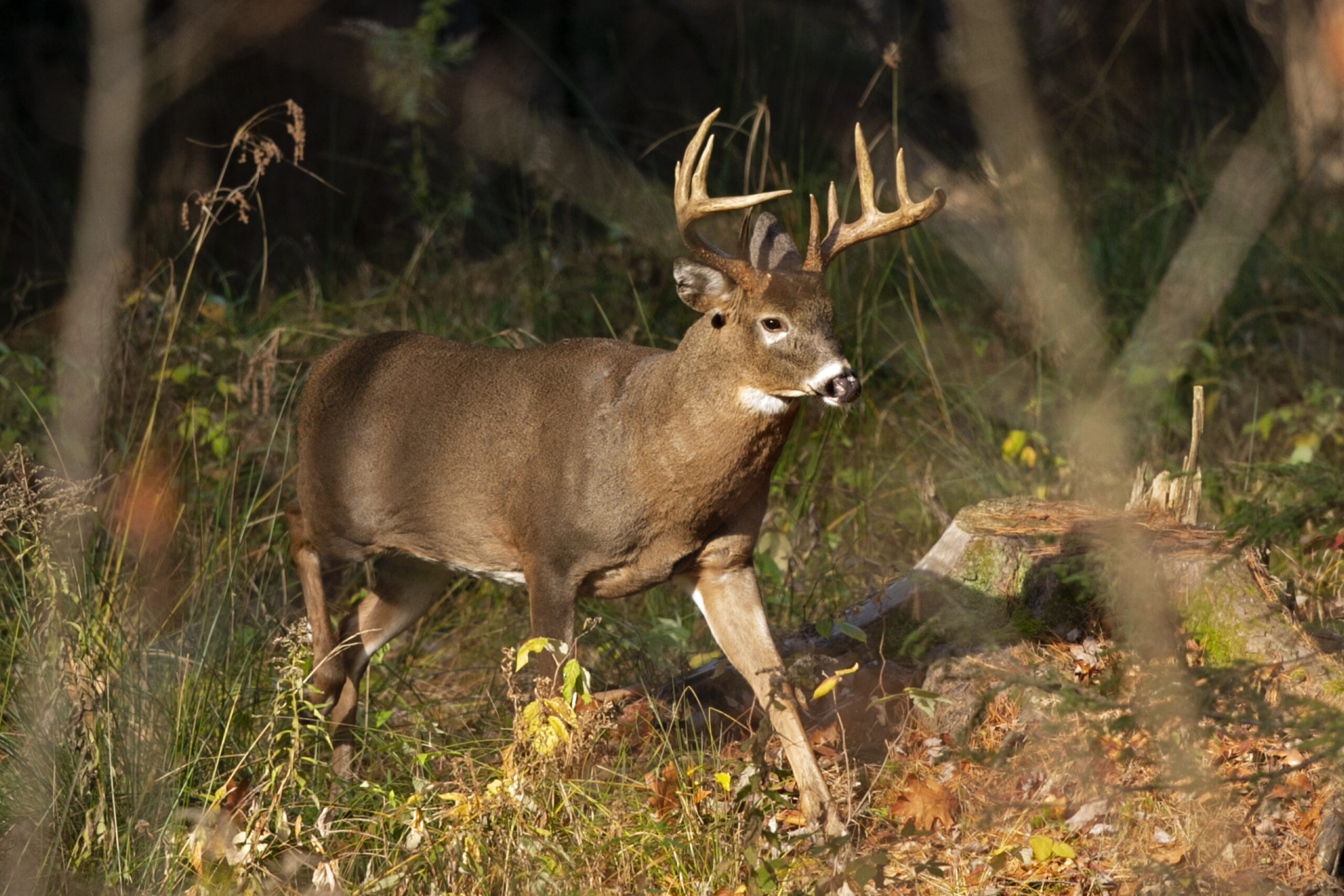
He also was the voice for the organization on numerous issues that included chronic wasting disease in deer and regulation of high capacity wells. He oversaw the Flambeau mine during its operation, and he opposed the state’s sulfide mining moratorium. Even so, he later weighed in against its outright appeal in favor of requiring pollution abatement technology. He also signed off on the DNR’s first wolf management plan and later opposed exclusion of a statewide population goal for wolves when the plan was updated in 2023.
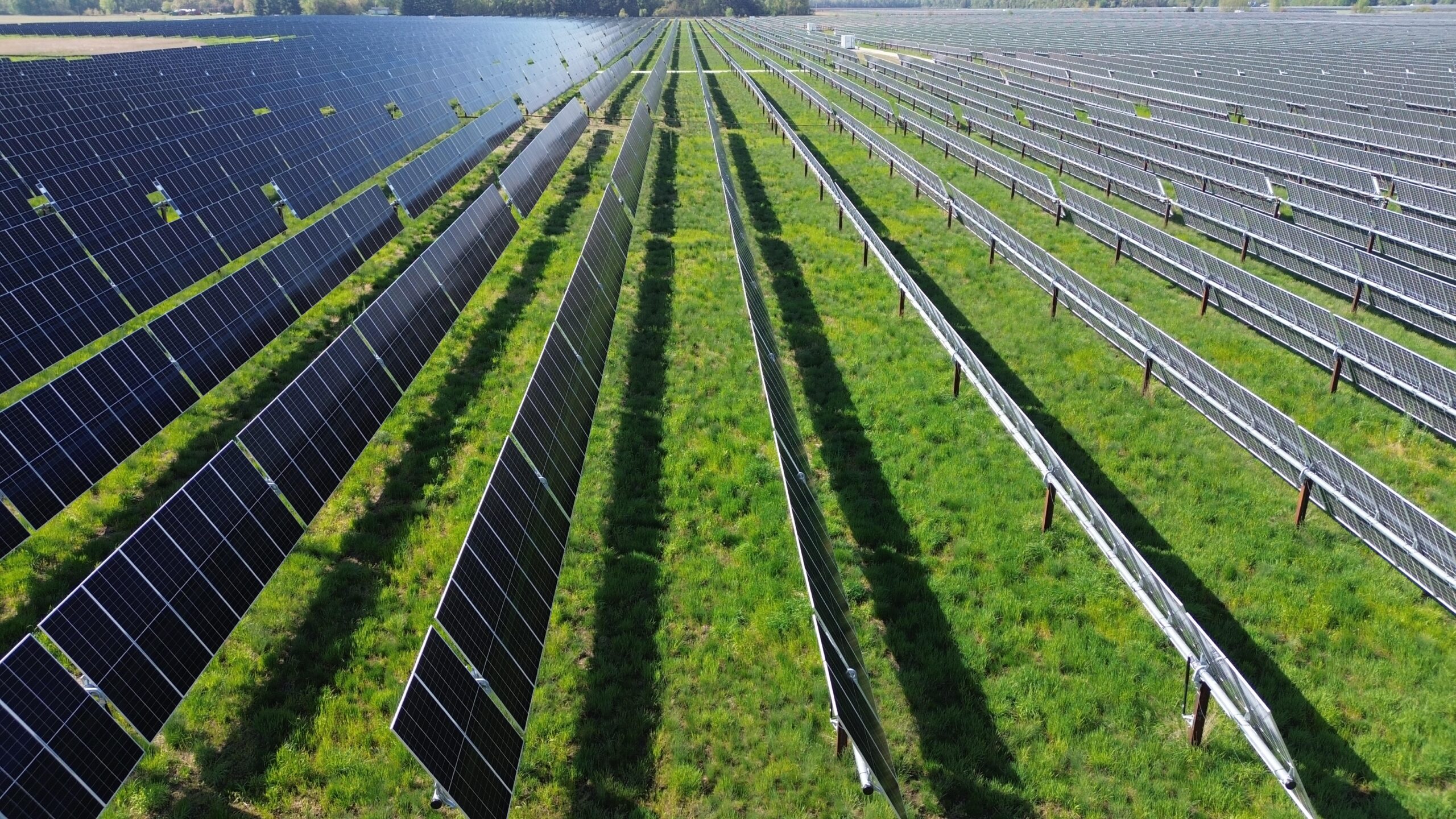
Meyer also helped secure a settlement over the Vista Sands Solar project to balance expansion of clean energy with protection of nearby habitat of the state-threatened greater prairie chicken.
Cody Kamrowski, executive director of the Wisconsin Wildlife Federation, said in a statement that Meyer was one of the most influential conservation leaders in Wisconsin history.
“His courage, integrity, and deep commitment to science-driven policy shaped generations of conservationists. Wisconsin’s lands, waters, wildlife, and outdoor traditions are stronger because of his life’s work,” Kamrowski said. “George was not only a leader of extraordinary caliber — he was a mentor, a collaborator, and a true friend to the conservation community. His loss is immeasurable, but his legacy will continue to guide us for decades to come.”
Meyer was inducted into the Wisconsin Conservation Hall of Fame in 2018, and he was recognized with a lifetime achievement award by the National Wildlife Federation in June. Meyer’s family said a celebration of his life will be held in the spring.

Wisconsin Public Radio, © Copyright 2026, Board of Regents of the University of Wisconsin System and Wisconsin Educational Communications Board.