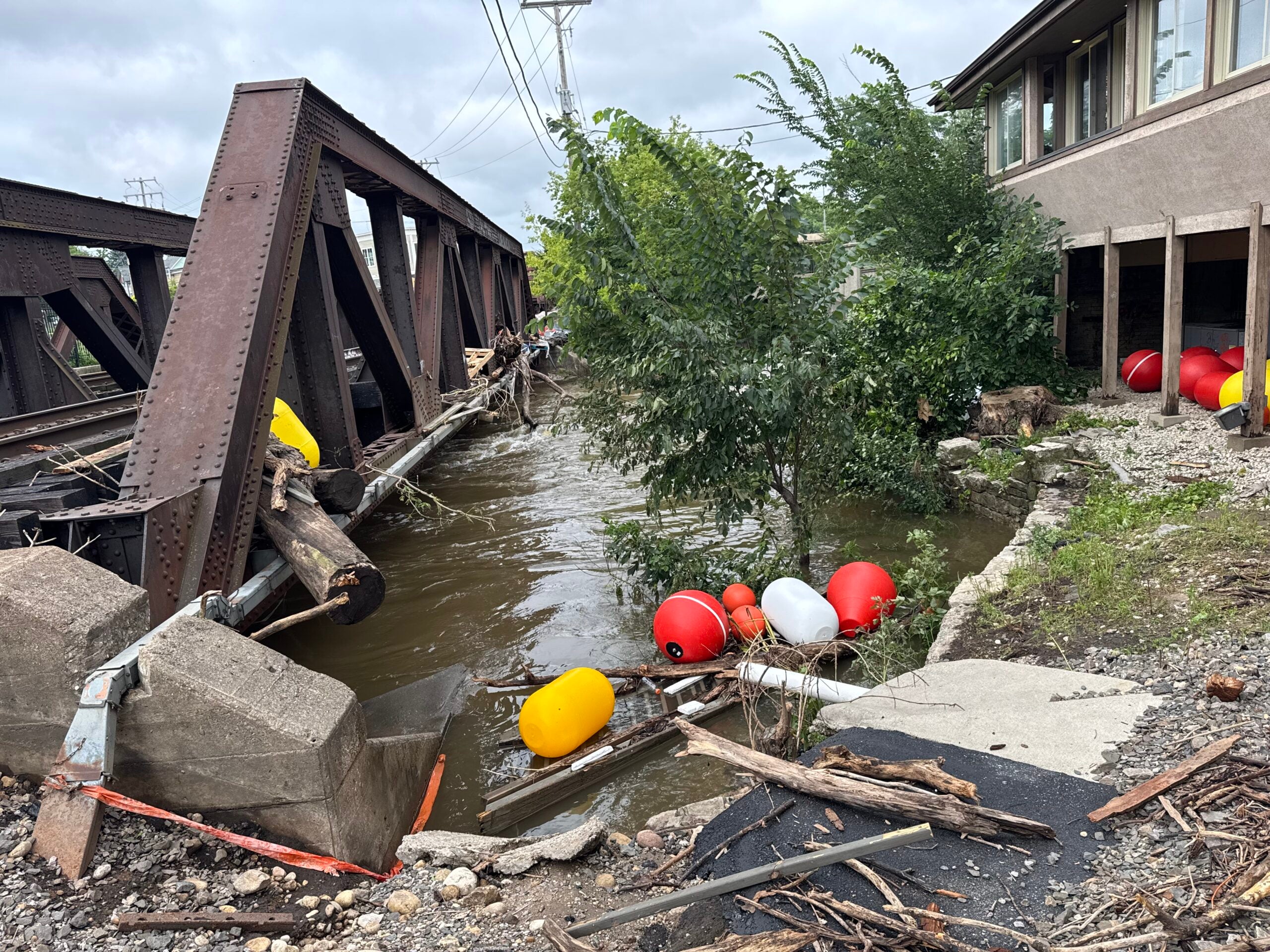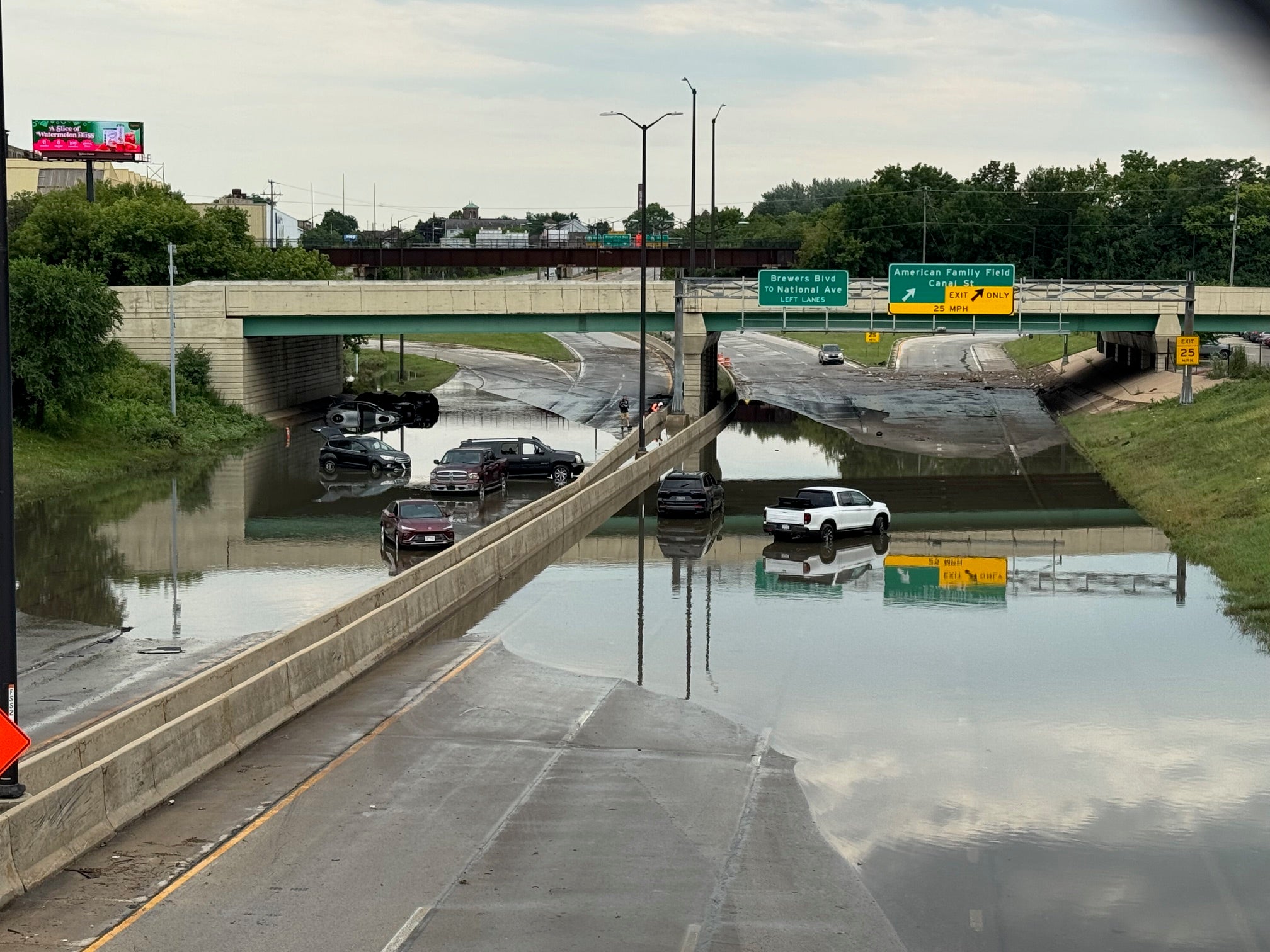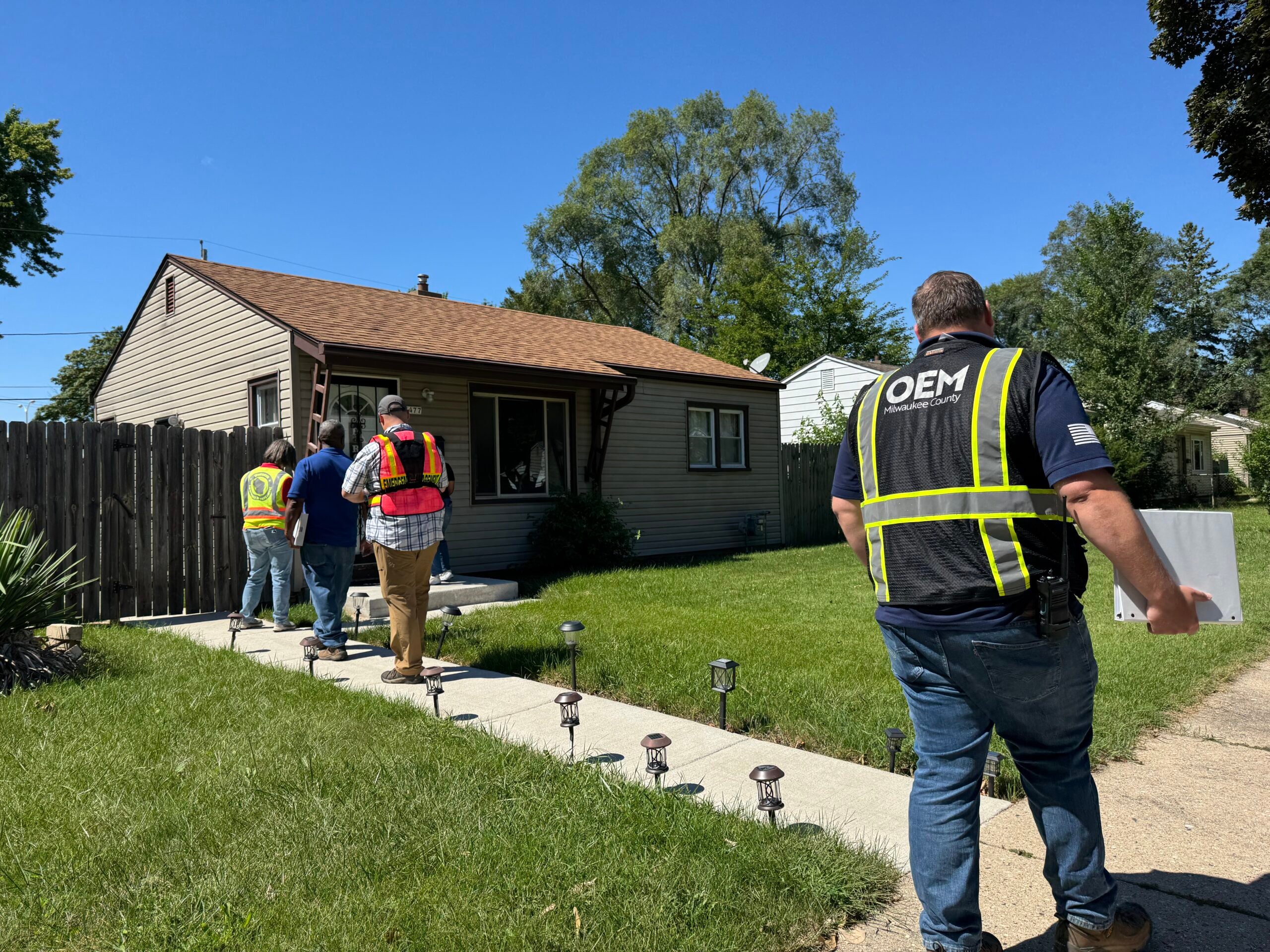

Nearly two months after historic flooding hit parts of Milwaukee and southeastern Wisconsin, families are still grappling with the aftermath.
Throughout the month of October, impacted residents can get in-person assistance from state and county personnel and representatives from the Federal Emergency Management Agency and the U.S. Small Business Administration at temporary flood disaster recovery centers set up at Wauwatosa City Hall and Milwaukee’s McNair Elementary School.
Valley Hollins visited McNair in early October hoping to get information on her application for FEMA assistance.
News with a little more humanity
WPR’s “Wisconsin Today” newsletter keeps you connected to the state you love without feeling overwhelmed. No paywall. No agenda. No corporate filter.
Since 1996, she’s lived in a single-family home in the Harambee neighborhood, north of Milwaukee’s downtown.
The National Weather Service reported nearly a foot of rain fell between Aug. 9 and 10 in eastern Waukesha County and northern and western Milwaukee County. Hollins told WPR’s “Morning Edition” that at the time, she could barely see outside her windows.
“When my neighbor’s tree fell down, it barely missed my yard — that’s when I really got scared,” she said.
The fast and heavy rainfall overwhelmed her home’s gutters, causing rain water to flow into the basement, she said.
It wasn’t until the following morning that Hollins opened the basement door and was immediately overwhelmed with a pungent, musty odor.
“That’s when I saw the water,” she said.
For nearly a week, Hollins worked to remove it. While several of her possessions were protected in storage bins, she said her first concern was whether the furnace and hot water heater would work.
“They are functioning, but we don’t know how well they will function over the winter,” Hollins said.
But the basement and home still need significant repairs and improvements, and Hollins did not have flood insurance.
Without it, she would pay thousands of dollars out of pocket to repair water damage and install larger gutters and a foundation barrier.
At 70 years old, “I don’t know how well I would qualify,” she said.
That’s why she reached out to FEMA for financial assistance.
Milwaukeeans seek FEMA assistance
“I talked to FEMA, went online and started an application, ” she said. “I haven’t heard anything from anyone.”
More than 1,500 residential structures were destroyed throughout six Wisconsin counties, according to estimates from Gov. Tony Evers. That doesn’t include the homes in need of repairs, like Hollins’.
Hollins felt positive before walking through the doors of McNair and hoped it would be an opportunity to connect with other local resources and receive answers from FEMA.
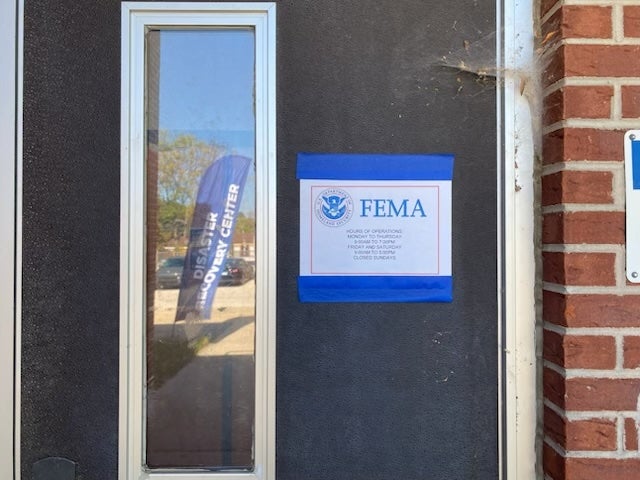
To begin the process of applying for federal assistance, Milwaukee County recommends that people bring a denial letter from their property insurer. Also, if professional services are needed for property rehabilitation, documents should be saved.
FEMA told WPR that its grant assistance doesn’t require repayment and may be used for temporary housing, home repair or replacement, and other disaster-related expenses.
This could mean moving and storage costs, primary vehicle repair or replacement, damaged furniture and appliances — including furnace, water heater and HVAC — and child care costs.
“I’m praying that FEMA comes through for me,” Hollins said.
Wisconsin received nearly $30 million from the Trump administration in federal disaster relief aid to support flood victims.
According to FEMA, that amount was an initial estimate based on preliminary damage assessments that were conducted in affected counties prior to the declaration. To date, more than 16,500 survivors in Milwaukee, Waukesha, and Washington counties have received more than $90 million to assist with their recovery needs.
“This is a clear indication that direct payments are reaching survivors in a timely manner,” FEMA said.
For Hollins, there is only one thing to do while she waits to see if her application is approved.
“Gotta trust in God, have faith,” she said.
Meanwhile, FEMA encourages all survivors to stay in touch. Anyone who has questions about the status of their application can call the helpline at 800-621-3362, visit a disaster recovery center or create an online account to see if they need any additional documents from them or see what may be stalling their application.
The deadline to apply for FEMA assistance is Nov. 12. People may get daily updates on the amount of money in the hands of survivors online at fema.gov/disaster/4892.
Editors note: This story was updated to include new information about federal funding from FEMA.