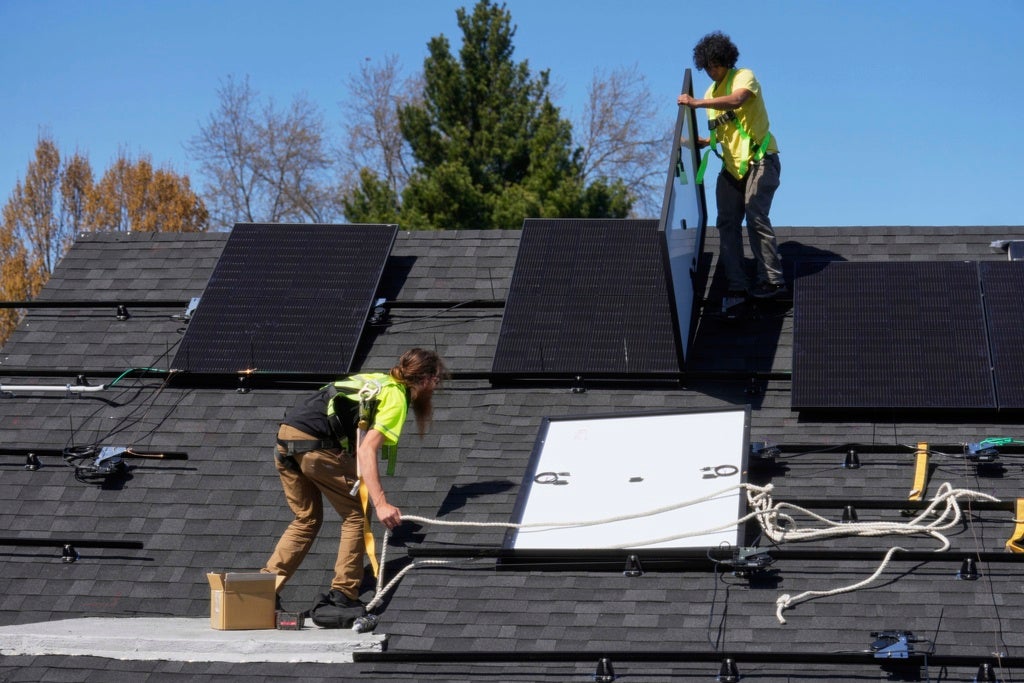
Gov. Tony Evers is urging the Trump administration not to end a program that awarded Wisconsin more than $60 million to help low- and moderate-income families access solar energy.
The New York Times reports the Trump administration was preparing to terminate $7 billion in federal grants awarded through the Solar for All program.
According to the Times report, the U.S. Environmental Protection Agency planned to send termination letters to 60 organizations that received grants from the program, funded by a Biden-era climate law.
News with a little more humanity
WPR’s “Wisconsin Today” newsletter keeps you connected to the state you love without feeling overwhelmed. No paywall. No agenda. No corporate filter.
One of those organizations is the Wisconsin Economic Development Corp. WEDC was awarded $62.4 million in 2024 as part of the Solar for All program. As of Friday afternoon, the agency had not received a formal notification from the EPA that the funding had been terminated, according to WEDC Secretary Missy Hughes.
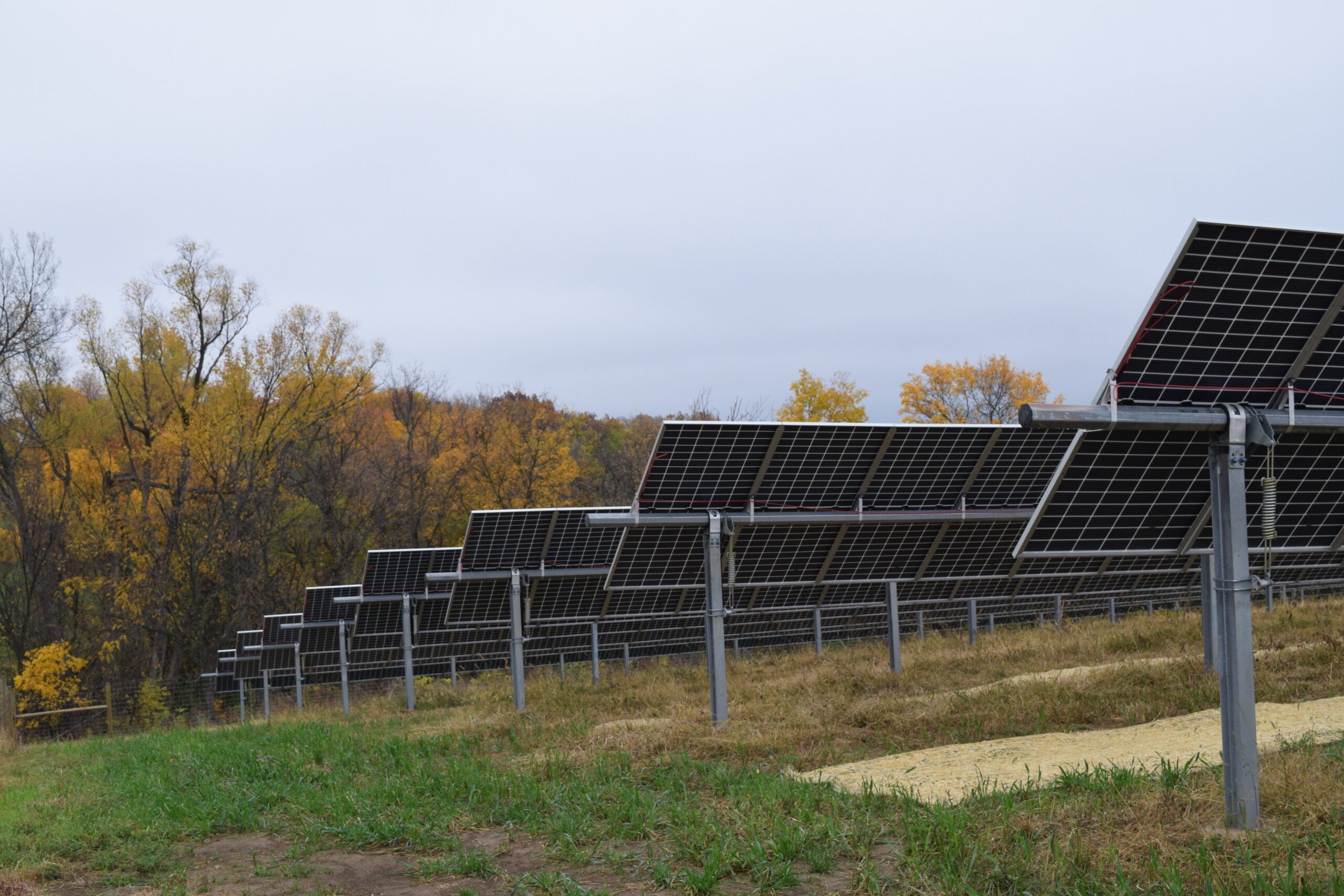
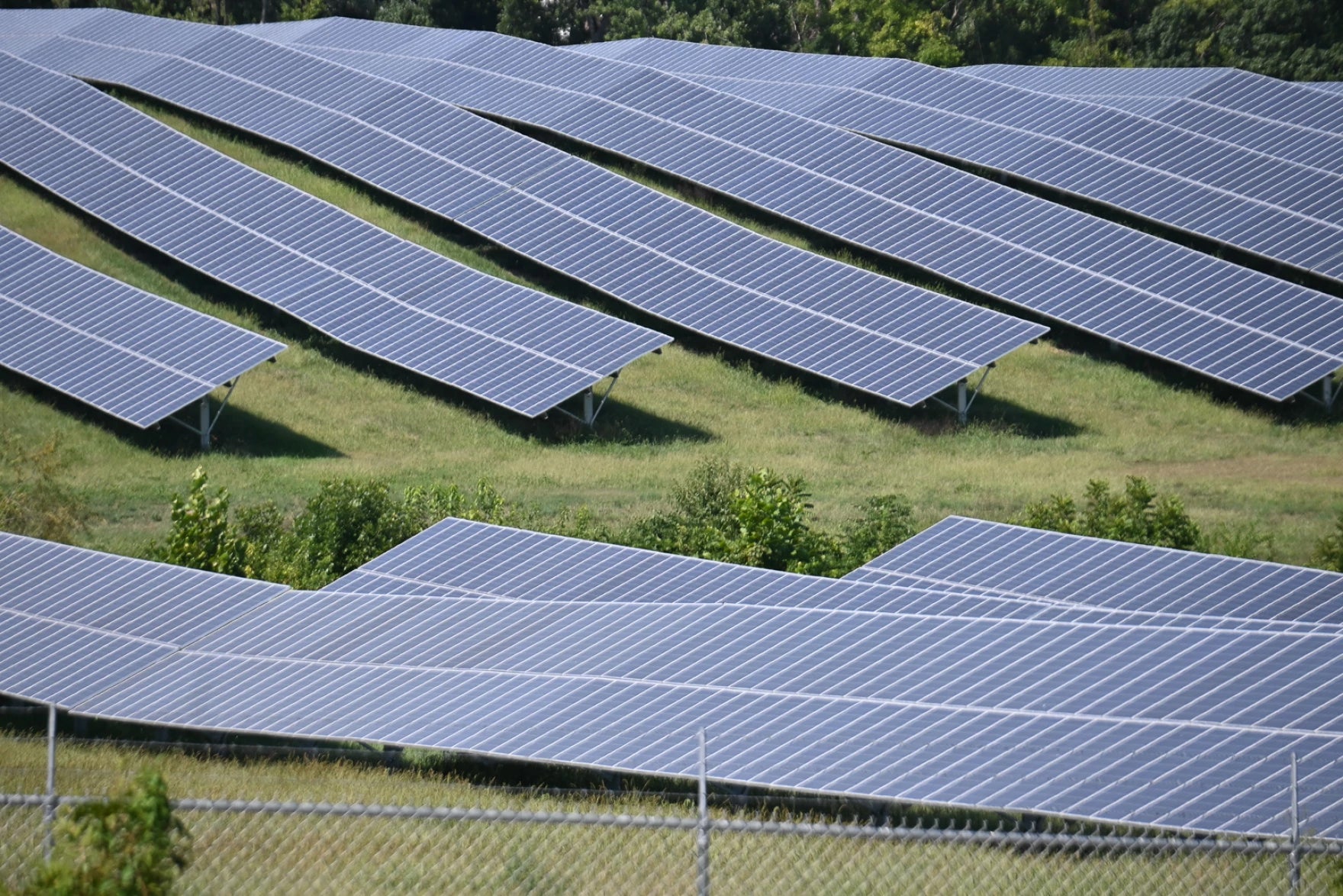
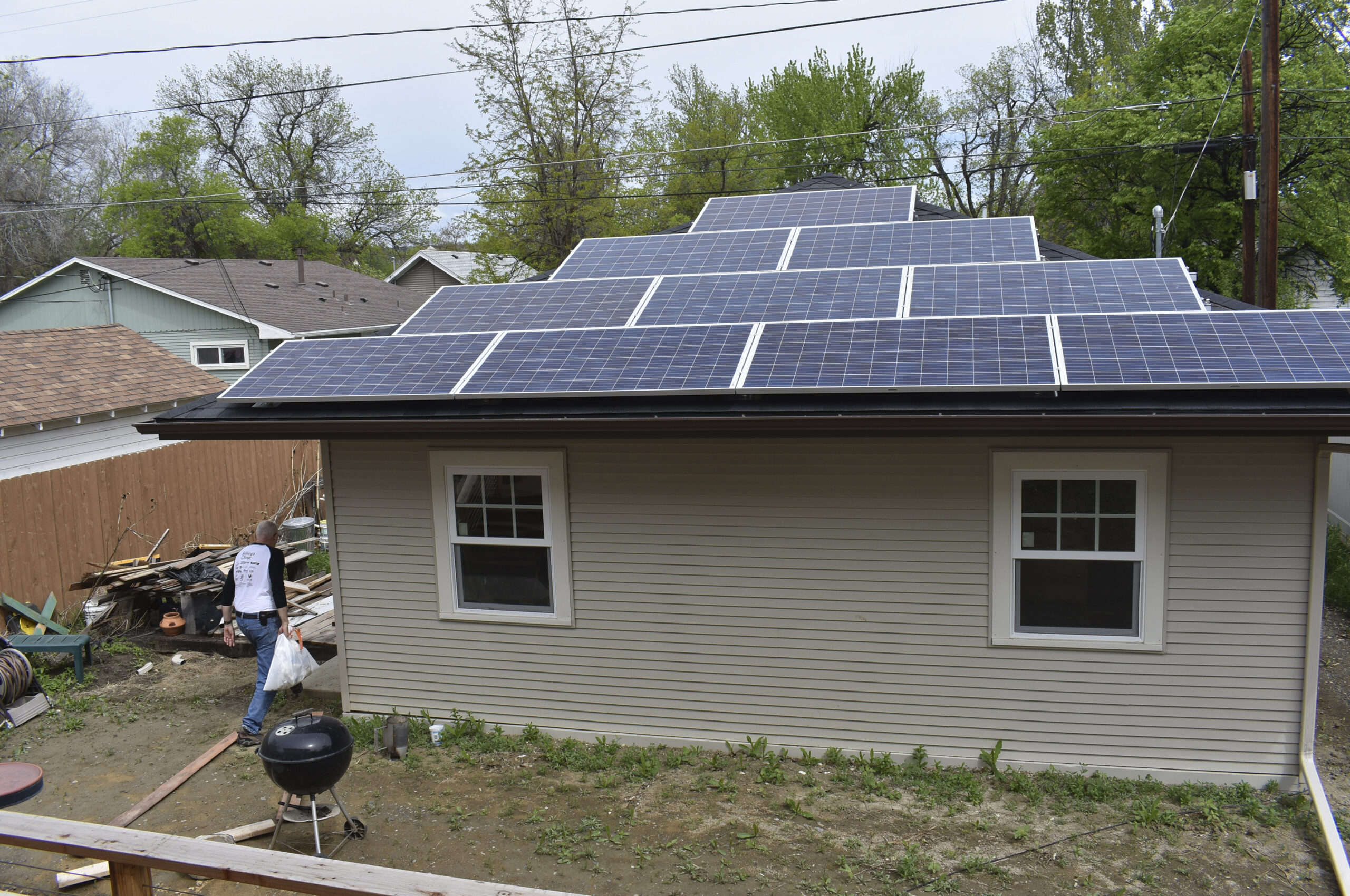
The agency has been developing guidelines for how to administer the program, dubbing it “PowerUp Wisconsin.” The program would support solar projects on single- and multi-family homes, as well as community solar projects.
On Thursday, Evers sent a letter to EPA Administrator Lee Zeldin calling on the Trump administration to abandon efforts to terminate Solar for All grants. Evers wrote there’s “no legitimate purpose or justification” for terminating the grants.
Doing so, the governor said, would “negatively impact Wisconsinites,” by increasing energy bills and hampering the state’s efforts to “improve air quality, boost resilience and create good-paying jobs.”
He said the program could serve up to 7,400 Wisconsin households, saving each of those households up to $500 per year.
“At a time when energy demand continues to increase, it is unfathomable for the Trump Administration to unnecessarily — and potentially illegally — terminate funding for a program designed to deploy affordable, renewable energy systems,” Evers wrote.
Earlier in the year, the program had been in limbo due to a federal funding freeze. This summer, Hughes said WEDC solicited proposals to find someone to provide “subject matter expertise and technical assistance.” Those proposals are due by the end of the month.
She said the agency planned to first focus on funding solar for single-family homes and hoped to get the program fully “up and running” by the start of the next construction season in the spring.
She also said a “very little” portion of the $62 million has already been spent on administrative costs, and the federal government had allowed that money to be spent.
“There was somebody who was still responding to us, and we were still working and developing the program with the EPA,” Hughes said. “We thought, based on what we had heard from the federal government and from the EPA, that this program was going to be one of the ones that was moving forward.”
The Wisconsin chapter of conservative advocacy group Americans for Prosperity criticized Evers’ letter to the Trump administration and the Solar for All program.
AFP-Wisconsin State Director Megan Novak said in a statement that grants for “intermittent energy sources like solar” do not lower costs and “drive up costs for everyone else.”
“President Trump is right to question the wisdom of taxpayer-subsidized energy programs that rig the market,” Novak stated. “Dismantling these costly drivers ensures a level playing field for all energy sources so families can benefit from lower prices, not politically favored technologies.”
Hughes said she disagreed with the notion that the Solar for All program was politically motivated and argued the Trump administration’s actions to dismantle the program were political.
Over the last six months, Hughes said the current administration has felt it’s “appropriate to renege on obligations” the federal government made to states.
“I don’t think any previous administration has done, so across the board, what the Trump administration has done to take back promises from the federal government,” she said.
Heather Allen, senior policy director for Chicago-based clean energy nonprofit Elevate, said the program would make a difference for the low- and moderate-income families that it was expected to support by using solar installations to reduce their electric bills.
Terminating the program’s funding would mean those households will have less money to spend on groceries, medicine and for supporting their children, she said.
“Now is the time to invest in our communities and to lower energy costs for hard-working families,” Allen said. “It is not the time to take one of the most simple, accessible, rapidly deployable tools, like solar, out of the hands of the people who need it most.”
In addition to helping families, Allen said the program would’ve helped take some pressure off of the grid at a time when utilities are expecting to see major increases in electricity demand from data center development.
“Every time we can reduce the demand for energy in the state of Wisconsin, we have less burden on our utilities to build more fossil fuel-fired power plants,” she said. “Each solar panel that we have that’s powering the grid of Wisconsin makes us less vulnerable to those (demand) peaks.”

Wisconsin Public Radio, © Copyright 2026, Board of Regents of the University of Wisconsin System and Wisconsin Educational Communications Board.