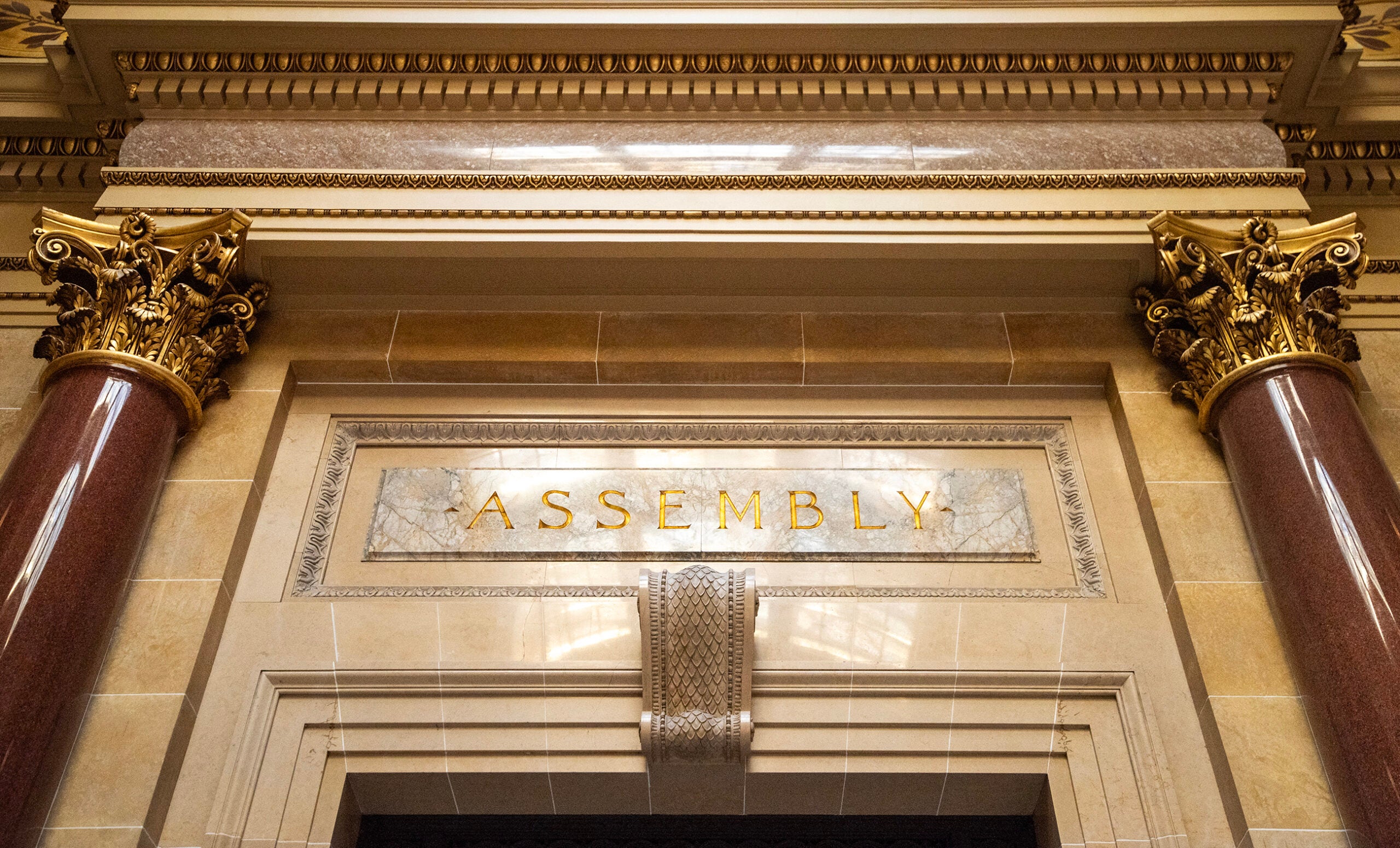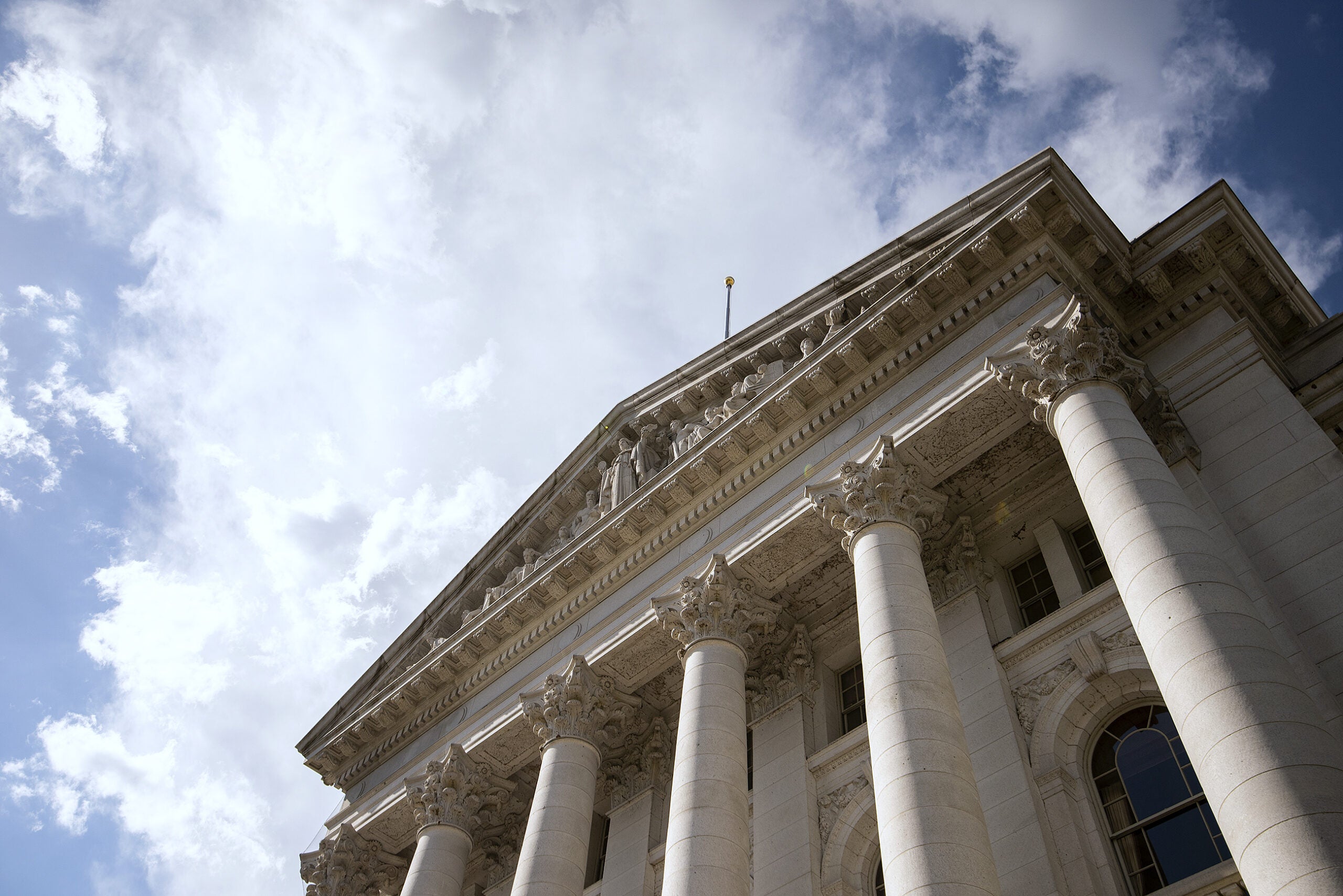
Graffiti or vandalism to historical markers — like plaques or statues — would become a felony under a proposal considered by Senate lawmakers on Wednesday.
At a public hearing of the Senate Committee on Judiciary and Public Safety, supporters of the historic property bill said such markers celebrate shared stories and experiences.
“They tell the story of Wisconsin and who we are as a people and, as such, should be protected and honored as records of the past that provide important lessons for the present,” said the bill’s lead author, Sen. André Jacque, R-New Franken. “A license to damage or destroy these historic public assets through civil unrest is a license to undo the common ties that bind us together as citizens of Wisconsin.”
News with a little more humanity
WPR’s “Wisconsin Today” newsletter keeps you connected to the state you love without feeling overwhelmed. No paywall. No agenda. No corporate filter.
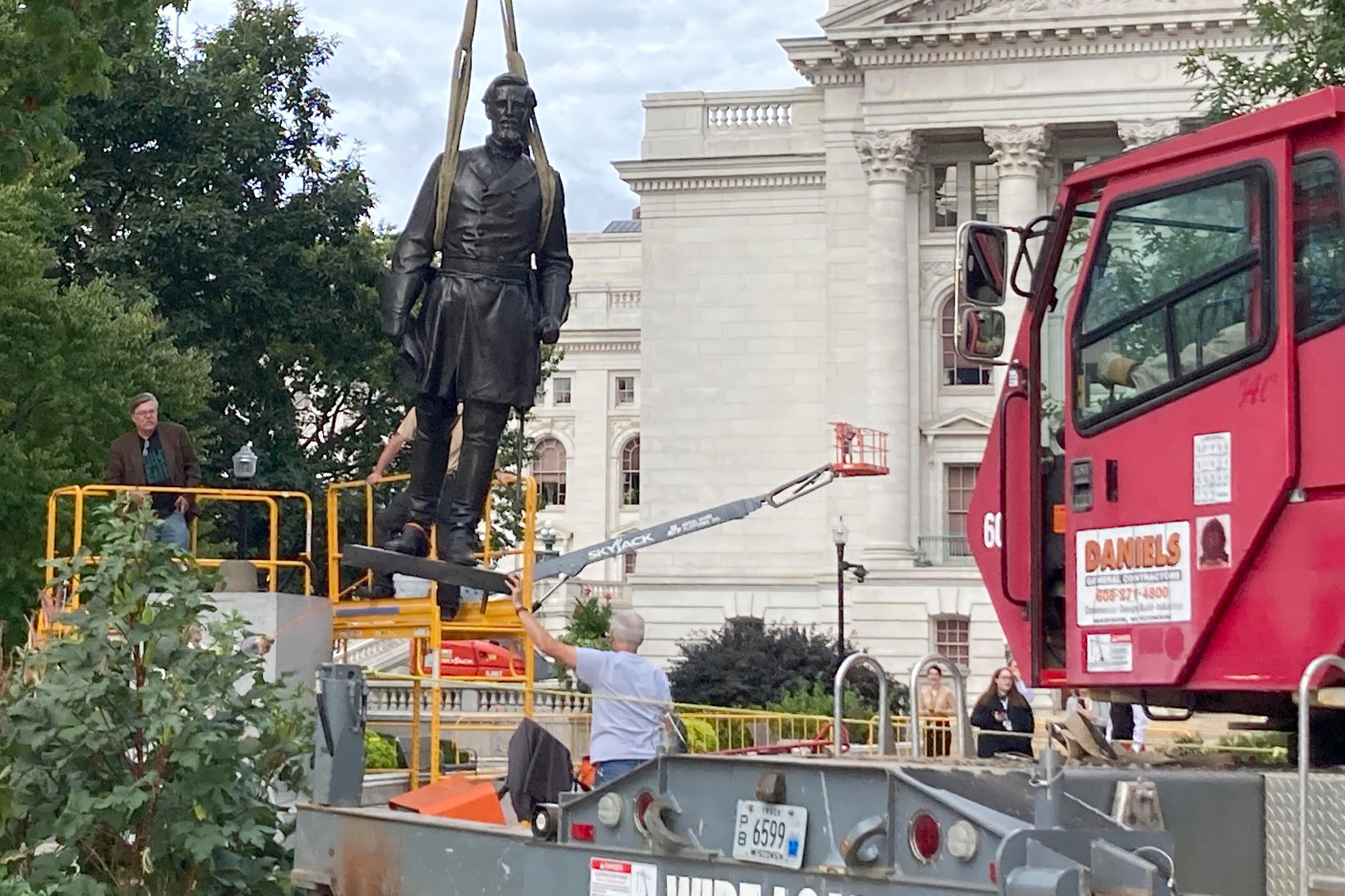
The proposal comes five years after the racial justice protests of 2020, during which time many monuments to Confederate soldiers, Christopher Columbus, and other figures were targeted with graffiti or torn down by protesters. In Wisconsin, protesters also toppled a monument to an abolitionist outside the state Capitol in Madison. That same night, they also toppled the Capitol’s “Forward” statue and dragged it down the street.
Following that summer, GOP lawmakers proposed bills to make such targeting of historical property a crime. A similar bill passed the Legislature in 2021, but it was vetoed by Gov. Tony Evers, who said defacing public property above a certain value is already illegal.
“Thus, current law already ensures individuals who engage in this behavior can be held accountable,” Evers wrote in 2022.
Current law expressly bans damaging some kinds of properties, but does not specify historical markers or monuments. On Wednesday, Jacque said the bill is a “common-sense extension of penalties already in place for damage committed against church properties and cemeteries.”
Sexual assault and trafficking proposals
Lawmakers also heard testimony Wednesday about proposals that would increase penalties for human trafficking and require clearer communication with a sexual assault survivor about the status of their rape kit.
Under the sexual assault proposal, survivors would be entitled to quick processing of the evidence taken after an assault, receive updates about the testing timeline, whether a possible assailant has been identified, and to learn if their case has been closed or reopened.
The human trafficking proposal would make it a Class C felony, with a minimum prison term of 10 years. It would make child trafficking a Class B felony, with a minimum prison term of 15 years.
The bill’s supporters said Wisconsin’s major corridors, including between Chicago and Milwaukee, have high rates of trafficking. The bill is backed by law enforcement groups and United Migrant Opportunity Services, which supports migrant farmworkers and low-wage workers.
Some Democrats on Wednesday expressed concern that this could catch up victims of trafficking, who are sometimes compelled to do illegal activities or perpetuate trafficking themselves.
“We all know that it’s difficult to prove that victims are victims of human trafficking,” said Sen. LaTonya Johnson, D-Milwaukee. “Not all officers recognize when individuals are human trafficking victims because there isn’t enough training.”
Wisconsin has previously received low grades from national anti-trafficking organizations for how it prevents trafficking and cares for survivors.

Wisconsin Public Radio, © Copyright 2026, Board of Regents of the University of Wisconsin System and Wisconsin Educational Communications Board.