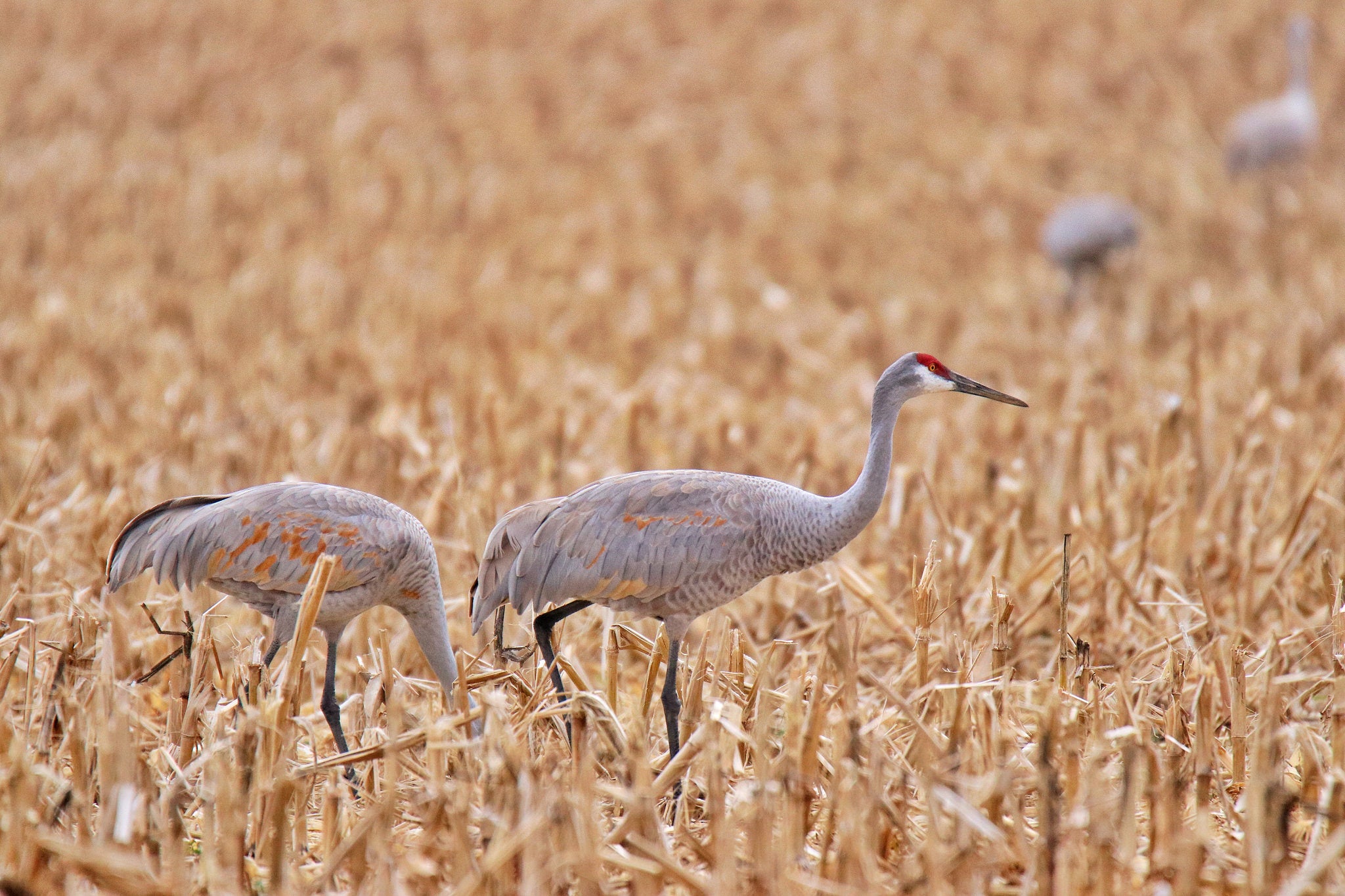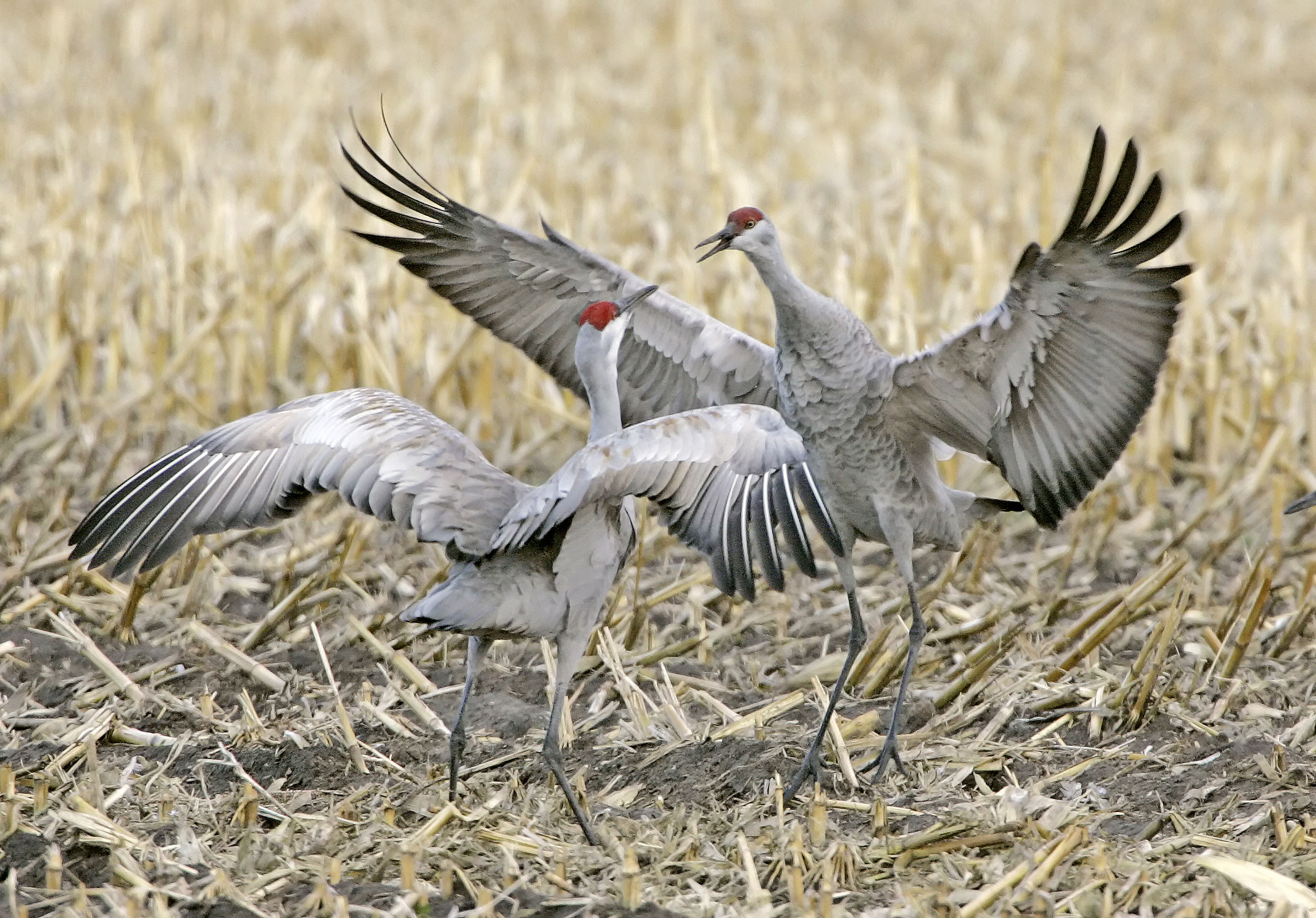
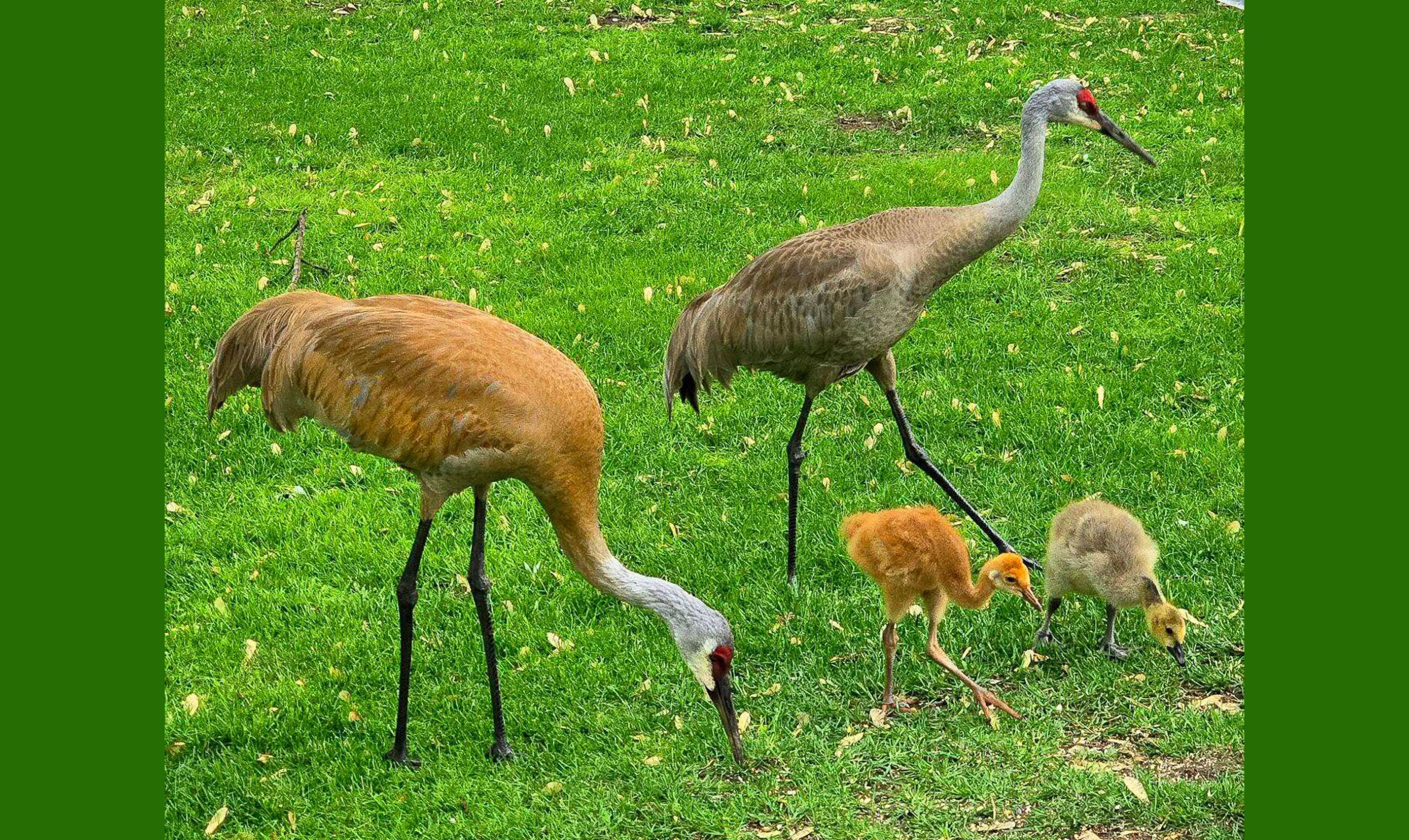
For the past eight years, Madison resident and wildlife photographer Alan Ginsberg has been following eight pairs of sandhill cranes at half a dozen nesting sites in Dane County.
One pair in particular comes back to a smaller pond close to friends of his who live on the city’s west side.
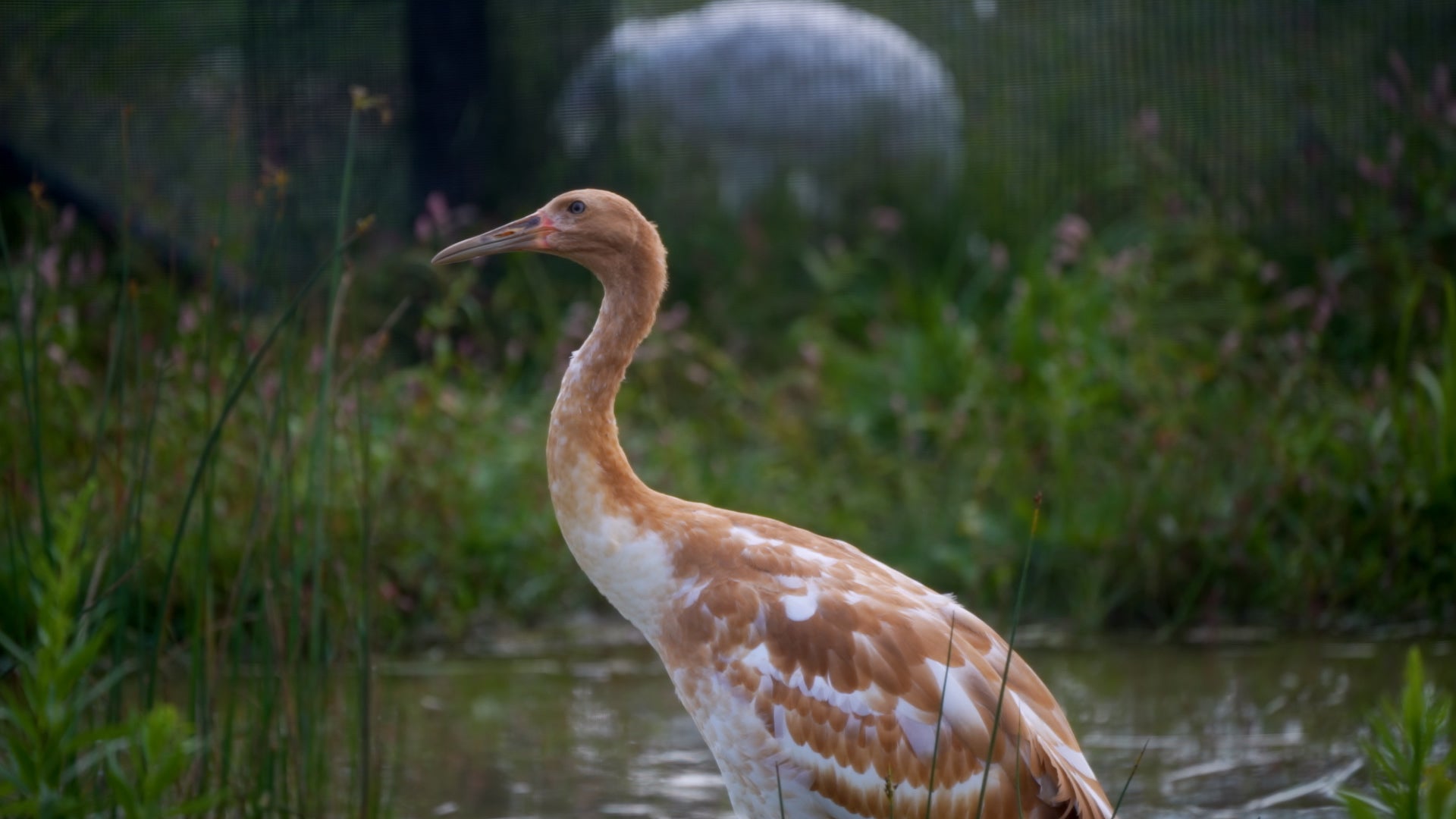
Since April, Ginsberg and his friends have watched as the birds laid a pair of eggs in a nest on the banks of the pond, with one hatching into a fluffy colt. Not long after that, water levels rose from recent rains and flooded the nest. It’s unclear what happened to the other egg, but the birds soon went in search of a new home.
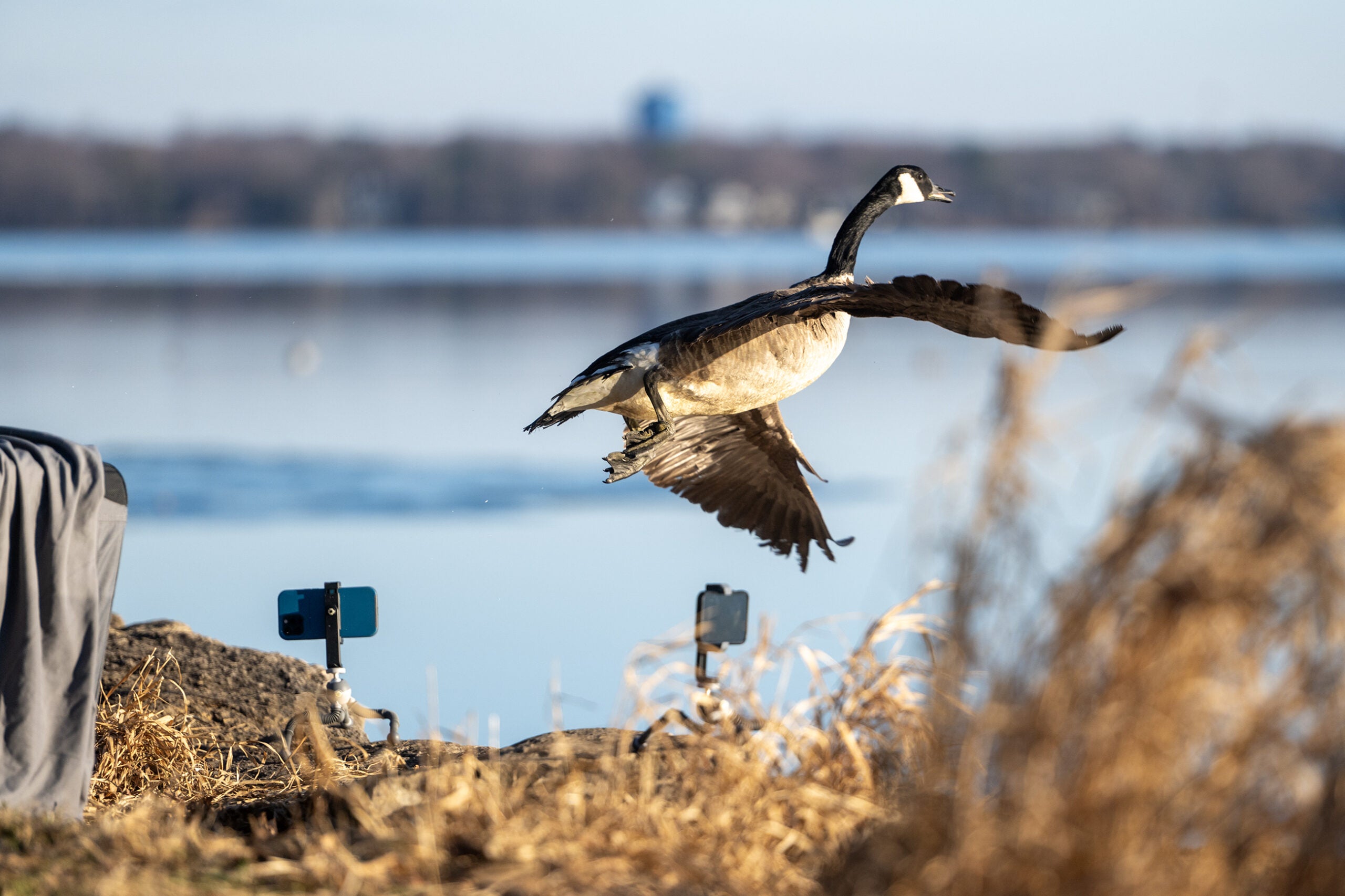
They took up residence in the nest of a pair of Canada geese, forcing those birds to go elsewhere. It soon became clear that a goose egg had remained behind —because it hatched into a gosling.
News with a little more humanity
WPR’s “Wisconsin Today” newsletter keeps you connected to the state you love without feeling overwhelmed. No paywall. No agenda. No corporate filter.
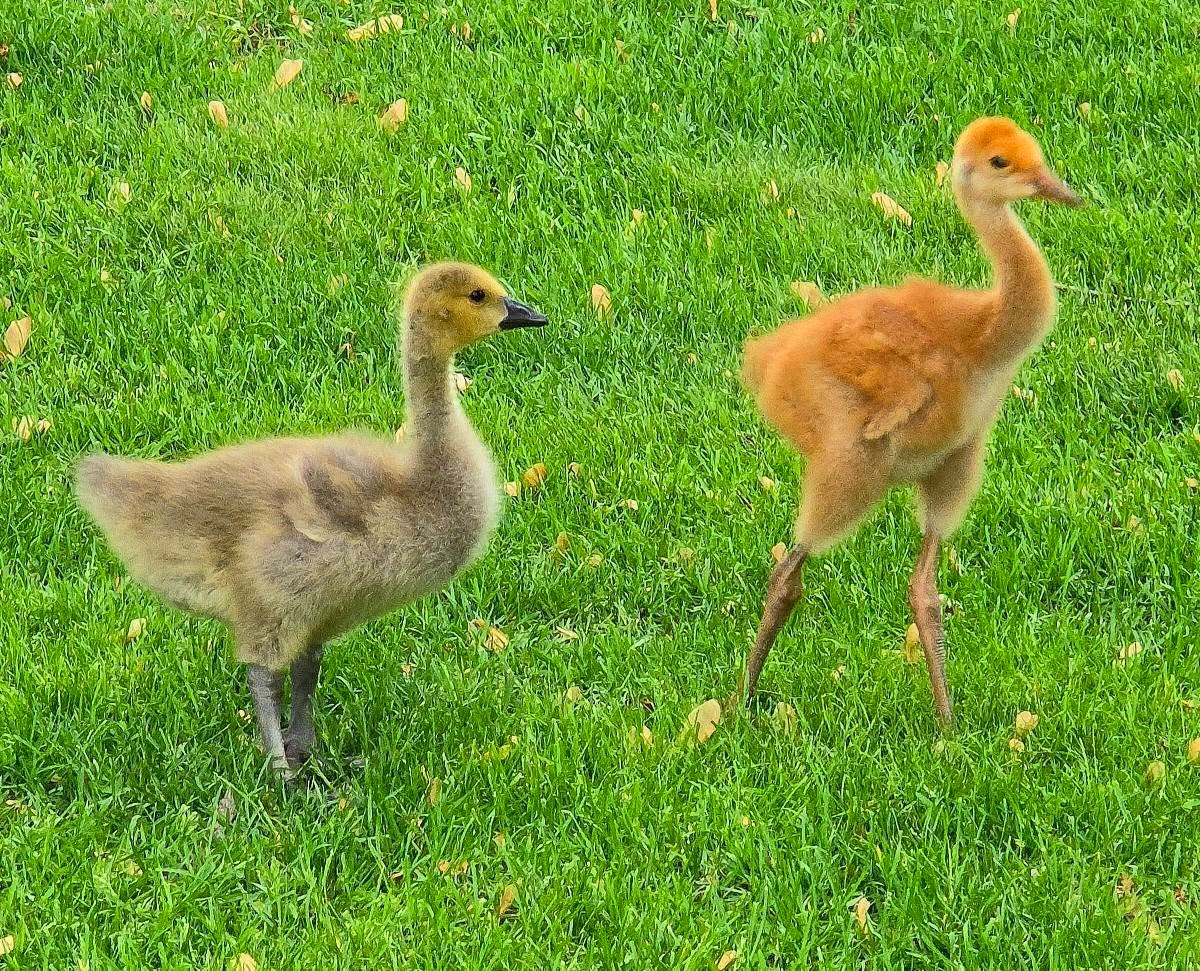
“All of a sudden, we had the rather strange sight here of a sandhill crane mother with two chicks, one being a Canada gosling and the other one being a sandhill crane colt,” Ginsberg said.
Ginsberg said the cranes immediately accepted the gosling as their own. For about a week, the geese protested and surrounded the nest, but the father sandhill crane would chase them off anytime they got too close.
After a week or so, the geese left the pond, Ginsberg said, “and the new blended family, shall we say, had the pond to themselves.”
Ginsberg has been documenting the birds at least twice a week to the delight of neighbors and citizens beyond the state’s capital city. After 12 weeks, the gosling is almost a full-grown goose and the crane colt is larger than his mother, but the family remains together.
The family’s daily routine includes ‘Abbey Road’ procession to homes
Over time, Ginsberg said their following has only grown as he documents their daily routine, capturing around 2,000 photos.
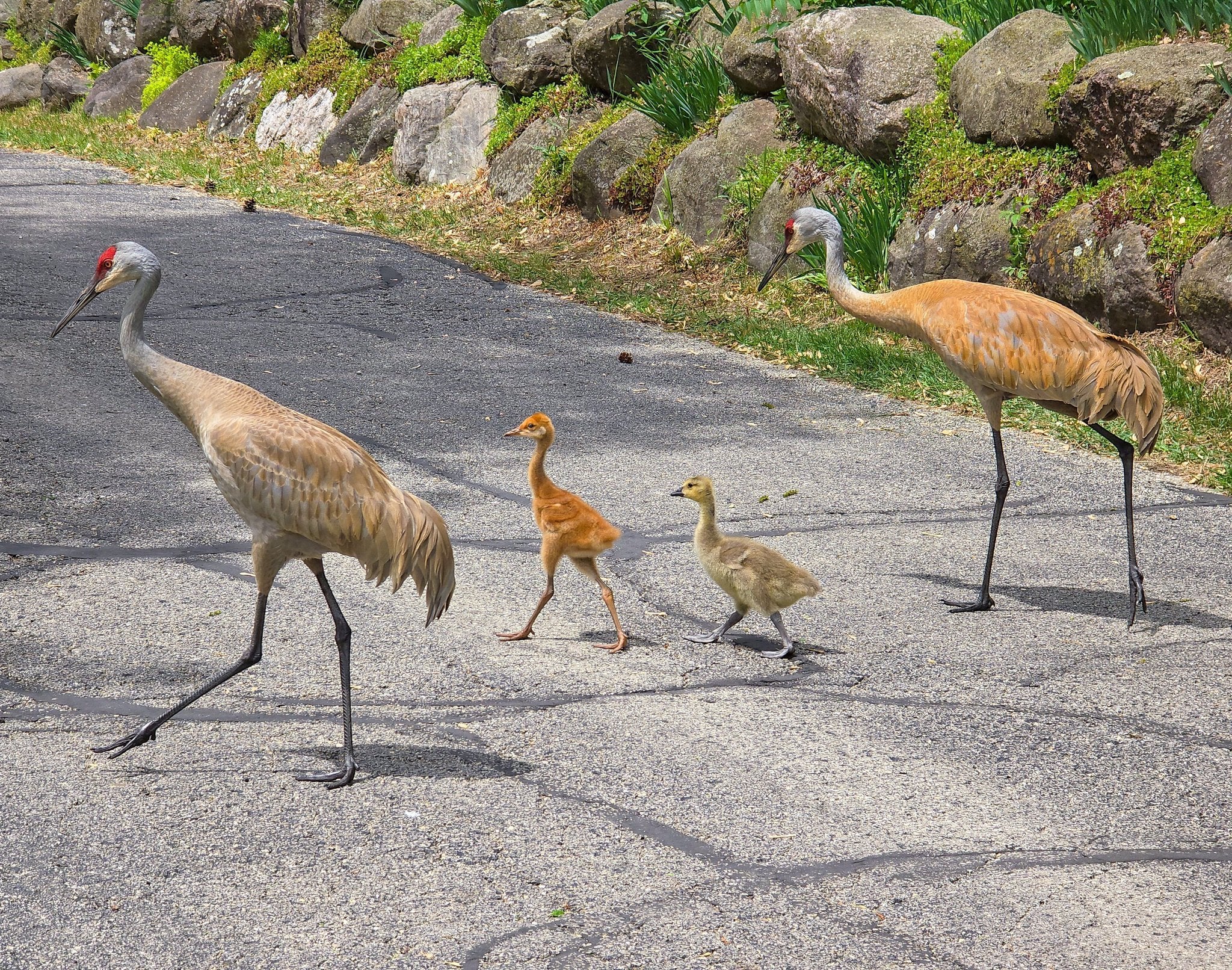
In the evenings, the birds retreat into the reeds, disappearing into the pond. In the mornings, they emerge and trek into the backyards of up to two dozen homes, checking out the bird feeders. The four cross the street in a line that Ginsberg finds reminiscent of a famous Beatles album cover.
“I call it the ‘Abbey Road’ procession,” Ginsberg said.
Ginsberg said he observed the father trying to feed a frog to the goose, which couldn’t get away from it quickly enough. Even the colt couldn’t get the frog down when offered, and the amphibian fell back into the pond. As omnivores, sandhill cranes typically feed on seeds, grains, frogs and snakes. Geese are largely herbivores that prefer grasses and aquatic plants.
Even so, the birds seem to have adjusted to each other’s diets and physical differences. The long-legged cranes will stop and wait for the goose that waddles along on it stubby legs when they’re out roaming the neighborhood. While weeks have passed, Ginsberg said the mother is still looking out for the goose, bringing food or breaking up fights between it and the young colt.
Ginsberg’s grandkids have named the colt “Copper” and the goose “Goldie.” He’s mulling the possibility of a book to chronicle their adventures.
While rare, sandhill cranes have been known to adopt geese elsewhere
While uncommon, the International Crane Foundation’s Anne Lacy said several instances have been observed of sandhill cranes adopting a goose into their fold. Lacy, director of Eastern Flyway Programs-North America, said a crane family adopted a gosling last year in the Lake Wingra area of Madison.
And the organization is hearing more instances of such cases, including a Minnesota couple who documented a similar family near their lakeside home. Lacy said it’s believed the same goose returned to the crane family each year.
“They shared space amicably, and then the goose actually paired naturally with another goose and raised its own family right next to (the assumed) same crane family that raised it,” Lacy said.
Minnesota couple Martha Harding and Gary Noren authored a children’s book to document the family.
Lacy said it’s likely people will report more such cases since both cranes and geese reside in developed areas. The populations of both birds have also rebounded in Wisconsin. Most recent data estimates the breeding population of Canada geese in Wisconsin is more than 181,000 birds. Fall surveys from 2018-2022 show Wisconsin has around 51,000 sandhill cranes.
In observed cases in Madison and Michigan, the families parted ways when the adopted geese died. Ginsberg said he’s observed Copper and Goldie beginning to take flight for about 10 yards at a time, raising the question of whether the family will stay together when they eventually migrate.
“We all want a happy ending where they all literally fly off into the sunset,” Ginsberg said.
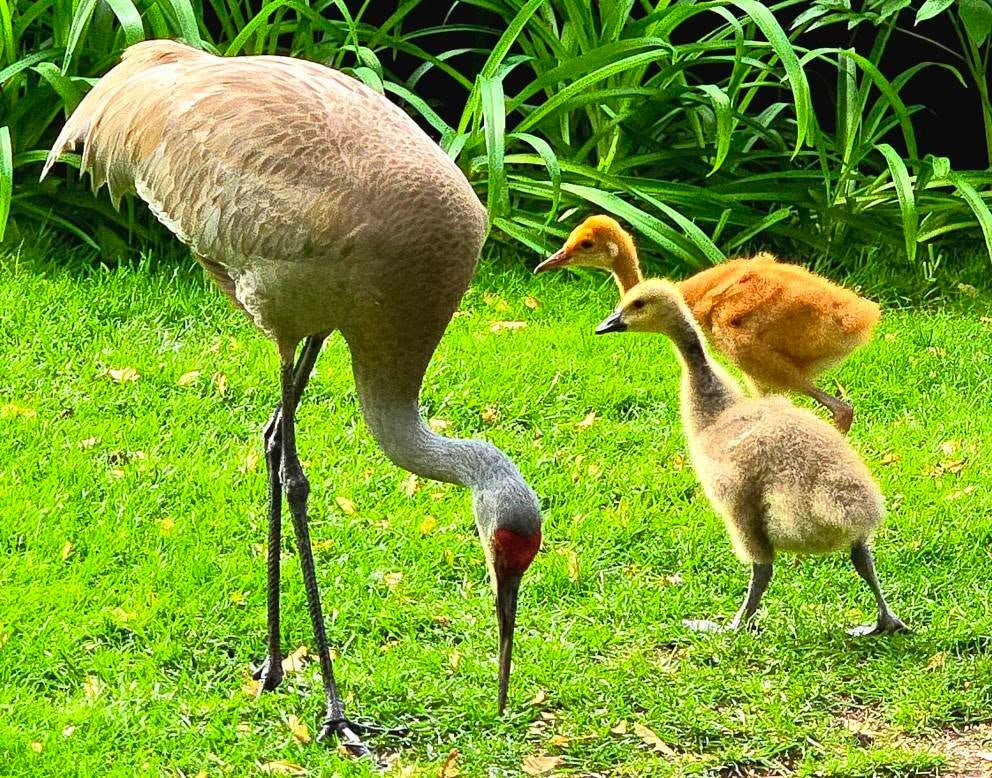
As Ginsberg continues to observe the family, he has started printing small blank notecards displaying his photos that people can buy. He said a portion of the proceeds will go to benefit the International Crane Foundation. He’s raised about half his goal of $1,000.
If there’s anything he’s taken away from watching the family, Ginsberg said it’s that the birds have shown there’s no reason to fear those who are different.
“You have this beautifully blended family, growing up as (if) everything is normal. Nothing should be different,” Ginsberg said. “You’ve got these birds who are so accepting of another. I think we can all take a couple of lessons from that attitude.”

Wisconsin Public Radio, © Copyright 2026, Board of Regents of the University of Wisconsin System and Wisconsin Educational Communications Board.