Supporters of a bill that would allow a sandhill crane hunt in Wisconsin say it will create opportunities for hunters and help farmers experiencing crop damage. But opponents argue it would do little to help growers and place the birds at risk.
People weighed in on the bill Wednesday during a hearing held by the state Senate sporting heritage committee. The proposal is the third attempt since 2012 to hunt the birds, sometimes dubbed the “ribeye of the sky” by hunters. The Joint Legislative Council introduced the bill earlier this year after a committee studied ways to manage cranes and related crop damage.
Under the bill, Wisconsin hunters would have the opportunity to hunt sandhill cranes, pending federal approval. The measure would also create a new program to reimburse corn growers for up to 50 percent of the cost of a treatment used to repel birds that eat freshly planted corn.
News with a little more humanity
WPR’s “Wisconsin Today” newsletter keeps you connected to the state you love without feeling overwhelmed. No paywall. No agenda. No corporate filter.
A 2010 management plan developed by the Mississippi and Atlantic Flyway Councils calls for a potential crane hunt once their numbers exceed a range between 30,000 to 60,000 birds. Rep. Paul Tittl, R-Manitowoc, who co-chaired the study committee, said the eastern population of sandhill cranes now averages more than 100,000.
“This is a well-thought-out proposal to address relief to farmers and promote new opportunities for hunters,” Tittl said.
Opponents say the bill would do little to help farmers. A hunt would threaten the stability of the sandhill crane population and place whooping cranes at risk of being mistakenly shot, said Anne Lacy, director of Eastern Flyway Programs-North America for the International Crane Foundation. She said whooping cranes have been killed in Wisconsin and pointed to four men in Oklahoma who were found guilty of killing endangered whooping cranes.
“This proposal comes on the heels of unprecedented outbreaks of highly pathogenic avian influenza, HPAI, posing a significant and novel risk to the stability of crane populations worldwide,” Lacy added.
Lacy said thousands of cranes died in Tennessee, Kentucky and Indiana this past spring.
Even so, waterfowl hunters and farmers said allowing a hunt would provide another tool for the DNR to manage the birds
“It will maintain a healthy crane population while giving farmers a meaningful way to reduce severe and reoccurring damage,” said Rick Gehrke, a farmer and board member of the Wisconsin Corn Growers Association.
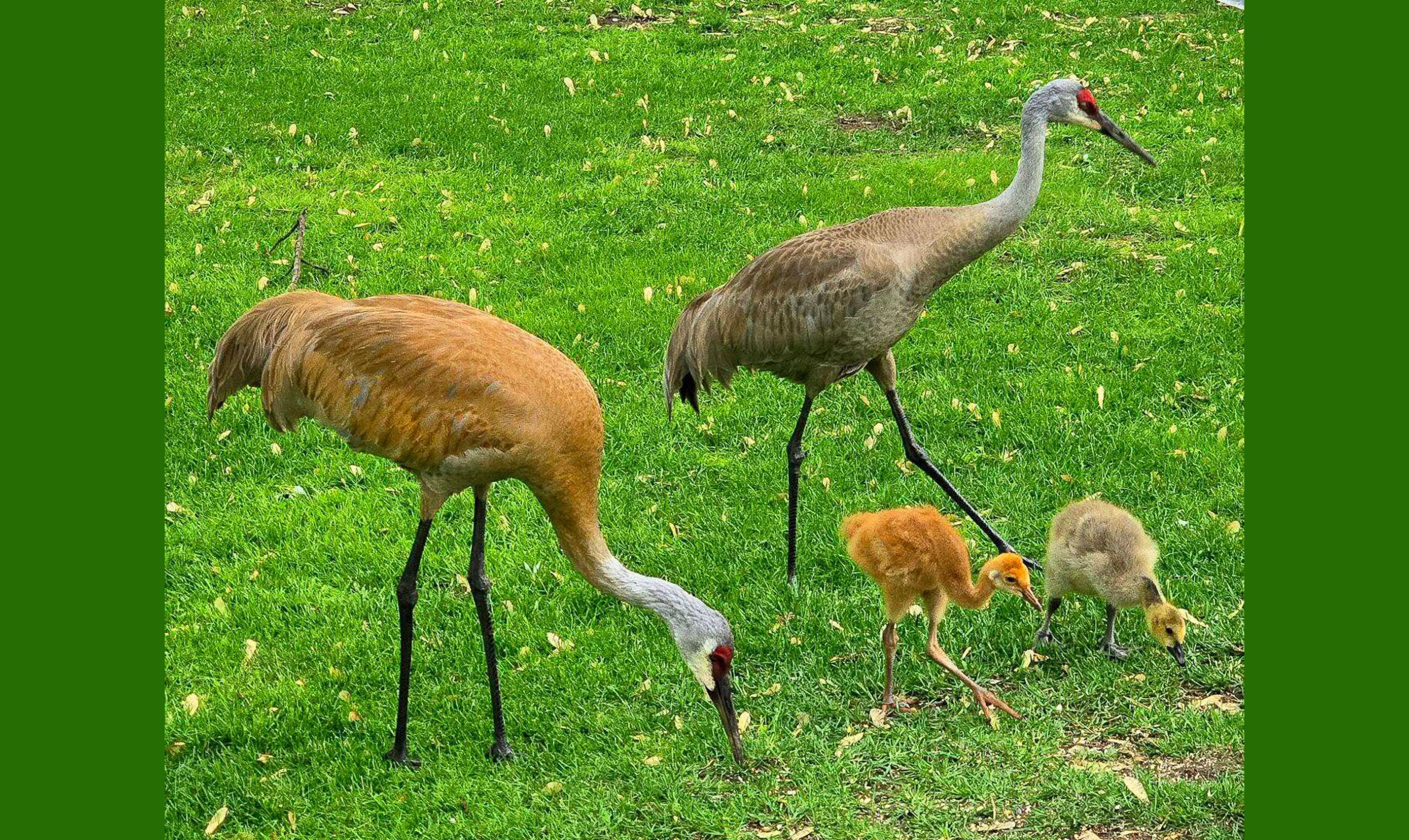
Madison resident Alan Ginsberg, a wildlife photographer who over the summer documented sandhill cranes raising a goose in Dane County, said not every animal must be on the table or in the sights of a gun to have value.
“Some creatures are worth more … for the beauty they bring and the hope that they symbolize,” Ginsberg said.
Hunting migratory birds is generally restricted under federal law, but the U.S. Fish and Wildlife Service can issue regulations to authorize a hunt. Federal requirements would restrict any hunt to the fall to avoid killing birds while they’re nesting in the spring.
Taylor Finger, the DNR’s game bird specialist, said a fall hunt would likely have very little impact on crop damage in the spring.
About 200 farmers report sandhill crane conflicts each year that have totaled up to nearly $2 million in damage. Under state law, farmers are unable to receive payments for crop damage through the state’s wildlife damage abatement program unless the DNR authorizes a hunt.
The proposal would increase fees to hunters to pay for additional wildlife damage claims. But an amendment proposed by the committee’s chair, Sen. Rob Stafsholt, R-New Richmond, would scale back those fees and also remove funding to reimburse farmers for the cost of Avipel, a seed treatment to deter the birds.
DeForest farmer Dave Mickelson, who served on the study committee, opposes the bill for removing aid for farmers like him.
“If having only a hunting season is the intent, then it should be presented as such. But crop damage should not be used as a justification for a hunting season,” Mickelson said.
Supporters said 17 states currently allow sandhill crane hunts.
In Wisconsin, up to 1,300 cranes are killed each year under depredation permits to control crop damage, but they must be left to rot in the field. Tim Andryk with Ducks Unlimited said that is a waste.
“They are such good eating that people that are opposed to hunting them, I think they’re opposed primarily because they’ve not eaten one,” Andryk said.
Only 17 percent of almost 2,800 people surveyed in 2023 support a hunting season on sandhill cranes, according to a study funded by the International Crane Foundation.
Last year, hunters killed 1,311 cranes in the three states that currently hunt the bird’s eastern population, which are Alabama, Kentucky and Tennessee.

Wisconsin Public Radio, © Copyright 2026, Board of Regents of the University of Wisconsin System and Wisconsin Educational Communications Board.